
Cell culture supernatant serves as an ideal sample source for studying secreted proteins, extracellular vesicles (such as exosomes), signaling molecules, and post-translational modifications. It is widely used in research on cell communication, immune regulation, disease mechanisms, and biomarker discovery. However, most conventional culture systems contain large amounts of high-abundance proteins, especially serum-derived albumin and immunoglobulins. These exogenous proteins often exist in the supernatant at high concentrations, severely masking signals from cell-secreted substances and compromising the sensitivity and specificity of downstream analyses such as mass spectrometry, ELISA, and Western blot.
To address this issue, researchers often employ pre-treatment methods to remove high-abundance proteins from the culture medium, thereby reducing background interference and enhancing the detection of low-abundance molecules. However, traditional methods (such as dialysis, precipitation, and inefficient ultrafiltration) are not only labor-intensive but also prone to protein loss, post-translational modification artifacts, or inconsistent results. To overcome these challenges, the abundant culture supernatant protein depletion kit utilizes magnetic nanoparticle-based enrichment technology, enabling rapid, gentle, and efficient selective removal of exogenous high-abundance proteins while maximizing the retention of target molecules such as low-abundance secreted proteins and cytokines.
Product Overview
The abundant culture supernatant protein depletion kit from MtoZ Biolabs utilizes magnetic nanoparticle-based enrichment technology to precisely identify and remove major high-abundance proteins in serum, such as albumin and IgG. This process significantly reduces background noise without affecting cell-derived secreted proteins, thereby enhancing signal detection in downstream analyses. The kit is suitable for processing small- to medium-volume cell culture supernatant samples and is fully compatible with a wide range of analytical techniques, including LC-MS/MS, ELISA, Western blot, and exosome proteomics.
Product Notes
1. Lysis buffer 1 must be freshly prepared: Mix Lysis buffer A and Lysis buffer B immediately before use.
2. Use samples immediately after preparation or aliquot and store them at -80°C.
3. The abundant culture supernatant protein depletion kit is capable of processing 8 samples.
4. Avoid foam formation during operation to prevent interference with protein binding efficiency.
5. Use low-protein-binding microcentrifuge tubes to collect eluates in order to minimize the loss of low-abundance proteins due to adsorption on tube walls.
6. Protein concentrations vary among different plasma batches; a preliminary test is recommended to determine the optimal dilution ratio and incubation time.
Product Details
|
Product Details |
Size |
Storage Conditions |
|
Wash buffer 1 |
2 mL×1 |
RT |
|
Wash buffer 2 |
8 mL×1 |
RT |
|
Lysis bufferA |
3.75 mg×1 |
RT |
|
Lysis bufferB |
1 mL×1 |
RT |
|
Beads |
0.8 mg×1 |
4℃ |
Protocol
The abundant culture supernatant protein depletion kit utilizes magnetic nanoparticle-based enrichment technology to remove high-abundance proteins. The entire experimental workflow is simple, time-efficient, and adaptable to various laboratory environments and scales. The following is the recommended standardized protocol:
1. Sample Preparation
(1) Collect the cell culture supernatant (recommended volume: 1-10 mL), and remove cells or debris via low-speed centrifugation or 0.22 μm filtration.
(2) It is recommended to lyophilize and concentrate the supernatant to one-tenth of its original volume.
2. High-Abundance Protein Removal
For magnetic bead-based kits
(1) Take the appropriate amount of pre-washed magnetic beads and add them to the corresponding volume of supernatant.
(2) Mix thoroughly and incubate on a rotator for 10-15 minutes.
(3) Use a magnetic stand to separate the beads and wash them.
(4) Elute the low-abundance proteins from the magnetic beads.
3. Post-Processing (Optional)
If further concentration or buffer exchange is needed, ultrafiltration tubes or centrifugal concentrators may be used.
4. Sample Storage and Application
(1) Immediate Use: The processed supernatant can be used directly for SDS-PAGE, Western blot, ELISA, LC-MS/MS, and other analyses.
(2) Storage: If not used immediately, aliquot and store at -80°C. Avoid repeated freeze-thaw cycles to prevent sample degradation.
Figures
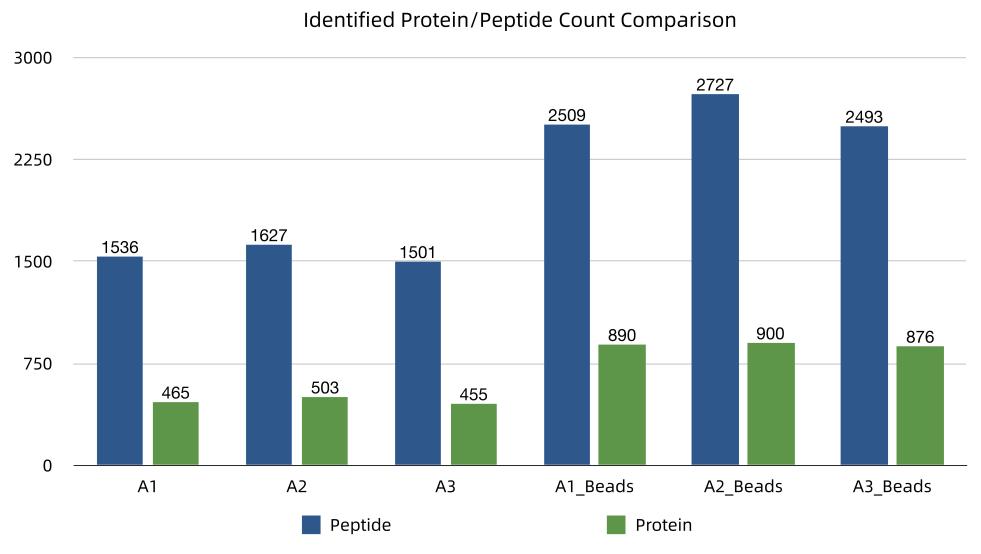
Figure 2. Experimental Renderings of Abundant Culture supernatant Protein Depletion Kit.
Features and Benefits
1. High Removal Efficiency
Utilizing magnetic nanoparticle enrichment technology, precisely identifies and removes common high-abundance proteins from culture media, significantly reducing background noise and enhancing the detection of cell-derived secreted components.
2. Low Protein Loss
Formulated with a gentle buffer system, it preserves the native structure and post-translational modifications of proteins, maximizing the recovery of low-abundance secreted factors, enzymes, and signaling proteins, ideal for functional studies and PTM analyses.
3. User-Friendly Operation
No need for large instruments. This streamlined workflow can be completed in approximately 30-40 minutes. It is easy to perform with standard lab equipment, improving experimental throughput.
4. Broad Compatibility
Processed samples are directly compatible with mass spectrometry, Western blotting, ELISA, Luminex assays, and exosome analysis, eliminating the need for additional cleanup steps and simplifying downstream workflows.
5. Compatible with Various Culture Systems
The abundant culture supernatant protein depletion kit is broadly applicable to media supplemented with FBS, BSA, serum replacements, horse serum, and more, offering excellent versatility across different experimental systems.
Applications
1. Secreted Protein Mass Spectrometry Analysis
By removing high-abundance proteins from culture supernatants, the identification rate and coverage of low-abundance proteins by mass spectrometry are improved, which helps study secreted proteins such as cytokines, chemokines, enzymes, and cell signaling pathways.
2. Exosomal Content Omics Research
Before exosome enrichment, removing high-abundance proteins prevents background contamination of exosomal components and improves the quality of omics data.
3. Cell-Drug Interaction Mechanism Research
In drug treatment, gene interference, or conditional culture experiments, analysis of the responses caused by changes in cell secretion can be conducted. After removing serum interference, protein expression or secretion level changes can be accurately evaluated.
4. Biomarker Discovery and Functional Validation
After removing high-abundance proteins, protein changes can be detected more sensitively. This can be applied to the culture medium of disease model cells (such as tumor cells) to analyze differential proteins after background purification, supporting translational research.
5. Optimization of Immunological Detection
Before conducting ELISA, Western blot, or Luminex to detect low-concentration cytokines, using the abundant culture supernatant protein depletion kit to treat samples significantly reduces background proteins in culture media, lowers serum interference, and improves sensitivity and accuracy.
Q1: What High-Abundance Proteins Can the Kit Remove?
A1: The abundant culture supernatant protein depletion kit is designed to remove common high-abundance proteins found in culture media supplemented with serum additives, including albumin, IgG, IgA, and transferrin. The actual types and efficiency of removal depend on the specific medium formulation and additives used.
Q2: Will It Affect the Detection of Cell-Secreted Proteins?
A2: No. The magnetic nanoparticle-based system is selective for high-abundance exogenous proteins. Low-abundance, cell-derived secreted proteins are preserved, ensuring accurate detection and analysis.
Q3: Is the Kit Compatible with Exosome Studies?
A3: Yes. It is recommended to first remove high-abundance proteins before exosome isolation to reduce contamination and improve the accuracy of downstream omics analyses.
Q4: What Sample Volume Can Be Processed Per Run?
A4: The standard kit supports 1-10mL per reaction. For larger volumes, please contact technical support to arrange a custom-sized kit or divide the sample into multiple processing batches.
Q5: Is the Protocol Complex? Are Special Instruments Required?
A5: The entire workflow is fast and simple, typically completed in 30-40 minutes. The magnetic enrichment process requires only a magnetic stand, no specialized or expensive instruments, making it ideal for routine lab use.