Resources

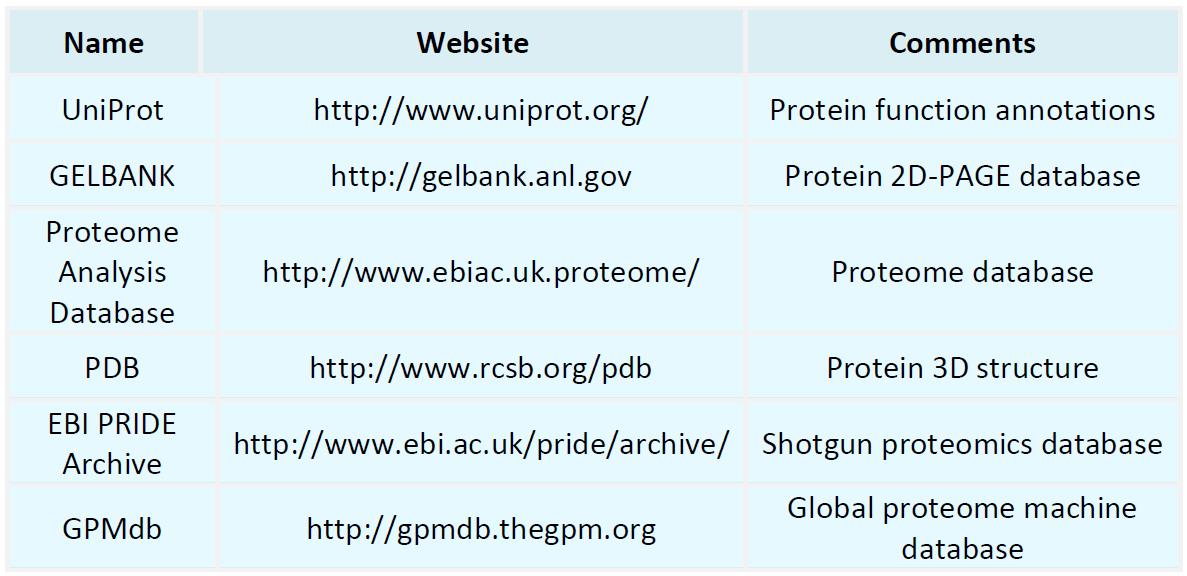
    Proteomics Databases

    resources1

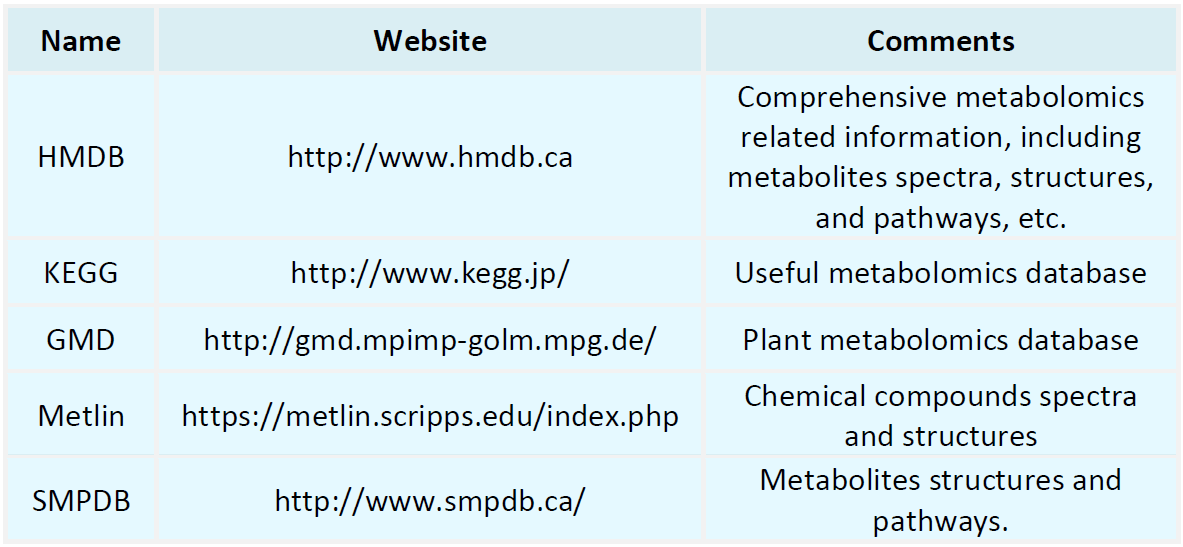
    Metabolomics Databases

    resources2
  • • How Does Peptidomics Bridge the Gaps in Proteomics?

    Does Proteomics Truly Provide Comprehensive Coverage? Proteomics has become a cornerstone technology for elucidating the functional states of biological systems, particularly playing a crucial role in deciphering disease mechanisms and identifying biomarkers. However, with continued advances in research, scientists have increasingly recognized that even high-throughput and highly sensitive mass spectrometry–based proteomics possesses intrinsic limitations. These limitations include: Inability to accu......

  • • How HLA Immunopeptidomics Advances Cancer Antigen Recognition?

    The Core Question in Cancer Immunotherapy: How Do T Cells Recognize Tumors? T cells do not directly recognize cancer cells themselves; instead, they assess whether a cell is abnormal through peptides presented by major histocompatibility complex (MHC, also known as HLA) molecules. Consequently, identifying and characterizing HLA-presented peptides, particularly those derived from oncogenic mutations, aberrantly expressed proteins, or viral integrations, collectively known as cancer antigen peptides, i......

  • • A Comprehensive Phosphoproteomics Workflow: From Sample Preparation to Data Analysis

    Phosphoproteomics represents a crucial subfield of proteomics dedicated to the study of protein phosphorylation and its functional roles within cells. Protein phosphorylation, a common and reversible post-translational modification, involves the addition of phosphate groups to serine, threonine, or tyrosine residues. This process modulates protein activity, subcellular localization, stability, and molecular interactions. In cellular signaling pathways, phosphorylation functions as a molecular switch, ......

  • • Targeted Protein Quantification: Achieving Precision at the Peptide Level through PRM Technology

    In proteomics research, achieving accurate and reproducible quantification of proteins of interest is essential for elucidating disease mechanisms, validating drug targets, and facilitating translational studies. However, due to the intrinsic complexity of proteins and the vast dynamic range of their expression levels, direct quantification at the protein level remains highly challenging. Consequently, peptide level quantification strategies have emerged as the predominant approach. Parallel Reaction ......

  • • Advantages and Disadvantages of High-Throughput Olink Proteomics Analysis

    In the fields of precision medicine and biomarker discovery, proteomic analysis has emerged as a powerful approach for elucidating disease mechanisms and identifying diagnostic targets. The high-throughput Olink platform, based on Proximity Extension Assay (PEA) technology, has gained increasing popularity in clinical cohort studies and drug development, owing to its exceptional sensitivity, minimal sample input, and capacity for large-scale multiplexed detection. However, like any analytical method, ......

  • • Olink PEA vs. Mass Spectrometry: A Comparative Analysis of Proteomic Technologies

    Mass spectrometry (MS) and Olink’s proximity extension assay (PEA) technology are two predominant approaches in proteomics research. Each offers distinct advantages and is suited for different research objectives and contexts. This paper presents a comprehensive comparison of the two technologies across technical principles, detection throughput, sensitivity, quantitative capability, and application scenarios, to aid researchers in selecting the most suitable proteomic strategy. Core Principles of Ma......

  • • Overview of Protein Phosphorylation Detection Techniques

    Protein phosphorylation detection primarily encompasses antibody-based approaches, mass spectrometry (MS)-based phosphoproteomic analyses combined with phosphopeptide enrichment strategies, as well as emerging technologies with single-cell and spatial resolution capabilities (e.g., proximity ligation assay [PLA], mass spectrometry imaging [MSI]). Protein phosphorylation is one of the most essential post-translational modifications (PTMs), playing a pivotal role in cellular signal transduction, metabol......

  • • Common Reasons for Olink Experiment Failures and Corresponding Solutions

    In proteomic studies using the Olink platform based on Proximity Extension Assay (PEA) technology, researchers are able to profile thousands of proteins using only minimal amounts of plasma or serum (1–3 μL). Nonetheless, experiments may encounter various obstacles. Low detection rates, limited reproducibility, and systematic bias can render data unusable or lead to inaccurate conclusions. This article summarizes the major causes of failure in Olink experiments and provides practical solutions to help......

  • • Accurate Determination of Protein Molecular Weight by Mass Spectrometry

    Proteins serve as the primary functional molecules in cellular processes, and their molecular weight directly reflects their amino acid sequence and structural integrity. As such, molecular weight is a critical parameter in protein identification, functional prediction, and quality control. In the biopharmaceutical industry, minor variations in protein molecular weight often indicate post-translational modifications (e.g., glycosylation, oxidation) or the presence of degradation products, which are cr......

  • • Designing an Efficient Co‑immunoprecipitation (Co‑IP) Protocol

    Co-immunoprecipitation (Co‑IP) is a classical technique for investigating protein–protein interactions, widely applied in the analysis of signaling pathways, target validation, and drug mechanism studies. By enriching target proteins and their associated complexes using specific antibodies, followed by detection via Western blot or mass spectrometry, Co‑IP enables the effective capture of native protein interactions within cells. Despite its seemingly straightforward principle, Co‑IP is technically de......

Submit Inquiry
Name *
Email Address *
Phone Number
Inquiry Project
Project Description *


How to order?


How to order

Submit Your Request Now ×
/assets/images/icon/icon-message.png

Submit Inquiry

/assets/images/icon/icon-return.png