






Protein Engineering Field
MtoZ Biolabs has advanced mass spectrometry analysis platforms and a complete protein detection system focusing on providing systematic structural, modification, interaction, and functional validation services for protein engineering research. We integrate various analytical technologies, including high-resolution mass spectrometry (LC–MS/MS), cryo-electron microscopy (Cryo-EM), surface plasmon resonance (SPR), and differential scanning calorimetry (DSC), to provide multi-level analytical solutions from molecular structure to overall function for research institutions and pharmaceutical enterprises.
MtoZ Biolabs Protein Engineering detection services cover structure confirmation, purity analysis, modification analysis, interaction studies, and functional validation. These services help clients obtain reliable and traceable experimental data during research and development, quality control, and registration stages, ensuring the stability, safety, and functionality of engineered proteins.
Services at MtoZ Biolabs
1. Protein Structure and Conformation Analysis
Techniques Used: High-resolution mass spectrometry (LC–MS/MS), circular dichroism (CD), dynamic light scattering (DLS), cryo-electron microscopy (Cryo-EM), X-ray diffraction (XRD)
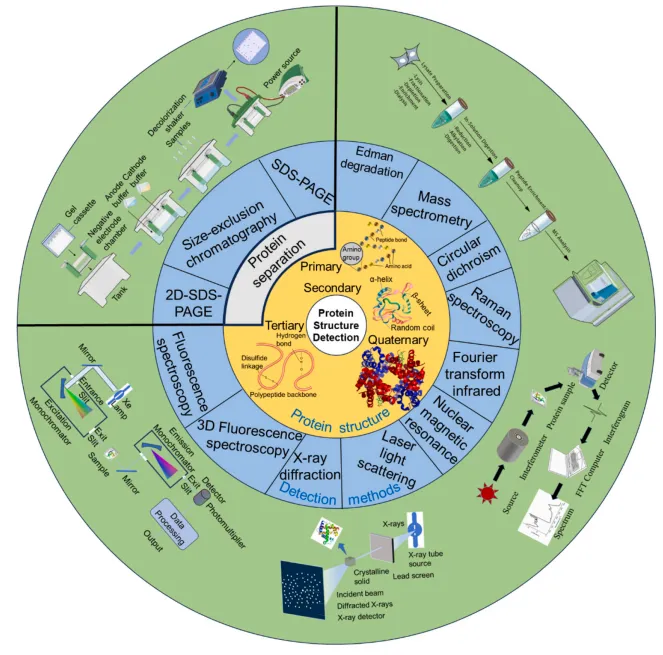
Lan, T. et al. Food Chem X. 2024.
Figure 1. Techniques for Protein Structure Characterization
Service Content:
● Verification of protein primary structure and amino acid sequence integrity
● Analysis of secondary and tertiary structural conformations and stability
● Evaluation of aggregation state, particle size distribution, and folding characteristics
● Investigation of the effects of environmental factors such as pH, temperature, and ionic strength on protein structure
Typical Applications:
● Structural characterization of antibodies, fusion proteins, and enzyme preparations
● Validation of vaccine antigen folding states
● Comparative analysis of conformational stability of engineered proteins
● Investigation of protein denaturation or aggregation mechanisms
2. Protein Quality and Purity Analysis
Techniques Used: LC–MS, UPLC, SEC-MALS, CE-SDS, SDS-PAGE
Service Content:
● Analysis of protein purity and molecular weight distribution
● Detection of degradation products, aggregates, and isoforms
● Monitoring of oxidation, deacetylation, and other chemical modification-induced quality changes
● Comparative consistency analysis under different batches or process conditions
Typical Applications:
● Release testing and stability evaluation of biopharmaceuticals
● Quality control of recombinant proteins
● Process optimization and purification performance assessment
● Biosimilar consistency analysis
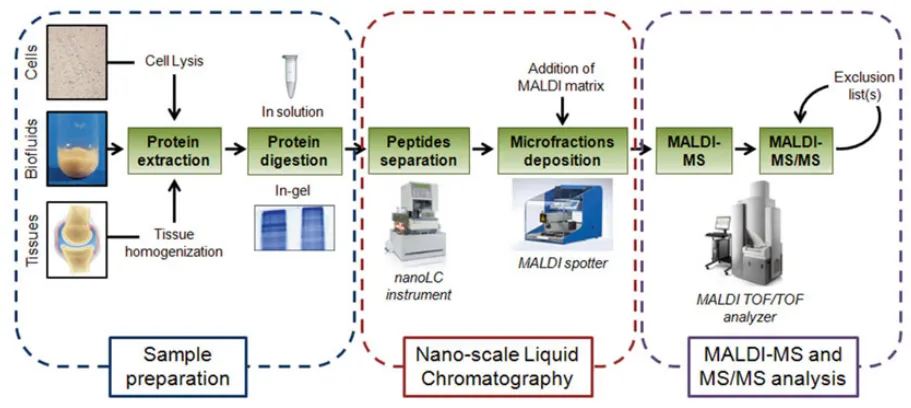
Carrera, M. et al. Humana, Press. 2021.
Figure 2. Workflow of Protein and Peptide Molecular Weight Determination by MALDI-TOF MS
3. Post-Translational Modification (PTM) Analysis
Techniques Used: Specific peptide enrichment (IMAC, TiO₂, anti-PTM antibodies), LC–MS/MS, PRM/MRM quantitative analysis
Service Content:
● Identification and localization of phosphorylation, acetylation, glycosylation, ubiquitination, and other modification sites
● Quantitative analysis of modification levels and variations
● Investigation of the regulatory effects of modifications on protein structure and function
● Construction of modification networks and pathway enrichment analysis
Typical Applications:
● Research on the role of protein modifications in drug mechanisms
● Screening of modification biomarkers related to efficacy and resistance
● Optimization and validation of engineered protein modification patterns
● Pathway and regulatory mechanism studies
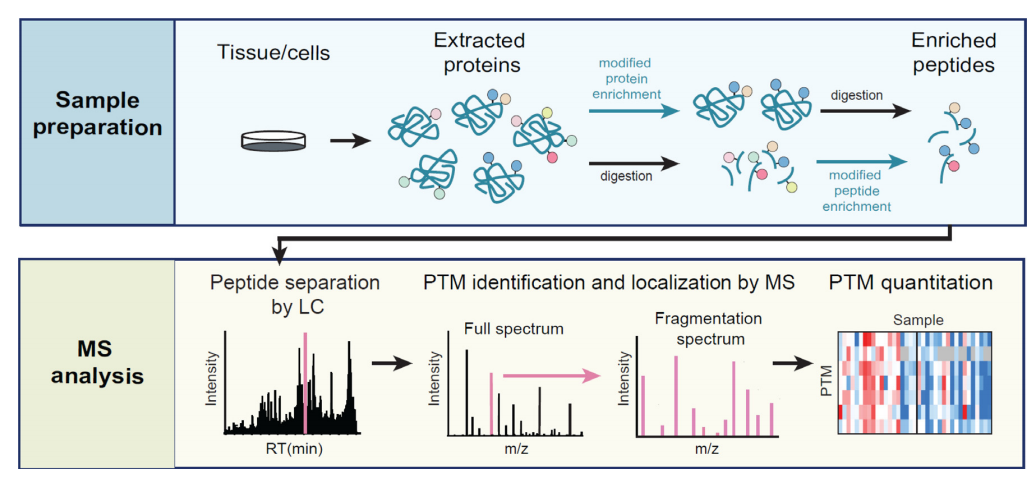
Brandi, J. et al. J Chromatogr A. 2022.
4. Protein Interaction and Complex Analysis
Techniques Used: Co-IP LC–MS/MS, pull-down, cross-linking MS, SPR, ITC
Service Content:
● Identification of protein–protein, protein–small molecule, and protein–nucleic acid interactions
● Analysis of complex composition and spatial conformation
● Measurement of binding kinetic parameters (Ka, Kd, kon, koff)
Typical Applications:
● Drug target binding mechanism research
● Verification of antigen–antibody affinity and specificity
● Exploration of complex assembly and regulatory mechanisms
● Analysis of protein signaling and interaction networks

Low, TY. et al. Cell Mol Life Sci. 2021.
Figure 4. The XL-MS Workflow
5. Physicochemical Property and Stability Analysis
Techniques Used: DSC, CD, DLS, spectroscopic analysis, particle size and melting temperature measurement
Service Content:
● Determination of protein thermal stability and melting temperature (Tm)
● Monitoring of the effects of pH, buffer, and ionic strength on protein conformation
● Analysis of aggregation tendencies and solubility changes
● Providing stability optimization recommendations for protein formulations
Typical Applications:
● Stability research on antibody and fusion protein formulations
● Optimization of enzyme storage and transportation conditions
● Protection of vaccine antigen conformations
● Validation of long-term stability of engineered proteins under frozen conditions
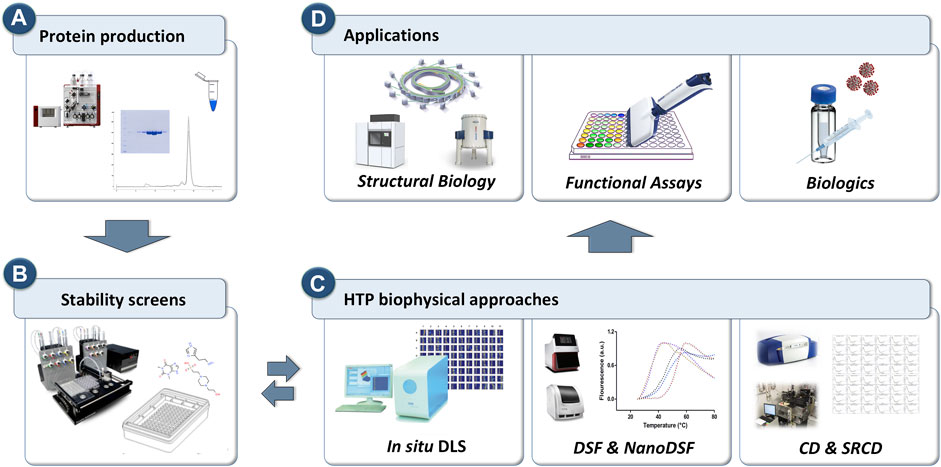
Kwan, TOC. et al. Front Mol Biosci. 2022.
Figure 5. Measuring Protein Aggregation and Stability Using High-Throughput Biophysical Approaches
Sample Handling and Quality Assurance
🔹 Accepted Sample Types: Purified proteins, cell lysates, culture supernatants, recombinant samples, drug formulations, and antibody samples
🔹 Recommended Storage: Snap-freeze samples in liquid nitrogen and store at −80 °C to avoid repeated freeze–thaw cycles
🔹 Quality Testing Items: Sample purity, integrity, concentration, and activity evaluation
🔹 Quality Assurance Measures: Each testing stage uses standard references and internal controls, with regular instrument calibration and complete traceability
Why Choose MtoZ Biolabs
✅ Multi-dimensional analytical system integrating mass spectrometry, spectroscopy, thermal analysis, and surface kinetics technologies for comprehensive protein characterization
✅ International analytical standards ensuring scientific, traceable, and reproducible results for both biopharmaceutical and research applications
✅ Professional scientific team with expertise in proteomics, structural biology, and analytical chemistry
✅ Flexible service options supporting single-item analysis or integrated project design tailored to specific goals
✅ High-quality deliverables including raw data, QC records, charts, and professional analytical reports supporting publications and regulatory submissions
Start Your Project with MtoZ Biolabs
MtoZ Biolabs is committed to advancing global protein engineering and biopharmaceutical development through high-resolution analytical platforms and systematic testing capabilities. Whether your research focuses on structural characterization, post-translational modification analysis, or functional validation and stability evaluation, we provide comprehensive solutions from sample testing to data interpretation.
Contact MtoZ Biolabs today to obtain a customized Protein Engineering Characterization and Validation research plan that will make your protein research and drug development more efficient, reliable, and scientifically robust.
How to order?




