






Resources
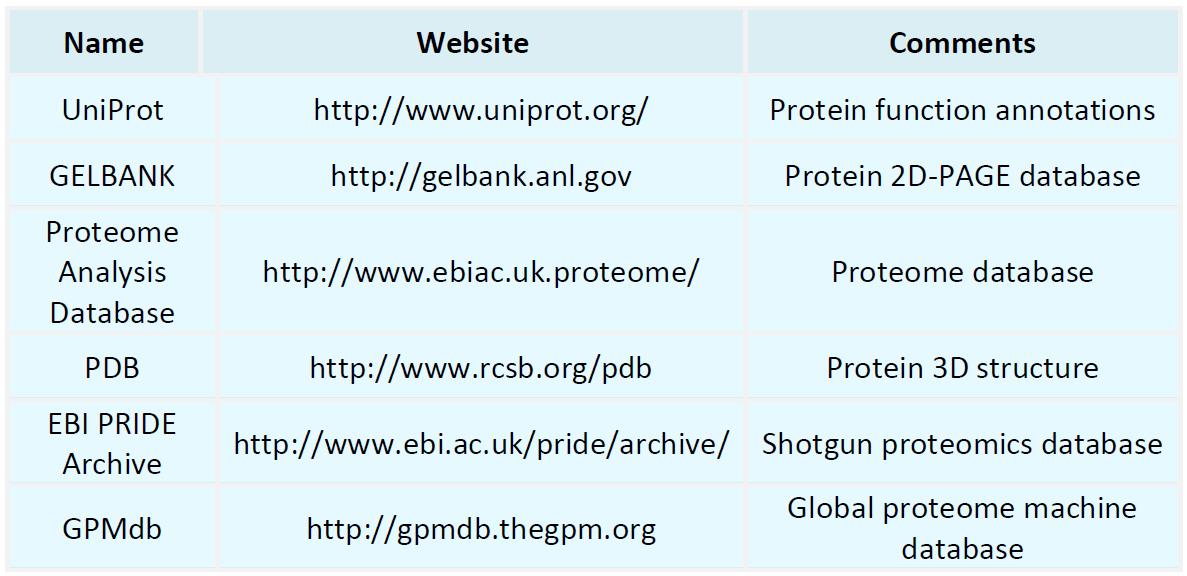
Proteomics Databases
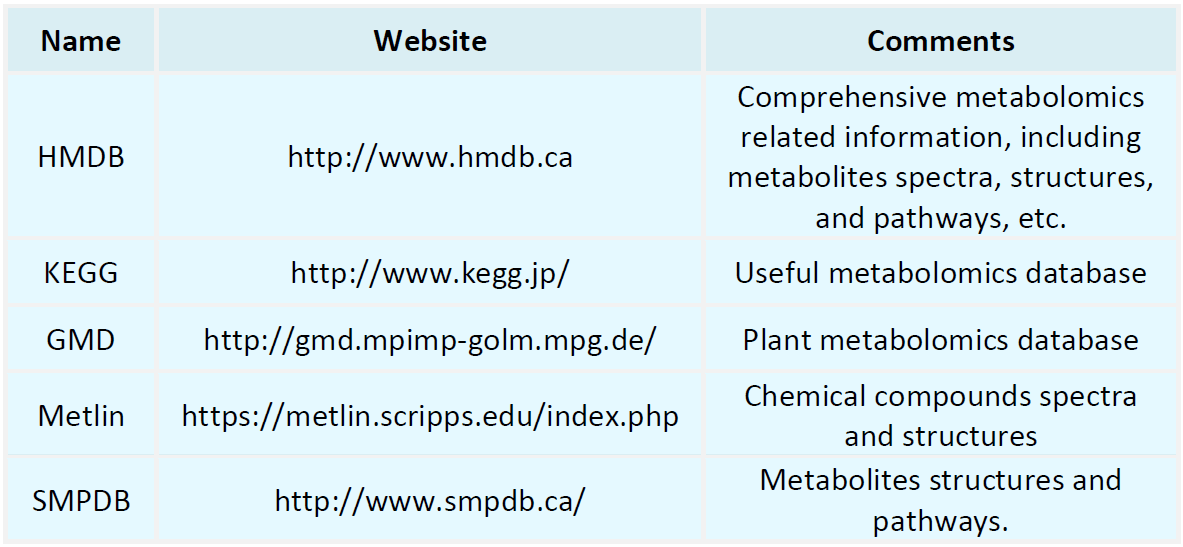
Metabolomics Databases
-
• HDX Hydrogen-Deuterium Exchange in Recombinant Protein Drugs
Recombinant protein drugs refer to protein products that are derived from animals and plants and developed through biotechnology. They have certain biological activity and can be used to prevent, treat, and diagnose diseases in humans, animals, and plants. Compared with small molecule drugs, protein drugs have advantages such as high activity, high specificity, and low toxicity, which attract a lot of researchers.
-
• Analysis of Free Toxins in ADC Drugs
Antibody-Drug Conjugates (ADC) are effective target therapy drugs for tumors, composed of monoclonal antibodies with specific targeting effects, small molecule cytotoxins with strong cell killing power, and their connectors. The key feature of ADC drugs is the combination of highly selective monoclonal antibodies with toxic drugs through chemical connection.
-
• HPLC Purity Analysis of Peptide Drugs
Peptides are large biological molecules formed by the connection of two or more amino acids through peptide bonds. Peptide drugs have become a research hotspot in the field of biomedicine in recent years, mainly having two advantages: First, peptide drugs possess high specificity and efficiency as they can target specific proteins or receptors in the body; Second, peptide drugs usually have good biocompatibility and low toxicity as they are based on naturally existing biomolecules.
-
• Antibody Drug Monosaccharide Spectrum Analysis
Antibody drugs are a significant advancement in the biopharmaceutical field in recent years, widely used in various diseases, especially in the treatment of cancer and autoimmune diseases. They mainly exert their therapeutic effects by recognizing and binding to specific antigens. This specificity makes antibody drugs have higher selectivity and reduced side effects in treatment. However, the safety, stability, and functionality of antibody drugs largely depend on their glycan structures.
-
• Key Methods for Protein Sequence Analysis: Deciphering the Fundamental Composition of Biomolecules
Protein Sequence Determination Methods Protein sequence determination is the foundation of protein sequence analysis. The commonly used protein sequence determination methods include: 1. Sanger Sequencing Sanger sequencing is a classic sequencing method, which determines the amino acids in the protein sequence one by one through DNA synthesis reaction. This method is highly accurate and reliable, but the sequencing speed is relatively slow, suitable for small-scale protein sequence determination.
-
• Mechanism of DIA-PRM Proteomics
The development of proteomics technology has provided powerful tools for understanding protein functions, interactions, and regulatory mechanisms within cells. Among the various proteomics techniques, Data-Independent Acquisition (DIA) and Parallel Reaction Monitoring (PRM) have become increasingly favored by researchers. By combining the strengths of both methods, DIA-PRM has emerged as a powerful technique for high-throughput and highly sensitive protein quantification.
-
• Application of DIA-PRM Proteomics
DIA (Data-Independent Acquisition) and PRM (Parallel Reaction Monitoring) are two mass spectrometry techniques widely used in proteomics research. DIA’s primary feature is its ability to scan all peptides simultaneously, providing comprehensive quantitative data. PRM, in contrast, selectively monitors target peptides, achieving higher quantification accuracy.
-
• Advantages and Disadvantages of DIA-PRM Proteomics
Data-Independent Acquisition (DIA) and Parallel Reaction Monitoring (PRM) are two mass spectrometry techniques that have gained considerable attention in proteomics research. DIA captures all precursor ions and their fragment spectra in an unbiased manner, ensuring comprehensive data acquisition, while PRM targets specific precursor ions and their fragment ions, providing high specificity and quantitative accuracy.
-
• Workflow of DIA-PRM Proteomics
Data-Independent Acquisition - Parallel Reaction Monitoring (DIA-PRM) is a proteomics analysis method that combines the strengths of Data-Independent Acquisition (DIA) and Parallel Reaction Monitoring (PRM) mass spectrometry techniques. DIA enables the acquisition of spectral data from all analytes in a sample within a single run, while PRM allows for high-precision, quantitative analysis of specific target peptides during subsequent analyses.
-
• Principle of DIA-PRM Proteomics
DIA (Data-Independent Acquisition) and PRM (Parallel Reaction Monitoring) are two critical mass spectrometry techniques in the field of proteomics. As scientific research progresses, proteomics methods continue to evolve, making protein quantification and identification more accurate and efficient.
How to order?




