






Resources
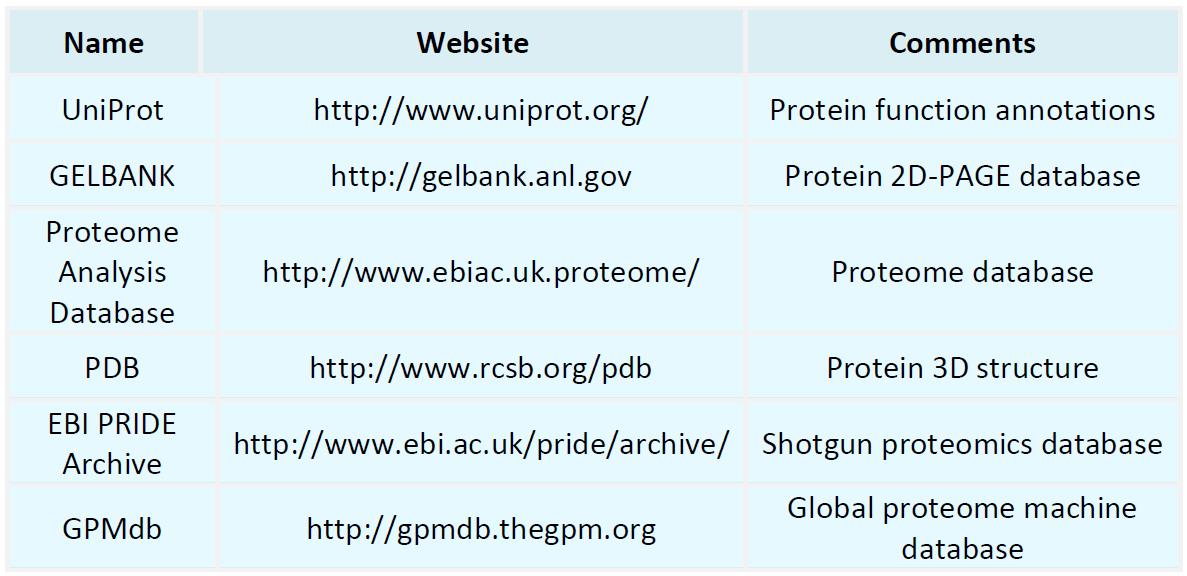
Proteomics Databases
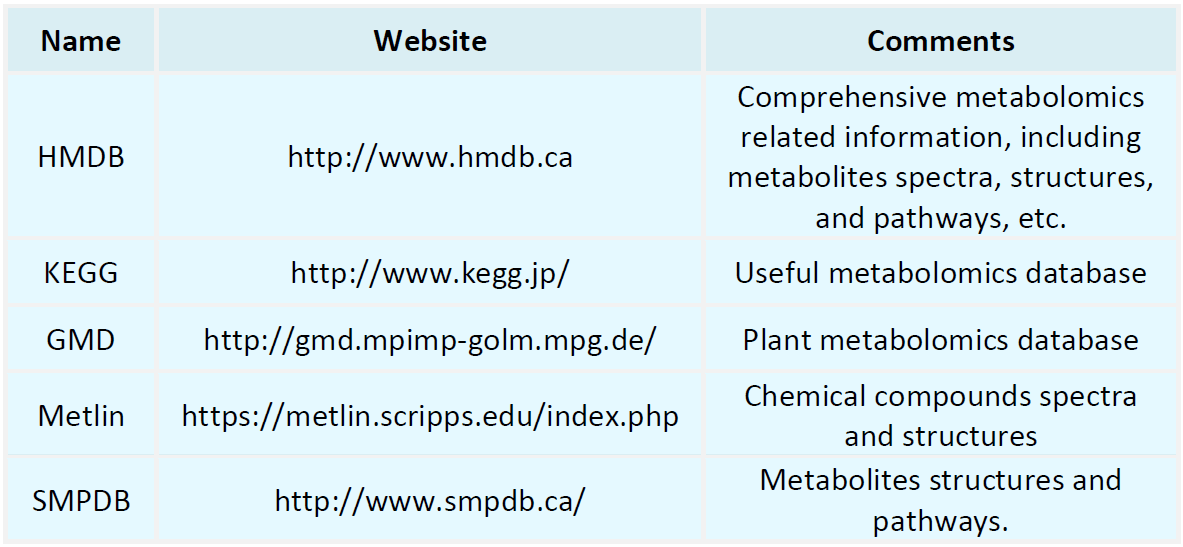
Metabolomics Databases
-
• Principle of TMT-Based Quantitative Proteomics Analysis
TMT (Tandem Mass Tags) quantitative proteomics analysis is a highly sensitive, multiplexed quantification technique based on mass spectrometry, widely used in proteomics research. This technology enables the relative quantification of multiple samples by labeling them with distinct tags and analyzing their intensities through mass spectrometry.
-
• Mechanism of Far-Western Blot in Protein-Protein Interaction Detection
Far-Western blotting is a powerful technique for detecting protein-protein interactions. Unlike traditional Western blotting, which relies on antibodies, Far-Western blotting employs a protein probe to identify target proteins. This technique is indispensable in studying protein interactions, elucidating signal transduction pathways, and discovering novel drug targets.
-
• Workflow of Far-Western Blot for Detecting Protein-Protein Interactions
Far-Western blotting is a crucial technique for studying protein-protein interactions. Unlike traditional Western blotting, this method leverages the binding capabilities of a known protein to identify target proteins, making it particularly useful for detecting specific ligand-binding proteins within complex mixtures. Its applications are significant in research areas such as signal transduction pathways and protein complex analysis.
-
• Application of Far-Western Blot in Protein Binding Affinity Studies
Protein-protein interactions (PPIs) are pivotal in biological research, influencing essential processes such as intracellular signal transduction, metabolic regulation, and gene expression. They also provide profound insights into disease mechanisms. Consequently, methods to investigate protein-protein interactions are highly valuable in life sciences.
-
• Advantages and Disadvantages of Far-Western Blot in Protein-Protein Interaction Studies
Protein-protein interactions (PPI) are essential for understanding cellular functions, signal transduction, and disease mechanisms. Far-Western blotting is a powerful technique that enables the detection of interactions between proteins. This technique employs a known protein as a probe, which binds specifically to a target protein, thereby facilitating the identification of protein-protein interactions within complex protein mixtures.
-
• Principle of Far-Western Blot in Protein-Protein Interaction Analysis
Far-Western blotting is a widely utilized technique for investigating protein-protein interactions. Unlike traditional immunoblotting, Far-Western blotting employs a protein probe instead of an antibody to detect target proteins in a sample. This technique provides a critical method for uncovering molecular mechanisms in complex biological processes, allowing the study of protein interactions under non-denaturing conditions that closely mimic physiological states.
-
• Kelp Histones Glycoform Analysis
Kelp, as a representative of large brown algae, is one of the most important economic seaweeds in the world. Apart from its applications in food and industry, kelp is also a source of many valuable bioactive substances, one of which is its histone. Histone in organisms often bind with sugar molecules to form histone-glycan conjugates, and these sugar molecules can affect the function and stability of glycoproteins. Therefore, the analysis of the glycoform of kelp histone is critical.
-
• AUC Analysis of Polypeptide Drugs by Ultracentrifugation
Peptide drugs are bioactive molecules formed by connecting multiple amino acids through peptide bonds. Generally, they are formed by connecting 10-100 amino acids, with a relative molecular mass lower than 10000. Most peptide drugs come from endogenous peptides or natural peptides, so they have no or little side effects on the human body. Compared to protein drugs, peptide drugs also have advantages such as good stability, high purity, low production cost, and low immunogenicity.
-
• Capillary Isoelectric Focusing (CIEF) Analysis of Peptide Drugs
Peptide drugs are bioactive molecules composed of multiple amino acids connected by peptide bonds. Typically, they are made up of 10~100 amino acids, with a relative molecular mass less than 10,000. Most peptide drugs are derived from endogenous peptides or natural peptides, so they have little or no side effects on the human body. Compared with protein drugs, peptide drugs also have advantages such as good stability, high purity, low production cost, and low immunogenicity.
-
• Q-TOF Peptide Map Analysis Steps
The Q-TOF (Quadrupole-Time of Flight) mass spectrometer is a mass spectrometry device that combines quadrupole and Time of Flight (TOF) technologies. It combines the selective ion transmission of quadrupole mass spectrometry and the high resolution, high precision measurement capabilities of Time of Flight mass spectrometry. It is often used for peptide mass spectrometry analysis, especially in protein identification and proteomics research.
How to order?




