






Resources
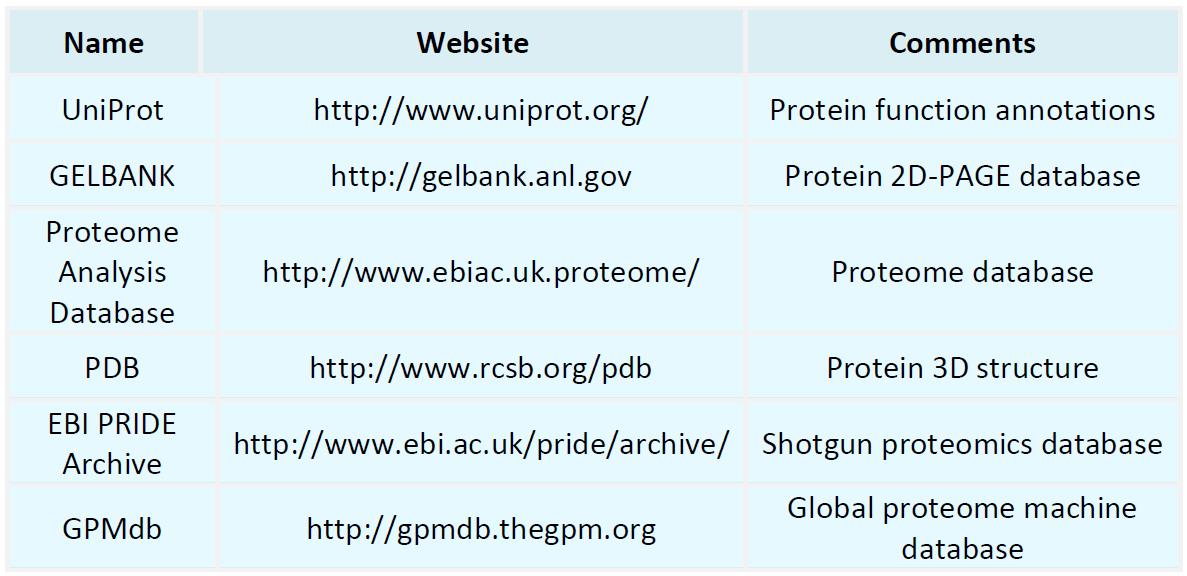
Proteomics Databases
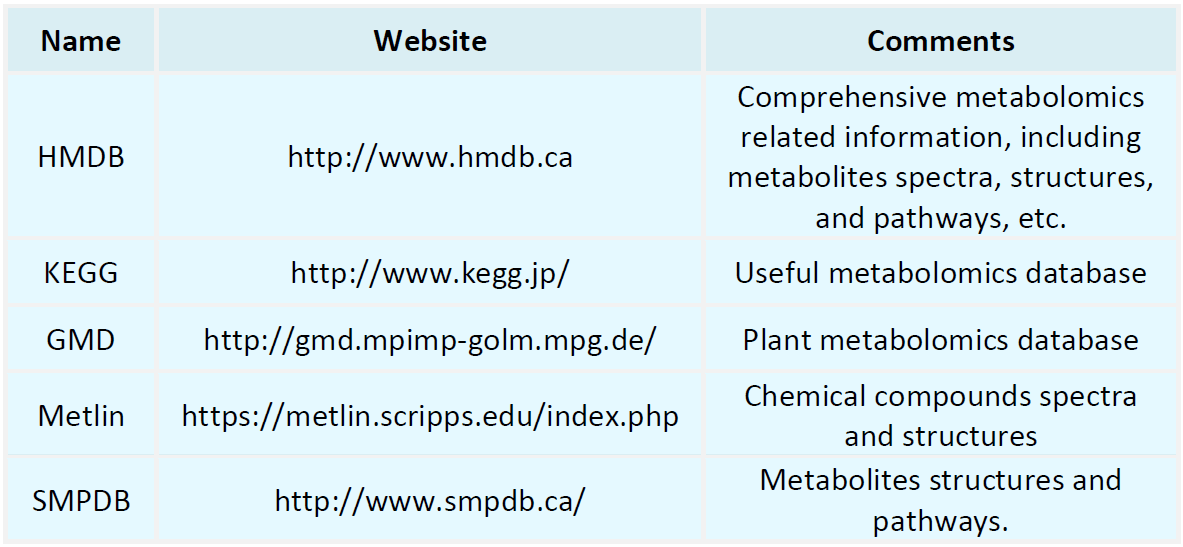
Metabolomics Databases
-
• Application Analysis of Single-Cell Sequencing Technology in Antibody Research
Antibodies are an essential component of the field of biopharmaceuticals, with extensive application prospects. However, traditional antibody research methods can only provide information at a holistic level, unable to reveal heterogeneity between different cells.
-
Proteins are one of the most basic functional molecules in living organisms, and their structure is closely related to their function. Understanding the structure of proteins is of great significance for revealing their functions, studying the mechanisms of diseases and developing drugs.
-
• Comprehensive Exploration of MRM Mass Spectrometry Detection Technology: From Theory to Practice
Biotechnological drug development has always been one of the crucial sectors of the pharmaceutical industry. With the continuous advancement of science and technology, drug development is also constantly innovating and developing. Among them, the MRM mass spectrometry detection technology, a type of quantitative mass spectrometry, plays an essential role in drug development.
-
• MRM and SRM Technology Advantages Analysis: Accurate Quantitative New Choices
The development of biopharmaceuticals requires accurate and reliable quantitative analysis methods to evaluate the efficacy and safety of drugs. Traditional drug analysis methods have some limitations, such as lack of sensitivity, selectivity, and accuracy. However, with the development of mass spectrometry technology, MRM (Multiple Reaction Monitoring) and SRM (Selective Reaction Monitoring) technologies have become new choices for precise quantification.
-
• Mechanism of SWATH-Based Protein Quantification
SWATH (Sequential Window Acquisition of All Theoretical Mass Spectra) is an advanced technique for protein quantification widely employed in proteomics research. Compared to traditional methods, SWATH offers high throughput, strong reproducibility, and comprehensive proteome coverage.
-
• Application of SWATH-Based Protein Quantification
SWATH (Sequential Window Acquisition of All Theoretical Fragment Ion Spectra) is a powerful, high-throughput mass spectrometry technique that allows comprehensive capture and analysis of all measurable proteins in a single experiment. Compared to traditional Data-Dependent Acquisition (DDA) methods, SWATH significantly enhances data coverage and reproducibility, making it a popular choice in proteomics.
-
• Workflow of SWATH-Based Protein Quantification
SWATH (Sequential Window Acquisition of All Theoretical Mass Spectra) is a state-of-the-art method widely employed in proteomics research for protein quantification. By capturing the complete set of possible peptide mass spectra data, SWATH enables highly accurate and reproducible quantitative analyses. The following is a detailed overview of the SWATH-based protein quantification workflow.
-
• Advantages and Disadvantages of SWATH-Based Protein Quantification
With the continuous advancement of proteomics research, quantitative proteomics techniques have become essential for studying protein functions and interactions. Among these techniques, SWATH (Sequential Window Acquisition of All Theoretical Mass Spectra)-based protein quantification has gained significant prominence due to its unique advantages. However, like any technology, it also has its limitations.
-
• Principle of SWATH-Based Protein Quantification
Quantitative protein analysis is vital for understanding the dynamic changes within biological systems. Traditional methods, such as label-based and label-free quantification, offer distinct advantages but often fall short in data depth and coverage.
-
• Application of MS-Based Relative Protein Quantification
Protein quantification is a pivotal technique in modern proteomics, with mass spectrometry-based methods becoming the preferred tools due to their high throughput, sensitivity, and specificity.
How to order?




