






Resources
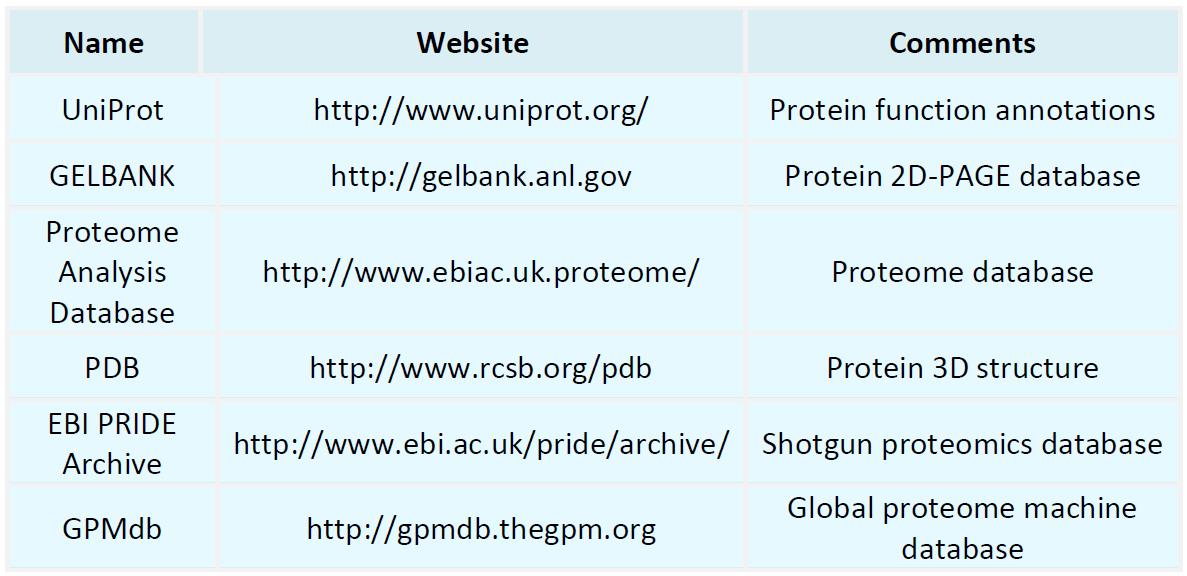
Proteomics Databases
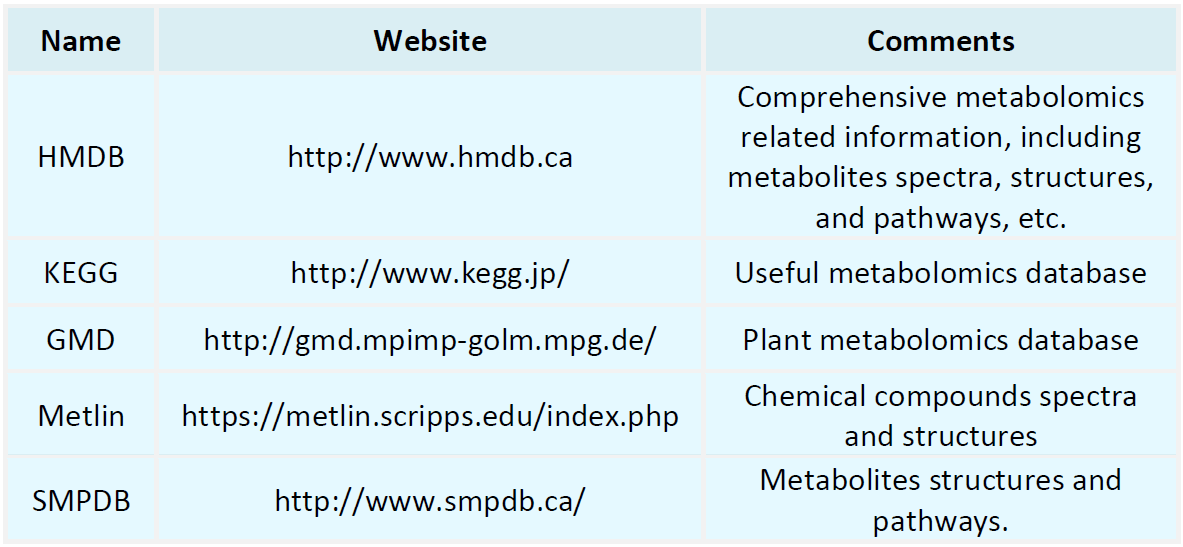
Metabolomics Databases
-
• Mechanism of Disulfide Bond Identification in Protein Analysis
Proteins, as one of the most important biomolecules in living organisms, have structures and functions that are closely related to their three-dimensional conformations. The folding and stability of these conformations are regulated by various covalent and non-covalent interactions, among which disulfide bonds (S-S bonds) play a critical role. Disulfide bond formation is crucial for the folding, structural stability, and functional regulation of proteins, especially in secreted and membrane-bound proteins.
-
• Application of Disulfide Bond Analysis in Proteomics
Proteins are essential molecules that perform nearly all cellular functions within living organisms. Disulfide bonds, a crucial covalent modification within proteins, play significant roles in protein folding, stability, and function. They are also involved in cellular signaling and enzyme activity regulation. With advancements in proteomics, disulfide bond analysis has emerged as a key area for studying the relationship between protein structure and function.
-
• Workflow of Protein Disulfide Bond Detection
Protein disulfide bonds are crucial chemical bonds that maintain the tertiary and quaternary structures of proteins, playing key roles in redox reactions. Detecting and analyzing these bonds is essential for understanding protein structure and function, elucidating disease mechanisms, and developing novel therapeutics.
-
• Advantages and Disadvantages of Disulfide Bond Mapping
Disulfide bonds are critical covalent linkages in proteins that play essential roles in maintaining their three-dimensional structure, stability, and function. Disulfide bond mapping is a technique used to determine the patterns of disulfide linkages in proteins, providing insights into protein folding, structure, and stability. This technique is widely utilized in structural biology, drug development, and protein engineering.
-
• Principle of Protein Disulfide Bond Quantification
Protein disulfide bonds, formed through the oxidation of thiol groups (-SH) of two cysteine residues, are covalent linkages that play a pivotal role in stabilizing the tertiary and quaternary structures of proteins. The dynamic formation and reduction of these bonds are critical for protein folding, structural integrity, and functional modulation, and are implicated in the pathogenesis of various diseases.
-
• Mechanism of Tyrosine Phosphorylation Detection via Mass Spectrometry
Tyrosine phosphorylation is a critical post-translational modification (PTM) involved in regulating various cellular processes such as signal transduction, proliferation, differentiation, and metabolic control. The dynamic nature of tyrosine phosphorylation modulates protein functions and protein-protein interactions, and dysregulation of this process is closely associated with numerous diseases, including cancer, autoimmune disorders, and neurodegenerative diseases.
-
• Application of Quantitative Tyrosine Phosphoproteomics in Cancer Research
Tyrosine phosphorylation is a critical post-translational modification that plays a significant role in cellular processes such as signal transduction, differentiation, proliferation, and apoptosis. Aberrant tyrosine phosphorylation is often associated with cancer initiation, progression, and metastasis. Thus, quantitative tyrosine phosphoproteomics has become a vital tool for studying cancer mechanisms and identifying potential biomarkers.
-
• Quantification of Ubiquitinated Proteins Using Orbitrap Fusion Mass Spectrometry
Ubiquitination is a fundamental biological process that regulates the degradation and stability of proteins via the covalent attachment of ubiquitin, a small regulatory protein. Abnormal ubiquitination is often implicated in various diseases, such as cancer and neurodegenerative disorders. Consequently, understanding ubiquitinated proteins and their modifications holds great significance in biomedical research.
-
• Detection of Ubiquitinated Proteins by Nano-LC-MS/MS
Ubiquitination is a key post-translational modification that regulates various cellular processes, such as protein degradation, activation, and subcellular localization, by covalently attaching the small protein ubiquitin to target proteins. Investigating the mechanisms of ubiquitination and identifying ubiquitinated proteins is crucial for understanding the pathogenesis of numerous diseases, including cancer and neurodegenerative disorders.
-
• Detection of Protein Oxidative Modifications Based on Orbitrap Fusion Lumos Mass Spectrometry
Protein oxidative modifications (OM) refer to the chemical modifications of protein amino acid residues induced by reactive oxygen species (ROS) and other reactive molecules under oxidative stress conditions. These modifications play significant roles in various biological processes, such as cell signaling, inflammation, and aging. Detecting protein oxidative modifications is crucial for understanding their functions in pathological and physiological processes.
How to order?




