






Whole-Cell Proteomics vs Mitochondrial Proteomics: Which Fits Your Research Goal?
Researchers studying mitochondrial biology often face an early design question: Should the experiment use whole-cell proteomics or mitochondrial proteomics?Both approaches can identify and quantify protein changes, but they examine the biological system at different levels. Whole-cell proteomics provides a broad view of cellular protein remodeling, whereas mitochondrial proteomics concentrates the analysis on mitochondrial-associated proteins and pathways.
Choosing the appropriate analytical level matters. A whole-cell dataset can preserve valuable system-wide context but may provide less focus on mitochondrial changes. A mitochondrial-focused dataset can resolve mitochondrial protein remodeling more directly but does not capture the complete cellular response.
Whole-Cell Proteomics and Mitochondrial Proteomics: What Is the Difference?
Whole-Cell Proteomics
Whole-cell proteomics analyzes proteins from whole-cell or tissue lysates without first isolating a specific organelle. It provides broad protein identification and quantitative information across multiple cellular compartments and pathways. This approach is particularly useful when the study asks questions such as:
- What is the global protein response to a treatment or perturbation?
- Which pathways differ between experimental groups?
- Which candidate proteins should be prioritized for further research?
- How do different genotypes, cell types, or experimental conditions differ at the proteome level?
Because the analysis retains broader cellular context, whole-cell proteomics is often suitable for discovery-oriented studies in which the major affected pathways are not yet known.
Mitochondrial Proteomics
Mitochondrial proteomics focuses on mitochondria or mitochondrial-enriched material. Reducing contributions from the broader cellular proteome creates a more focused view of mitochondrial-associated protein changes. This approach is particularly relevant when the hypothesis centers on processes such as oxidative phosphorylation, respiratory-chain organization, mitochondrial metabolism, redox regulation, or mitochondrial quality control. The additional mitochondrial focus also introduces another experimental consideration: mitochondrial isolation and preparation quality can influence the resulting proteomics dataset.
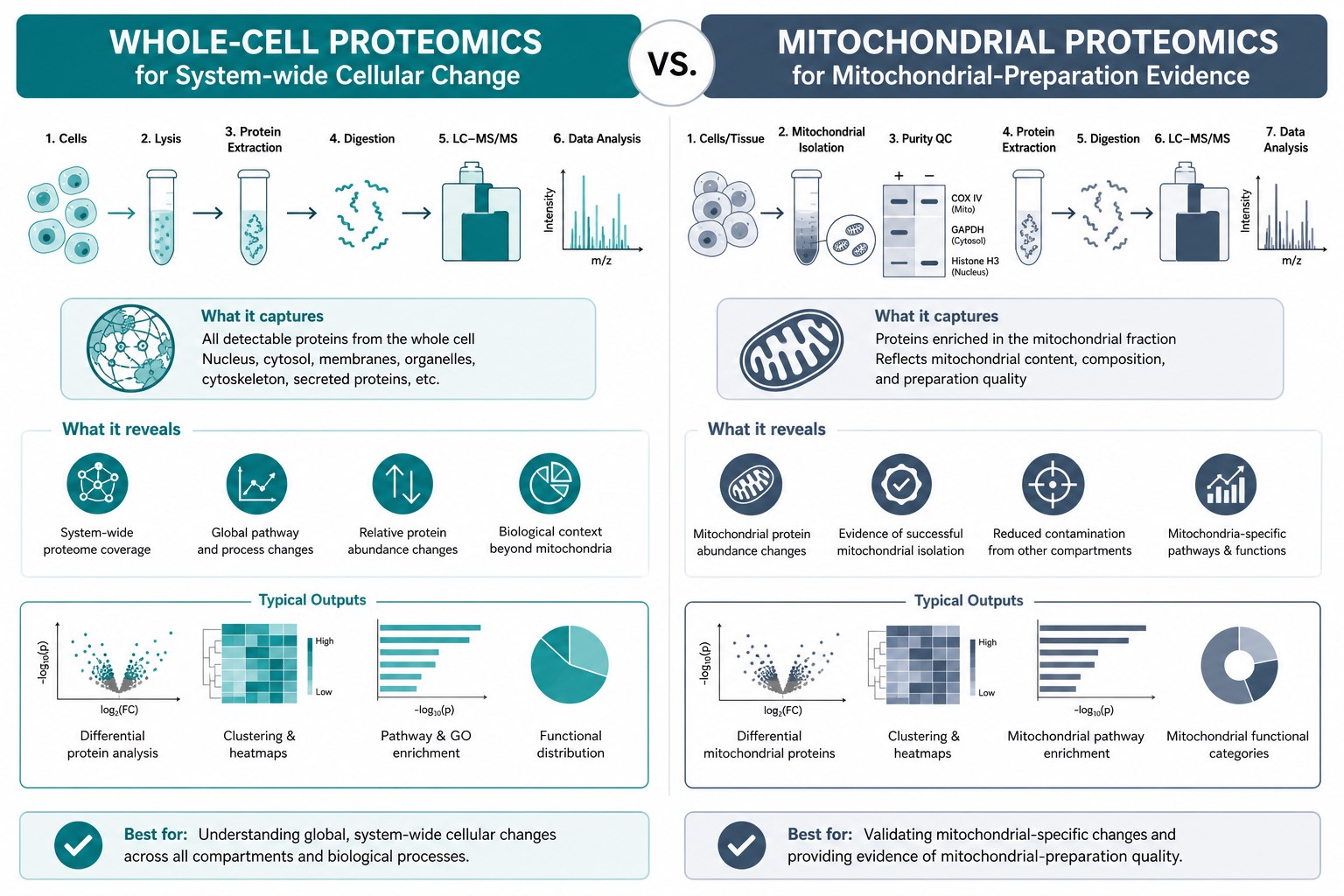
Figure 1. Match the method to the claim: system-wide cellular change versus mitochondrial-preparation evidence.
Side-by-Side Comparison
|
Dimension |
Whole-cell proteomics |
Mitochondrial proteomics |
|---|---|---|
|
Core question |
What changed across the cell proteome |
What changed in the mitochondrial preparation |
|
Best-fit goal |
Broad discovery; multi-compartment phenotypes |
Mitochondria-centered remodeling or candidate ranking |
|
Main advantage |
Wider cellular context |
Higher focus on mitochondrial-associated proteins |
|
Main limitation |
Mitochondrial signals may be diluted |
Broader cellular context is reduced |
|
Sample logic |
Cells or tissues processed for total proteome |
Cells, tissue, or extracted mitochondria planned for mito-focused analysis |
|
Weak fit |
Claims that require organelle-resolved evidence |
Claims that require whole-cell system mapping |
Neither approach is inherently better. The key difference is the biological level at which the study needs to resolve protein changes.
Not sure which analytical level fits your project? MtoZ Biolabs can help evaluate the research objective, available sample type, and mitochondrial preparation status before the study design is finalized. Contact us for an early project assessment to determine whether a broad whole-cell view or a mitochondrial-focused approach is more appropriate for the question being asked.
When Is Whole-Cell Proteomics the Better Choice?
Whole-cell proteomics is generally more appropriate when the study aims to understand a broad cellular response. A drug treatment, genetic perturbation, or disease model may simultaneously affect signaling, metabolism, stress responses, protein synthesis, and mitochondrial pathways. If the objective is to understand how these systems change together, restricting the analysis to mitochondria may remove useful biological context.
Whole-cell proteomics is particularly suitable when:
- the major affected pathways are not known in advance;
- the study is intended as a broad discovery screen;
- multiple cellular compartments are relevant;
- mitochondrial changes represent only one part of the hypothesis;
- global protein differences are the primary endpoint.
A whole-cell dataset may also identify mitochondrial pathways as an important part of the response. That finding can provide a rationale for a more focused mitochondrial investigation.
When Mitochondrial Proteomics Fits Better?
Mitochondrial proteomics becomes more relevant when mitochondrial protein changes are already central to the biological question.
Typical research questions include:
- Which mitochondrial proteins differ between experimental groups?
- Are oxidative phosphorylation or respiratory-chain proteins coordinately altered?
- Does a perturbation affect mitochondrial metabolic enzymes?
- Are mitochondrial protein changes associated with oxidative stress or quality-control processes?
- Which protein-level changes accompany an observed mitochondrial phenotype?
In these situations, mitochondrial enrichment brings the analytical material closer to the biological question. The main value should not simply be described as “detecting more proteins.” More importantly, mitochondrial-focused proteomics provides a more specific biological context for interpreting mitochondrial-associated protein changes.
This focus also makes upstream preparation important. Differences in mitochondrial recovery, purity, contamination, or preparation consistency can influence protein coverage and quantitative comparison. For more detail, see How Mitochondrial Isolation Quality Affects Proteomics Results.
A Layered Strategy: From Global Screening to Mitochondrial Focus
Whole-cell and mitochondrial proteomics do not always need to be treated as alternative endpoints. In some projects, they can be used sequentially to move from broad discovery to a more focused mitochondrial question.
A practical layered strategy is:
1. Start with Whole-Cell Proteomics for Global Screening
Whole-cell proteomics can first identify broad protein and pathway changes without assuming that mitochondria are the only affected cellular compartment.
2. Identify Mitochondrial Pathways or Candidate Signals
The resulting dataset may reveal coordinated changes involving oxidative phosphorylation, mitochondrial metabolism, redox regulation, or other mitochondrial processes.
3. Follow with Mitochondrial Proteomics
A subsequent mitochondrial-focused experiment can examine mitochondrial protein remodeling in greater detail and place those changes in a more specific mitochondrial context.
This approach combines the breadth of whole-cell profiling with the focus of mitochondrial proteomics. It can be useful when mitochondrial involvement is suspected but has not yet been established strongly enough to justify beginning with organelle-focused analysis.
However, the sequence is not required for every project. If the hypothesis is already clearly centered on mitochondrial proteins, starting directly with mitochondrial proteomics may be more appropriate. When project resources are limited, the first priority should be the analytical level that most directly answers the primary biological question. Additional analysis can then be considered if the initial results create a clear reason for follow-up.
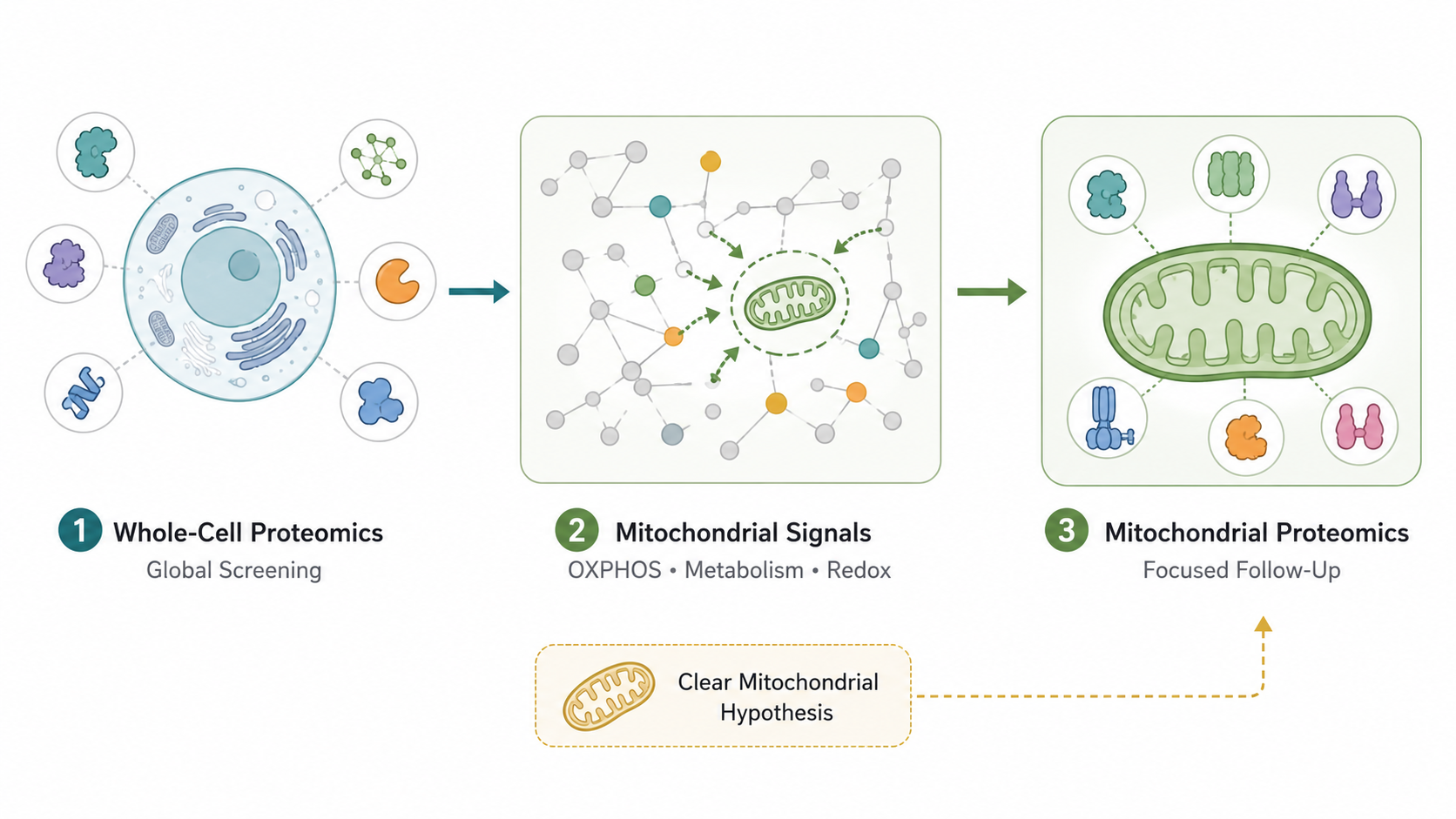
Figure 2. Layered strategy from whole-cell proteomics to mitochondrial proteomics.
A Practical Decision Framework
Four questions can help determine which analytical level fits the study.
1. What Is the Primary Research Goal?
Choose whole-cell proteomics when the objective is broad cellular discovery.
Consider mitochondrial proteomics when mitochondrial protein remodeling is central to the hypothesis.
2. How Important Is Broader Cellular Context?
Whole-cell proteomics preserves information across multiple cellular compartments.
Mitochondrial proteomics intentionally narrows the context to obtain a more focused view of mitochondrial-associated changes.
3. What Material Is Available?
Cells and tissues may support either strategy depending on the study design. If isolated mitochondria are already available, a mitochondrial-focused project may provide a direct analytical starting point when the material is suitable for proteomic analysis.
4. What Evidence Does the Study Need?
If the desired outcome is a broad map of cellular protein and pathway changes, whole-cell proteomics is usually more appropriate.
If the desired outcome is a focused comparison of mitochondrial proteins and pathways, mitochondrial proteomics may be the better fit.
Related Services
Teams comparing cellular and organelle-focused options can review the services below while the research goal is still open.
Mitochondrial Proteomics Service
The main route for mitochondrial proteomics when the claim depends on mitochondrial-preparation protein evidence.
A whole-cell-oriented path when the research goal is broader cellular proteome change rather than mitochondria-only focus.
Subcellular Proteomics Service
Use this when the question needs subcellular resolution beyond a single mitochondrial design, or across multiple fractions.
Frequently Asked Questions
1. Which fits better for a mitochondria-centered research goal?
Mitochondrial proteomics, because it analyzes the mitochondrial preparation directly instead of relying on diluted mitochondrial signals in a whole-cell background.
2. When should I start with whole-cell proteomics?
When the phenotype may involve many compartments or you still need a broad map before committing to organelle enrichment.
3. Can whole-cell proteomics detect mitochondrial proteins?
Yes. Mitochondrial proteins can be identified in whole-cell proteomics datasets, but they are analyzed within the broader cellular proteome. Whether this provides sufficient mitochondrial information depends on the research question.
4. Does mitochondrial proteomics prove exclusive mitochondrial localization?
No. It reports proteins associated with the mitochondrial preparation. Exclusive residence still needs orthogonal evidence when critical.
5. Are all proteins detected in a mitochondrial preparation mitochondrial proteins?
Not necessarily. Mitochondrial-enriched preparations may contain proteins from other cellular compartments. Detection in an enriched fraction alone does not establish exclusive mitochondrial localization.
Conclusion
Whole-cell proteomics and mitochondrial proteomics address different analytical needs. Whole-cell proteomics provides a broad view of cellular protein changes, while mitochondrial proteomics focuses on mitochondrial proteins and pathways when mitochondrial remodeling is central to the research question. The two approaches can also be combined when a study moves from broad discovery to more focused mitochondrial investigation.
For a free project consultation, send us your research objective, sample type, available sample amount, mitochondrial isolation or preparation status, experimental groups or comparison design, and the main protein-level questions you want to address. MtoZ Biolabs can review this information and help determine whether whole-cell proteomics, mitochondrial proteomics, or a combined strategy is more suitable for your study.
How to order?




