






Untargeted Metabolomics and Lipidomics Services: From Broad Profiling to Candidate Annotation
Untargeted metabolomics and lipidomics detect molecular features that can be extracted, separated, ionized, and measured under defined analytical conditions. They do not capture every metabolite or lipid present in a sample. A single compound may generate multiple signals, while other molecules may remain undetected because of low abundance, instability, matrix effects, or limited compatibility with the selected analytical conditions.
The value of untargeted profiling therefore depends on more than the number of detected features. A clearly defined biological comparison, consistent sample handling, appropriate data processing, and evidence-based annotation are required to convert analytical signals into interpretable candidates. Feature detection, candidate annotation, analytical confirmation, and biological validation should be treated as distinct stages with different levels of evidentiary strength.
What Broad Profiling Actually Measures
1. Detectable Features Rather Than Complete Molecular Coverage
One compound may generate several features through adducts, isotopes, fragments, or charge states, while other compounds remain undetected because of poor extraction, weak ionization, instability, low abundance, or matrix suppression.
“Untargeted” means that acquisition is not restricted to a fixed target list. It does not imply unrestricted chemical coverage or equal sensitivity across molecular classes.
2. Metabolite and Lipid Features Represent Different Chemical Spaces
(1) Metabolic Feature Diversity
Untargeted metabolomics addresses small molecules with wide differences in polarity, acidity, stability, and abundance. Amino acids, organic acids, sugars, nucleotides, and other intermediates do not respond uniformly to one extraction or separation condition. The observed chemical space reflects the compatibility between the sample matrix and analytical conditions.
(2) Lipid Class and Molecular-Species Diversity
Untargeted lipidomics examines lipid classes and molecular species that vary in headgroup, chain length, unsaturation, adduct behavior, and fragmentation. Evidence may support a class assignment, sum composition, or more specific molecular-species candidate.
A class-level change does not imply uniform behavior among all member species, and a molecular formula may not distinguish positional or stereochemical isomers.
3. Untargeted Analysis Is Primarily Comparative
Broad profiling gains scientific value from defined comparisons such as treatment versus control, different phenotypes, time points, or experimental conditions. A single sample can yield a descriptive feature list, but it offers limited evidence for biological prioritization without a comparison framework. Study design should therefore begin with the biological contrast that the molecular data are expected to test.
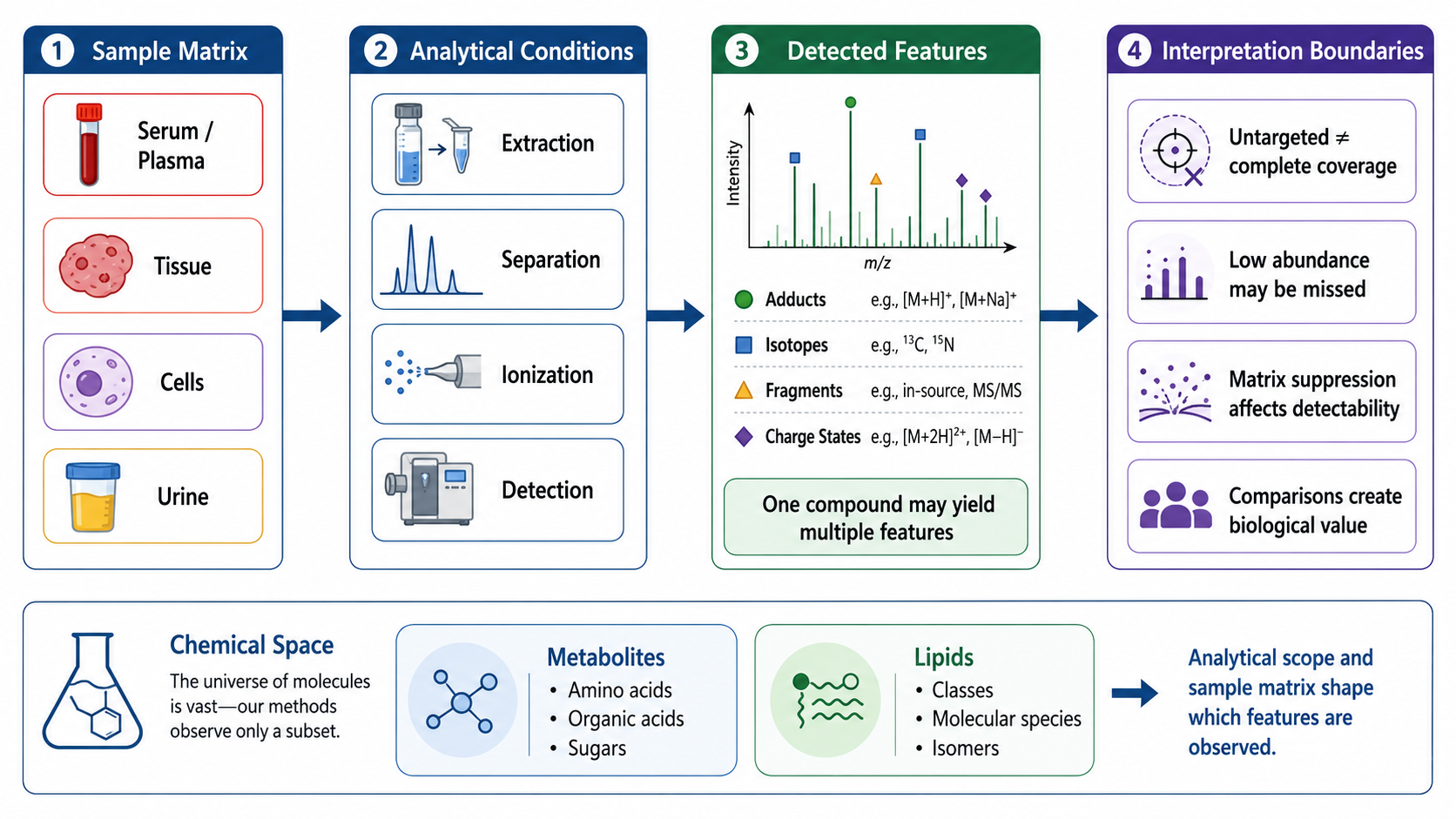
Figure 1. What Untargeted Profiling Measures Under Defined Conditions
How Samples and Study Design Shape the Result
1. Sample Matrix Influences Extraction and Detectability
(1) Matrix Composition
Serum, plasma, tissue, cultured cells, urine, culture supernatant, and other matrices differ in proteins, salts, endogenous enzymes, lipid load, and concentration range. These properties affect extraction recovery, chromatography, ion suppression, and background interference.
(2) Molecular Stability and Abundance
Metabolites and lipids vary in stability and endogenous concentration. Some degrade during handling, while low-abundance compounds may be difficult to distinguish from noise. Highly abundant matrix components can also suppress weaker signals.
Absence from the feature table may reflect biological absence, analytical loss, data filtering, or insufficient signal quality.
2. Preanalytical Variation Can Resemble Biological Change
Collection time, processing delay, temperature fluctuation, freeze-thaw history, hemolysis, tissue ischemia, culture conditions, and prior preparation can alter molecular profiles before measurement. Systematic handling differences between groups may therefore resemble biological effects.
Consistent procedures, documented preparation history, and balanced processing reduce this risk. Quality-control results reveal analytical instability or unusual samples, but they cannot repair a design in which sample condition is confounded with biological group.
3. Groups, Replicates, and Batches Define Comparative Value
(1) Biological Groups and Controls
Groups and controls should correspond directly to the primary research question. Biological replicates capture variation among independent units. Technical replicates estimate measurement variability and cannot replace inadequate biological replication.
(2) Biological Replication and Batch Balance
Preparation and measurement batches should be distributed across biological groups rather than aligned with them. Randomized order and balanced allocation reduce the risk that technical drift will be mistaken for a group effect.
Statistical adjustment may address partial batch variation, but it cannot reliably separate biological and technical effects when both are completely confounded.
From Molecular Features to Candidate Annotation
1. Feature Detection and Alignment Build the Comparison Matrix
Raw data are converted into a comparison matrix through peak detection, noise filtering, retention-time alignment, feature grouping, normalization, and quality-based filtering. Missing-value handling and signal thresholds also influence which features remain available for statistical analysis.
2. Annotation Uses Multiple Forms of Evidence
(1) Precursor and Isotope Evidence
Accurate precursor mass, isotope pattern, and plausible elemental composition can narrow candidate structures. Many metabolites and lipids nevertheless share similar or identical masses, so mass agreement alone supports a candidate assignment rather than confirmed identification.
(2) Fragmentation and Library Evidence
Fragmentation patterns may be compared with public spectral libraries or structural databases. A close match strengthens a candidate annotation, but confidence still depends on spectrum quality, acquisition conditions, library coverage, and unresolved isomers.
(3) Retention and Reference Evidence
Retention behavior and compound-matched standards can strengthen molecular assignment in a dedicated confirmation step. Agreement in retention and fragmentation provides stronger analytical support than database annotation alone.
Such evidence should not be assumed for every candidate generated through untargeted analysis.
3. Annotation Confidence Is Feature-Specific
Features in one dataset may remain unknown, receive a molecular-formula candidate, support a chemical-class assignment, or reach a more specific structural annotation. Result tables should preserve feature-specific evidence and annotation levels so that statistical importance can be considered together with identity confidence.
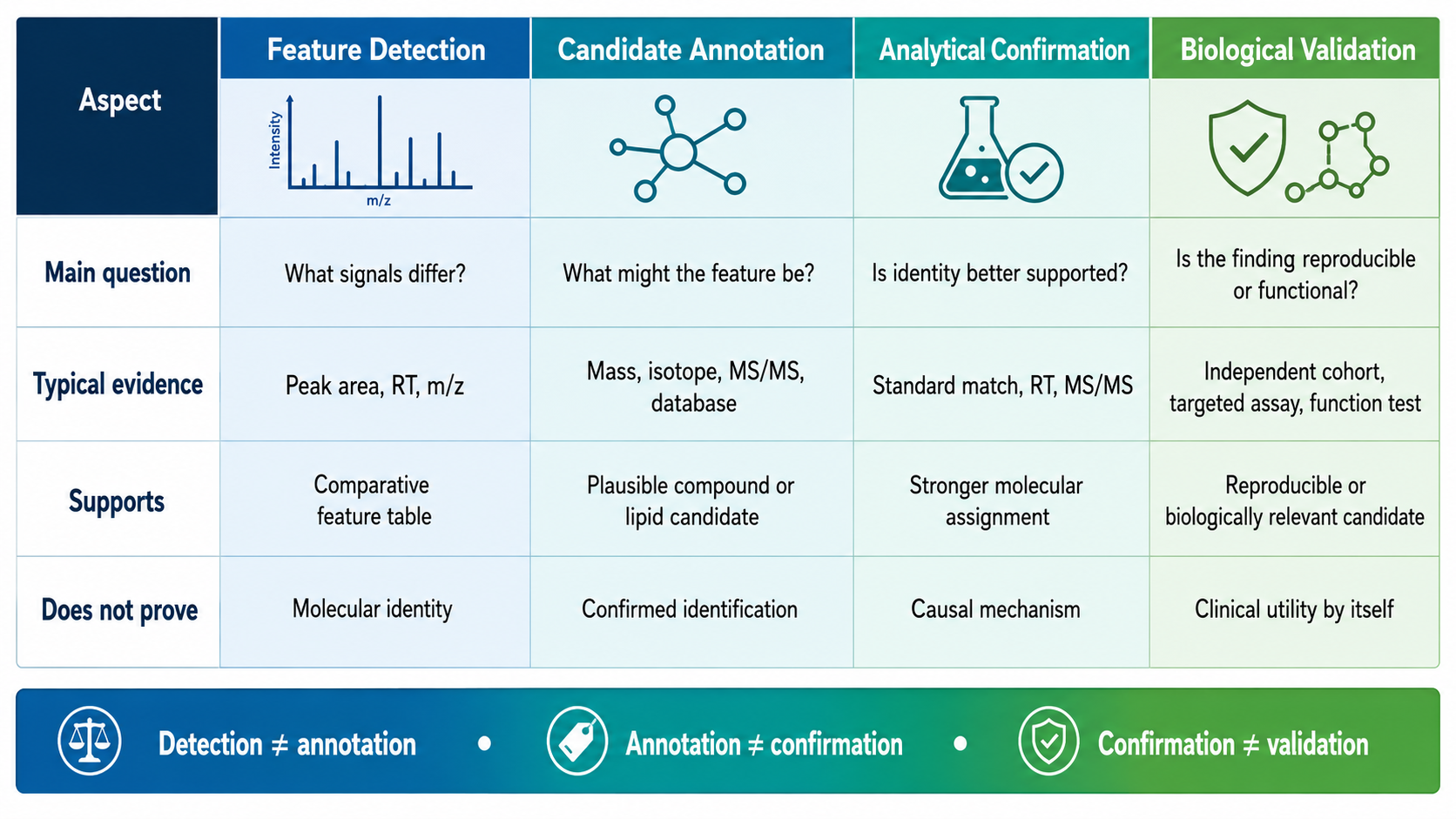
Figure 2. Evidence Levels From Feature Detection to Validation
Interpreting Untargeted Results
1. Statistical Differences Support Candidate Prioritization
(1) Group Patterns and Differential Features
Unsupervised analyses summarize major variation without group labels, while supervised models examine class-related separation and require appropriate validation. Feature-level comparisons estimate effect size and statistical evidence for defined contrasts.
No single plot or statistic is sufficient for candidate selection.
(2) Candidate Ranking
Candidate priority may combine statistical stability, effect size, signal abundance, annotation confidence, replicate consistency, and relevance to the hypothesis. A low P value or high model contribution does not by itself establish biological importance.
2. Pathway Context Does Not Establish Mechanism
Pathway and network analyses place annotated candidates into biochemical context. Their interpretation depends on annotation quality, database coverage, pathway definitions, and the background set used for enrichment.
An enriched pathway indicates statistical overlap with a curated process. It does not independently prove pathway activity, causal direction, biological mechanism, or biomarker validity.
3. Candidate Annotation Requires Appropriate Follow-Up
(1) Focused Analytical Follow-Up
Important candidates may proceed to focused measurement when identity confidence, abundance, standard availability, and research relevance justify further analysis. Targeted detection or absolute quantification addresses a narrower question than broad profiling.
Each candidate requires separate feasibility and identity review; focused measurement does not retroactively confirm every discovery feature.
(2) Biological Validation
Analytical confirmation establishes stronger evidence for molecular identity or concentration under a defined method. Biological validation examines reproducibility, functional relevance, or association in independent experiments or sample sets.
Even a well-confirmed molecular change does not independently demonstrate causation, mechanism, clinical utility, or a validated biomarker role.
Untargeted profiling is most informative when detectable features, comparative design, annotation confidence, and follow-up requirements are interpreted as a connected evidence chain. MtoZ Biolabs evaluates untargeted metabolomics and untargeted lipidomics projects based on the research objective, sample matrix, group design, preparation history, and expected result, with candidate annotation interpreted according to the available database and spectral evidence. Submit your inquiry below for project evaluation.
MtoZ Biolabs, an integrated chromatography and mass spectrometry (MS) services provider.
Related Services
How to order?




