






Serum, Plasma, or CSF Proteomics: Which Analysis Strategy Fits Your Study?
Match the analysis strategy to the decision your study must support. Choose an identification-focused path when the first need is a protein inventory without a formal group contrast. Choose a quantitative proteomics path when disease, treatment, or time comparisons require abundance estimates across samples. Add differential screening and pathway views when the project must rank candidates and organize biology, not only list detected proteins.
For serum, plasma, or CSF proteomics, the strategy choice comes after the matrix and comparison arms are locked. DDA and DIA are both valid directions; the better fit depends on cohort size, contrast structure, and whether the project needs flexible sample addition or broader cross-sample consistency. Confirm the analysis package with the laboratory before samples are committed.
Why Analysis Strategy Follows the Research Claim
Many serum/plasma/CSF proteomics projects already have a biological goal but still debate method labels. A team may ask for "full proteomics" when it only needs a first inventory. Another team may request identification only when the real need is a disease-versus-control contrast. A third team may plan pathway figures before deciding whether quantification should be DDA- or DIA-oriented.
Serum/plasma/CSF protein analysis supports different decisions at different depths. Identification-focused analysis generates a reportable protein or protein-group list under the selected workflow. Quantitative proteomics adds abundance comparison across matched samples or groups. Differential screening and pathway annotation help prioritize candidates after quantification is defined. Those layers are related, but they are not the same project request.
Strategy selection should therefore start from one sentence about the decision the dataset must support, then move to acquisition mode and deliverables for serum/plasma/CSF proteomics.
Analysis Strategy Comparison
Use the table below to compare common strategy paths for biofluid proteomics. Exact workflow details are confirmed with the laboratory for the locked matrix and species.
|
Strategy layer |
Primary question |
Typical deliverables |
Best fit when |
Main limit |
|---|---|---|---|---|
|
Identification-focused analysis |
Which proteins are detected? |
Protein identification tables, peptide evidence, acquisition report |
Pilot inventory, method setup, or first look at a new cohort |
No formal group contrast unless quantification is added |
|
Quantitative comparison |
How do protein abundances differ across samples? |
Quantitative matrices, sample-wise abundance estimates |
Disease, treatment, or time comparisons across matched arms |
Requires matched handling and clear group design |
|
Differential screening |
Which proteins change between defined groups? |
Differential protein lists, fold-change and filter outputs |
Candidate ranking for biomarker or mechanism follow-up |
Depends on replicate structure and quantification quality |
|
Pathway-oriented interpretation |
How do candidates map to function and networks? |
GO, KEGG, COG, PPI, and Reactome where species support allows |
Functional context and hypothesis generation after differential analysis |
Pathway views organize candidates; they do not prove causality |
|
DDA-oriented workflow |
Discovery-style identification and quantification |
DDA-based identification and quantification outputs processed with tools such as MaxQuant or Proteome Discoverer |
Many discovery setups with flexible sample addition |
Cross-run consistency needs careful design |
|
DIA-oriented workflow |
Broader comparative quantification across cohorts |
DIA-based quantification outputs processed with tools such as Spectronaut or DIA-NN |
Larger sample series needing consistent quantification |
Cohort and contrast should be defined before acquisition |
Read the table as a planning stack, not a menu to order everything at once. Projects with formal group contrasts usually require quantification and differential analysis, whereas inventory-focused projects may need identification alone.
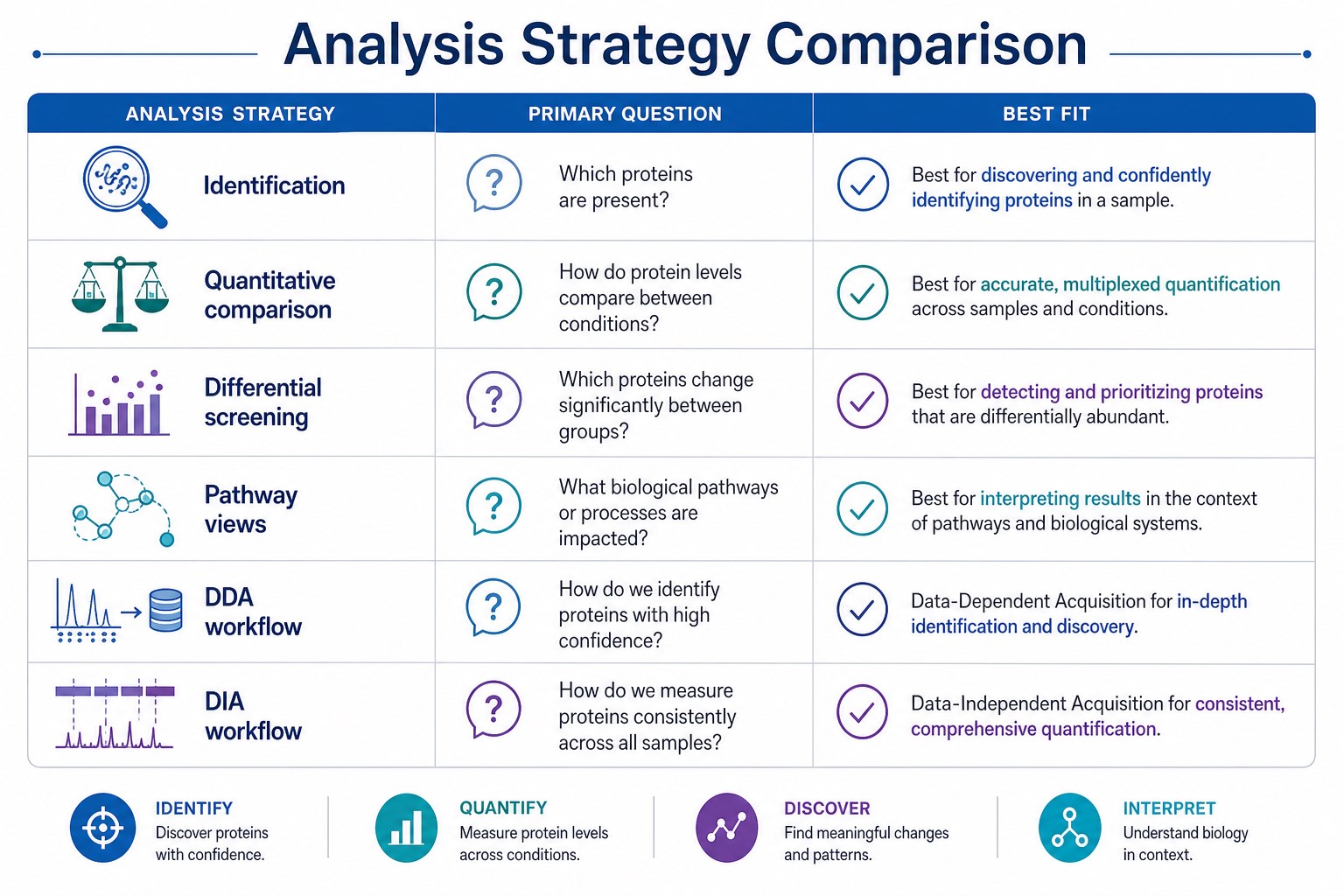
Figure 1. Identification, quantification, differential screening, and pathway views answer different study decisions.
Identification-Focused vs Quantitative Proteomics
Identification-focused analysis
This path fits early inventory questions. It helps teams learn which proteins are detectable in serum, plasma, or CSF under the current matrix and handling conditions.
It is weaker as the sole path when the grant or manuscript claim depends on group comparison. Detection alone does not show that a protein increases in disease plasma or decreases after treatment in CSF.
Quantitative proteomics
This path fits contrast-driven studies. It supports comparisons across disease and control arms, treatment windows, or longitudinal time points when sample handling is matched.
Quantitative design should be chosen together with cohort structure. A small, precious CSF set needs a different quantification conversation than a larger plasma biobank.
When both layers are needed
Quantitative proteomics usually generates both protein-identification evidence and cross-sample abundance estimates within the same analytical workflow. State whether the project needs only a protein list or a formal quantitative contrast so the report and statistical design match the claim.
DDA vs DIA: Which Direction Fits the Cohort?
DDA and DIA are acquisition directions, not separate biological questions. Both can support serum/plasma/CSF proteomics when sample design is matched.
DDA supports flexible discovery and protein identification, with quantification performance depending on acquisition depth and cross-run consistency.
DIA often improves data completeness and quantitative consistency across matched samples, but it is not limited to large cohorts.
Software version details are not required at planning stage. What matters is agreeing on DDA or DIA direction and the group contrast quantification must support.
Choose DDA or DIA according to the required discovery depth, quantitative completeness, cohort design, and platform capability.
Label-Free, DIA, and TMT in Biofluid Quantification Design
Within quantitative proteomics, three common design paths appear in biofluid projects:
Label-free quantification analyzes samples individually and compares abundances after processing. It fits pilots, evolving cohorts, and projects that may add samples later.
DIA quantification emphasizes consistent quantification across samples in a defined series. It fits larger comparative cohorts when cross-sample consistency matters.
TMT fits predefined multiplex comparisons when sample allocation, reference channels, and cross-batch normalization can be planned before labeling.
The better choice depends on whether flexibility, cohort consistency, or multiplex batch comparison is the priority. Matrix choice still matters. Plasma anticoagulant consistency and CSF contamination control remain upstream of any quantification chemistry.
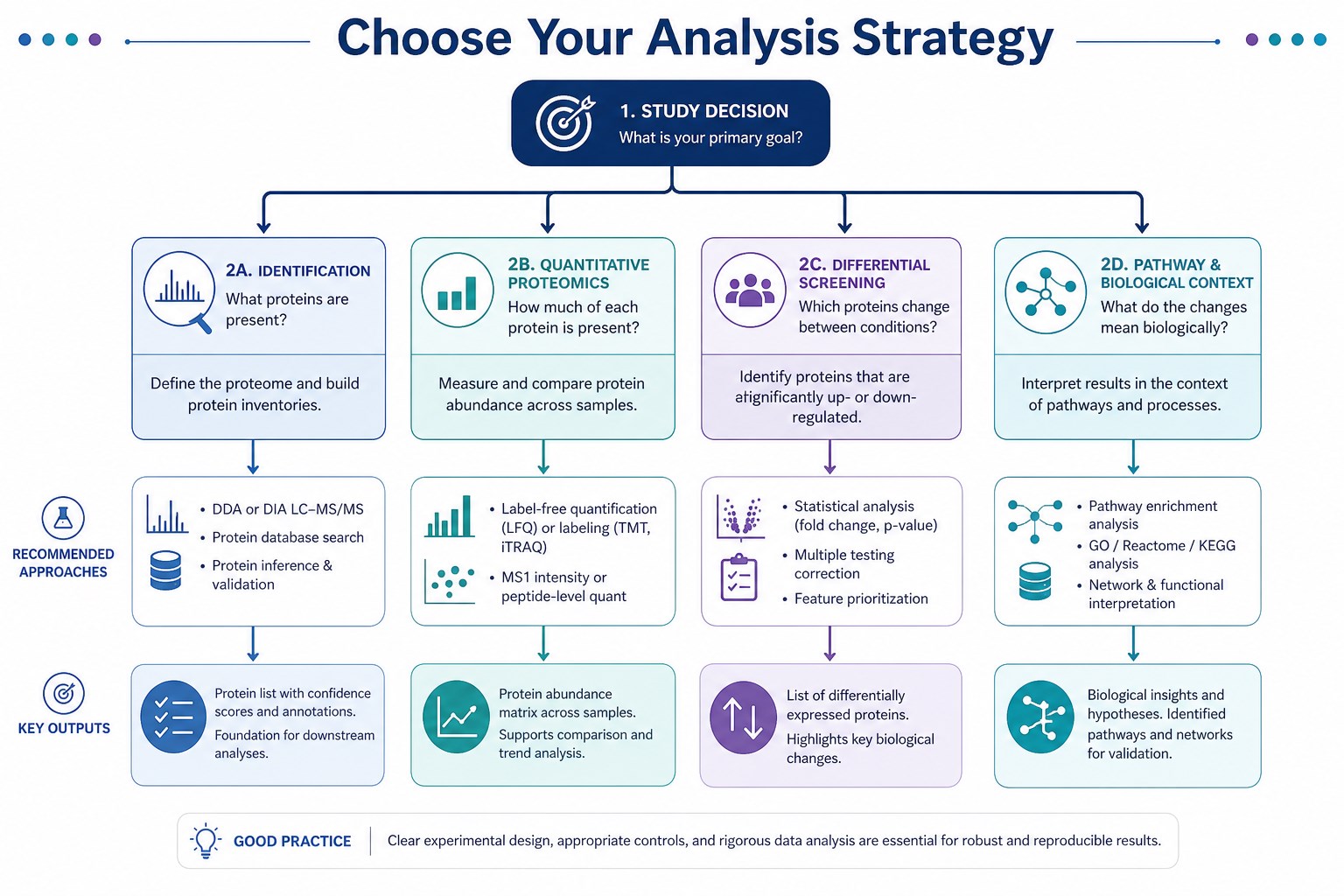
Figure 2. Start from the study decision, then choose identification depth, quantification mode, and pathway deliverables.
Decision Guide by Study Goal
Choose identification-focused analysis when
The project needs a first detectability readout. Sample groups are not yet ready for formal contrast. The team is testing whether serum, plasma, or CSF proteomics is feasible on the current material.
Choose quantitative proteomics when
The primary claim compares arms, time points, or treatments. Abundance differences matter as much as detection. Replicate or subject structure is defined enough to support comparison.
Add differential screening when
The project must rank proteins that change between predefined groups. Candidate selection for follow-up is part of the current phase.
Add pathway-oriented outputs when
The team needs GO, KEGG, COG, PPI, or Reactome views to organize candidates. Confirm species support before assuming Reactome will be included. For plasma or serum projects, Reactome is available for supported species such as Homo sapiens, Mus musculus, and Rattus norvegicus among others in the supported set.
Pause and clarify when
The request says "identification only" but the scientific question is a disease contrast. The cohort is still changing but TMT batch design is already being discussed. Pathway figures are expected without a defined quantification contrast.
Matrix Notes That Affect Strategy Choice
Serum, plasma, and CSF can all enter proteomics analysis, but they do not require the same strategy conversation.
Serum and plasma usually support circulating comparison designs with label-free, DIA, or TMT quantification when handling is matched. Plasma projects should prefer EDTA or citrate and avoid heparin.
CSF strategy should account for low protein input, limited volume, blood contamination, and the need for a clearly defined CNS-proximal research question.
CSF is not a substitute matrix when the claim is systemic circulation. Blood is not a substitute when the claim is CNS-proximal.
For projects that need help mapping a research goal to identification, quantification, or differential serum/plasma/CSF proteomics, MtoZ Biolabs can review strategy fit before the analysis batch is locked.
Related Services
Teams at the analysis-strategy stage can review the service roles below with MtoZ Biolabs before confirming identification, quantification, and pathway deliverables.
Complementary: Blood/Plasma/Serum Proteomics Solutions. Role: align circulating biofluid projects with the right identification or quantitative proteomics package.
Complementary: High-Depth Blood Proteomics Service. Role: use a depth-focused blood proteomics path when low-abundance detection is part of the quantitative strategy.
Alternative: Cerebrospinal Fluid (CSF) Protein Quantitative Proteomics Solutions. Role: choose a CSF quantitative path when the primary claim is CNS-proximal rather than circulating blood profiling.
Planning Scenarios
Pilot biobank with undefined group structure
Start with identification-focused analysis or flexible label-free quantification. Add formal differential screening after arms stabilize.
Disease versus control plasma cohort with fixed arms
Plan quantitative proteomics with DDA or DIA direction agreed up front. Add differential lists and supported pathway views in the same phase if candidate ranking is required.
Small CSF set with one primary contrast
Avoid dividing limited CSF material across multiple preprocessing or acquisition branches. Prioritize one primary comparison, then select appropriate downstream analyses from the resulting dataset.
Biomarker study expecting pathway figures
Ensure quantification and differential screening are part of the strategy. Pathway outputs organize candidates; they do not replace group comparison design.
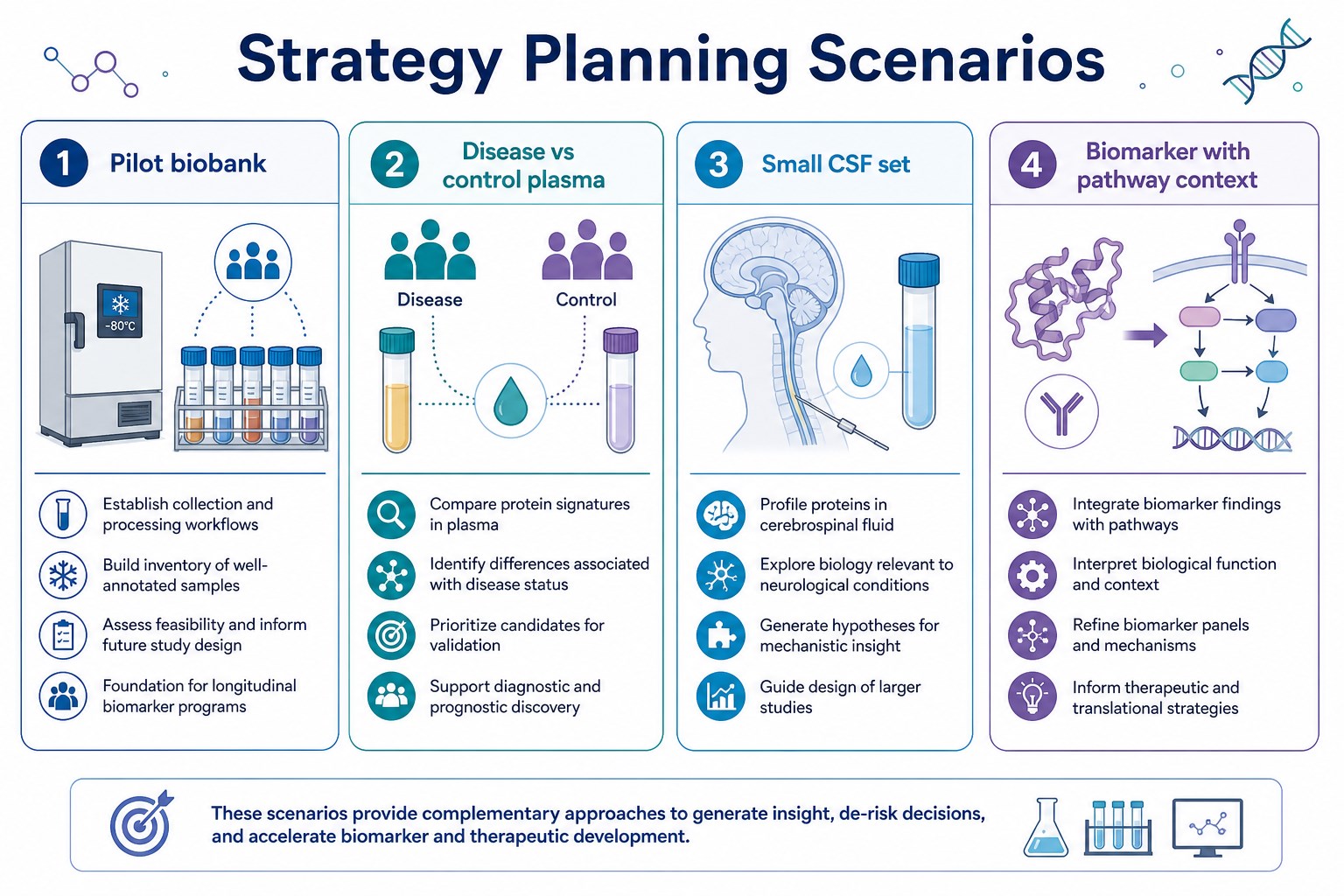
Figure 3. Strategy mistakes usually come from mismatched deliverables, not from choosing serum instead of plasma.
Frequently Asked Questions
1. Which analysis strategy fits a serum, plasma, or CSF proteomics study?
Fit the strategy to the decision. Use identification-focused analysis for inventory questions. Use quantitative proteomics for group contrasts. Add differential and pathway layers when ranking and mechanism organization are required.
2. Is protein identification enough for a biomarker project?
Usually not. Biomarker claims typically need quantitative comparison and differential screening across defined groups.
3. Should the project use DDA or DIA?
Choose DDA or DIA based on cohort structure and comparison needs, not platform preference alone. Confirm the direction with the laboratory for the locked matrix.
4. Can pathway analysis replace quantification design?
No. GO, KEGG, COG, PPI, and Reactome views organize candidates after quantification and contrast design are defined.
5. Does CSF require the same strategy as plasma?
CSF can use the same analysis layers, but limited volume often forces a narrower quantitative question. Matrix choice should still match the biological claim in any serum/plasma/CSF proteomics design.
Conclusion
Serum, plasma, or CSF proteomics strategy selection starts with the study decision, not with method labels. Identification-focused analysis fits inventory needs. Quantitative proteomics fits group contrasts. Differential screening and pathway views fit candidate prioritization and functional interpretation
The practical next step is to write one primary claim, confirm matrix and arms, then choose DDA or DIA direction and quantification design with the laboratory. Teams planning serum/plasma/CSF protein analysis can contact MtoZ Biolabs to review which strategy fits the current research goal and expected report depth.
How to order?




