






Resources
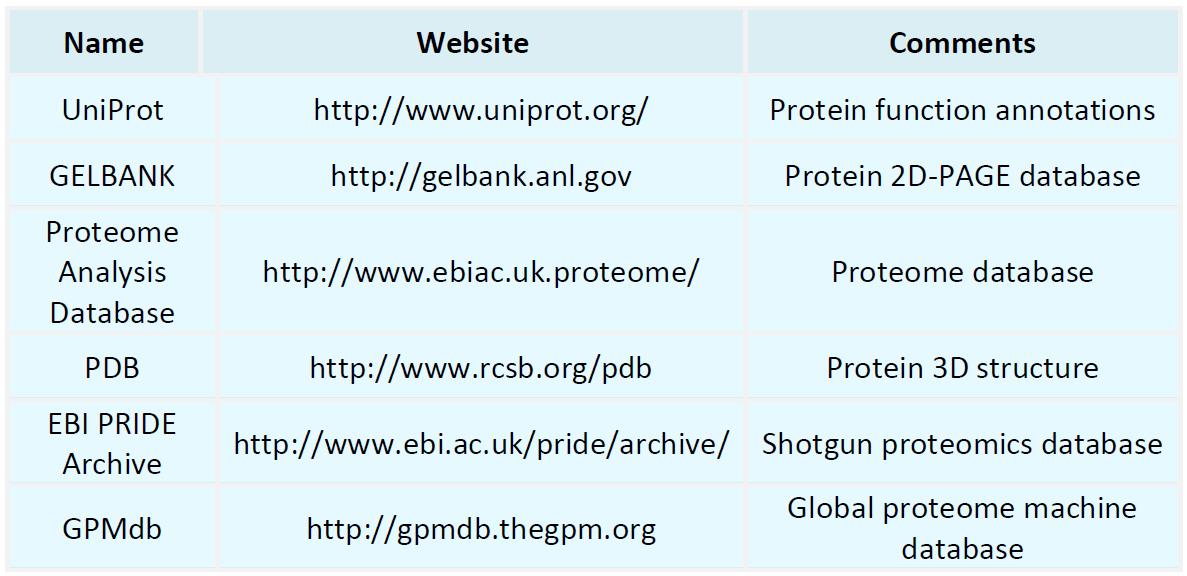
Proteomics Databases
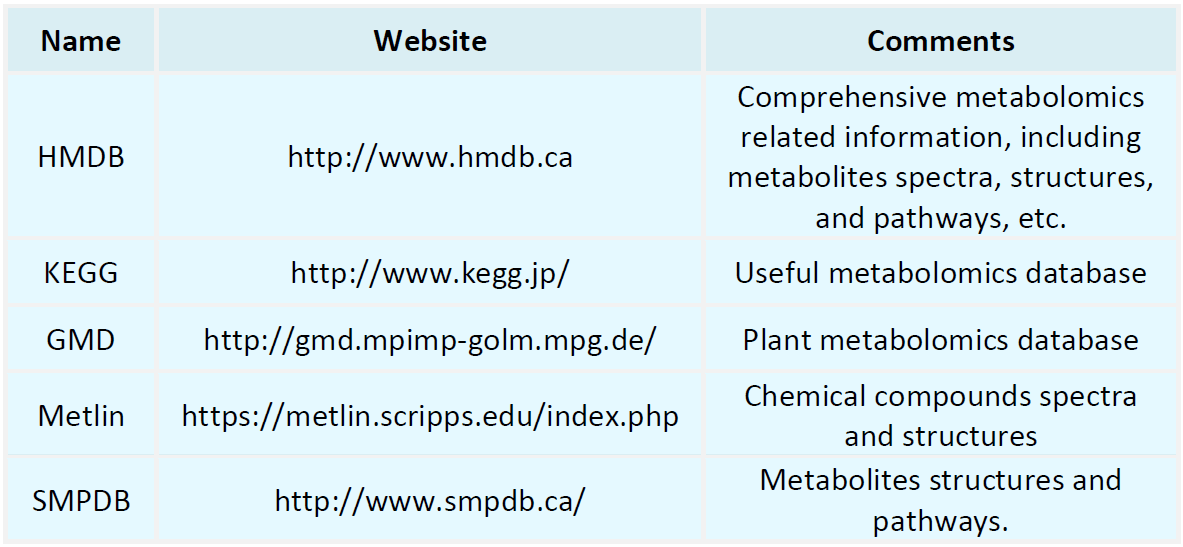
Metabolomics Databases
-
• Detection of Differential Proteins Based on Semi-Quantitative Proteomic Analysis
Proteomics, as a vital tool in modern biology, is extensively employed to elucidate the expression, function, and interactions of proteins within biological systems. Differential protein detection constitutes a crucial component of proteomics research, offering significant insights into biological processes and disease mechanisms by comparing protein expression variations under distinct experimental conditions or biological states.
-
• Detection of Differential Protein Expression Using MS-Based Quantification
In life sciences research, the analysis of protein expression differences is a critical approach to understanding physiological and pathological changes in organisms under varying conditions. Recently, mass spectrometry (MS) has emerged as a widely used technique in this field due to its high-throughput and sensitive capabilities.
-
• Identification of Protein Interactions Using Pull-Down and Mass Spectrometry
Protein-protein interactions (PPIs) are fundamental to various cellular processes. They regulate essential biological mechanisms such as signal transduction, cell division, and metabolic control. Understanding PPIs is critical for uncovering biological principles and disease mechanisms. Target protein pull-down coupled with mass spectrometry (MS) has emerged as a pivotal technique in PPI research, offering high throughput and sensitivity, and is extensively used in proteomics.
-
• Quantitative Analysis of Protein-Protein Interactions Using SILAC and MS
Protein-protein interactions (PPIs) play a crucial role in cellular signaling, metabolic regulation, and gene expression control. Investigating these interactions not only aids in understanding the fundamental mechanisms of biological processes but also provides potential targets for drug development.
-
• GST Pull-Down Assay Combined with Mass Spectrometry for Protein-Protein Interaction Analysis
Protein-protein interactions (PPI) are integral to numerous cellular processes and functions. Elucidating these interactions is critical not only for understanding biological mechanisms but also for identifying potential drug targets. Among the various methods employed for PPI analysis, the integration of GST pull-down technology with mass spectrometry (MS) stands out as a robust approach, enabling precise identification and characterization of protein interactions.
-
• Principle of Post-Translational Modification Analysis
Post-Translational Modification (PTM) refer to the chemical modifications that proteins undergo after translation, either through enzymatic or non-enzymatic processes. PTM significantly influence protein structure, function, and interactions, serving as a key mechanism for regulating cellular biological processes.
-
• Mechanism of 4D-DIA Quantitative Proteomics
4D-DIA (Four-Dimensional Data-Independent Acquisition) quantitative proteomics is a cutting-edge technology that has gained prominence in recent years. By integrating high-resolution mass spectrometry, time, ion mobility, and data-independent acquisition, this approach enables the quantitative analysis of proteins in complex samples with unprecedented sensitivity and resolution.
-
• Application of 4D-DIA Quantitative Proteomics
The development of proteomics technologies has provided powerful tools for biological research, particularly in understanding the molecular mechanisms of complex biological systems. 4D-DIA (Four-Dimensional Data-Independent Acquisition) is an emerging technique in quantitative proteomics that combines multidimensional chromatography separation with high-resolution mass spectrometry analysis. This approach enables highly accurate and high-throughput analysis of protein expression and modifications.
-
• Advantages and Disadvantages of 4D-DIA Quantitative Proteomics
In proteomics research, Data-Dependent Acquisition (DDA) and Data-Independent Acquisition (DIA) are two commonly employed mass spectrometry techniques. Recently, 4D-DIA (Four-Dimensional Data-Independent Acquisition) quantitative proteomics has garnered significant attention from the research community. This method not only leverages the strengths of traditional DIA but also introduces ion mobility as a fourth dimension, thereby enhancing the accuracy and resolution of quantitative proteomic analyses.
-
• Workflow of 4D-DIA Quantitative Proteomics
4D-DIA (Four-Dimensional Data-Independent Acquisition) is a cutting-edge technique in modern proteomics. This approach integrates liquid chromatography, mass spectrometry, and bioinformatics to conduct high-throughput, high-precision quantitative analysis of proteins in complex biological samples. By incorporating a time dimension, 4D-DIA surpasses traditional DIA methods, enabling higher resolution data acquisition and analysis.
How to order?




