






Resources
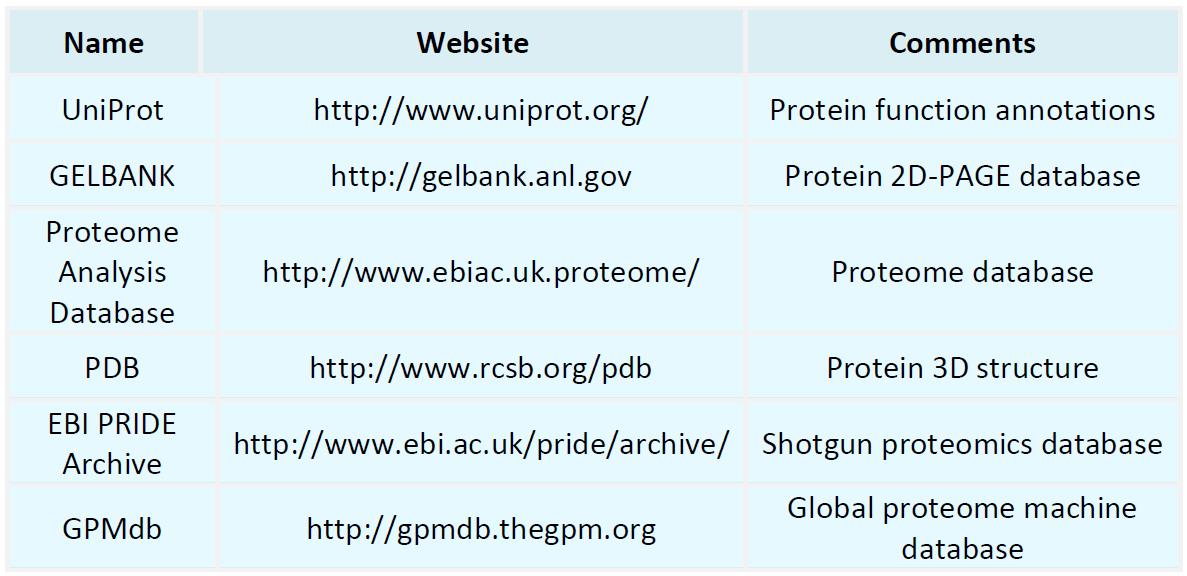
Proteomics Databases
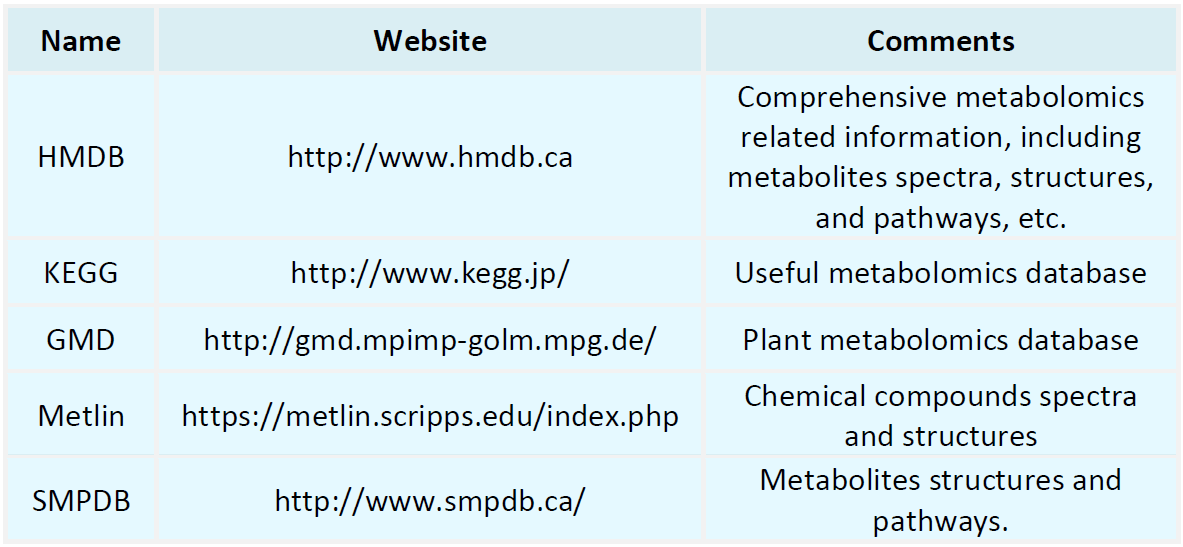
Metabolomics Databases
-
• Protein Mass Spectrometry Analysis of Interacting Protein Samples
In the field of biopharmaceuticals, protein-protein interactions are the basis of many biological processes and also play an important role in drug development. In order to gain a deeper understanding of the function and regulation mechanisms of interacting proteins, scientists employ protein mass spectrometry analysis, which is a powerful tool that helps us comprehensively analyze interacting protein samples and thus drive the development of the biopharmaceutical field.
-
• MRM-Based Analysis of Targeted Proteomics
Targeted proteomics is a highly specific and sensitive method for quantitative protein analysis, widely applied in biomarker validation, disease research, and drug development. Multiple Reaction Monitoring (MRM) is one of the most commonly used methods in targeted proteomics. MRM analysis relies on mass spectrometry to selectively monitor precursor ions and their fragment ions of specific peptides, achieving high sensitivity and precision in quantifying target proteins.
-
• Detection of Peptides by Tandem Mass Spectrometry
Tandem Mass Spectrometry (MS/MS) is a widely utilized analytical tool in modern proteomics for qualitative and quantitative detection of peptides and proteins. With its high sensitivity, specificity, and resolution, MS/MS has become essential in analyzing complex biological molecules.
-
• Detection and Visualization of Protein Interactions Using Bioinformatics Methods
Protein-protein interactions (PPIs) play a critical role in regulating cellular functions and ensuring normal physiological activities. Understanding and exploring PPIs not only contributes to elucidating complex molecular networks but also holds significant value in disease mechanism research and drug target development. With advances in bioinformatics, computational PPI detection and visualization methods have increasingly become valuable tools for studying protein interactions.
-
• Advantages and Disadvantages of iTRAQ in Proteomics
Proteomics is an emerging discipline that studies the overall issues of protein expression, modification, interaction, function, and networks. In this field, quantitative analysis of proteins is considered one of the most important techniques. Among them, iTRAQ (isobaric tags for relative and absolute quantitation) technology has been widely used in quantitative proteomics.
-
• The Analysis of Peptide Composition and Function in Vivo Through Immuno-Mass Spectrometry
The human immune system is our first line of defense against disease and infection, and peptides play a crucial role in it, making them the focus of research. However, due to the wide variety and complex functions of peptides, their in-depth study has always been a challenge in the field of biopharmaceuticals. Fortunately, the development of immune mass spectrometry analysis has brought new possibilities for deciphering the composition and function of peptides in the body.
-
• Mass Spectrometry Analysis Methods for Peptides in Peptidomics
Peptidomics is an increasingly important research direction in the field of biopharmaceuticals. It uses mass spectrometry as its core technology to comprehensively analyze peptides in complex biological samples, revealing the protein composition and function in organisms.
-
• Application of High-Throughput Proteomics in Gene Knockout Research
Gene knockout technology is a powerful tool widely used to study gene function and regulatory networks. However, a comprehensive understanding of the effects of gene knockout on cells and tissues often requires more than gene expression data, as transcriptional changes do not always correlate with changes at the protein level.
-
• Principle of Metabolomics Analysis
Metabolomics is a pioneering field within life sciences that focuses on analyzing the dynamic changes of all small molecule metabolites in biological systems. These metabolites, which include carbohydrates, lipids, amino acids, nucleotides, and more, play crucial roles in various biological processes. Metabolomics analysis can reveal molecular mechanisms underlying diseases, evaluate drug responses, and predict disease progression.
-
• Advantages and Limitations of High-Throughput Proteomics in Gene Knockout
High-throughput proteomics in gene knockout research has emerged as a powerful approach for systematically examining the impact of specific genes on the proteome, providing insights into gene function, protein expression, and interactions. This technique allows researchers to monitor how gene deletions affect protein abundance, post-translational modifications, and functional networks on a large scale.
How to order?




