






Resources
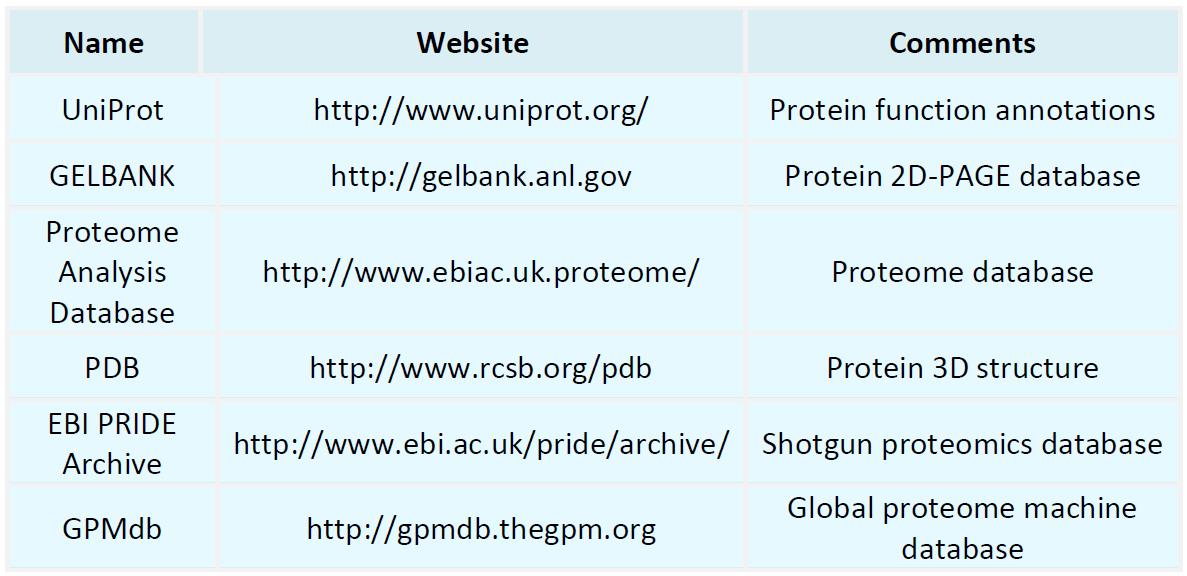
Proteomics Databases
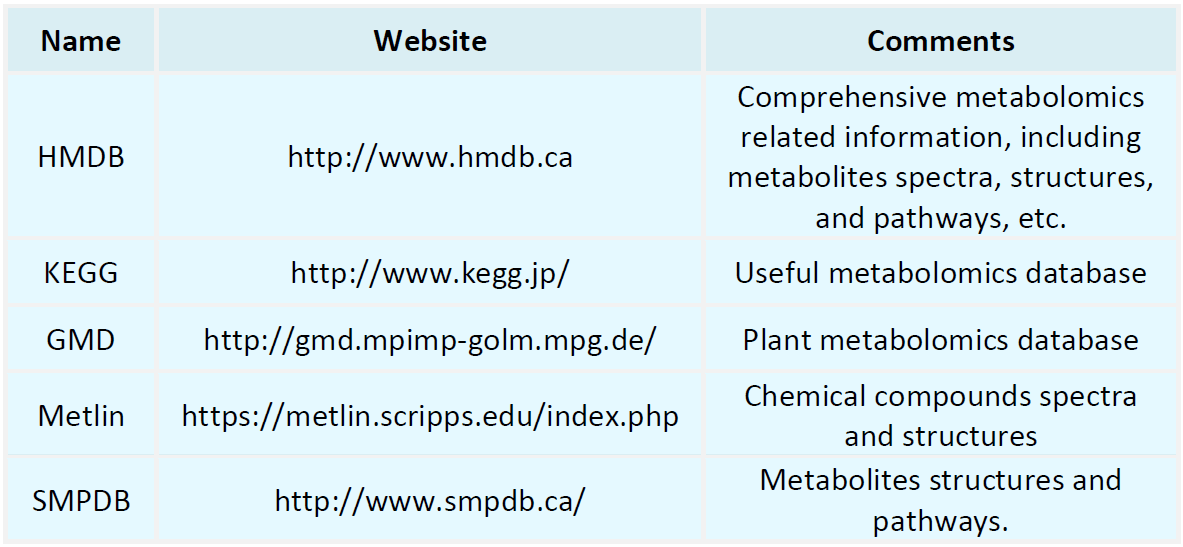
Metabolomics Databases
-
Terminal Sequencing is a method used for analyzing the amino acid sequence of protein or peptide molecules, with a particular focus on determining the N-terminal (amino end) and C-terminal (carboxyl end) amino acid sequences of these molecules. The main applications of terminal sequencing technology include protein identification and characterization, protein structure and function research, and biomarker discovery. In drug development, this technology can be used to determine the structure of target ......
-
• Unique Peptides Mass Spectrometry
Unique peptides mass spectrometry refers to a specialized approach using mass spectrometry to detect and quantify peptides that are uniquely generated from the enzymatic digestion of proteins. These unique peptides, having distinct sequences, serve as precise indicators of the expression levels of their corresponding proteins in biological samples. As such, unique peptides mass spectrometry is integral to various proteomic applications, including protein identification, quantification, post-translatio......
-
• Biotherapeutic Characterization
Biotherapeutic characterization involves the thorough analysis and identification of various aspects of biopharmaceuticals, including their structure, physicochemical properties, and biological activity. The primary goal is to ensure the safety, efficacy, and quality consistency of biopharmaceutical products. These products, including vaccines, antibodies, and protein drugs, are highly complex due to their molecular structure and unique production processes. Biotherapeutic characterization plays a piv......
-
• Protein Sequencing and Identification Using Tandem Mass Spectrometry
Protein sequencing and identification using tandem mass spectrometry is a powerful analytical approach that enables multi-stage separation and in-depth characterization of complex biological samples. By coupling multiple mass spectrometers, this technique facilitates precise identification and quantification of proteins within heterogeneous mixtures. The application of tandem mass spectrometry in protein analysis primarily falls into two categories: (1) protein identification through amino acid sequen......
-
• Protein Sequence of Amino Acids
The protein sequence of amino acids refers to the linear arrangement of amino acids in a specific order within the protein molecule. As one of the essential biomolecules in living organisms, the function and structure of proteins are closely linked to their amino acid sequence. Proteins perform a wide variety of functions, such as catalyzing biochemical reactions as enzymes, contributing to cellular structure, and regulating physiological processes as hormones. The distinct arrangement of amino acids ......
-
Mass fingerprinting analysis primarily involves the systematic examination of the mass spectral characteristics of complex compounds to generate a unique "fingerprint" spectrum. This analytical method separates, detects, and quantifies the chemical components in a sample using specialized instruments and techniques, producing a spectrum that reflects the overall chemical profile of the sample. These spectra are unique and characteristic, serving as a "chemical fingerprint" to identify the sample, asse......
-
Affinity purification is a technique for separating and purifying biomolecules by exploiting their specific interactions, such as those between antigen and antibody, enzyme and substrate or inhibitor, and receptor and ligand. In this process, one molecule (the ligand) is immobilized on a solid support (e.g., agarose gel or magnetic beads) to create an affinity matrix. When a sample containing the target molecule passes through the matrix, the target specifically binds to the immobilized ligand, while ......
-
Amino acid profiles refer to the composition and relative concentrations of amino acids in biological samples, such as proteins, cells, tissues, or food. Analyzing these profiles is essential for investigating various biological processes, including organism growth, development, metabolism, and disease progression. This analysis method reveals the composition and functional state of proteins by quantifying the types and concentrations of amino acids. Amino acid profile analysis is not only key to nutr......
-
• Activity-Based Protein Profiling Overview
Activity-based protein profiling is a method for investigating protein function, mechanism, and their roles in biological systems by detecting and analyzing protein activity. ABPP exploits the ability of small-molecule probes to bind specifically to the active sites of proteins, thereby labeling and enriching active proteins for subsequent identification and functional studies using various analytical techniques. These small-molecule probes typically consist of three components: a reactive group that ......
-
• Affinity Based Protein Profiling
Affinity based protein profiling is an effective and versatile technique that enhances our understanding of the complex proteome by identifying and isolating proteins with specific biological functions or interactions. This approach leverages the natural binding properties between proteins, such as antibody-antigen and receptor-ligand interactions, to selectively enrich target proteins. By integrating liquid chromatography with protein mass spectrometry, this technique enables the identification and q......
How to order?




