






Phosphoproteomics Analysis in Cancer Research: Signaling Networks, Kinase Activity, and Clinical Applications
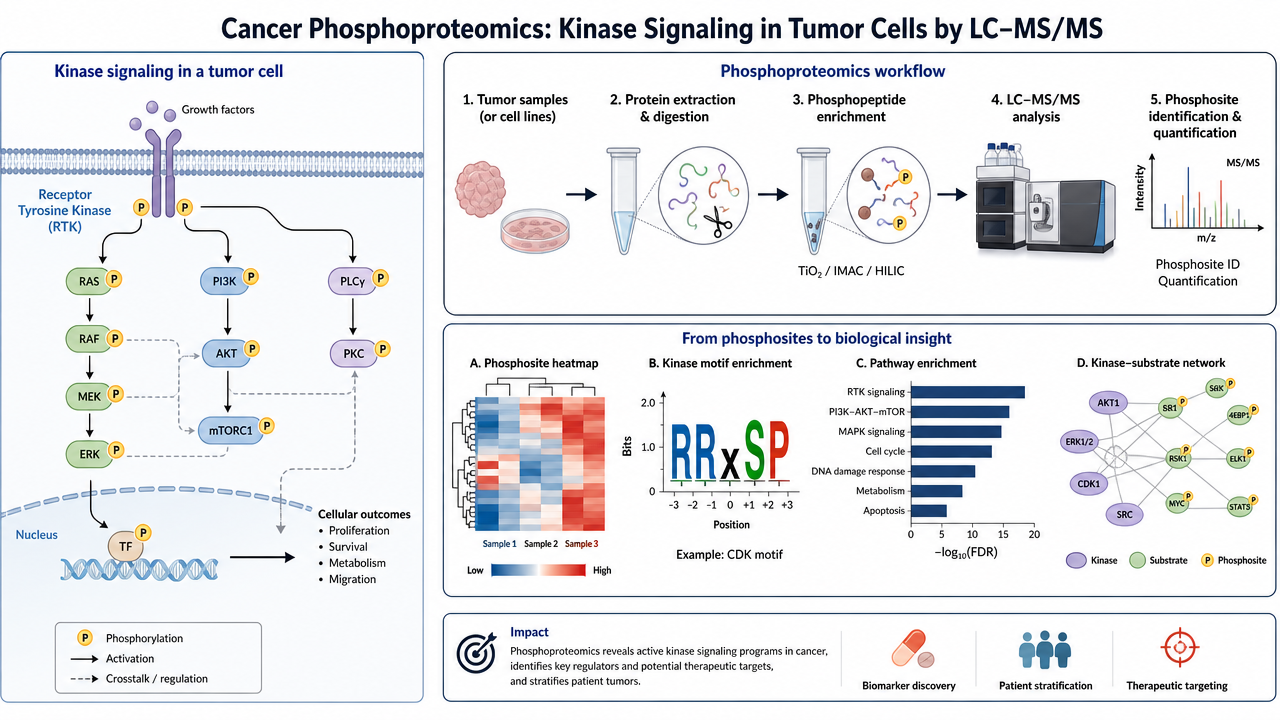
Phosphorylation rewires cancer signaling faster than many expression changes. Phosphoproteomics captures kinase network state for target discovery, resistance biology, and biomarker development.
Key Takeaways
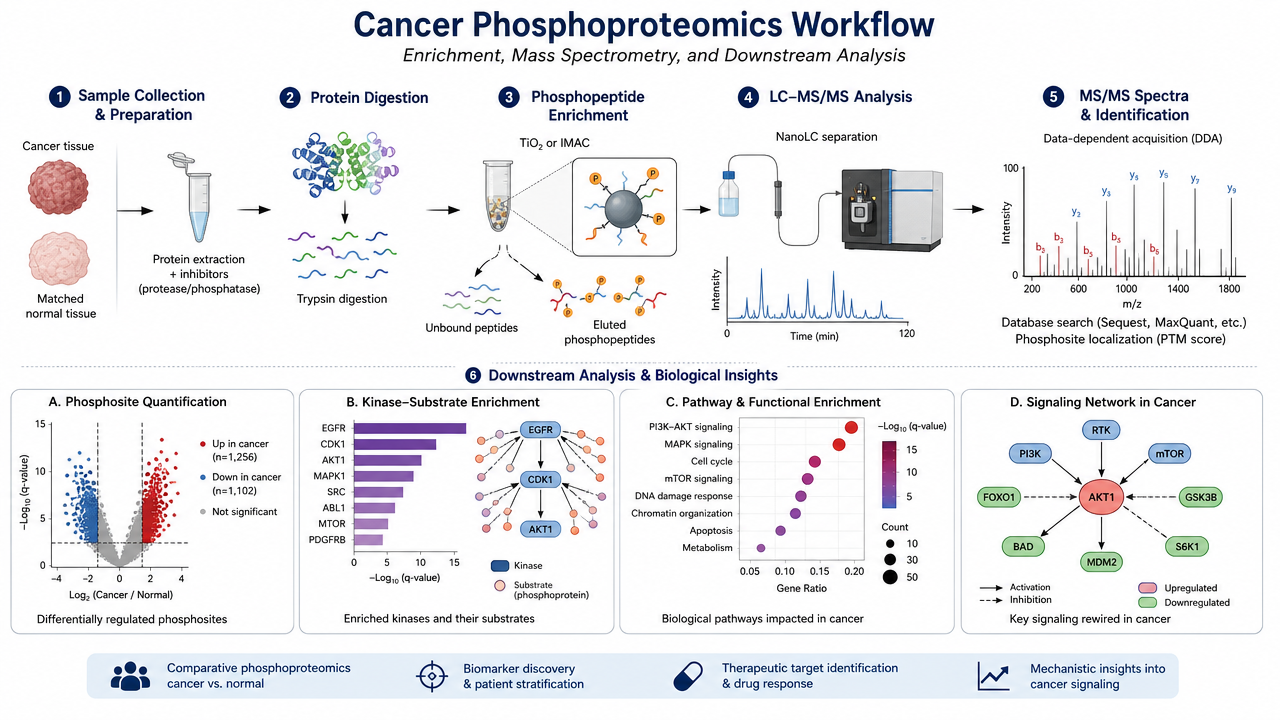
- Phosphatase inhibitors preserve sites during lysis.
- TiO2, IMAC, and Tyr enrichment recover phosphopeptides.
- DIA improves cohort quantification consistency.
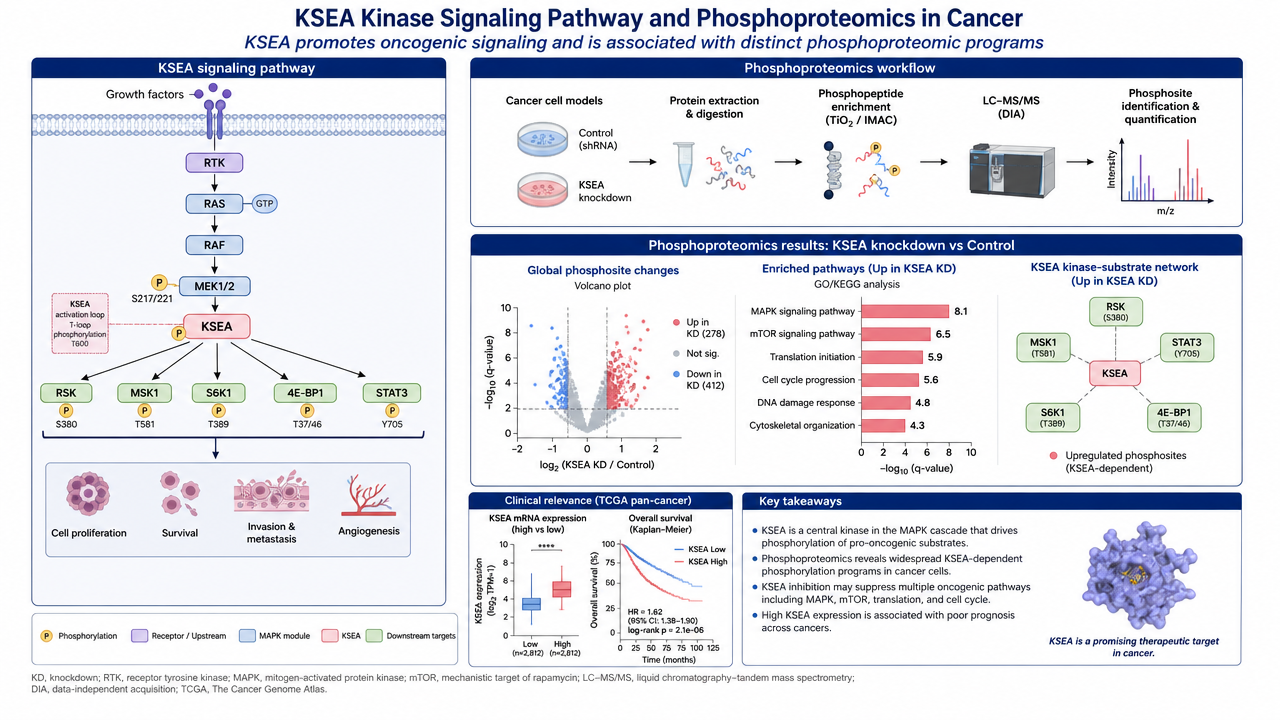
- KSEA links sites to kinase activity.
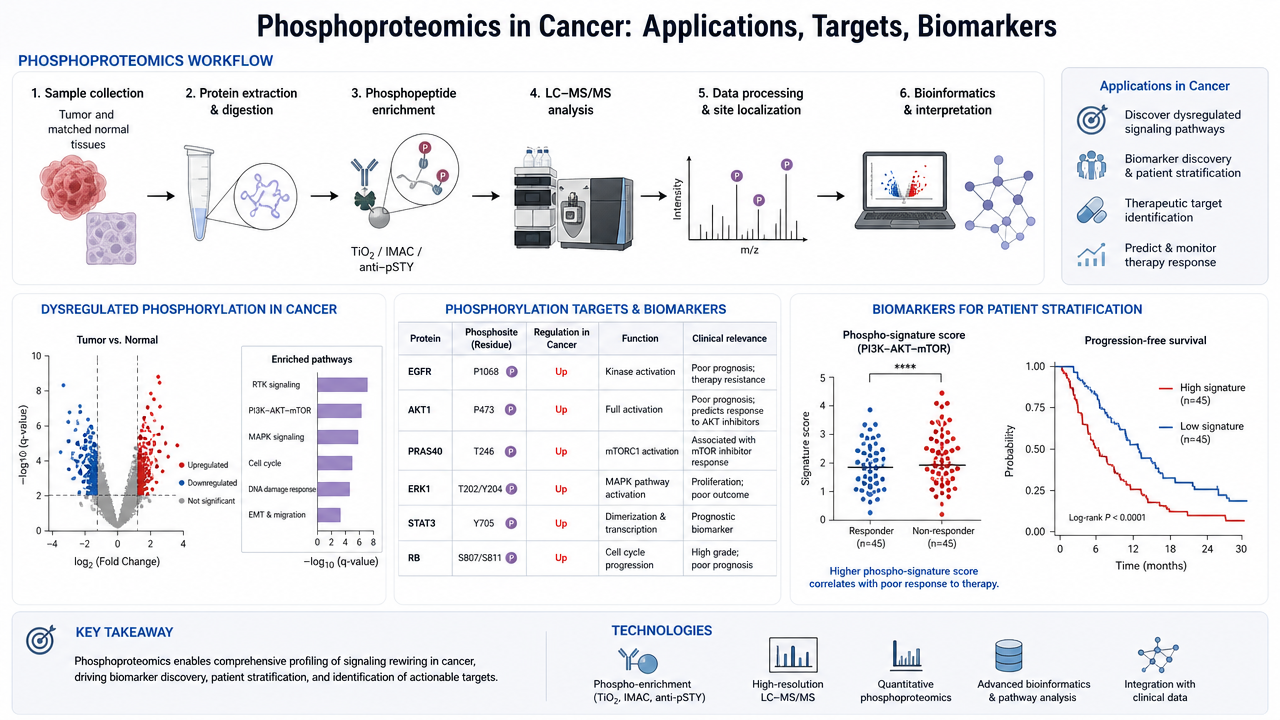
- Applications span targets, resistance, biomarkers, and precision therapy.
Related Services
Quantitative Phosphoproteomics Service
Phosphoproteomics Analysis Service
Deep Phosphoproteomics Service
DIA Phosphoproteomics Analysis Service
Experimental Workflow
Rapid sample prep with inhibitors; phosphopeptide enrichment; high-resolution LC-MS/MS with DDA or DIA.
Translational Applications
Target kinases, map resistance bypass signaling, develop phospho-biomarkers, and stratify patients by tumor phospho-maps.
FAQ
Why enrich phosphopeptides?
Low stoichiometry requires enrichment for deep coverage.
Conclusion
Phosphoproteomics captures dynamic cancer signaling when prep, enrichment, and kinase-focused analysis are integrated.
Submit Inquiry
How to order?




