






Peptide Mapping Analysis or De Novo Sequencing? Matching Reference-Based Confirmation to Your QC Goal
Introduction
Protein primary structure projects often begin with the same purified sample and different analytical goals. One team may need to confirm that a recombinant product matches an expected sequence. Another may need to determine the sequence of a protein with no reliable database entry. A third may need only terminal confirmation or intact mass evidence for a release file. Each scenario can involve mass spectrometry, but the best route depends on whether a reference sequence exists and what level of residue-level evidence is required.
Peptide mapping analysis and alternative structure methods answer different questions. Peptide mapping matches observed peptides to a known reference through LC-MS/MS and coverage mapping. De novo sequencing assembles sequence from MS/MS without a predefined reference. Edman degradation reads terminal residues sequentially. Intact mass analysis confirms global molecular weight but not residue-level coverage. Method selection should begin with reference availability and documentation needs, not instrument preference alone.
Teams choosing a primary structure route before samples are prepared can compare options across project goal, sample type, and reporting depth. MtoZ Biolabs can Compare peptide mapping and alternative structure workflows before digestion or sequencing begins.
Related Services
- Peptide Mapping Analysis Service
- Peptide Mapping Service
- Comprehensive Peptide Mapping Service
- Primary Structure Analysis Service
- De Novo Protein Sequencing Service
- N-Terminal Sequencing Service
- HPLC-Based Peptide Mapping Assays Service
Start With the Structure Question
Method selection usually begins with one of four scenarios:
- Reference-backed confirmation. A sequence is available and the goal is to verify that the sample matches it.
- Unknown or uncertain sequence. No trustworthy reference exists and the protein sequence must be determined.
- Terminal-specific question. The project requires N-terminal or C-terminal readout rather than full-length coverage.
- Documentation for QC or comparability. The team needs traceable peptide-level evidence for review or release.
These scenarios lead to different default routes. Reference-backed QC favors peptide mapping analysis. Unknown proteins push teams toward de novo sequencing. Terminal questions may favor Edman or terminal MS approaches.
Route Comparison at a Glance
|
Decision Factor |
Peptide Mapping Analysis |
De Novo Sequencing |
Edman / Terminal Methods |
Intact Mass Analysis |
|---|---|---|---|---|
|
Reference sequence required |
Yes |
No |
Optional |
Optional |
|
Core readout |
Coverage map and PSM-supported peptides |
Assembled protein sequence |
Terminal residue readout |
Global molecular weight |
|
Best study goal |
Recombinant confirmation, PTM review |
Unknown protein characterization |
Terminal verification |
Mass confirmation |
|
Residue-level coverage |
Strong when digestion succeeds |
Strong for unknowns |
Limited to termini |
None across sequence |
|
PTM support |
Strong at peptide level |
Moderate to strong |
Limited |
Indirect |
|
Common bottleneck |
Digestion gaps, hydrophobic regions |
Data quality, assembly ambiguity |
Blocked termini |
Cannot localize variants |
|
Ideal deliverable |
Coverage map with PSM table |
Full or partial de novo sequence |
Terminal sequence report |
Intact mass report |
When Peptide Mapping Analysis Is the Better Fit
Peptide mapping analysis is usually the preferred route when:
- a reliable reference sequence is available
- recombinant, biosimilar, or QC confirmation is the primary goal
- PTM or sequence variant review is needed at peptide level
- report-ready coverage documentation is required
- the project needs to compare sample and reference at the peptide level
Strengths include direct reference comparison, PSM-supported residue evidence, and established use in biopharmaceutical characterization.
Limitations include dependence on digestion quality and reduced utility when no valid reference exists.
Teams with reference-backed QC goals may review Peptide Mapping Analysis Service or Biopharmaceutical Peptide Mapping Analysis Service.
When De Novo Sequencing Fits Better
De Novo Protein Sequencing Service is often selected when:
- no trustworthy reference sequence exists
- the sample may contain unexpected variants or fusion sequences
- the project goal is sequence discovery rather than reference confirmation
De novo sequencing answers a different question than peptide mapping analysis and is usually unnecessary when a valid reference already supports QC needs.
When Edman or Terminal Methods Fit Better
N-Terminal Sequencing Service and related terminal approaches are often chosen when:
- the project requires direct terminal residue readout
- processing site or signal peptide removal must be confirmed
- full-length coverage is not required for the immediate decision
Terminal methods complement peptide mapping analysis but rarely replace full coverage when complete primary structure confirmation is required.
When Intact Mass or HPLC Mapping Fits Better
Intact mass analysis confirms global molecular weight and can detect major mass shifts from glycosylation or large modifications. HPLC-Based Peptide Mapping Assays Service may be sufficient when comparative peptide profiles rather than full MS/MS coverage documentation are the primary need.
These routes are often used as supporting evidence rather than full replacements for LC-MS/MS peptide mapping when residue-level confirmation is required.
Combined Method Strategies
Many programs combine methods. Intact mass may screen for major differences before peptide mapping analysis. Terminal sequencing may confirm processing sites while coverage mapping addresses the full sequence. De novo sequencing may follow when reference comparison fails to explain observed peptides.
Planning the documentation package during scoping reduces delay when one method alone cannot answer every project question.
If uncertainty remains between peptide mapping analysis and de novo sequencing, review whether the project decision actually requires a reference match or true sequence discovery. That distinction usually resolves the route faster than platform comparison alone.
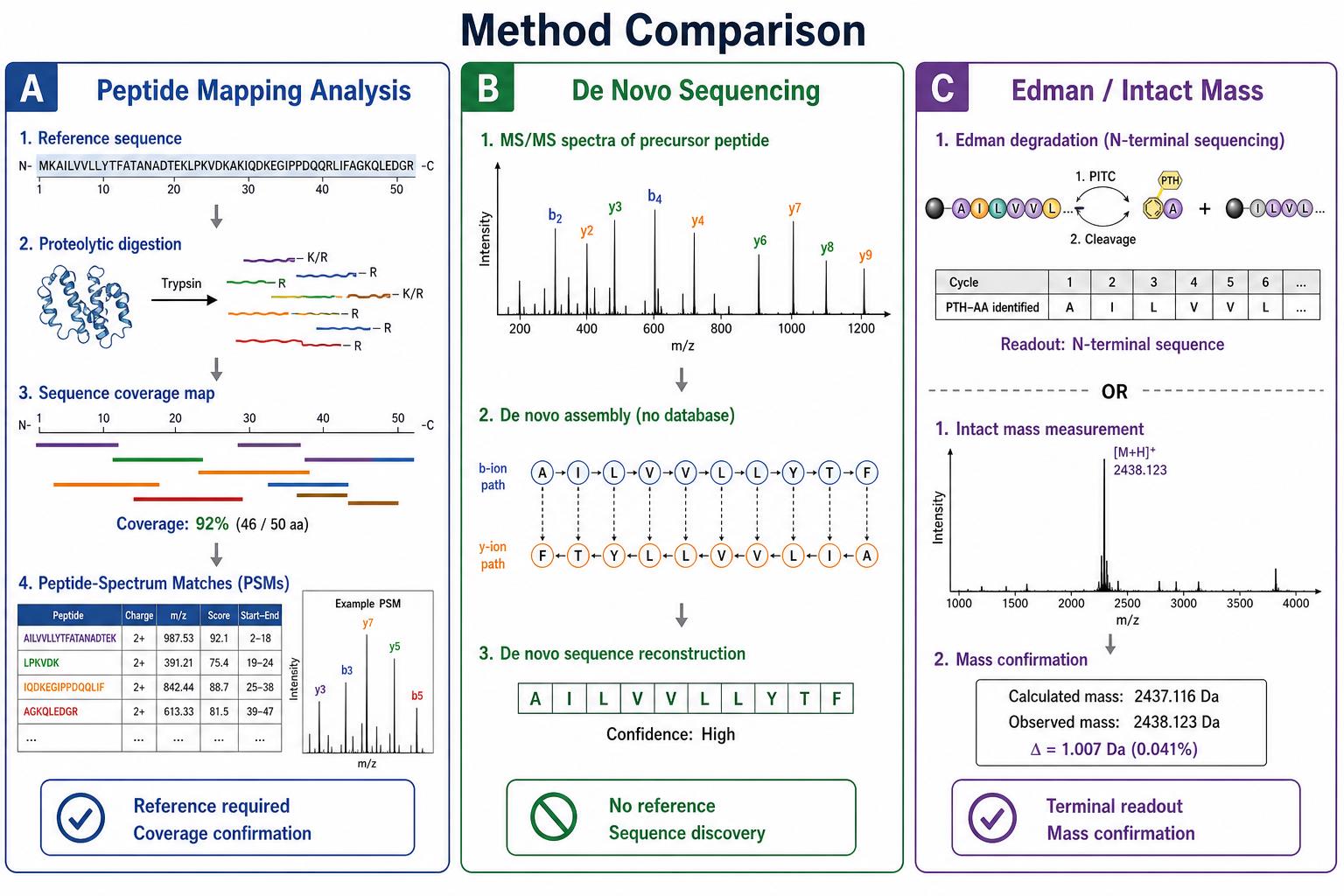
Figure 1. Reference availability and documentation depth determine whether peptide mapping analysis, de novo sequencing, or terminal methods is the better fit.
Decision Recommendations by Project Goal
Choose peptide mapping analysis when:
- a reference sequence is available
- residue-level coverage documentation is required
- PTM or comparability review is part of the goal
Choose de novo sequencing when:
- no reliable reference exists
- sequence discovery is the primary objective
Choose Edman or terminal methods when:
- terminal confirmation is the decisive question
Choose intact mass or HPLC mapping when:
- global mass or comparative peptide profile evidence is sufficient for the next decision
Practical Examples by Study Type
1. Recombinant mAb Lot Release
Peptide mapping analysis with coverage map and PSM table against reference sequence.
2. Unknown Purified Protein From a Non-Model Organism
De novo protein sequencing rather than reference-based mapping.
3. Confirm Signal Peptide Removal
N-terminal sequencing plus targeted peptide mapping analysis of the mature N-terminus region.
4. Biosimilar Comparability Package
Peptide mapping analysis with side-by-side coverage and PTM comparison.
For internal route selection, use one decision line: if a valid reference exists and the goal is confirmation, start with peptide mapping analysis; if no reference exists, move to de novo sequencing or hybrid discovery workflows.
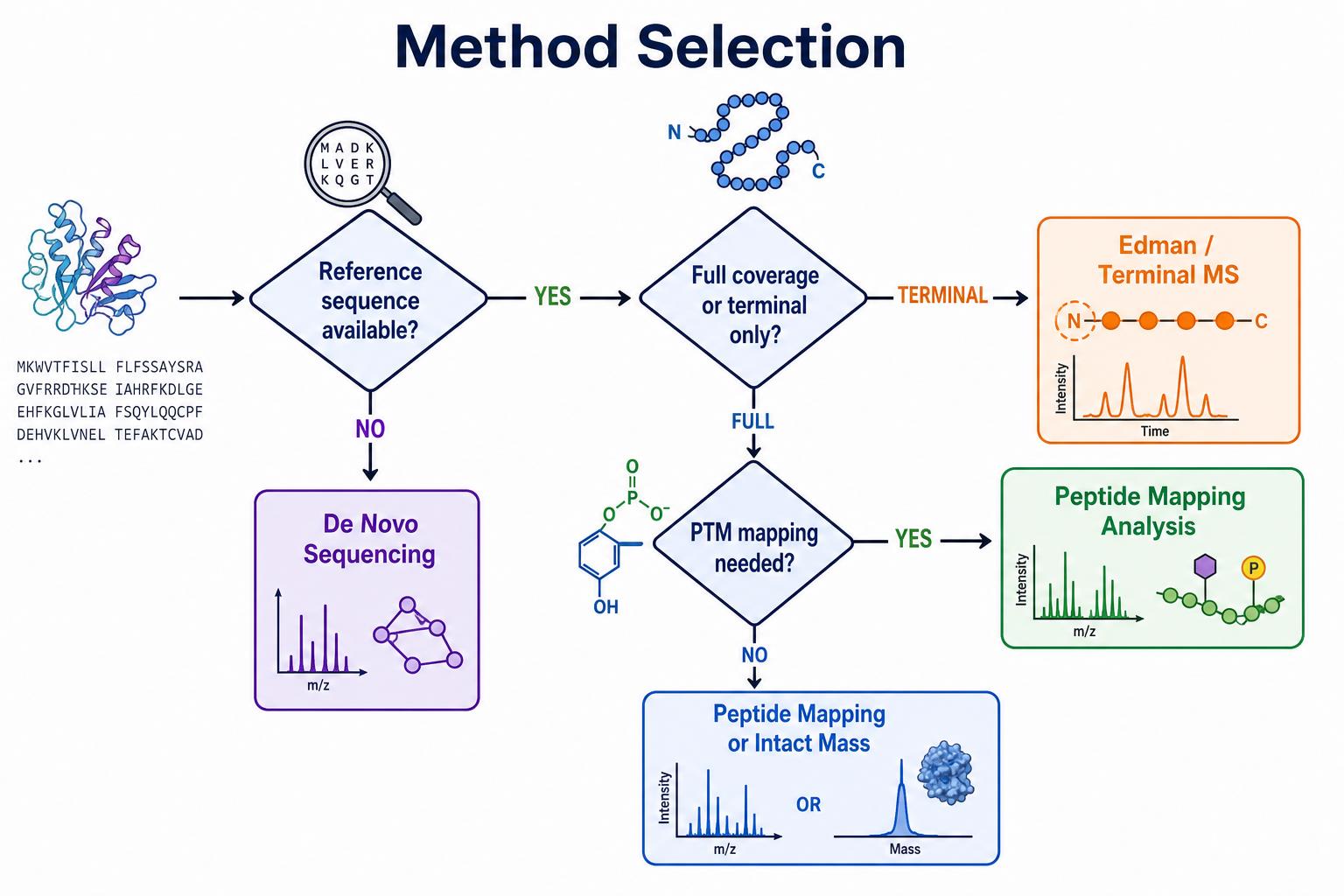
Figure 2. Reference sequence availability and documentation requirements determine the preferred primary structure method.
Frequently Asked Questions
1. Is peptide mapping analysis enough for biopharmaceutical QC?
Often yes, when coverage, PTM review, and method documentation meet the project's quality requirements. Specific programs may require complementary methods.
2. Can peptide mapping analysis and de novo sequencing be combined?
Yes. Some projects use mapping first and de novo analysis for unexplained peptides or regions without reference support.
3. Does intact mass replace peptide mapping analysis?
No. Intact mass confirms global weight but does not provide residue-level coverage across the sequence.
4. When is Edman sequencing preferred over peptide mapping analysis?
When the primary question is terminal sequence confirmation rather than full-length coverage.
5. Can peptide mapping analysis detect a wrong construct?
Yes, when variant peptides are observed and confidently matched, or when expected peptides are absent from critical regions.
Conclusion
Peptide mapping analysis, de novo sequencing, Edman degradation, and intact mass methods serve different primary structure questions. Peptide mapping analysis is the most direct route when a reference sequence exists and residue-level confirmation is required. Method selection should begin with reference availability and documentation needs, not generic platform preference.
MtoZ Biolabs can Match the primary structure workflow to project stage across Peptide Mapping Analysis Service, Comprehensive Peptide Mapping Service, and De Novo Protein Sequencing Service. Contact the technical team to compare options before sample submission.
How to order?




