






Outsource Peptide Mapping or Use In-House MS? Comparing Service Routes for Biopharmaceutical Primary Structure Confirmation
Introduction
Primary structure confirmation can be handled internally, outsourced to a peptide mapping service, or split across multiple analytical routes depending on project stage and documentation needs. One team may have LC-MS/MS capacity but lack time for digestion optimization and coverage reporting. Another may need a formal service report for lot release while keeping discovery work in-house. A third may wonder whether HPLC peptide mapping is sufficient or full LC-MS/MS coverage documentation is required for the next QC milestone.
Outsourced peptide mapping service and alternative routes answer different operational and documentation questions. A full service package delivers sample-to-report primary structure evidence. In-house MS may provide data faster for exploratory work but still require internal interpretation capacity. HPLC peptide mapping may support comparative profiling with less sequence-level detail. Method selection should begin with documentation depth and internal resource availability, not outsourcing preference alone.
Teams choosing a primary structure route before samples are prepared can compare service tiers, internal capacity, and reporting requirements. MtoZ Biolabs can Compare peptide mapping service and alternative workflows before project commitment.
Related Services
- Peptide Mapping Service
- Comprehensive Peptide Mapping Service
- Peptide Mapping Analysis Service
- Biopharmaceutical Peptide Mapping Analysis Service
- HPLC-Based Peptide Mapping Assays Service
- HPLC-Based Quality Peptide Mapping Assays Service
- Primary Structure Analysis Service
Start With the Documentation Goal
Route selection usually begins with one of four scenarios:
- Formal QC or release documentation. A report-ready coverage package is required.
- Internal exploratory confirmation. The team needs sequence support but not full regulatory-style reporting.
- Comparative peptide profiling. Reference and test materials must be compared at the peptide level.
- Unknown or uncertain sequence. Reference-based mapping is not sufficient and alternative structure services are needed.
These scenarios lead to different default routes. Formal QC documentation favors outsourced peptide mapping service or comprehensive LC-MS/MS mapping. Exploratory work may remain in-house if interpretation capacity exists. Comparative profiling may be supported by HPLC mapping when full PSM documentation is not required.
Route Comparison at a Glance
|
Decision Factor |
Peptide Mapping Service (LC-MS/MS) |
In-House MS Workflow |
HPLC Peptide Mapping Service |
|---|---|---|---|
|
Core deliverable |
Coverage map and PSM-supported report |
Internal data and interpretation |
Comparative peptide profile |
|
Best use case |
QC, release, biosimilar documentation |
Exploratory or method-development support |
Profile comparison, stability monitoring |
|
Interpretation burden |
Low for client |
High for client |
Moderate |
|
Sequence-level evidence |
Strong |
Strong if workflow is mature |
Limited to profile level |
|
PTM support |
Strong when in scope |
Depends on internal capability |
Usually indirect |
|
Setup burden for client |
Low |
High |
Low to moderate |
|
Common bottleneck |
Scope definition |
Method development and reporting time |
Less sequence detail |
When an Outsourced Peptide Mapping Service Is the Better Fit
A peptide mapping service is usually preferred when:
- report-ready primary structure documentation is required
- internal teams lack bandwidth for digestion, acquisition, and coverage reporting
- biopharmaceutical QC or comparability evidence must be traceable and consistently formatted
- multi-enzyme mapping or PTM review is needed without building internal expertise for one project
- project timelines benefit from a defined service workflow
Strengths include lower internal setup burden, structured deliverables, and access to experienced digestion and interpretation workflows.
Limitations include dependence on clear scope definition and sample suitability at submission.
Teams needing formal documentation may review Peptide Mapping Service or Comprehensive Peptide Mapping Service.
When In-House MS May Be Enough
Internal LC-MS/MS workflows may be sufficient when:
- the team already maintains a validated mapping workflow
- the goal is exploratory confirmation rather than formal QC documentation
- report format requirements are flexible
- sample volume and repetition justify internal method maintenance
In-house workflows can work well for early development but often become bottlenecks when documentation depth or turnaround expectations increase.
When HPLC Peptide Mapping Fits Better
HPLC-Based Peptide Mapping Assays Service or HPLC-Based Quality Peptide Mapping Assays Service may be selected when:
- comparative peptide profiles are the primary deliverable
- release or stability monitoring depends on chromatographic pattern comparison
- full PSM-supported sequence coverage is not required for the immediate decision
HPLC mapping remains useful but usually provides less residue-level evidence than LC-MS/MS service packages when deep coverage documentation is required.
Combined Service Strategies
Many programs combine routes over time. HPLC profiling may monitor routine comparability while LC-MS/MS peptide mapping service supports milestone characterization. Internal exploratory mapping may precede outsourced comprehensive mapping for regulatory packages.
Planning documentation needs by project phase reduces unnecessary repeats and helps teams reserve full service packages for decision points that require them.
If uncertainty remains between standard and comprehensive service tiers, request feasibility review on one representative sample before committing the full batch set.
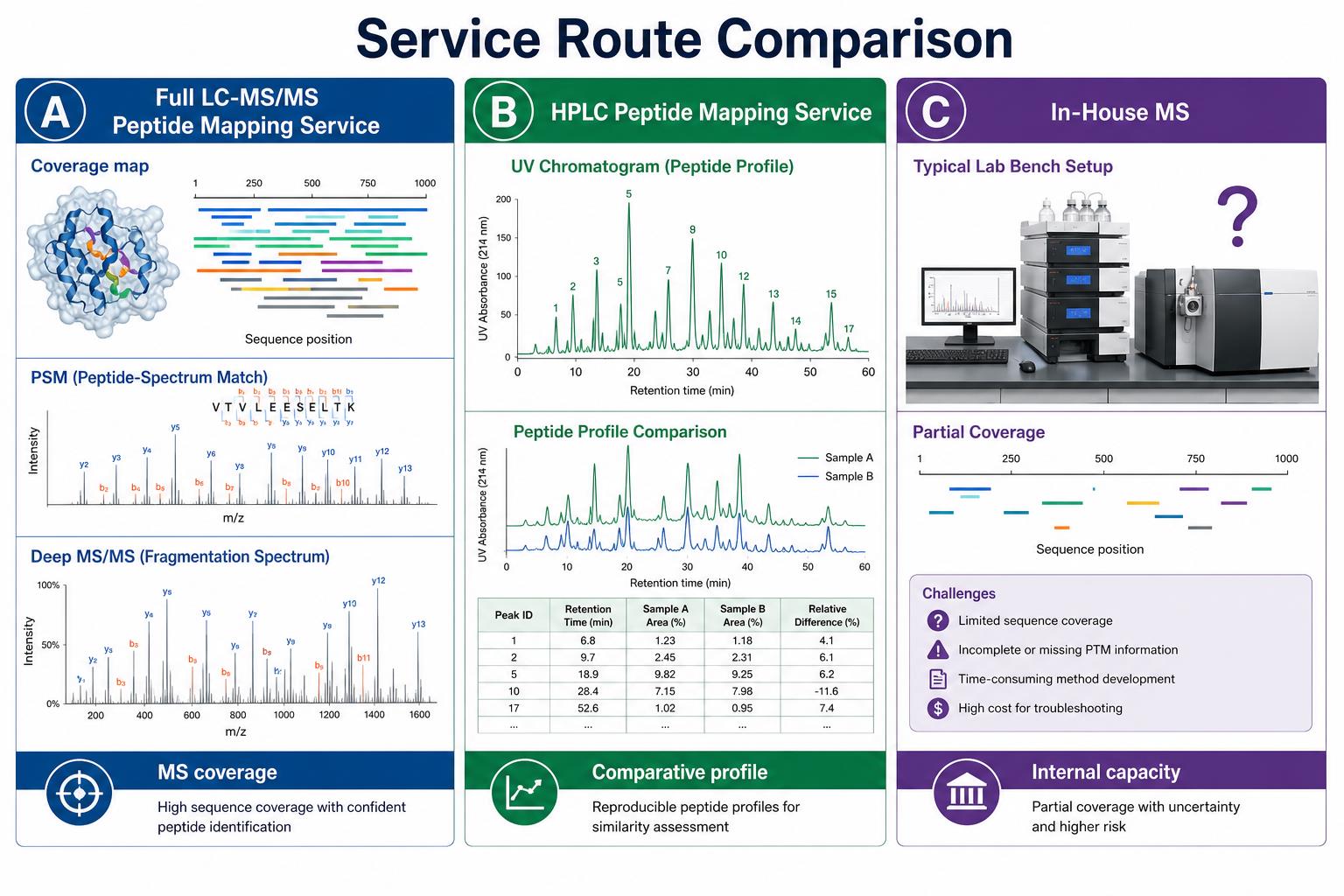
Figure 1. Documentation depth, internal capacity, and comparability needs determine whether outsourced LC-MS/MS service, in-house MS, or HPLC mapping is the better fit.
Decision Recommendations by Project Goal
Choose a peptide mapping service when:
- report-ready coverage documentation is required
- internal interpretation bandwidth is limited
- biopharmaceutical QC or comparability evidence is the goal
Choose in-house MS when:
- exploratory confirmation is sufficient
- a mature mapping workflow already exists internally
Choose HPLC peptide mapping when:
- comparative profiles are the primary deliverable
- full sequence-level PSM documentation is not immediately required
Choose comprehensive mapping when:
- standard service coverage is unlikely to satisfy critical regions or PTM review
Practical Examples by Study Type
1. mAb Lot Release Package
Outsourced peptide mapping service with coverage map, PSM table, and method summary.
2. Early Clone Screening
In-house digest and MS check before formal service documentation is needed.
3. Biosimilar Stability Monitoring
HPLC peptide mapping across time points with periodic LC-MS/MS confirmation.
4. Regulatory Milestone Characterization
Comprehensive peptide mapping service with gap closure and PTM review.
For internal route selection, use one decision line: if the output must be a QC-ready coverage report, outsource or use a comprehensive service tier; if the output is an internal go/no-go check, in-house MS may suffice.
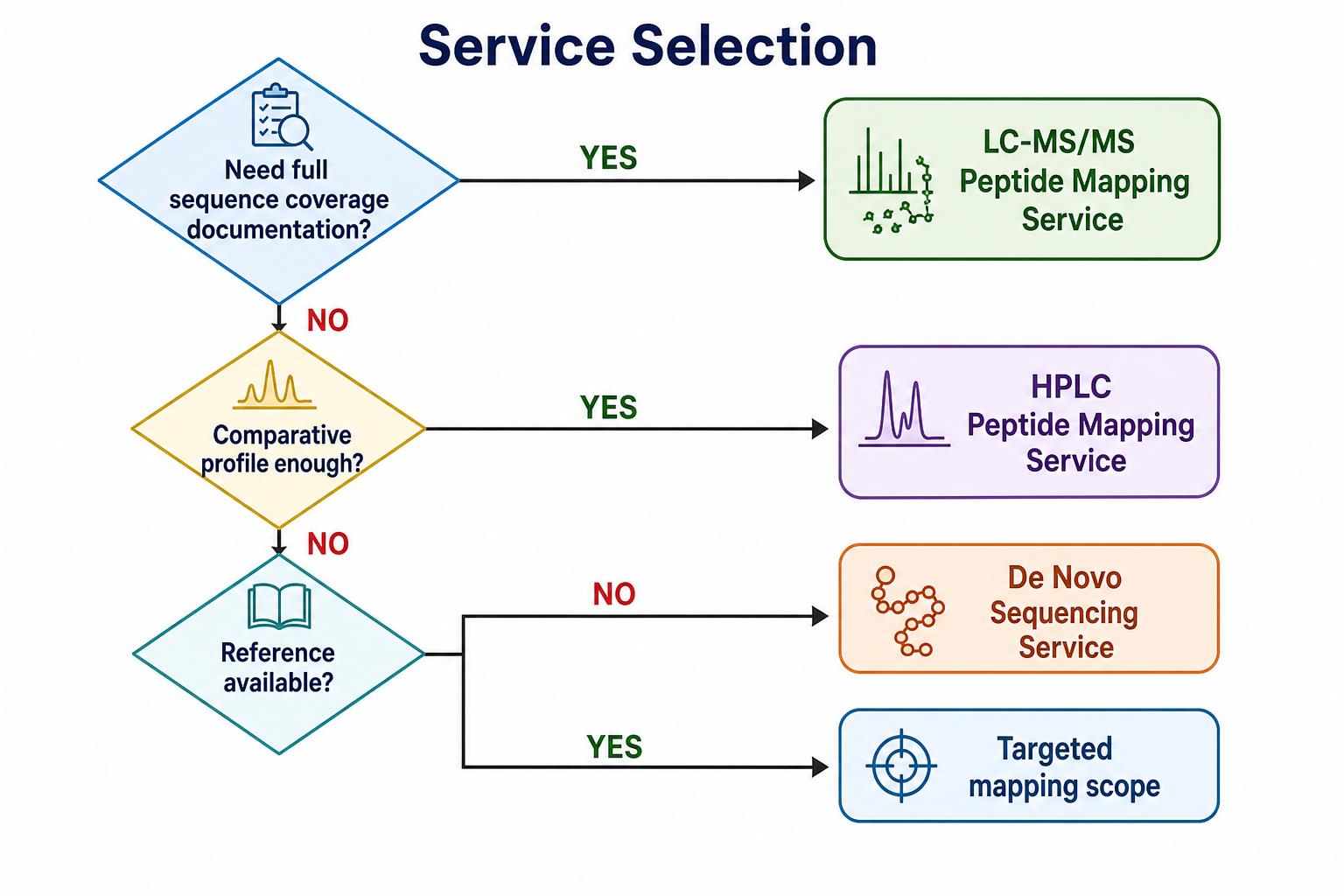
Figure 2. Documentation requirements and internal capacity determine whether outsourced peptide mapping service, in-house MS, or HPLC mapping is preferred.
Frequently Asked Questions
1. Is outsourcing peptide mapping always slower than in-house work?
Not necessarily. Internal queues, method development, and report writing often take longer than a scoped service package when internal capacity is limited.
2. Can HPLC mapping replace a peptide mapping service?
For some comparability workflows, yes. When residue-level coverage documentation is required, LC-MS/MS service routes are usually more appropriate.
3. What is the difference between standard and comprehensive peptide mapping service?
Comprehensive tiers typically address broader coverage, difficult regions, or additional PTM review beyond a standard single-digest package.
4. Can one provider support both HPLC and LC-MS/MS mapping?
Yes. Integrated providers can help match the route to the documentation level required at each project stage.
5. Should biosimilar programs use the same service route for all milestones?
Not always. Routine monitoring and milestone characterization may require different service depths.
Conclusion
Outsourced peptide mapping service, in-house MS, and HPLC mapping serve different documentation and resource needs within primary structure confirmation. Full LC-MS/MS service packages are the most direct route when report-ready coverage evidence is required. Method selection should begin with documentation depth and internal capacity, not habit or instrument availability alone.
MtoZ Biolabs can Match the peptide mapping workflow to project stage across Peptide Mapping Service, Comprehensive Peptide Mapping Service, and HPLC-Based Peptide Mapping Assays Service. Contact the technical team to compare options before sample submission.
How to order?




