






How to Optimize DDA Parameters for High-Quality Protein Identification
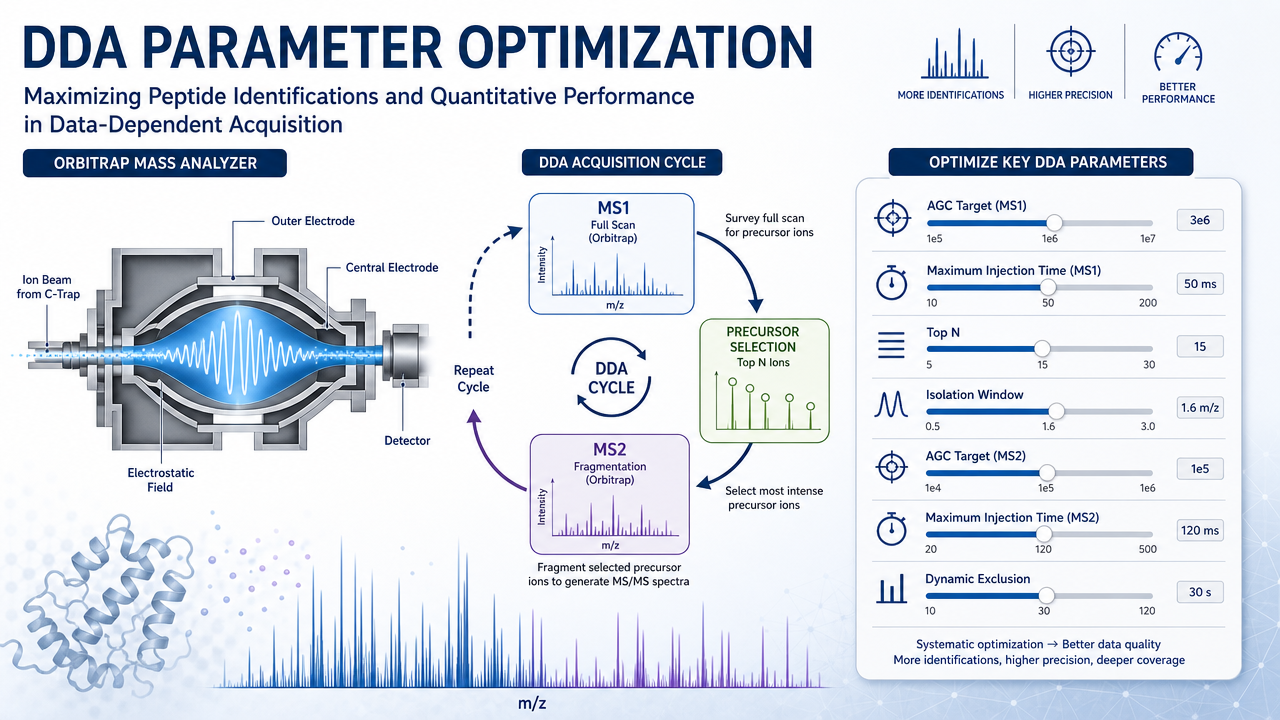
Data-dependent acquisition (DDA) remains central to discovery proteomics and spectral library generation. High-quality protein identification requires coordinated tuning of sample prep, LC gradients, MS1 survey settings, and MS2 fragmentation, not a single instrument default.
Key Takeaways
- DDA selects top-N precursors by intensity; bias toward abundant peptides is expected.
- Sample prep and loading consistency set the identification ceiling.
- MS1 resolution and scan range affect precursor fidelity in complex mixtures.
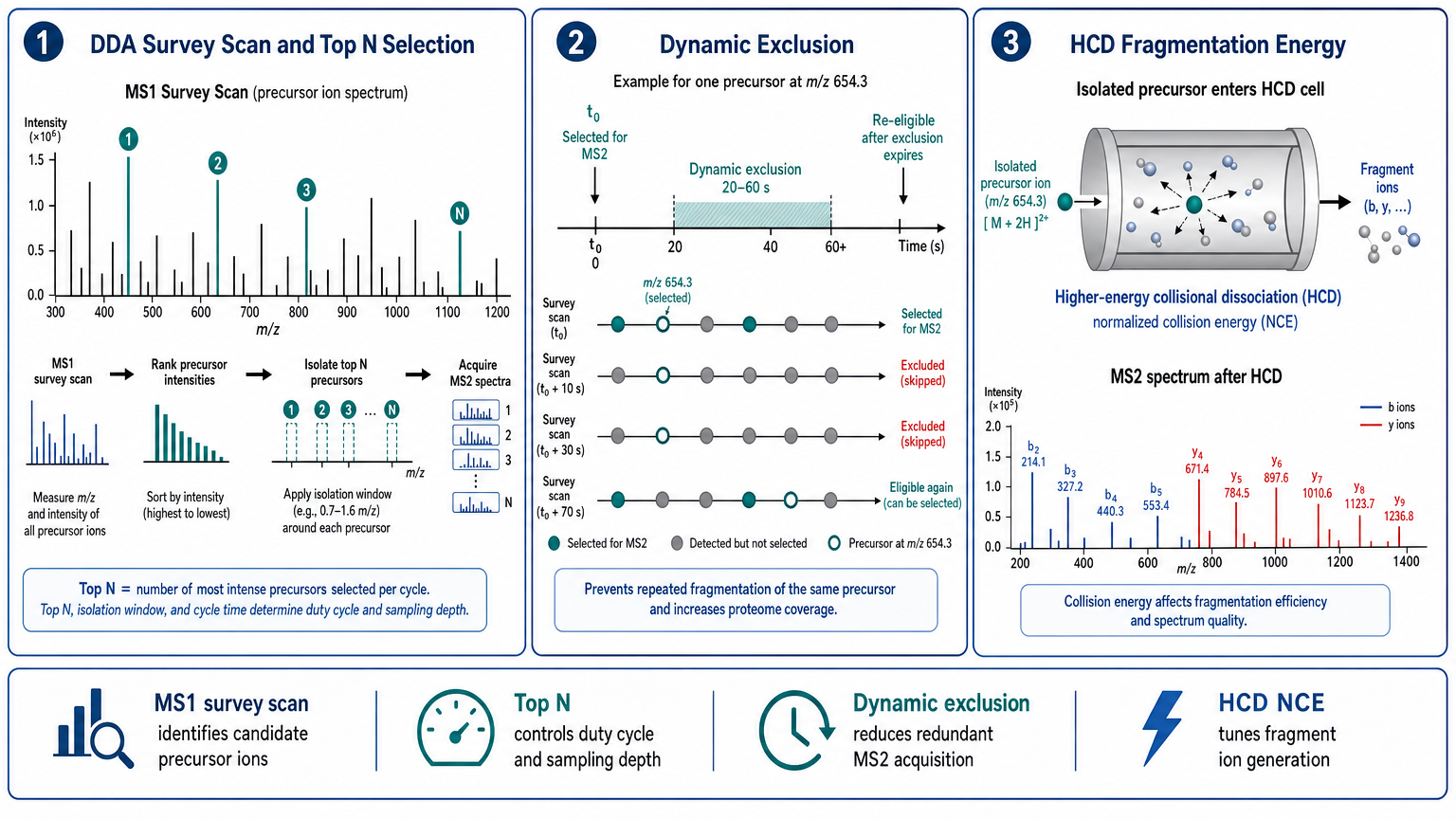
- Top N, dynamic exclusion, and NCE shape MS2 informativeness and depth.
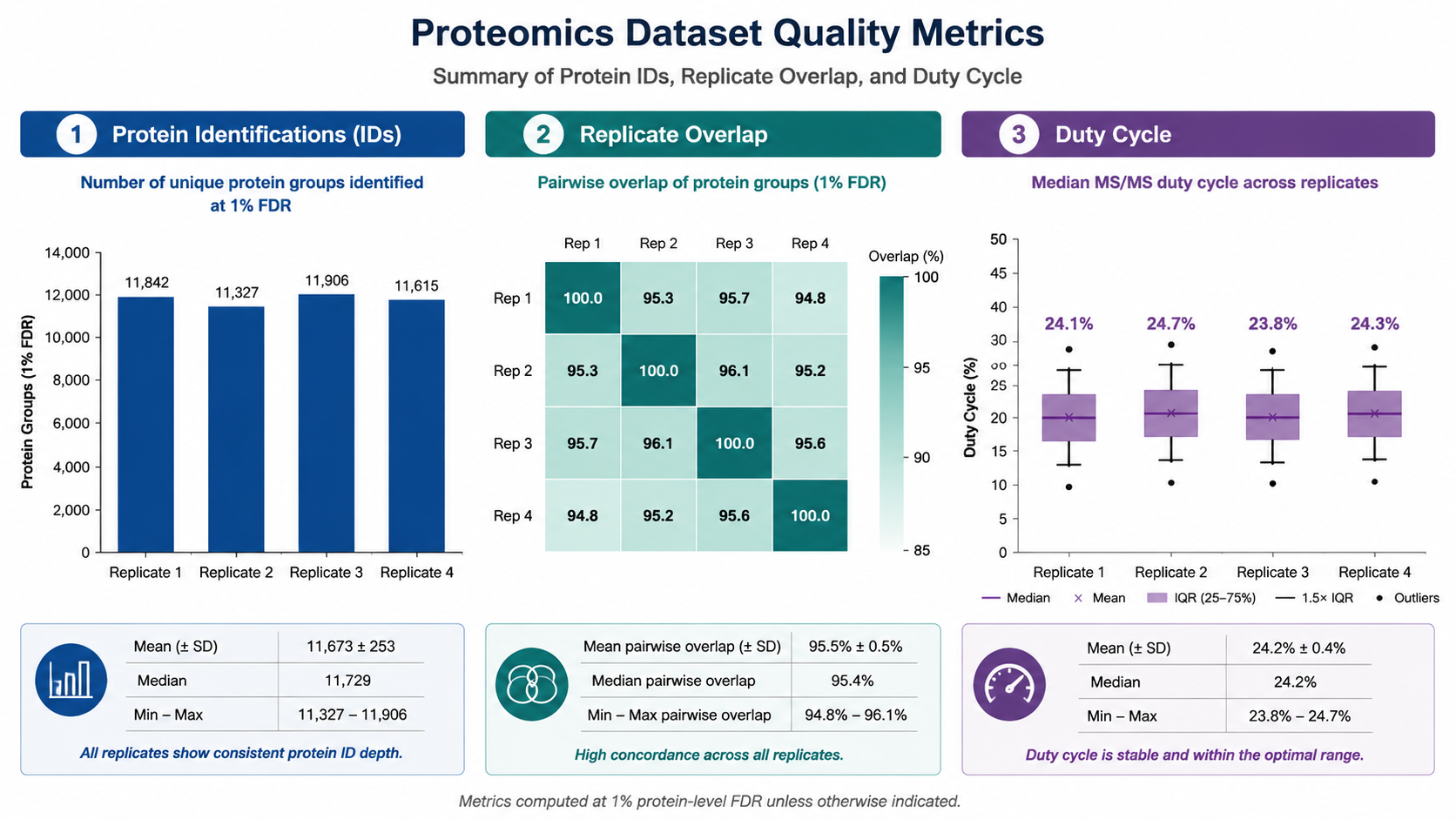
- Evaluate tuning with FDR-controlled IDs and replicate overlap, not MS2 count alone.
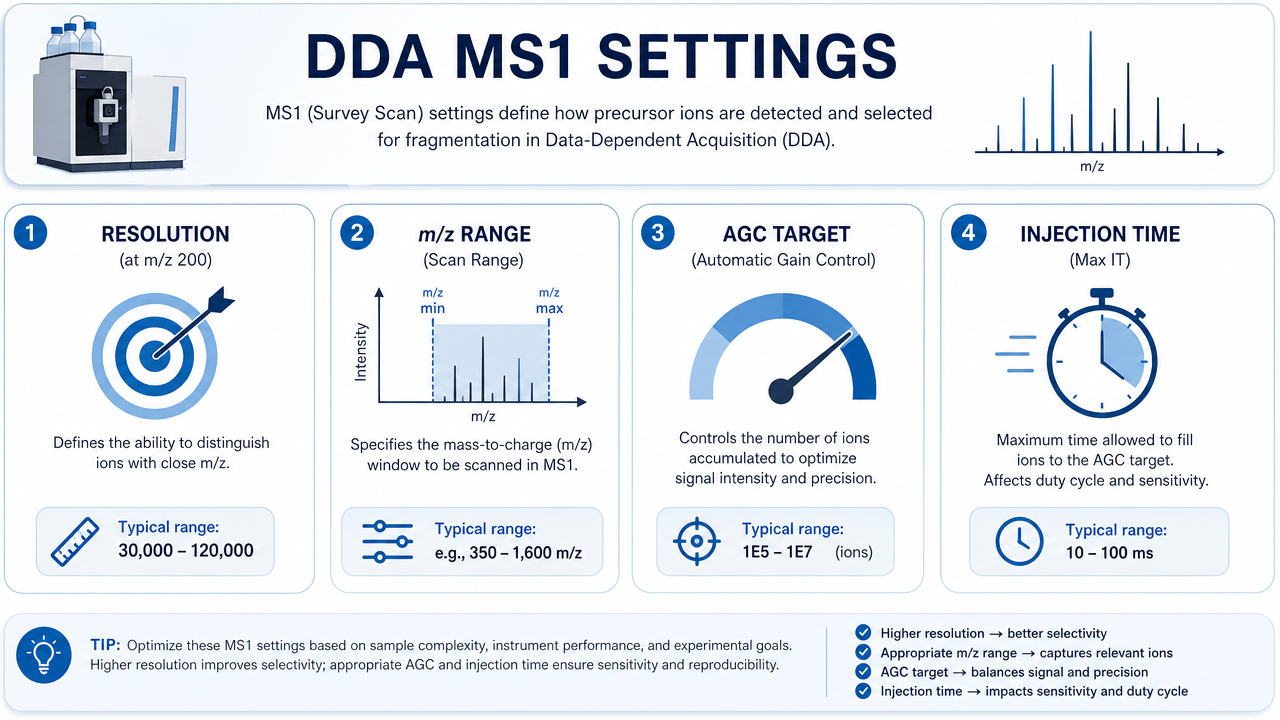
Sample Preparation
Use protease inhibitors, optimize digestion, desalt peptides, and normalize load before changing acquisition tables.
MS2 and Dynamic Exclusion
Start with Top 15*20 and 45-60 s exclusion; adjust HCD NCE and MS2 resolution against cycle time and identification depth.
Related Services
Protein Identification by LC-MS/MS Service
Protein Identification Service by Shotgun Proteomics
LC MS Protein Identification Service
Protein Identification Analysis Service
LC Gradient and Evaluation
Extend nano-flow gradients when peak capacity limits IDs; track unique proteins, digestion QC, and replicate overlap after each parameter change.
FAQ
1. What is a good starting Top N?
Top 15-20 with 45-60 s dynamic exclusion on modern Orbitrap systems; refine using identification depth and duty cycle.
2. Should I raise MS1 or MS2 resolution first?
Raise MS1 when co-elution limits precursors; raise MS2 when fragment annotation suffers, watch total cycle time.
3. When is DDA preferable to DIA?
Library building, clean single-precursor MS/MS, and identification-first discovery workflows often favor DDA.
Conclusion
DDA optimization is a system workflow across prep, chromatography, and acquisition. Evidence-based iteration by sample type beats copying generic method templates.
How to order?




