






LC-MS/MS-Based Exosome Protein Profiling
LC-MS/MS-based exosome protein profiling measures peptides generated from proteins recovered in an exosome preparation and uses their MS/MS evidence to build a protein-level profile. The reliability of that profile depends on how clearly peptide evidence supports individual protein assignments, whereas profiling depth and sequence coverage reflect which proteins and protein regions are represented in the LC-MS/MS dataset. Together, these features determine how confidently the resulting protein profile can be interpreted and used for downstream research.
Understanding these two levels helps distinguish a reliable protein identification from a deep protein profile. A study may generate confident assignments for a relatively limited number of proteins, while another may detect a broader protein set with variable sequence coverage across individual proteins.
For a broader view of how protein profiling fits with sample preparation, quantitative strategy, and downstream interpretation, see Exosome Proteomics: A Practical Guide for Protein Analysis Studies.
What Does LC-MS/MS-Based Exosome Protein Profiling Measure?
LC-MS/MS-based exosome protein profiling reports the proteins represented by identifiable peptide evidence in the analyzed preparation. The primary output is therefore a protein-level profile built from peptide signals and MS/MS sequence evidence rather than a direct measurement of intact exosome particles.
This information can be viewed at two connected levels:
● Peptide-level evidence: LC-MS/MS records peptide precursor-ion signals and MS/MS fragment-ion spectra that provide sequence information for peptide identification.
● Protein-level assignments: Identified peptides are mapped back to the proteins that could have produced them, forming the reported protein profile.
Particle size, concentration, morphology, and selected marker measurements describe different properties of the exosome preparation. LC-MS/MS addresses a complementary question: which proteins are analytically represented in that preparation. The interpretation of characterization results before proteomic analysis is discussed in Exosome Characterization Before Proteomics.
When quantitative analysis is added, the same protein-level dataset can be extended to compare relative abundance across predefined samples or groups. Protein profiling alone, however, is primarily concerned with establishing which proteins are represented and how well those assignments are supported.
Because the measured material is an exosome preparation rather than individually resolved vesicles, the protein profile should be interpreted in the context of the preparation and its isolation history. The effects of isolation and co-isolated background are addressed in How Exosome Isolation and Purification Affect Proteomics Results.
How Is an Exosome Protein Profile Generated by LC-MS/MS?
An exosome protein profile is generated by converting proteins in the analyzed preparation into peptides, measuring those peptides by LC-MS/MS, and assembling the resulting peptide identifications into protein-level assignments.
1. Proteins Are Converted Into Peptides
Proteins recovered from the exosome preparation are extracted and digested into peptides. This step determines which protein-derived peptides are available for downstream LC-MS/MS analysis, but the detailed preparation procedure depends on the sample and is not itself the final protein-identification step.
2. Peptides Are Separated and Analyzed by LC-MS/MS
Liquid chromatography separates the peptide mixture before mass spectrometric detection. MS records peptide precursor ions, and MS/MS fragmentation produces fragment-ion spectra containing sequence information.
3. MS/MS Spectra Are Assigned to Peptide Sequences
The acquired fragment-ion spectra are evaluated against candidate peptide sequences. Spectra with sufficient sequence evidence contribute peptide identifications that can then be used for protein-level assignment.
4. Peptide Evidence Is Assembled Into a Protein Profile
Identified peptides are mapped to the proteins they support. Because some peptides are unique to one protein while others are shared among related sequences, protein inference is used to integrate the available peptide evidence into protein-level assignments.
The resulting profile consists of the protein assignments supported by the peptide evidence obtained from the analyzed exosome preparation. How confidently individual proteins can be resolved from that evidence is evaluated separately through peptide specificity and protein-inference results.
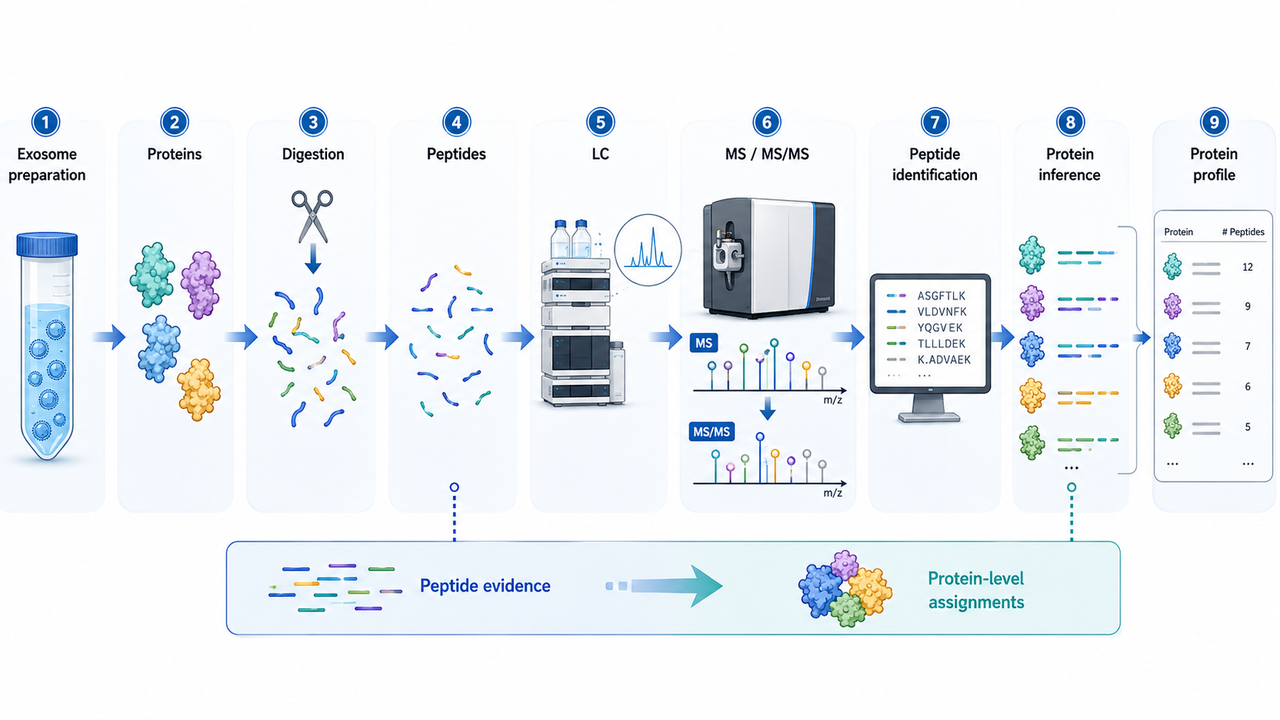
Figure 1. LC-MS/MS Exosome Protein Profiling from Peptide Evidence to Protein-Level Assignments
How Can You Evaluate the Reliability of Protein Identification?
Once protein-level assignments have been generated, their reliability should be evaluated from three related features: the quality of the supporting peptide evidence, whether the observed peptides are specific to the reported protein, and whether protein inference leaves unresolved alternatives.
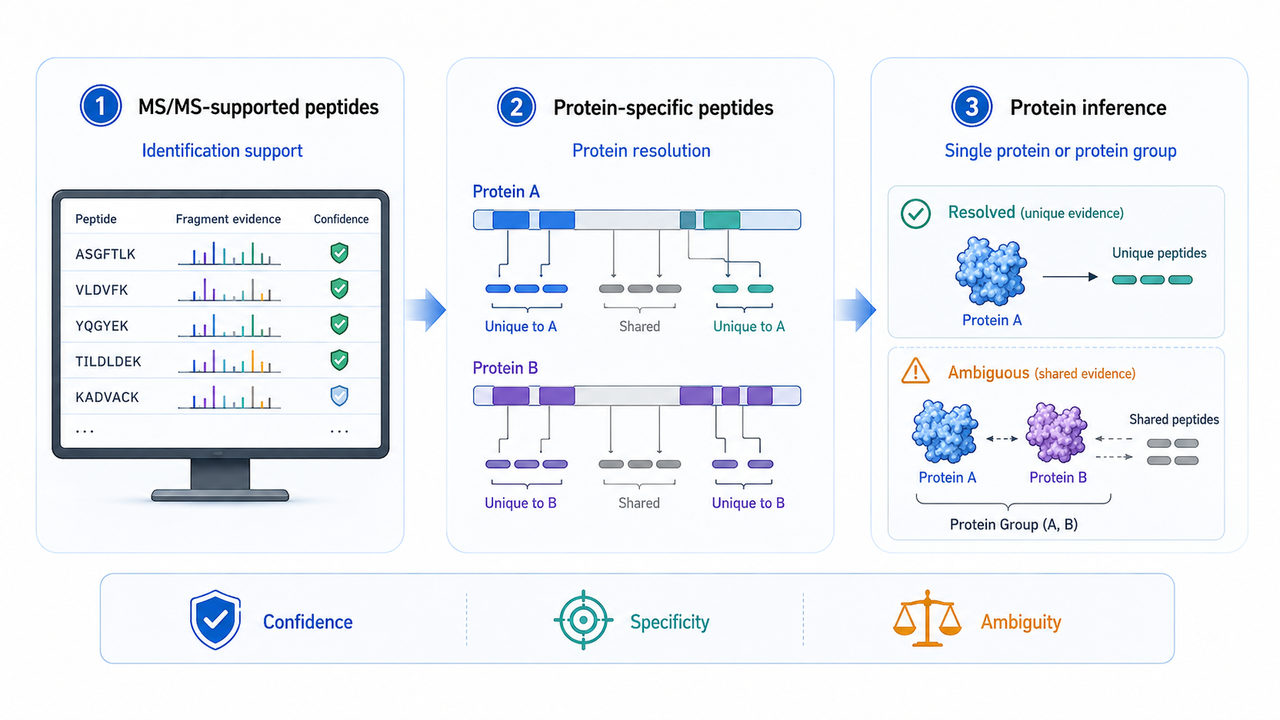
Figure 2. Peptide Evidence, Specificity, and Protein Inference in Protein Identification
1. Review the MS/MS Evidence Supporting the Peptides
A reported protein should be supported by peptide identifications that meet the required confidence criteria and contain sufficient MS/MS sequence evidence. Peptide number provides useful context, but it should be interpreted together with sequence quality and peptide distribution because multiple peptides may still arise from conserved regions and add limited protein-specific resolution.
2. Determine Whether the Peptides Resolve the Protein
Protein-specific peptides provide stronger evidence for distinguishing one protein from related sequences, whereas shared peptides may support several homologous proteins, isoforms, or family members. When the biological question depends on resolving a specific isoform, paralog, or closely related protein, the presence and distribution of protein-specific peptides are more informative than total peptide count alone.
3. Check Whether Protein Inference Leaves Ambiguity
Protein inference determines how the identified peptide set is translated into protein-level results. Some peptide sets support a single protein assignment, whereas others remain compatible with several related proteins and may therefore be reported at the protein-group level. The reported resolution should be checked against the biological question to determine whether the available evidence is sufficient to distinguish the protein of interest.
|
Evidence to Review |
What It Helps Determine |
Interpretation Focus |
|
MS/MS-supported peptides |
Whether the reported protein is supported by identifiable peptide evidence |
Confidence and consistency of peptide identification |
|
Protein-specific peptides |
Whether one protein can be distinguished from related sequences |
Resolution of isoforms, homologs, or family members |
|
Protein inference |
Whether peptide evidence supports an individual protein or a protein group |
Remaining ambiguity at the protein-assignment level |
What Factors Affect Exosome Protein Profile Depth and Coverage?
Protein profile depth and protein sequence coverage describe different parts of the LC-MS/MS result:
● Profile depth: how many proteins are represented by identifiable peptide evidence in the dataset. It is not a count of every protein present in the original exosome preparation.
● Protein sequence coverage: how much of an identified protein sequence is represented by detected peptides. Lower coverage means that fewer sequence regions were observed.
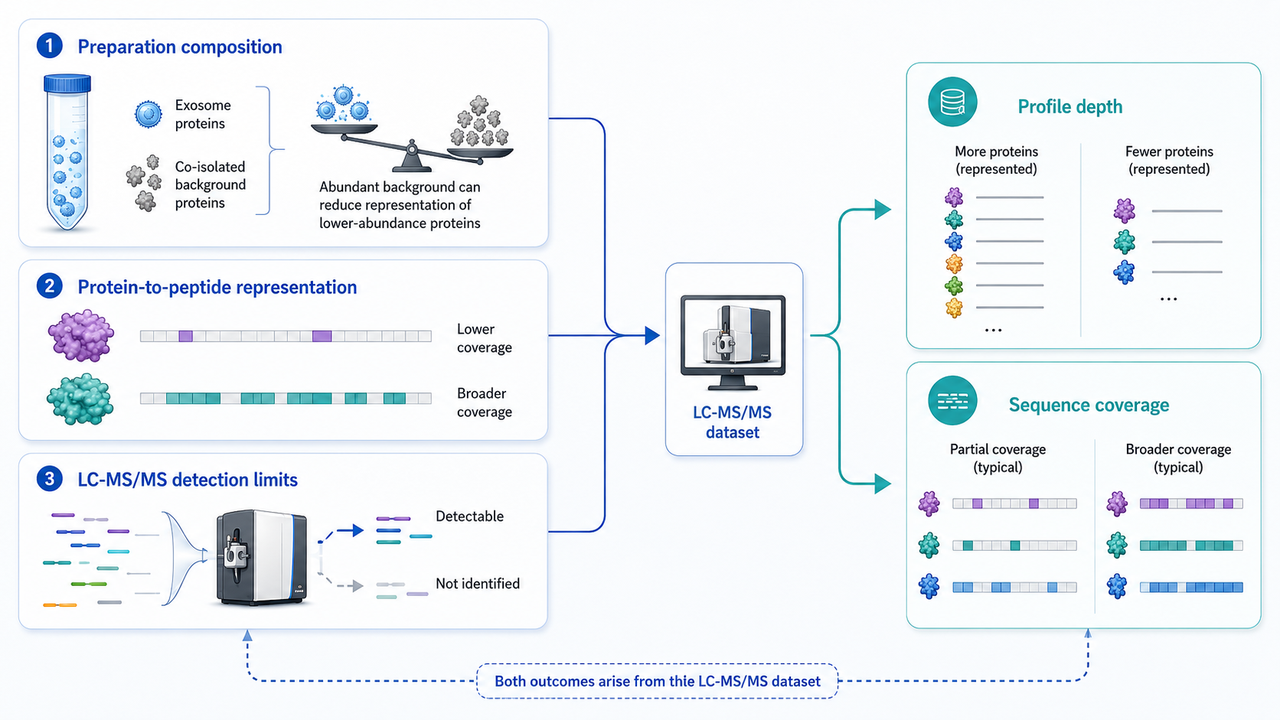
Figure 3. Factors Affecting Exosome Protein Profile Depth and Sequence Coverage
1. Composition of the Exosome Preparation
Exosome preparations contain proteins across a wide abundance range and may also carry co-isolated proteins or non-vesicular material. When abundant background proteins contribute a large share of the peptide signal, lower-abundance proteins are less likely to appear in the final profile. Differences in profiling depth between preparations may therefore come from recovery and background composition rather than from a true difference in biological protein content.
2. Uneven Protein-to-Peptide Representation
A protein does not generate equally detectable peptides across its full sequence. Extraction, digestion, peptide properties, and LC-MS/MS detectability determine which regions are represented in the data. One protein may be identified from peptides covering only a limited part of its sequence, while another yields broader coverage. Low sequence coverage describes limited sequence representation; it does not by itself invalidate the protein identification.
3. LC-MS/MS Detection and Identification Limits
A protein enters the reported profile only when its peptides generate sufficient measurable and identifiable MS/MS evidence. Low-abundance peptides may not be sampled, and some spectra may not support a confident sequence assignment. A protein that is not reported was therefore not supported by enough evidence under the analytical conditions used. That result should not be converted into a claim that the protein is biologically absent from the exosome preparation.
What Research Questions Can LC-MS/MS Exosome Protein Profiling Support?
Once an exosome protein profile has been established, the next step depends on what the study needs to learn from the detected protein set. The profile can support biological organization, candidate prioritization, or a decision to move into quantitative or targeted analysis.
|
Next Research Question |
How the Protein Profile Can Be Used |
Possible Next Step |
|
Which protein classes or functional categories are represented? |
Organize detected proteins by protein class, molecular function, cellular role, or other relevant annotations |
Functional interpretation of the existing profile |
|
Which biological processes are represented across the detected protein set? |
Use functional annotation and pathway analysis to identify recurring biological themes |
Prioritize pathways or biological processes for follow-up |
|
Which proteins deserve closer investigation? |
Rank candidates according to identification evidence, biological relevance, and study context |
Targeted measurement or orthogonal follow-up |
|
Which proteins change between predefined biological groups? |
Use the profiling dataset to define the measurable protein space and inform study design |
Quantitative proteomics across biological samples |
|
Does a selected candidate warrant focused measurement? |
Use discovery-stage evidence to define proteins or peptides of interest |
PRM, MRM, or another targeted strategy |
The key distinction is whether the study needs to establish which proteins are represented in the preparation or determine which proteins change across predefined biological groups. Protein profiling addresses the first question, whereas the second requires quantitative comparison with appropriate group design and biological replication.
LC-MS/MS protein profiling can therefore serve as the primary analysis for composition-focused studies or provide the protein-level foundation for subsequent quantitative comparison and candidate-focused follow-up.
Conclusion
For studies that need to establish an exosome protein profile by LC-MS/MS, the MtoZ Biolabs Exosome Protein Analysis Service can support protein identification and downstream data analysis. Project planning can be based on the current sample state, exosome isolation status, and whether the study is focused on protein profiling alone or will proceed to quantitative comparison.
How to order?




