






How to Choose a Quantitative Strategy for Exosome Proteomics
Choosing a quantitative exosome proteomics strategy is often challenging because the best approach depends on how samples are grouped, how many samples must be compared, how much protein material is available from the exosome preparations, and what the study ultimately needs to measure. The practical goal is not to choose the most complex method, but to match the quantitative workflow to the comparison that the experiment must support. MtoZ Biolabs can help evaluate these project conditions and determine a quantitative design that fits the sample structure and analytical objective.
For a broader view of how quantitative analysis fits with sample preparation, protein profiling, data interpretation, and study planning, refer to Exosome Proteomics: A Practical Guide for Protein Analysis Studies.
What Should Be Considered Before Choosing a Quantitative Strategy?
Before choosing a quantitative exosome proteomics strategy, five points should be defined: the comparisons that need to be made, the number of samples and biological replicates, whether multiplexing is needed, how much protein material is available, and what the quantitative dataset needs to deliver. These factors determine how samples should be organized and what type of acquisition is better matched to the study.
1. What Comparisons Need to Be Preserved?
Start with the biological contrasts the study must answer. A two-group comparison is relatively straightforward, whereas paired samples, multiple treatment groups, or time-course designs require a quantitative structure that preserves several comparisons without mixing them with technical batches.
2. How Many Samples and Biological Replicates Are Included?
Total sample number affects whether the project can remain within one analytical structure or must be divided across several runs or multiplexes. Biological replicates also need to remain distributed in a way that represents variation within each group rather than becoming tied to a specific batch.
3. Does the Study Need Multiplexing?
If a predefined sample set can be organized within one or more multiplexes, a labeled quantitative design may be practical. If samples will be added over time, or the study requires greater flexibility in how individual samples are analyzed, an independently organized workflow may be easier to manage.
4. How Much Comparable Exosome Protein Material Is Available?
The relevant question is not the yield of the best sample, but whether sufficient and reasonably comparable protein material is available across the whole study. A workflow that cannot be applied consistently to all samples is unlikely to support the intended comparison.
5. What Should the Quantitative Dataset Prioritize?
Some studies mainly need broad discovery of condition-associated protein changes. Others place greater value on measuring the same peptide and protein signals consistently across many samples and minimizing gaps in the quantitative matrix. This priority directly affects the later choice of acquisition strategy.
Before method selection, one additional condition should be checked: the exosome preparations being compared should have sufficiently comparable isolation, storage, and processing histories. If preparation history is systematically linked to the biological groups, the issue should be addressed before choosing a quantitative workflow because the resulting dataset may not reliably distinguish preparation-related variation from the biological effect under study.
With these five factors defined, the next decisions become much clearer: Label-free versus TMT/iTRAQ determines how quantification is organized across samples, while DDA versus DIA determines how the peptide measurements are acquired.
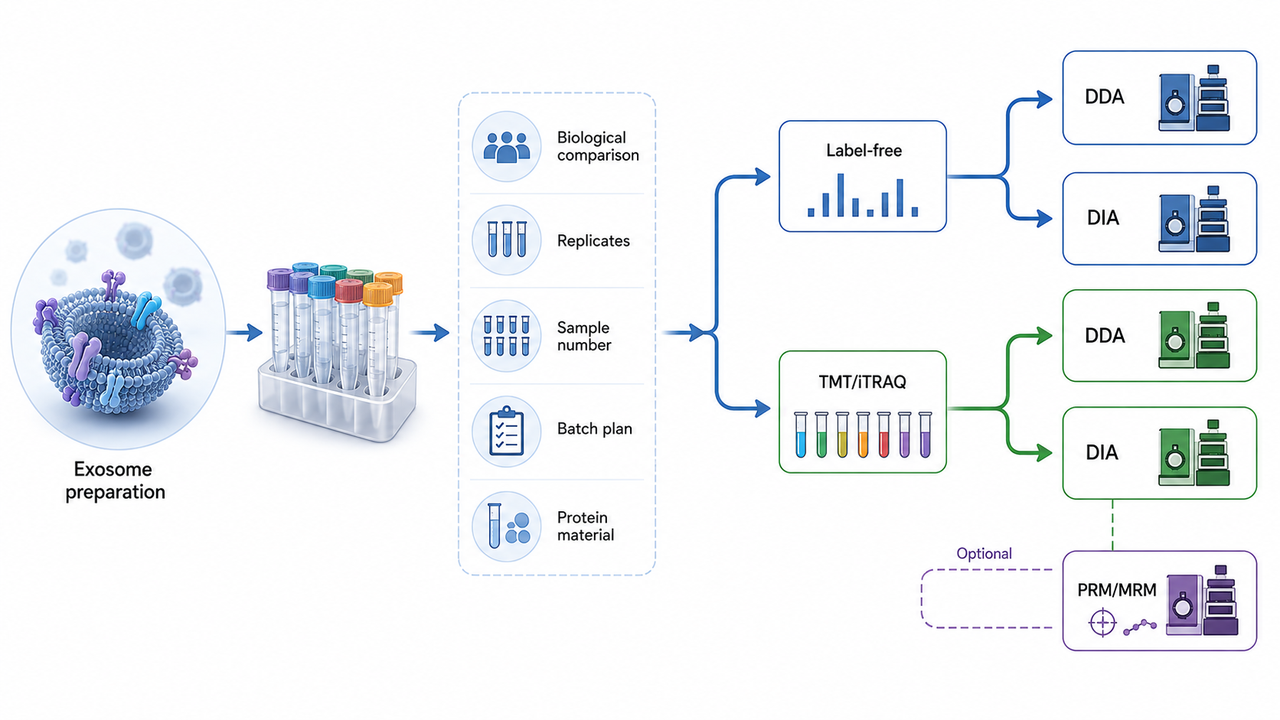
Figure 1. Quantification and Acquisition Strategy Selection in Exosome Proteomics
Label-Free or TMT/iTRAQ: How Should Quantification Be Organized?
The choice between Label-free and TMT/iTRAQ should follow the sample structure. The main questions are whether the full sample set is fixed in advance, whether multiplexing is practical, and whether the study may expand after analysis begins.
1. When Label-Free Fits Better
Label-free is often more practical when samples are analyzed independently, new samples may be added later, or the study does not fit naturally into a fixed multiplex. This avoids redesigning a labeling scheme when the sample set changes, but quantitative comparison is then distributed across separate LC-MS/MS runs, so run-to-run consistency becomes more relevant.
2. When TMT/iTRAQ Fits Better
TMT/iTRAQ is better matched to a predefined sample set that can be organized within a planned multiplex. If several multiplexes are required, the design should preserve connectivity between multiplexes and avoid systematically assigning different biological groups to separate batches. Otherwise, biological differences can become difficult to distinguish from multiplex effects.
3. A Practical Way to Decide
|
Study Situation |
More Likely to Favor |
|
Samples may be added during the project |
Label-free |
|
Sample set is fixed before analysis |
TMT/iTRAQ |
|
Study does not fit naturally into a multiplex |
Label-free |
|
Samples can be organized within a predefined multiplex |
TMT/iTRAQ |
|
Multiple multiplexes separate biological groups into different batches |
Redesign the batch allocation before proceeding |
Once the sample organization is clear, the next question is whether DDA or DIA better supports the required balance between discovery depth and consistent quantitative measurement across samples.
DDA or DIA: Which Acquisition Strategy Fits the Project?
The choice between DDA and DIA should follow how much the study depends on consistent quantitative measurement across samples. DDA remains suitable for discovery-oriented exosome proteomics, while DIA is usually more attractive when the comparison requires the same peptide and protein signals to be measured across a larger or more complex sample set.
1. When DDA May Be a Better Match
DDA is a reasonable choice when the main objective is broad exploratory discovery and the study does not depend strongly on complete measurement of the same peptide signals across every sample. It can be well matched to early-stage comparative studies in which identifying condition-associated protein changes remains the primary objective. Because precursor selection can vary between runs, some peptides may be represented inconsistently across exosome preparations, which becomes more relevant when the biological comparison depends strongly on cross-sample data completeness.
2. When DIA May Be a Better Match
DIA is often better matched to studies in which cross-sample consistency and quantitative completeness are central to interpretation. This becomes particularly relevant in multi-group, time-course, or other comparative designs when missing peptide or protein measurements would weaken the intended group-level comparison. Its value in this context lies in more consistent representation of the measurable protein space across the dataset rather than simply a higher identification count.
3. A Practical Way to Decide
|
Study Situation |
More Likely to Favor |
|
Broad exploratory discovery |
DDA |
|
Discovery-oriented comparison with limited dependence on complete cross-sample measurements |
DDA |
|
Comparative study where consistent measurement across many samples is a major priority |
DIA |
|
Time-course or multi-group design with strong dependence on cross-sample data completeness |
DIA |
|
Quantitative completeness across samples is a major priority |
DIA |
|
Main concern is maximizing protein identifications in a single run |
Do not choose on identification count alone |
When Should PRM/MRM Be Used After Discovery Proteomics?
PRM/MRM becomes relevant when the research question has narrowed from proteome-wide discovery to a predefined set of protein targets. The key transition is from asking which proteins change across the dataset to asking how selected candidate proteins behave across follow-up samples or experimental groups.
A discovery experiment may identify proteins associated with treatment, disease status, genotype, or another experimental condition. Once a smaller candidate set has been prioritized, repeating another broad discovery experiment may add less value than measuring those targets directly in a targeted workflow.
The decision can be framed simply:
-
If the project still needs to discover which proteins change, remain in discovery-scale proteomics.
-
If candidate proteins are already defined and the next question concerns their abundance across selected samples, PRM/MRM can be considered for targeted follow-up.
PRM/MRM can provide focused quantitative evidence for selected protein candidates across follow-up samples. If the next research question concerns biological function, the candidate should move into functional experiments; if it concerns diagnostic or prognostic performance, independent validation is required. Targeted proteomics therefore strengthens evidence for the abundance pattern of a predefined candidate while leaving functional and clinical questions to experiments designed for those endpoints.
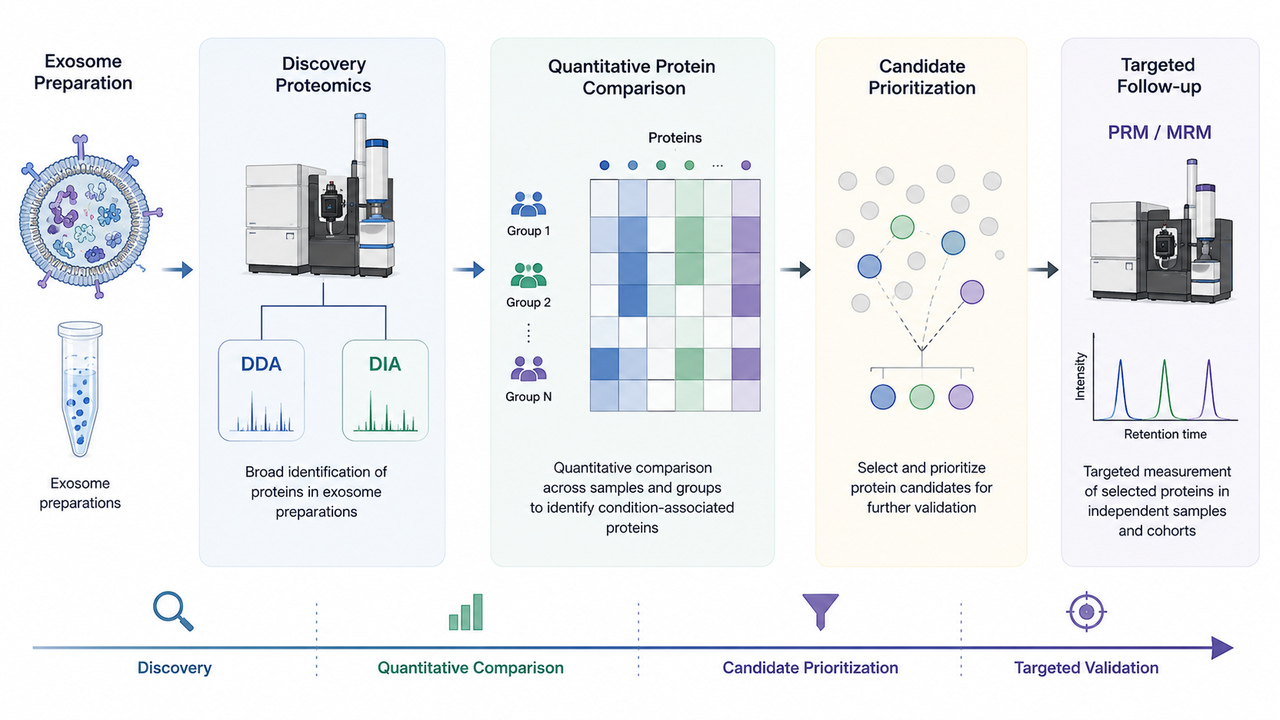
Figure 2. Transition From Discovery Proteomics to Targeted Protein Follow-Up
How to Match the Strategy to Common Exosome Proteomics Study Scenarios
Once the comparison groups and sample structure are defined, the strategy can usually be narrowed by asking what the study needs most: flexible sample organization, multiplexing, consistent measurement across samples, broad discovery, or focused follow-up.
|
If Your Study Looks Like This |
What to Consider First |
Why |
|
You only need to know which proteins are detectable in one exosome preparation |
Protein profiling rather than a quantitative comparison |
A quantitative design adds little value unless protein abundance must be compared across samples or conditions |
|
The complete sample set is already defined and can be organized within a planned multiplex |
TMT/iTRAQ |
Multiplexing can organize predefined samples within a shared quantitative comparison |
|
Samples may be added later or need to remain independently analyzed |
Label-free |
The study can expand without redesigning an existing multiplex structure |
|
The study includes many samples, multiple groups, or time points, and missing measurements across samples would weaken the comparison |
DIA should receive greater consideration as the acquisition strategy |
The decision is driven by the need for more consistent peptide and protein measurement across the dataset, not by sample number alone |
|
The study is still broadly searching for condition-associated protein changes and complete cross-sample measurement is not the dominant requirement |
DDA may remain sufficient for discovery-oriented acquisition |
The project still prioritizes broad discovery rather than maximizing quantitative completeness across every sample |
|
A small set of candidate proteins has already been selected from discovery data |
PRM/MRM |
The research question has shifted from discovering changing proteins to measuring predefined targets |
For this profiling-only situation, LC-MS/MS-Based Exosome Protein Profiling explains how identification evidence should be evaluated and why profiling depth can differ.
What Should Be Confirmed Before Finalizing the Quantitative Strategy?
Before the quantitative strategy is finalized, four points should be clear.
1. The Biological Comparison Is Defined
The relevant groups, time points, paired relationships, and biological replicates should already be established. The analytical strategy should preserve these comparisons rather than force them into a structure that creates avoidable batch confounding.
2. The Sample and Batch Structure Is Workable
Exosome preparations should be sufficiently comparable across the groups being analyzed, and the main biological contrasts should not be systematically separated into different analytical batches or multiplexes.
3. Quantification Format and Acquisition Strategy Are Serving Different Roles
Label-free or TMT/iTRAQ should be chosen according to how samples need to be organized, while DDA or DIA should be selected according to what the dataset needs from acquisition, particularly the balance between discovery and cross-sample quantitative completeness.
4. The Analytical Endpoint Is Clear
If the study still needs broad discovery, the workflow should remain discovery-oriented. If a defined candidate set already exists, targeted follow-up may be more appropriate than another broad proteome-wide comparison.
If any of these points remains unresolved, changing the mass spectrometry method alone will not solve the underlying design problem. The quantitative strategy should be finalized only when the workflow can support the biological comparison the study is intended to test.
Conclusion
For projects that require quantitative comparison of exosomal proteins, MtoZ Biolabs can evaluate the available samples, group design, and expected analysis through its Exosome Protein Analysis Service to determine a suitable quantitative workflow before analysis begins.
How to order?




