






How Exosome Isolation and Purification Affect Proteomics Results
Researchers often notice isolation-related questions only after proteomics data are available: one group may show fewer identified proteins, stronger background, broader missingness, or a quantitative pattern that does not match the expected biology. Before interpreting these differences biologically, check whether exosome isolation or purification systematically changed the material entering LC-MS/MS. For the broader study context linking isolation with sample preparation, quantitative strategy, and data interpretation, see Exosome Proteomics: A Practical Guide for Protein Analysis Studies.
Isolation and purification can alter protein recovery, co-isolated background, and the composition of the final preparation. These changes can affect protein identification, profile depth, quantitative measurements, and sample comparability. For an existing study, researchers should determine whether the isolation and purification history allows the samples to be compared directly and whether any preparation-related problem is limited to individual samples, specific batches, or an entire comparison group.
How Exosome Isolation and Purification Change Proteomics Results
Different isolation workflows do not recover the same protein mixture from the same starting sample. A workflow that retains more soluble or lipoprotein-associated material presents a different LC-MS/MS input from one that removes more background but also loses part of the exosome-associated protein content.
These differences change the peptide mixture available for measurement. Higher background can reduce the representation of lower-abundance exosome-associated proteins, while greater material loss can reduce the peptide evidence available for identification. The result may be fewer identified proteins, a shifted protein profile, or less consistent quantitative measurements across samples.
When two datasets differ, recovery, background, and preparation composition are the first upstream variables to compare.
What Isolation and Purification Change Before LC-MS/MS
Isolation and purification determine whether exosome preparations provide comparable protein inputs for LC-MS/MS. Before interpreting proteomic differences between groups, researchers should check whether protein recovery, co-isolated background, preparation composition, or additional purification differs systematically between the samples being compared.
1. Is Protein Recovery Sufficient and Comparable for the Intended Analysis?
Uneven protein recovery matters most when it consistently affects one biological group, preparation batch, or subset of samples. Lower recovery can reduce the amount of material available for peptide measurement, whereas a higher protein yield may partly reflect co-isolated background rather than greater recovery of exosome-associated proteins.
Recovery differences become a comparison problem when they materially change the protein input or systematically follow the biological groups. If one group consistently has lower recovery, review identification depth, missingness, and quantitative stability before interpreting group-level changes.
2. Is Background Uneven Enough to Distort the Comparison?
Co-isolated soluble proteins, lipoprotein-associated material, and other non-vesicular components become part of the peptide mixture analyzed by LC-MS/MS. Background becomes most relevant when it is substantially higher in one sample subset or biological group.
If abundant background proteins dominate the same samples that also show lower identification depth or altered quantitative patterns, background composition should be considered before those differences are assigned to biology. If background levels are similar across groups, it is less likely to explain a systematic group-associated pattern.
3. Do the Preparations Represent Comparable Material?
Two samples can both be described as exosome preparations while still containing different proportions of vesicle-associated and non-vesicular material, particularly when different isolation or purification workflows were used. Direct comparison is most appropriate when the samples were processed with comparable workflows and contain sufficiently similar types of recovered material. If biological groups were processed through substantially different preparation routes, first determine whether the preparation difference can be separated from the biological comparison.
4. Would Additional Purification Improve the Current Preparation?
Additional purification is useful only when reducing background improves the LC-MS/MS input without creating insufficient or uneven recovery. If the existing preparation already provides adequate material and acceptable background, further purification may add little value. If background is likely to dominate the peptide signal, additional cleanup may be justified, provided that comparable material can still be recovered across samples.
If you are unsure whether an existing exosome preparation is suitable for proteomics or requires additional cleanup, contact MtoZ Biolabs with the sample source, isolation method, purification history, and available material for evaluation before LC-MS/MS analysis.
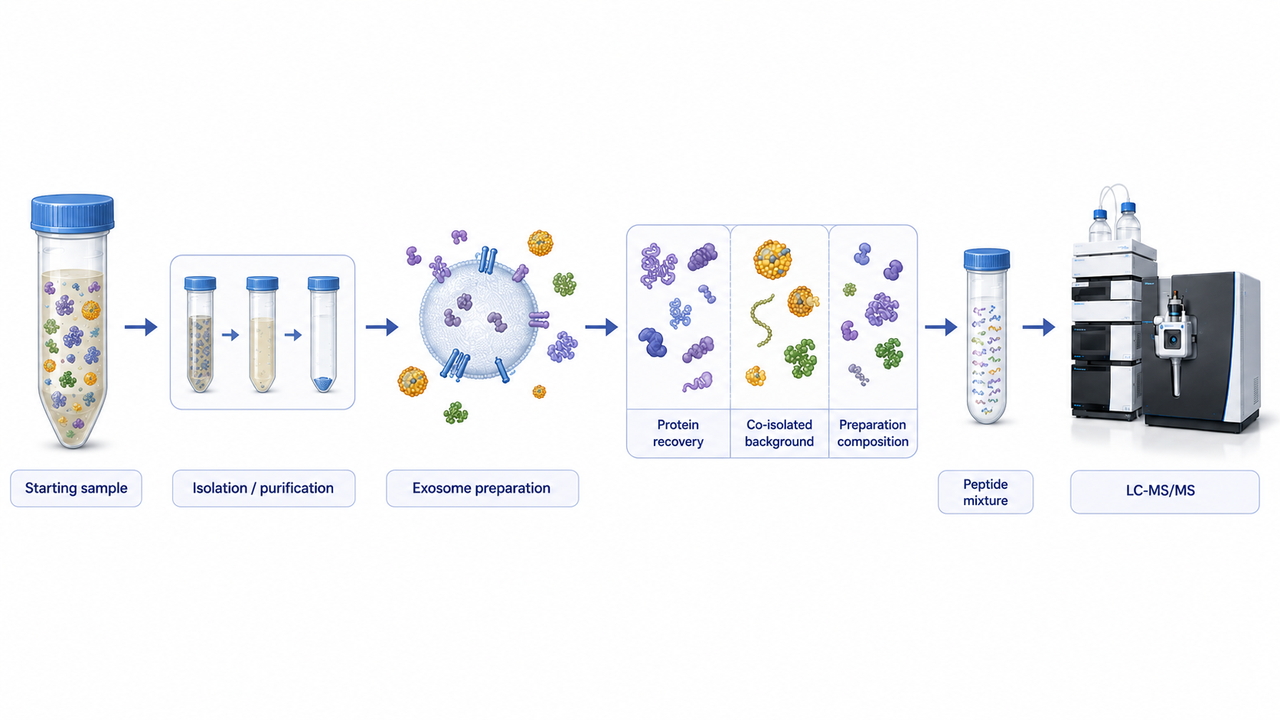
Figure 1. How exosome isolation and purification alter the material entering LC-MS/MS
How to Recognize Isolation-Related Effects in Proteomics Results
|
What You See in the Data |
First Question to Answer |
What to Do Next |
|
One group or batch has noticeably fewer identified proteins |
Do these samples also share lower recovery, stronger background, or the same preparation batch? |
Review preparation history before interpreting lower identification depth as a biological difference |
|
A subset is dominated by abundant background proteins |
Is the background concentrated in one group or preparation batch? |
Compare isolation and purification history and determine whether background is systematically affecting the comparison |
|
Samples cluster more strongly by preparation batch than biological group |
Are preparation batch and biological group partially or completely aligned? |
Evaluate batch–group confounding before proceeding with group-level interpretation |
|
One subset shows broader missingness or unstable quantitative values |
Do these samples share recovery, concentration, or processing deviations? |
Review the affected samples and determine whether the issue is sample-specific or group-linked |
|
Samples processed with different isolation workflows show markedly different protein profiles |
Does the profile difference follow the preparation workflow rather than the biological grouping? |
Evaluate preparation-dependent recovery and composition before treating the profile difference as biological. |
Use these patterns to identify which samples or batches need their preparation history reviewed before biological interpretation continues. When an unusual protein profile repeatedly follows the same isolation batch or preparation deviation, an isolation-related explanation becomes more plausible. When the same biological-group pattern remains evident among samples processed with the same isolation workflow, the observed proteomic difference is more likely to reflect biology rather than preparation.
When the main uncertainty is whether an individual protein identification itself is supported by sufficient peptide evidence, that question belongs to LC-MS/MS-Based Exosome Protein Profiling.
Can the Current Samples Still Support Quantitative Comparison?
Different isolation histories do not automatically make a dataset unusable, but they change how confidently samples can be compared. The key question is whether preparation differences are independent of the biological comparison or systematically aligned with it.
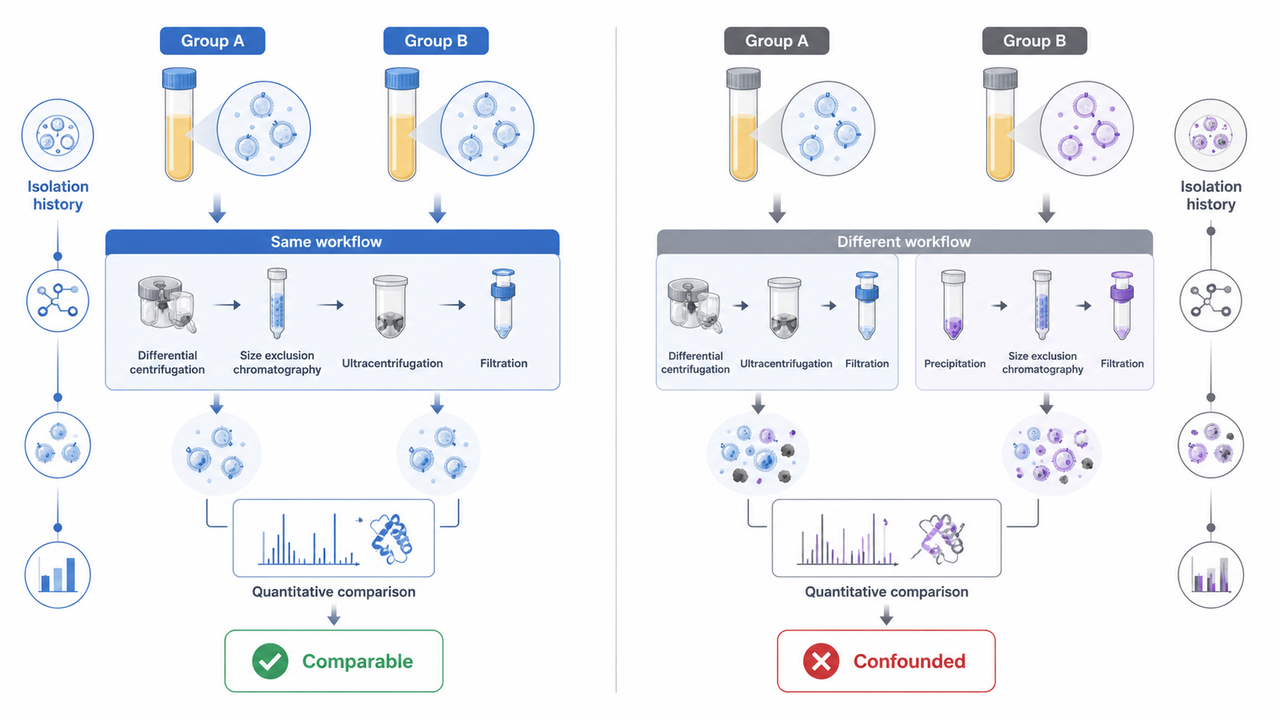
Figure 2. How isolation workflow consistency affects sample comparability
|
Isolation Situation |
Interpretation of the Current Dataset |
Comparison Status |
|
Same isolation and purification workflow across biological groups |
Systematic preparation bias is less likely to explain the group difference |
Comparison can proceed if no major sample-specific preparation issue is evident |
|
Minor documented deviations in a few samples |
The main comparison may remain usable, but affected samples may carry additional technical variation |
Proceed after reviewing the affected samples |
|
Different isolation batches distributed across biological groups |
Batch variation may contribute without being completely confounded with biology |
Comparison can proceed after checking whether the proteomic pattern follows batch |
|
Different biological groups processed with different isolation workflows |
Preparation effect cannot be separated cleanly from biological condition |
Not suitable for clean group-level biological attribution |
|
Isolation history incomplete |
Sample comparability cannot yet be established |
Comparison status cannot yet be determined |
Preparation history becomes most problematic when it systematically follows the biological variable being tested. For example, if all disease samples were processed with one isolation workflow and all controls with another, any protein difference can reflect both biology and preparation. Downstream normalization or statistical testing cannot reconstruct material that was differentially recovered before LC-MS/MS, nor can it determine which part of the observed difference originated from isolation.
If preparation histories are sufficiently consistent and the study is ready to move into quantitative comparison, the next analytical question is how to organize that comparison. This is addressed in How to Choose a Quantitative Strategy for Exosome Proteomics.
How to Distinguish Isolation Effects from Biological Differences
When proteomic differences appear between samples or groups, first determine whether they align more closely with biological grouping or with preparation history. Reduced identification depth, increased background, broader missingness, or unstable quantitative values deserve particular attention when they occur in samples that share the same isolation batch, purification procedure, or recovery deviation.
1. Compare Proteomic Patterns with Preparation Records
Review whether the affected samples share any preparation-related feature, such as:
-
the same isolation batch;
-
a different isolation or purification procedure;
-
unusually low or high recovery;
-
a concentration or cleanup deviation;
-
an additional purification step.
A proteomic pattern that repeatedly coincides with the same preparation feature should not be interpreted as a biological difference until that preparation effect has been evaluated. If no such correspondence is evident, isolation is less likely to explain the result.
2. Determine Whether the Issue Is Limited to Individual Samples or Affects the Comparison
If reduced identification depth, high background, or unstable quantitative values occur only in one or a few samples, review those samples for documented processing deviations. The broader group comparison may remain interpretable if the problem is confined to those samples.
If the same pattern occurs across multiple samples that share one isolation workflow or batch, preparation becomes relevant to the group-level comparison. The concern is greatest when the same preparation structure also matches the biological grouping.
3. Check Whether the Biological Difference Persists Under Comparable Preparation Conditions
When samples from the same biological comparison have been processed across more than one preparation batch, examine whether the same protein changes remain evident within comparable preparation conditions. A group-associated pattern reproduced across preparation batches provides stronger support for a biological difference, whereas a pattern that mainly follows isolation batch or disappears within comparable preparation conditions is more likely to contain a preparation-related component. This comparison is only informative when preparation batch and biological group are not completely confounded.
4. Choose the Next Step Based on the Source of the Problem
After determining whether the observed variation is associated with individual samples, preparation batches, or biological groups, select the appropriate next step:
● Continue quantitative interpretation when preparation histories are comparable and the observed biological pattern does not track isolation batch or processing deviations.
● Review individual samples when the abnormal pattern is restricted to a small number of samples with identifiable preparation issues.
● Repeat preparation or analysis when the affected samples can be reproduced from comparable starting material and the technical problem is correctable.
● Limit the conclusion to profiling or exploratory analysis when the dataset remains informative but preparation differences weaken direct group-level comparison.
● Reconsider the comparison design when isolation workflow and biological group are inseparable.
● Recover missing preparation records when sample comparability cannot yet be established.
If sample preparation is sufficiently comparable, the remaining question is whether individual protein changes are supported by quantitative consistency, biological replicates, statistical evidence, and data completeness. This can be evaluated in How Differential Exosomal Proteins Are Identified and Interpreted.
If the uncertainty occurs before LC-MS/MS—such as whether an existing preparation requires additional processing—see Exosome Proteomics Sample Preparation and LC-MS/MS Compatibility.
Conclusion
When an existing isolation history makes direct proteomic comparison difficult to judge, project evaluation can start from the sample source, isolation and purification workflow, group structure, and the pattern already observed in the dataset. The MtoZ Biolabs Exosome Protein Analysis Service can support project-specific evaluation of sample comparability and analysis planning for the current preparations.
How to order?




