






How to Analyze Histone β-Hydroxybutyrylation by LC-MS/MS: Sample Prep, Enrichment, and Quantification
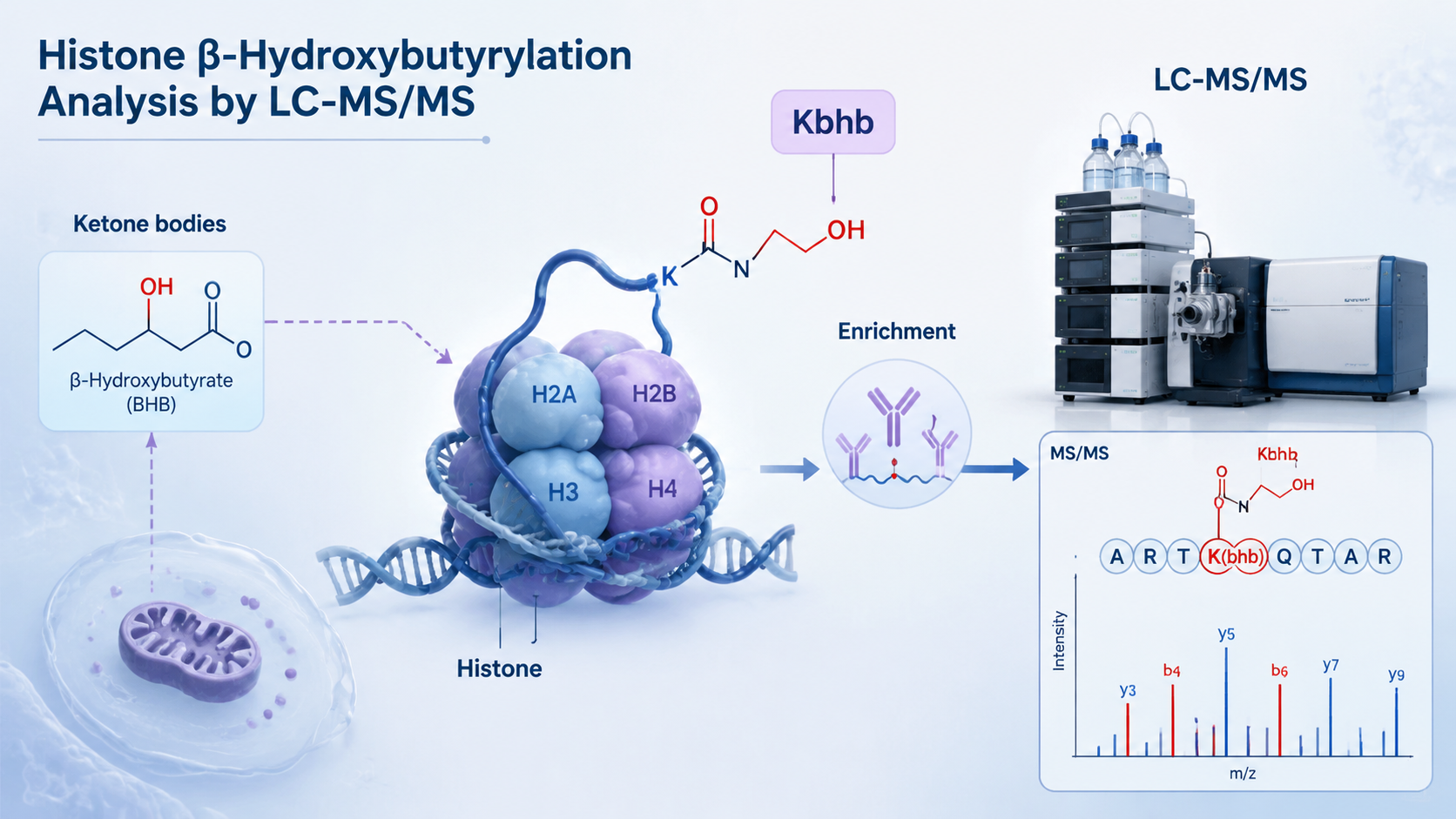
Histone β-hydroxybutyrylation (Kbhb) is a lysine acylation mark derived from the ketone body β-hydroxybutyrate. It links energy metabolism to chromatin regulation and has drawn attention in metabolic disease, cancer, and immune biology. LC-MS/MS remains the reference method for mapping Kbhb sites, confirming localization, and quantifying changes across conditions. This is true only if sample preparation, enrichment, and search parameters are aligned with its low abundance and mass ambiguity risks.
Key Takeaways
-
Purify histones early with protease inhibitors to limit modification loss before digestion.
-
Chemical derivatization and multi-enzyme digestion improve coverage of basic histone sequences.
-
Kbhb peptides are low abundance; immunoaffinity or staged fractionation often precedes LC-MS/MS.
-
Set Kbhb as a variable modification (+86.0368 Da) with strict FDR and localization scoring.
-
High-resolution MS reduces confusion with near-mass acyl marks on lysine.
What Is Histone β-Hydroxybutyrylation?
Kbhb installs a β-hydroxybutyryl group on histone lysine residues. Because the acyl donor connects to ketone-body metabolism, Kbhb shifts with fasting, exercise, and metabolic stress in ways that standard acetylation panels may not capture. Functionally, Kbhb sits alongside other short-chain acylations in tuning transcription and chromatin accessibility.
Related Services
Histone β-Hydroxybutyrylation Analysis
Lysine β-hydroxybutyrylation Proteomics Analysis Service
Protein β-Hydroxybutyrylation Analysis
LC-MS/MS Workflow for Kbhb
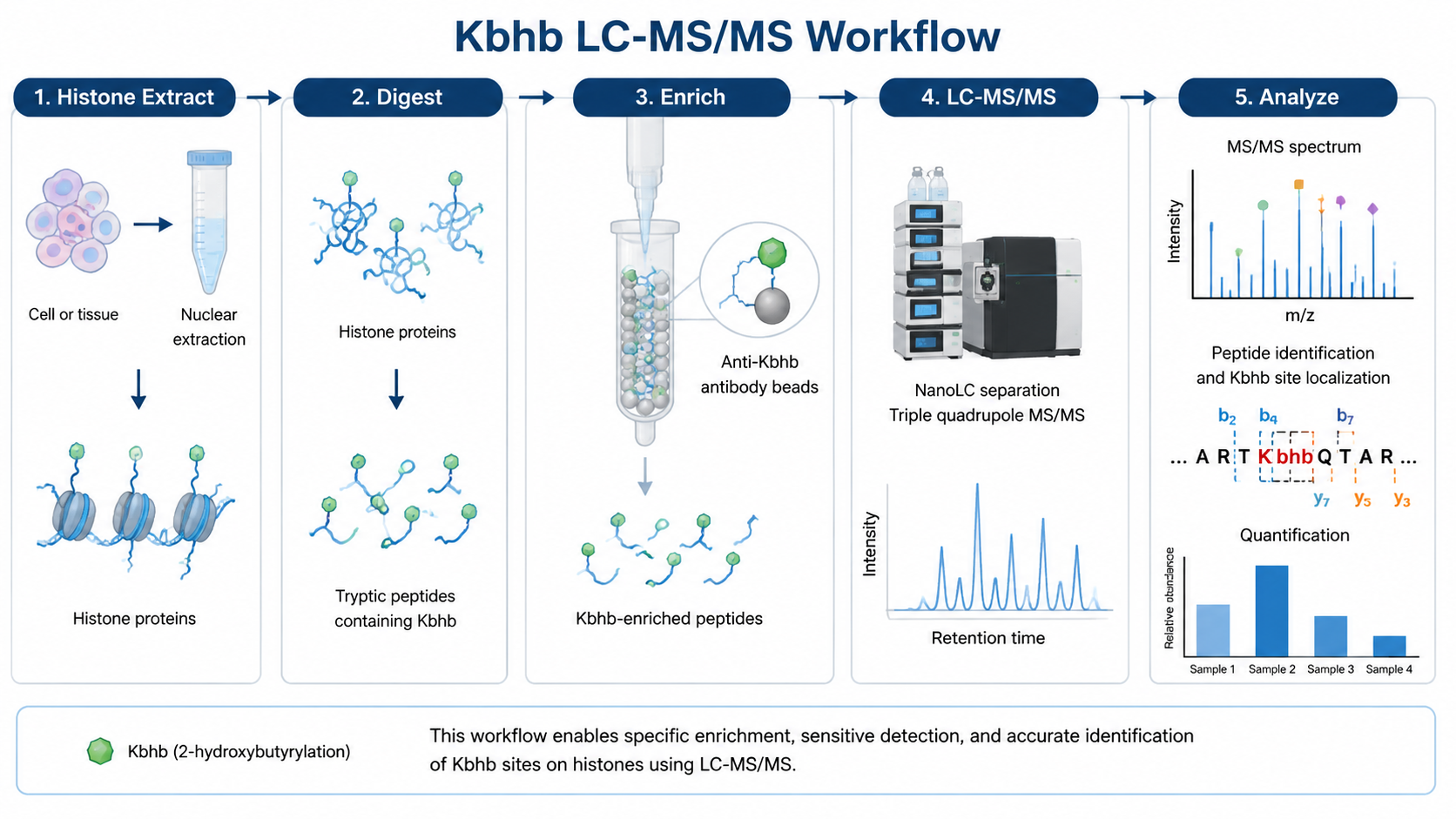
Step 1: Histone Extraction and Purification
Lyse cells or tissue in buffer with protease and deacylase inhibitors where needed. Acid extraction (for example 0.2 M HCl) enriches histones; acetone precipitation helps remove non-histone proteins.
Step 2: Digestion Strategy
Propionylation or benzoylation can block free lysines and improve tryptic cleavage. Combining trypsin with Glu-C increases coverage. Control temperature, time, and pH to limit artificial modification or incomplete digestion.
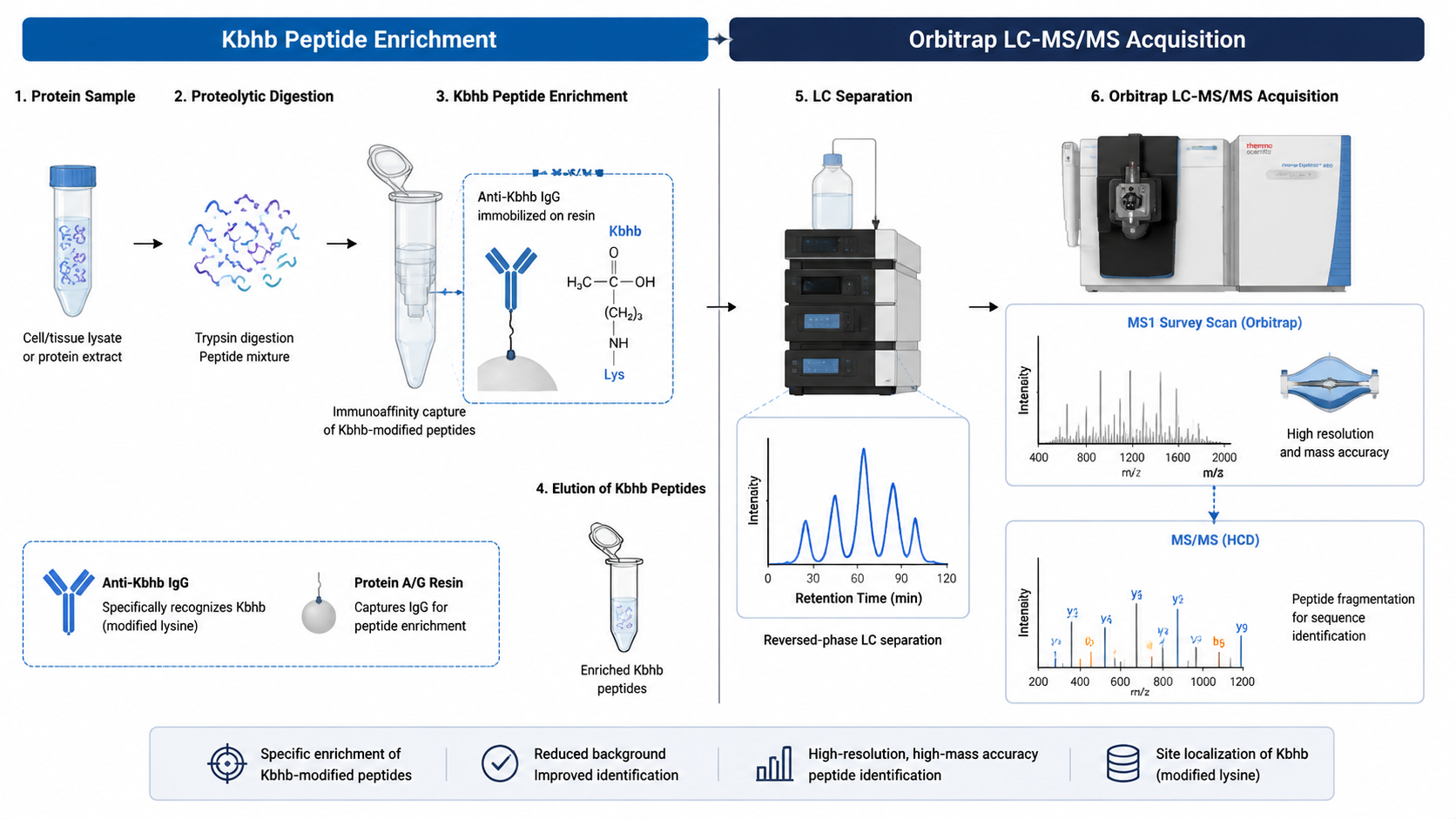
Step 3: Enrich Kbhb Peptides
Antibody-based enrichment for Kbhb or broader hydroxybutyryl marks improves sensitivity. High-pH reversed-phase prefractionation spreads complexity before MS.
Step 4: LC-MS/MS Acquisition
Nanoflow C18 LC paired with high-resolution instruments is standard. DDA suits discovery; DIA supports reproducible quantification. PRM can validate key sites after discovery.
Data Analysis
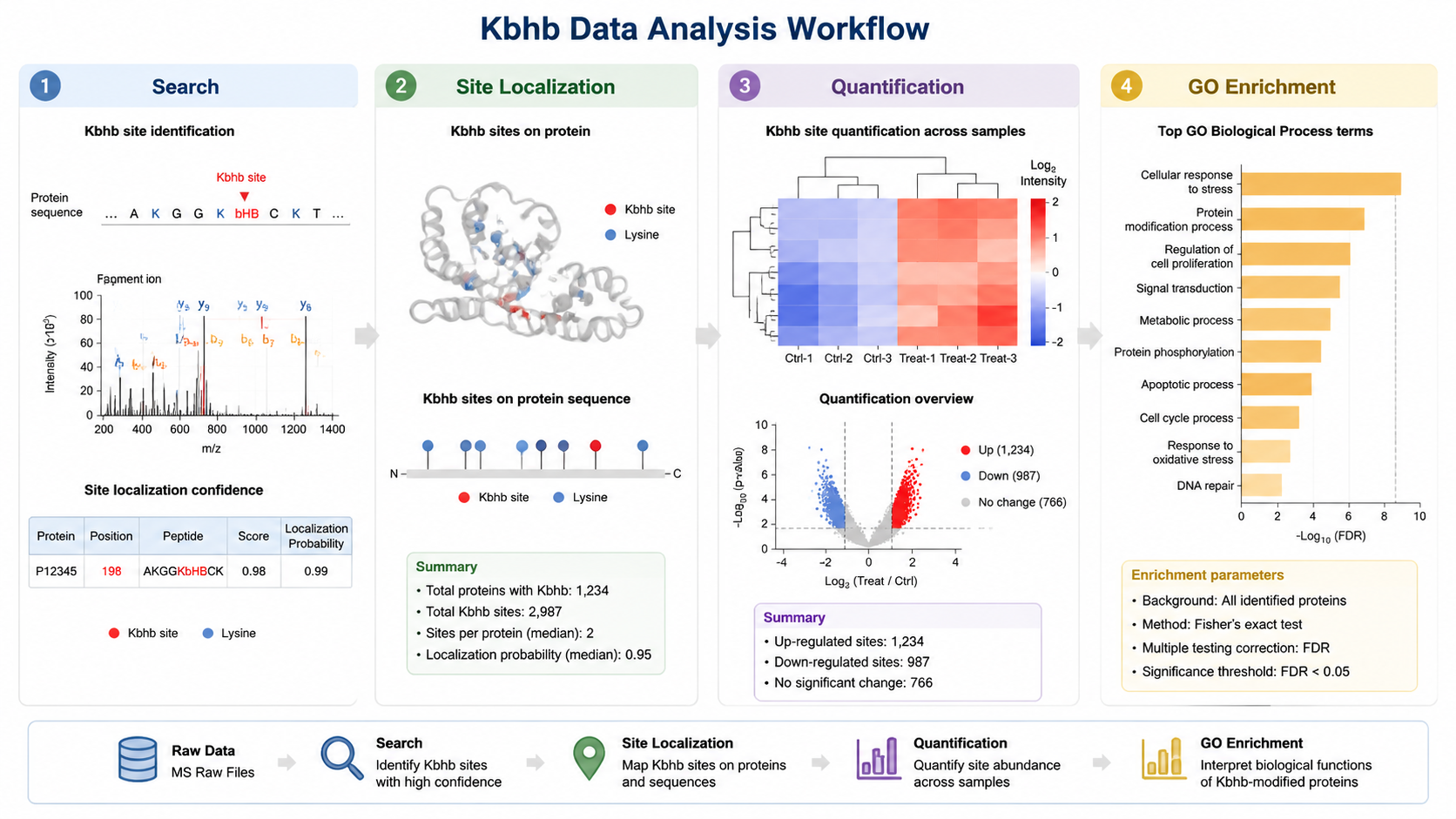
Search with MaxQuant, Proteome Discoverer, or Byonic. Include Kbhb (+86.0368 Da) as a variable modification on lysine. Hold peptide and site FDR near 1% and review localization scores before reporting sites. Quantify by label-free MS1 intensities or multiplexed TMT/iTRAQ as study design requires.
Challenges and Optimization
| Challenge | Why It Happens | Practical Response |
|---|---|---|
| Low Kbhb abundance | Rare mark on few lysines | Antibody enrichment; more histone input |
| Poor digestion | Basic histone sequence | Derivatization; multi-enzyme digest |
| Mass ambiguity | Near-mass acyl isomers | High-resolution MS; strict localization |
| Quant variability | Dynamic metabolism | ≥3 replicates; consistent normalization |
FAQ
1. What mass shift defines Kbhb on lysine?
Kbhb adds +86.0368 Da on lysine in standard search settings.
2. Is enrichment always required?
For deep site mapping in typical cell models, enrichment or extensive fractionation is usually necessary because Kbhb peptides are low abundance.
3. Can DDA and DIA both work?
Yes. Use DDA for broad site discovery; use DIA when quantitative comparison across many samples is the main goal.
4. How does Kbhb differ from histone butyrylation?
Butyrylation and β-hydroxybutyrylation are distinct acyl marks with different mass shifts and metabolic origins.
Conclusion
Analyzing histone β-hydroxybutyrylation by LC-MS/MS is feasible when the workflow respects histone chemistry: clean extraction, thoughtful digestion, Kbhb-aware enrichment, high-resolution acquisition, and conservative site reporting.
How to order?




