






Can Isolated Exosomes Be Submitted for Proteomics Analysis?
-
The preparation is an isolated exosome or EV fraction, not unprocessed biofluid.
-
The isolation method is known and can be summarized for intake review.
-
The resuspension buffer is disclosed and appears compatible with protein digestion and LC-MS/MS, or can be reviewed for compatibility.
-
Estimated protein amount or particle yield is sufficient for the planned profiling or comparative design, including replicates.
-
Purity and integrity expectations for the isolated preparation are met, or remaining limitations are explicitly accepted for the planned claim.
-
Storage at −80°C and freeze-thaw history are recorded.
-
At least minimal QC context is available, such as NTA, TEM or cryo-EM, or WB marker data, or the absence of QC is explicitly acknowledged with accepted interpretation limits.
-
Confirm the material is an isolated EV or exosome preparation.
-
Confirm isolation method and major buffer components.
-
Confirm amount against profiling versus comparative goals.
-
Confirm storage temperature and freeze-thaw count.
-
Attach available QC files or state QC gaps.
-
Submit for proteomics if criteria are met; otherwise request isolation review, buffer compatibility check, or additional characterization first.
-
The isolation method is unknown and cannot be reconstructed.
-
The buffer is proprietary or complex and has not been reviewed for MS compatibility.
-
Yield is visibly or quantitatively too low for the intended comparative design.
-
Samples were thawed repeatedly without documentation.
-
There is strong suspicion of heavy soluble protein contamination, microbial contamination, or medium-protein carryover, and no QC is available to contextualize risk.
-
source matrix and isolation method summary
-
resuspension buffer composition
-
estimated protein amount and/or particle concentration
-
number of vials and volume per vial
-
storage at −80°C and freeze-thaw history
-
available QC data such as NTA, TEM or cryo-EM, or WB markers
-
study goal: profiling or comparative isolated EV proteomics
-
group labels and replicate plan
Introduction
Many exosome and extracellular vesicle projects reach proteomics with vesicles already in hand. The isolation may have been completed in-house, by a collaborator, or during an earlier service step. At that point the practical question is simple: can isolated exosomes be submitted for proteomics analysis directly, or should the preparation be reviewed first?
In many cases, isolated exosomes or isolated EVs can be reviewed for direct LC-MS/MS proteomics when the isolation method, buffer composition, available input, storage history, and basic QC context are clearly documented. Direct submission should still be confirmed before shipping. Unknown additives, undocumented freeze-thaw history, insufficient material, or unclear preparation quality may require additional review, cleanup, or adjustment of the analysis scope before proteomics begins.
This article explains how to judge whether isolated exosome proteomics or isolated EV proteomics can proceed immediately, which red flags require pause, and what information to send with ready-to-analyze vesicle samples. For project-specific review of isolated EV or exosome samples, researchers can submit sample source, isolation method, buffer composition, available input, storage history, and QC information through the Exosome / Extracellular Vesicle Proteomics Service page.
Direct Submission Is Possible When Readiness Criteria Are Met
Isolated vesicle samples are frequently the preferred input for proteomics because enrichment has already been performed. Direct submission is reasonable when all of the following are true.
When these conditions are met, the isolated preparation may be suitable for direct proteomics processing without repeating the isolation step.
A Practical Go or No-Go Decision Path
Use the following sequence before shipping isolated vesicles.
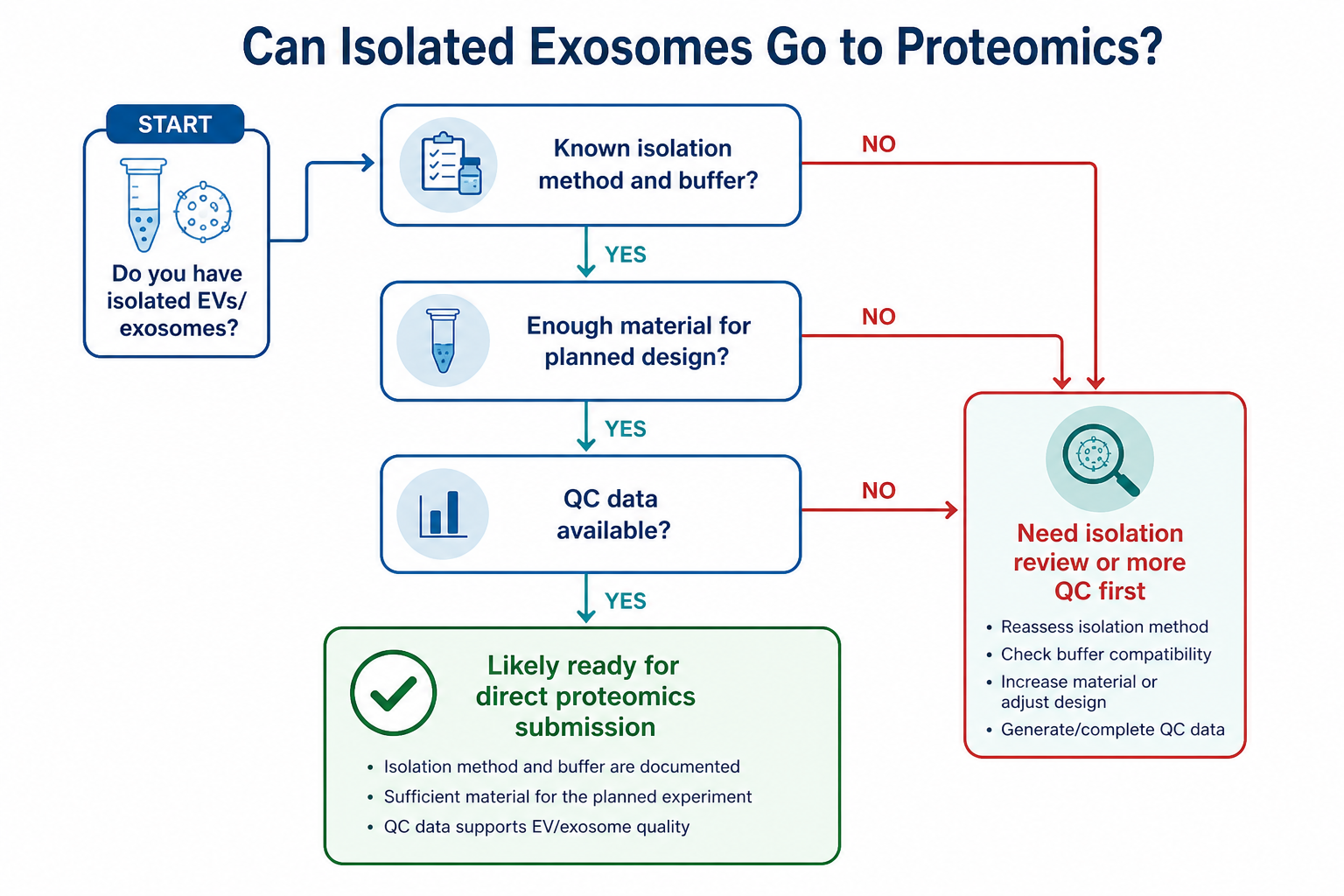
Figure 1. Isolated exosome and EV samples can proceed to proteomics when method, buffer, amount, and QC readiness are confirmed.
What Makes an Isolated Sample Ready
1. Documented Isolation Method
State whether ultracentrifugation, density gradient, size exclusion chromatography (SEC), precipitation, filtration, affinity capture, microfluidic enrichment, or a combined workflow was used. Method class affects co-isolating protein background and should be part of the proteomics metadata.
2. Compatible Buffer and Formulation
Disclose glycerol, detergent, high salt, protease inhibitors, dye additives, or commercial kit buffers. Some formulations are acceptable after cleanup review. Undisclosed additives are a common reason intake is paused.
3. Sufficient Yield for the Study Design
Profiling of a single preparation has different material needs than a multi-group comparative study. Isolated EV proteomics is ready only when yield matches the full design, not just one exploratory vial.
4. Traceable Sample Identity
Each vial should have a unique ID linked to group assignment, isolation date, and source matrix. Ready samples are administratively clear as well as scientifically clear.
5. QC Context
NTA particle size and concentration estimates, TEM or cryo-EM morphology evidence when available, Western blot marker data for proteins such as CD9, CD63, or CD81, and total protein estimates all help. Complete QC is ideal. Partial QC can still support direct submission if limitations are accepted in advance. ELISA or flow cytometry is not treated here as a standard EV QC module.
Exosomal Protein Isolation and Profiling Service
Extracellular Vesicle Profiling Services
When Isolated Samples Should Not Go Straight to Proteomics
Pause direct submission when one or more of these issues are present.
In these cases, isolated status alone is not enough. Buffer exchange review, additional characterization, re-isolation from retained upstream material, or a narrowed profiling objective may be required first.
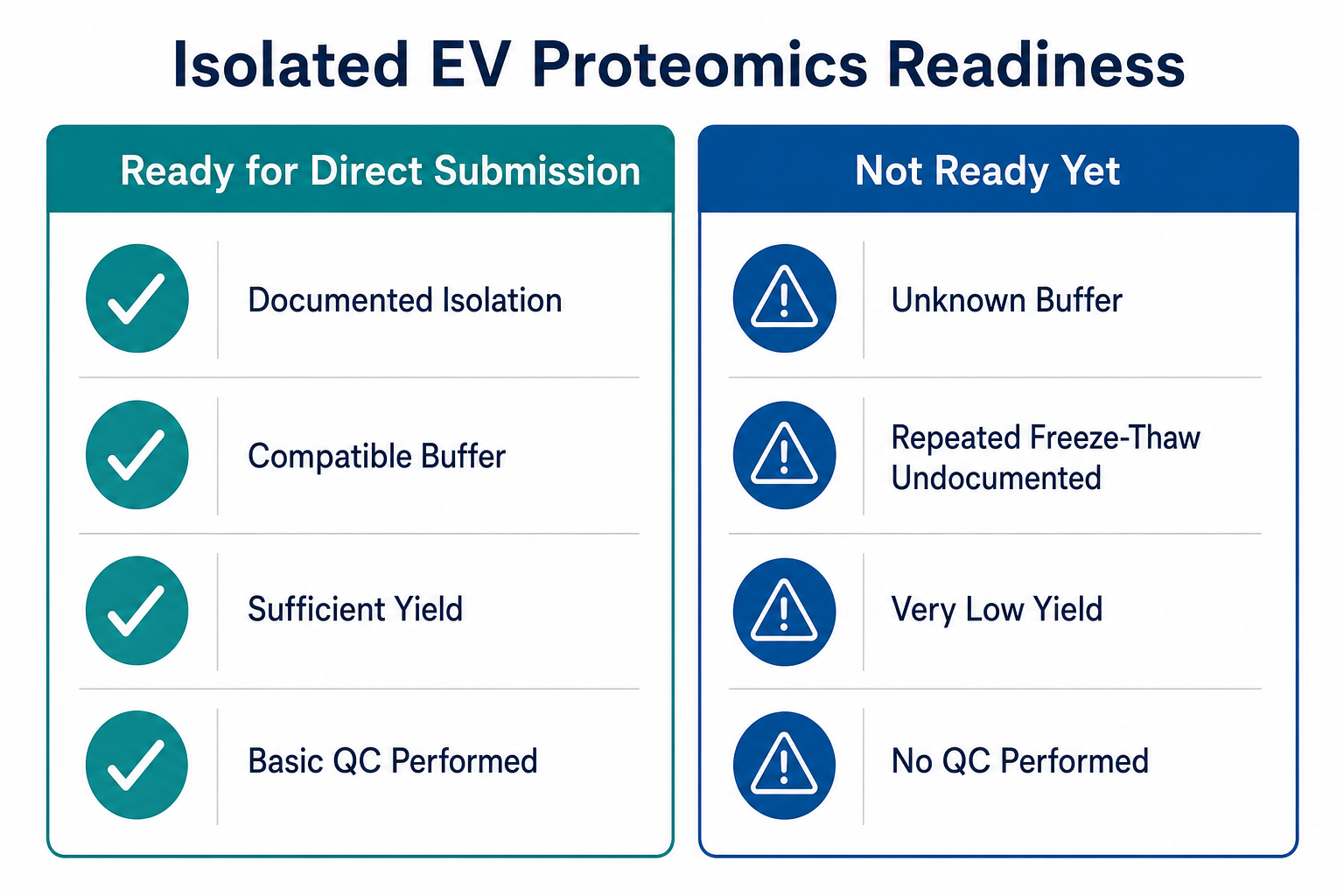
Figure 2. Direct proteomics submission is appropriate for documented, sufficient, QC-supported isolates, not for underspecified or compromised vesicle preparations.
Ready vs Not Ready at a Glance
|
Check Item |
Ready for Direct Proteomics |
Not Ready Yet |
|---|---|---|
|
Isolation method |
Documented |
Unknown |
|
Buffer |
Disclosed and reviewable |
Undisclosed or likely incompatible |
|
Amount |
Matches planned design |
Too low for goal |
|
Storage history |
Recorded −80°C holding and controlled freeze-thaw |
Multiple undocumented thaw events |
|
QC information |
Available or explicitly limited |
Missing with high contamination concern |
|
Sample IDs |
Unique and matched to metadata |
Ambiguous or incomplete |
This table is a feasibility screen, not a substitute for project-specific intake confirmation.
What to Send with Isolated Exosome or EV Samples
Include a short package with the shipment or inquiry:
Ship isolated preparations on dry ice after −80°C storage.
How MtoZ Biolabs Reviews Isolated Sample Feasibility
MtoZ Biolabs reviews isolated exosome and isolated EV submissions for method documentation, buffer compatibility, yield fit, and QC context before LC-MS/MS. When samples are ready, proteomics can proceed on the isolated material. When gaps are material, the team can recommend characterization, purification review, or a revised study scope before acquisition.
To check whether your isolated vesicles can be submitted now, contact MtoZ Biolabs with isolation method, buffer details, estimated amount, QC summary, and whether the goal is profiling or comparative analysis.
Frequently Asked Questions
1. Can isolated exosomes be submitted for proteomics analysis without re-isolation?
Yes, when isolation method, buffer, yield, storage history, and basic study metadata are adequate. Re-isolation is needed only when the current preparation is unsuitable or insufficiently documented.
2. Are isolated EVs handled the same way as isolated exosomes for proteomics intake?
Yes in practical intake terms. Both require clear method and buffer documentation. Use the name that matches your preparation and describe the isolation workflow precisely.
3. What is the most common reason an isolated sample is not accepted for immediate MS?
Incomplete buffer or method documentation is common. Low yield for a comparative design and missing QC with suspected contamination are also frequent blockers.
4. Do I need TEM and NTA before isolated exosome proteomics?
They are strongly helpful. Direct submission may still proceed with partial QC if limitations are accepted, but interpretation is stronger when NTA particle data and TEM or cryo-EM morphology context are available. WB markers such as CD9, CD63, or CD81 further strengthen readiness review.
5. What if I have isolated vesicles but no protein quantification?
Provide particle estimates if available and state that protein amount is unknown. Feasibility can still be reviewed, but expectations for depth and design scale may need adjustment.
Conclusion
Isolated exosomes and isolated EVs can often be submitted directly for proteomics analysis. The deciding factor is readiness, not the mere fact of isolation. Documented method, compatible buffer, sufficient yield, controlled storage, and usable QC context separate samples that are ready for LC-MS/MS from samples that need review first.
Teams that complete this feasibility check before shipping reduce intake delays and avoid underpowered proteomics runs. For isolated exosome proteomics or isolated EV proteomics planning, researchers can submit the isolation method, buffer composition, available input, storage history, QC summary, and study goal through the Exosome / Extracellular Vesicle Proteomics Service page to determine whether the current vials are ready for direct LC-MS/MS analysis or need additional review first.
Related Services
Exosome / Extracellular Vesicle Proteomics Service
Exosomal Proteomic Detection Service
How to order?




