Resources
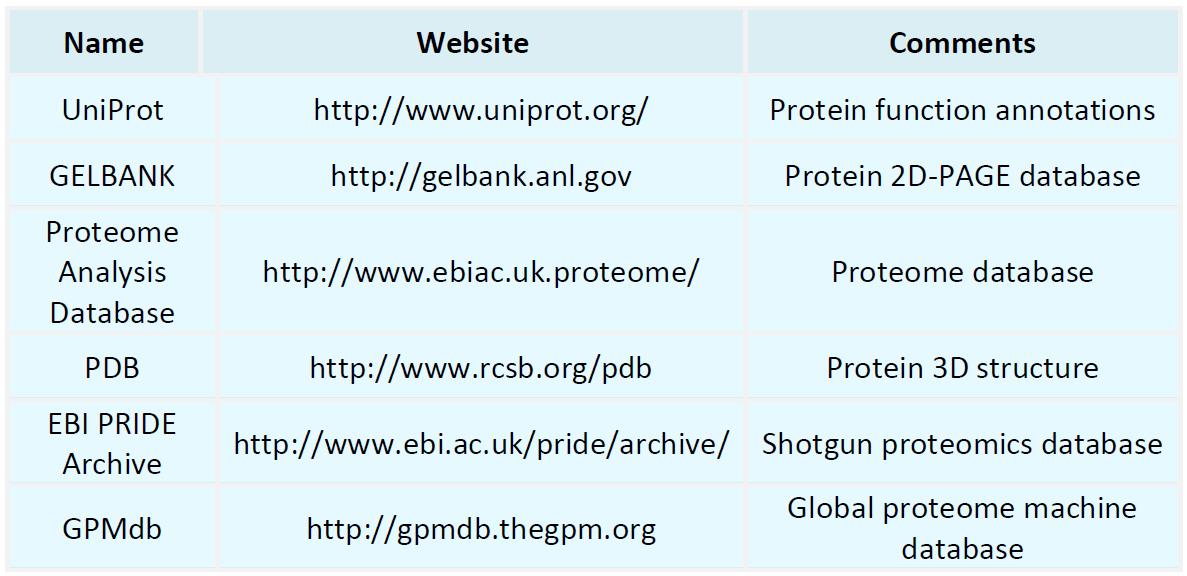
Proteomics Databases
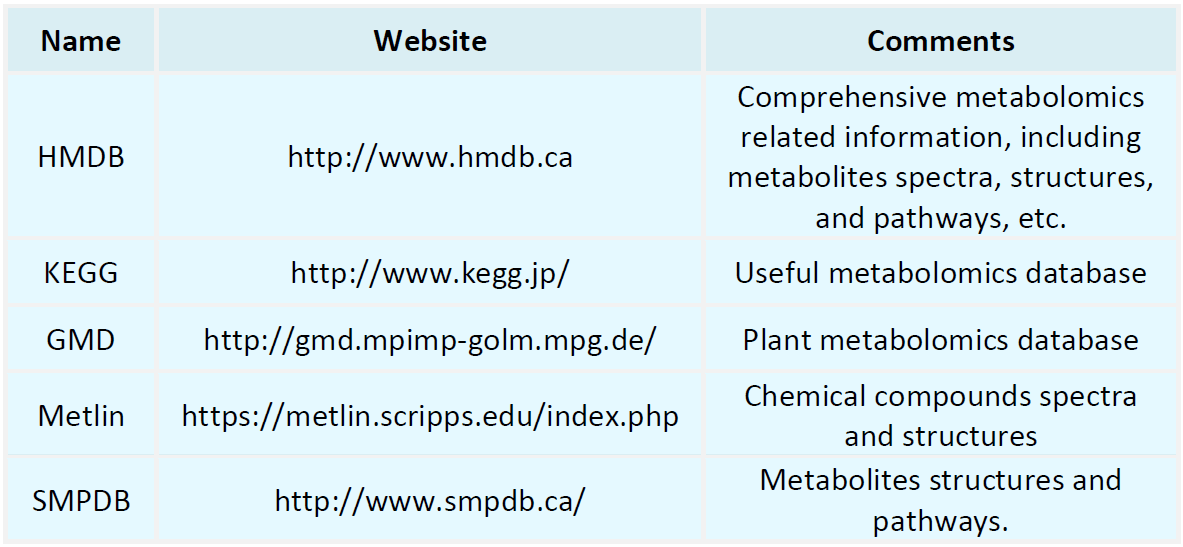
Metabolomics Databases
-
• Key Differences Between iTRAQ, TMT, and Label-Free Proteomics
In modern proteomics research, selecting an appropriate quantification strategy is crucial. With advances in mass spectrometry, iTRAQ (Isobaric Tags for Relative and Absolute Quantitation), TMT (Tandem Mass Tag), and label-free quantification have emerged as three mainstream approaches that are widely applied in studies of disease mechanisms, drug target screening, and clinical biomarker discovery. Although all three approaches rely on high-resolution mass spectrometry platforms, they differ substanti......
-
• Tools for PRM Proteomics Data Analysis
Parallel Reaction Monitoring (PRM) is a targeted protein quantification approach enabled by high-resolution and high-mass-accuracy mass spectrometry platforms. PRM has been extensively applied in cancer biomarker verification, drug target confirmation, and signaling pathway studies. In contrast to Selected Reaction Monitoring (SRM/MRM), PRM utilizes high-resolution instruments such as Orbitrap or Q-TOF systems to acquire full fragment ion spectra, thereby improving analytical selectivity and quantitat......
-
• Quantitative Phosphoproteomics with TMT Labeling
Protein phosphorylation represents one of the most prevalent and functionally important post-translational modifications (PTMs) in eukaryotic cells. It regulates essential biological processes, including cell proliferation, apoptosis, metabolism, and stress responses, and is intimately associated with major human diseases such as cancer, autoimmune disorders, and neurodegenerative diseases. However, phosphorylation events are characterized by dynamic turnover, low abundance, and susceptibility to ion ......
-
• What Are the Types of Metabolomics?
Metabolomics refers to the qualitative and quantitative analysis of all small-molecule metabolites within biological systems, including amino acids, organic acids, sugars, lipids, and other metabolic intermediates. The aim is to elucidate biochemical processes underlying physiological conditions, disease mechanisms, pharmacological responses, or environmental influences based on changes in metabolite abundance. Metabolomics can be classified along multiple dimensions: By research strategy: untargeted......
-
Exosomes are nanoscale extracellular vesicles that mediate intercellular communication and hold emerging value in disease biomarker discovery, early cancer screening, and therapeutic delivery. Although exosomes can be isolated from multiple human biofluids, differences in vesicle abundance, biochemical composition, and matrix complexity directly influence purification efficiency and downstream omics data quality. This article compares exosome isolation characteristics across serum, plasma, urine, and ......
-
• How to Handle Missing Values in Label-Free Quantitative Proteomics Data?
In label-free quantitative proteomics, missing values constitute a non-negligible component of downstream data analysis. Missingness is frequently observed within raw mass spectrometry data, and inappropriate handling may compromise statistical inference and lead to biased or misleading biological interpretations. Consequently, rigorous identification and treatment of missing values are critical for ensuring data integrity and analytical reproducibility. Causes and Classification of Missing Values in......
-
• What Is the Difference Between Targeted and Untargeted Metabolomics?
As life science research continues to advance, metabolomics has emerged as an analytical discipline that directly profiles the downstream biochemical outputs of biological processes. Focusing on metabolites enables comprehensive characterization of the dynamic metabolic states of cells, tissues, or biofluids under defined physiological or pathological conditions. Benefiting from progress in high-resolution mass spectrometry, metabolomics has been widely applied in tumor metabolism research, drug metab......
-
• How to Perform Label-Free Quantitative Proteomics Analysis Using Mass Spectrometry?
Proteomics plays a central role in life science research by enabling systematic investigation of biological system functions, while quantitative analysis is essential for elucidating changes in protein expression, signaling pathway regulation, and disease mechanisms. Label-free quantitative proteomics (LFQ) has gained increasing attention due to its broad sample compatibility, streamlined experimental workflow, and reduced overall cost. With advances in high-resolution mass spectrometry, subtle variat......
-
• Common Challenges in TMT Proteomics and How to Overcome Them
Tandem Mass Tag (TMT) is a widely adopted labeling-based strategy for high-throughput quantitative proteomics. Owing to its multiplexing capacity, high quantitative accuracy, and ability to analyze multiple samples in parallel, TMT has become an essential approach in studies of disease mechanisms, biomarker discovery, and drug mode-of-action analysis. Nevertheless, despite its advantages, the practical implementation of TMT workflows is associated with multiple technical challenges. If not properly ad......
-
• Workflow for TMT 16plex Quantitative Proteomics Analysis
In systems biology research, accurate protein quantification is essential for characterizing the dynamic regulation of biological processes. Although traditional label-free approaches are relatively straightforward to implement, they often suffer from limitations in data consistency and control of batch effects. Owing to its high throughput, reduced inter-batch variability, and superior quantitative accuracy, Tandem Mass Tag (TMT) labeling has emerged as one of the most widely adopted strategies for m......
How to order?