Crosslinking Protein Interaction Analysis Service
MtoZ Biolabs provides crosslinking protein interaction analysis to preserve weak, transient, and lysis-sensitive protein-protein interactions. By stabilizing protein complexes during sample processing, our service supports the investigation of interaction partners and complex composition.
We select in vivo or in vitro crosslinking and chemical or photoactivated reagents based on your samples and research goals. Co-IP, Western blotting, and high-resolution Orbitrap LC-MS/MS support known interaction analysis, candidate interactor identification, and crosslinking site identification.
- Capturing transient protein interactions
- Stabilize weak protein interactions
- High accuracy
Weak or transient protein-protein interactions can dissociate during cell lysis, extraction, or purification, making them difficult to capture using conventional methods. Crosslinking stabilizes spatially associated proteins through covalent bonds, helping preserve protein complexes for downstream analysis.
What Is Crosslinking Protein Interaction Analysis?
Crosslinking protein interaction analysis investigates protein-protein interactions (PPIs) using reagents that form covalent bonds between reactive groups on spatially proximal proteins, followed by Western blot analysis to assess crosslinking and validate selected interactions, and mass spectrometry to identify interacting proteins and, where applicable, characterize crosslinked peptides and interaction sites.
It can improve recovery of weak or transient associations that might otherwise be lost during sample preparation, supporting studies of protein complexes and interaction networks. Crosslinking captures molecular proximity under defined conditions; the resulting evidence must be interpreted alongside the enrichment strategy, sample context, and appropriate controls.
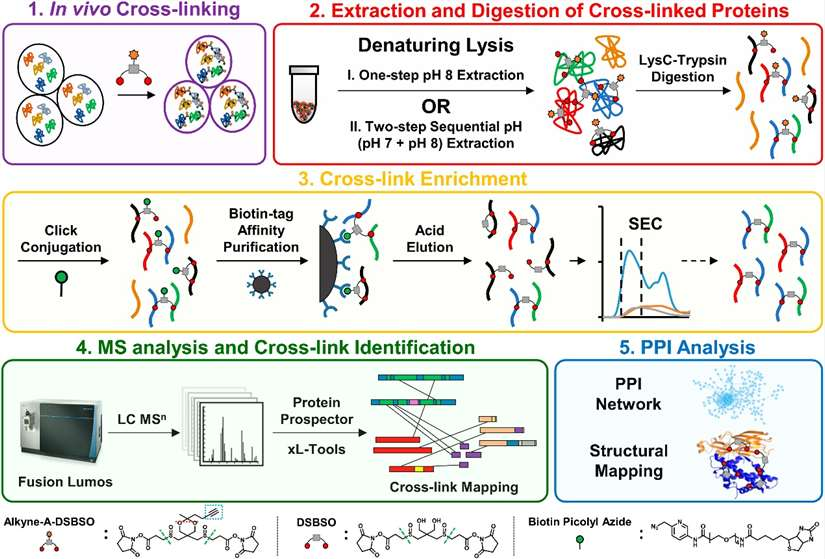
Wheat A. et al. Proc Natl Acad Sci USA. 2021.
Figure 1. General Cross-linking -LC-MS Workflow for PPI Study
Service at MtoZ Biolabs
MtoZ Biolabs offers a Crosslinking Protein Interaction Analysis Service that integrates in vivo or in vitro crosslinking, chemical or photoactivatable crosslinking reagents, affinity enrichment, and high-resolution Orbitrap LC-MS/MS. Our service includes:
1. Known Protein Interactions Analysis
Stabilize suspected protein associations through crosslinking, followed by Co-IP and Western blotting to evaluate specific candidate partners. This option is useful when conventional Co-IP loses interaction signals during lysis or washing.
2. Identification of Unknown Interaction Partners
Enrich crosslinked protein complexes using Co-IP or affinity capture and identify co-enriched candidate interactors by LC-MS/MS, supporting protein complex composition analysis. Matched negative controls help distinguish potential partners from nonspecific enrichment.
3. Crosslinking Site Identification and Structural Analysis
Identify crosslinked peptides and assign crosslinking sites using a dedicated LC-MS/MS-based XL-MS workflow. When suitable protein structures are available, identified sites may be mapped onto 3D models to examine spatial contacts. Site assignment depends on the quality of the peptide spectra and the suitability of the sequence database.
4. Comparative Protein Interaction Analysis
Compare protein associations or complex composition across treatments, genetic variants, or other conditions using matched samples, appropriate controls, and a project-specific analytical strategy. Where supported by the data, changes in associated proteins can be assessed between experimental groups.
Projects may include crosslinking optimization, sample preparation, protein enrichment, and downstream detection. Pre-crosslinked samples can also be evaluated for compatibility. The final method is defined during project scoping rather than applying one fixed crosslinker or enrichment protocol to all samples.
Analysis Workflow
1. Crosslinking Strategy Design
2. Crosslinking Condition Optimization
3. Cell Lysis and Co-Immunoprecipitation (Co-IP)
4. Western Blot or Mass Spectrometry Analysis
5. Data Analysis and Reporting
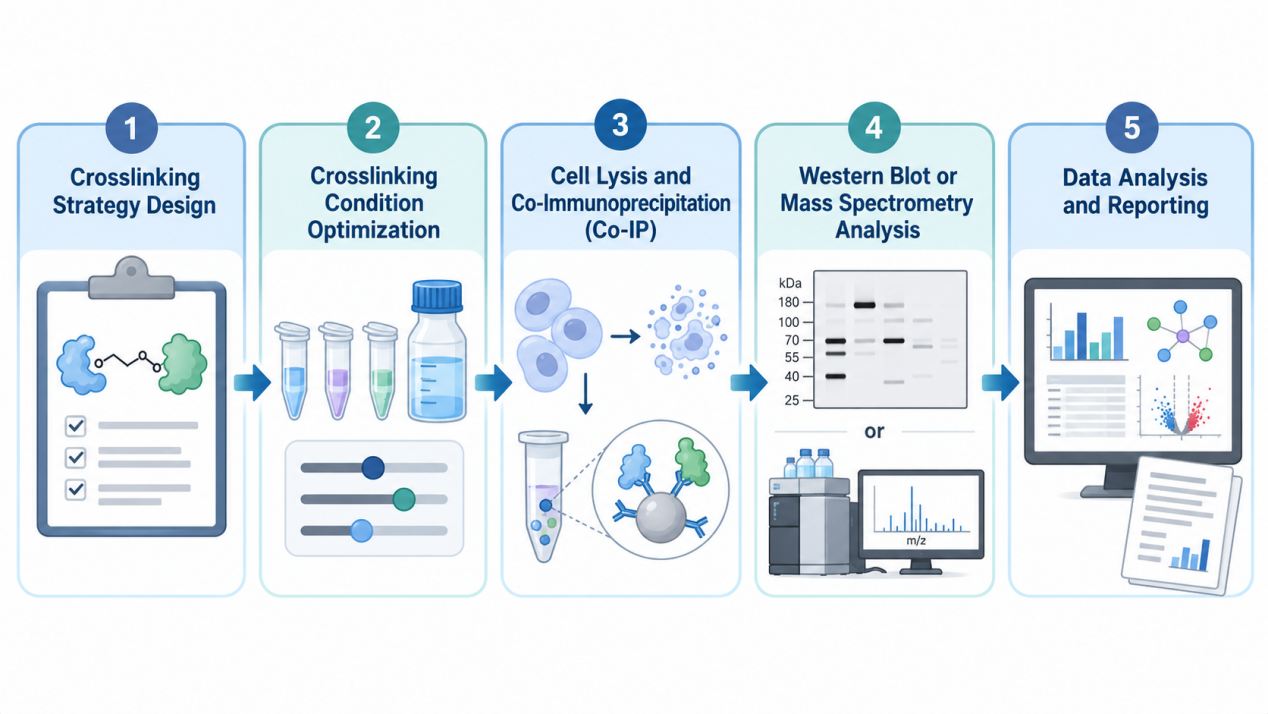
Figure 2. Workflow for Crosslinking Protein Interaction Analysis
Service Advantages
1. Flexible Crosslinking Strategies
In vivo and in vitro approaches with chemical or photoactivated crosslinking options.
2. Weak and Transient Interaction Analysis
Better preservation of associations vulnerable to sample-processing losses.
3. High-Sensitivity Detection
High-resolution Orbitrap MS supports identification of low-abundance proteins.
4. One-Time Charge
Transparent project pricing with no hidden fees or additional charges.
Sample Submission Suggestions
|
Parameter |
Chemical Crosslinking |
Photoactivated Crosslinking |
|
Accepted Samples |
Crosslinked gel bands, protein solutions, or cells; two separately submitted non-crosslinked recombinant proteins may also be accepted |
Crosslinked gel bands, protein solutions, or cells |
|
Purified Protein |
Recommended 100–150 µg, purity ≥90% |
Starting amount: 150 µg |
|
Cell Input |
≥1–2 × 10⁷ cells per condition |
5 × 10⁶–1 × 10⁷ cells per condition |
|
Minimum Input |
20 µg purified protein in limited-sample cases, subject to assessment |
Evaluated individually |
|
Sequence Information |
Target sequence or appropriate species-specific protein database |
Target sequence or appropriate species-specific protein database |
|
Buffers |
Use compatible HEPES or PBS before crosslinking; avoid Tris and glycine with amine-reactive crosslinkers |
Choose a compatible buffer; avoid free amines for amine-reactive photo-crosslinkers; SDS <0.1% |
|
Pre-Crosslinked Samples |
Provide reagent, reaction conditions, and buffer composition |
Provide photo-crosslinker, irradiation conditions, and buffer composition |
|
Storage and Shipping |
Flash-freeze protein solutions or cells in liquid nitrogen; ship on dry ice |
Flash-freeze and ship on dry ice |
Note: Input and buffer requirements depend on the crosslinker and downstream assay. Free-amine restrictions concern relevant crosslinking reactions, not necessarily previously crosslinked materials. Confirm gel-band shipping conditions before submission.
Deliverables
1. Raw MS Data
Original LC-MS/MS files for projects involving mass spectrometry.
2. Identification Results
Protein identification lists and, for site-resolved XL-MS projects, identified crosslinked peptides and localized residue sites.
3. PDF Report
Experimental methods, analysis results, and relevant tables and figures. Optional 3D site mapping may be provided when suitable structural information is available.
FAQs
Q1. Does crosslinking confirm direct binding between two proteins?
Not by itself. Co-enrichment can reflect indirect association or proximity. Independent binding assays may support direct interaction, while site-resolved XL-MS provides additional spatial evidence.
Q2. How are nonspecific crosslinking signals controlled?
Crosslinker concentration, reaction time, and enrichment conditions are optimized, with suitable negative controls and biological replicates. For LC-MS/MS projects, control-group enrichment helps assess background proteins.
Discuss Your Crosslinking Protein Interaction Project
Whether you need to examine known partners, discover candidate interactors, or identify crosslinking sites, MtoZ Biolabs can assess a workflow suited to your target proteins and samples. Share your study goals and sample details with our scientific team to discuss project feasibility.
MtoZ Biolabs, an integrated chromatography and mass spectrometry (MS) services provider.
Related Services
Protein-Protein Interaction Analysis Service
Crosslinking Mass Spectrometry Service
Photocrosslinking Mass Spectrometry Service
Chemical Crosslinking-Mass Spectrometry (CXMS) Analysis Service
Demo for Crosslinking Protein Interaction Analysis
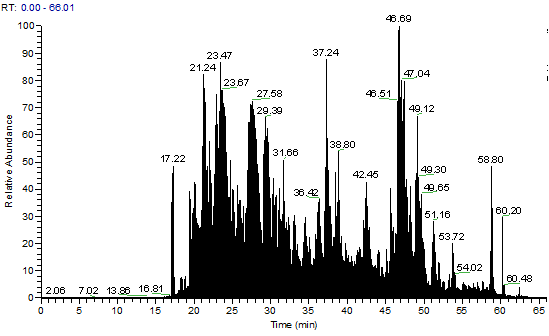
Total Ion Chromatogram