



Protein-protein interaction analysis by IP-MS asks which proteins co-enrich with an endogenous bait after antibody capture, Input and IgG controls, and LC-MS/MS identification. The target bait must be recovered before prey names can be read as candidates. A missing target does not always mean the IP failed: the bait may be present on blot yet absent from the MS table because of peptide coverage, antibody-chain dominance, or reporting cutoffs. The method fits cells or tissues with an IP-competent antibody. It does not prove binary direct binding (Hein et al. 2015). Pause partner ranking when bait recovery is unverified. Reassess the system when the antibody is Western-only or the bait is not expressed in the tested state.
Researchers who already have an IP-MS table with a missing bait, Input and IgG arms, and a written interaction claim can also review the MtoZ Biolabs IP-Mass Spectrometry Service and Protein-Protein Interaction Analysis for project-specific recovery review.
What Missing Target Detection Means in PPI Analysis
In IP-MS, target detection does two jobs. It confirms that immunoprecipitation captured the intended bait, and it anchors interpretation of co-purifying proteins. When the bait is absent from the MS report, prey identifications become harder to trust as bait-specific candidates because antibody background, bead binders, and sticky lysate proteins may dominate the list.
Missing target detection falls into two categories. IP failure means too little bait was captured or eluted to support interaction analysis. MS detection failure means bait protein was present in the eluate but was not reported by LC-MS/MS because of peptide recovery, search, or reporting limits. Treating every missing bait as a failed experiment can trigger the wrong repeat. Treating every prey list as valid despite a missing bait can create false interaction claims.
IP-MS protein-protein interaction analysis fits cultured cells or tissues where a native bait can be recovered with an IP-competent antibody and matched negative controls. It is a poor first system when the antibody only works on a denatured blot, when the bait is not expressed in the tested state, or when the claim is reconstituted binding of a purified domain. Those limits are developed in IP-MS Protocol: From Antibody Capture to LC-MS/MS and AP-MS vs IP-MS: How to Choose the Right Interactome Workflow.
A missing bait is a stop sign for candidate ranking, not a license to interpret the rest of the eluate as an interactome.
Experimental Systems and Negative Controls That Diagnose the Gap
Start with enrichment evidence independent of the identification table. If material remains, check the bait by western blot or an equivalent targeted method in Input, bait IP, and IgG or bead controls. Compare whether signal is weak, absent, present only on beads, or present in eluate.
If the bait is absent by targeted detection, the problem is usually upstream of LC-MS/MS: antibody performance, lysis compatibility, wash stringency, or elution. If the bait is recovered by targeted detection but absent from MS, the problem is more likely digestion, peptide ionization, database searching, or reporting thresholds.
Negative controls belong in that diagnosis, not only in later prey filtering.
Control |
What a missing bait there means |
What it cannot do |
|---|---|---|
Input |
Bait may not be expressed or extracted in this system |
Prove the IP antibody works |
IgG or bead |
Shared background without bait-specific capture |
Replace Input |
Bait IP eluate |
Capture or elution failed, or MS missed peptides |
Prove a remaining prey is a partner |
Matched replicate |
One arm unlike the others |
Rescue an unverified bait IP |
Input shows whether the bait existed before capture. IgG shows whether the antibody handle itself recovers the bait or only background. Asymmetric wash or elution between bait IP and IgG can make recovery look unstable across replicates. Sample-prep parity that keeps those arms comparable is covered in How to Prepare Immunoprecipitation Samples for Mass Spectrometry.
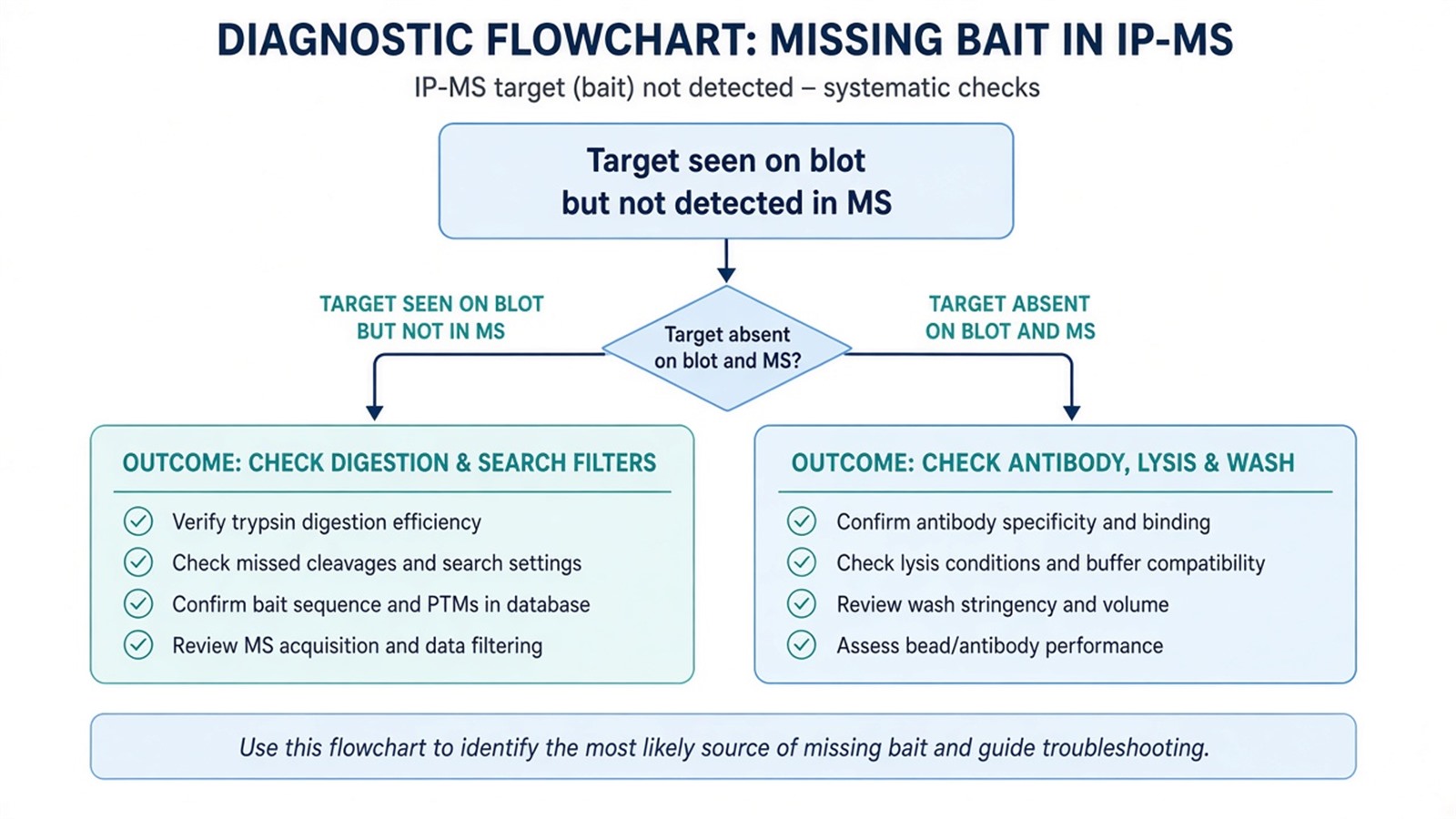
Figure 1. Separate IP failure from MS detection failure before any prey name is treated as a candidate interactor.
Candidate Screening Must Wait on Bait Recovery
Identification of a protein in an IP eluate is not a confidence call. Ranking requires bait recovery, handle-matched controls, and a declared enrichment rule. Probabilistic scoring such as SAINT uses bait versus control counts to assign a probability that a prey is specifically co-purified (Choi et al. 2011). Those scores still operate on enrichment tables. If the bait itself is missing, the table has no anchor.
A contaminant catalog such as the CRAPome is a prior on how often a protein appears in control purifications (Mellacheruvu et al. 2013). It does not convert an unverified bait IP into a high-confidence shortlist. Identification depth in a Co-IP-style eluate is typically hundreds to about a thousand proteins, depending on the sample. Depth without bait recovery is not a stronger interactome.
A practical pause rule is:
- Confirm the bait in Input.
- Confirm the bait in the bait IP by targeted detection when material remains, or by peptide evidence in the raw search.
- Compare bait recovery with IgG processed identically.
- Only then rank remaining names against the matched control.
- Keep any shortlist for reciprocal capture or a defined-pair assay, not for mechanism claims.
Isotype subtraction still helps, but its value falls when the bait IP arm itself lacks evidence of successful enrichment. The appropriate response is to pause validation of prey candidates until bait recovery is confirmed by independent detection or a repeated IP with corrected conditions.
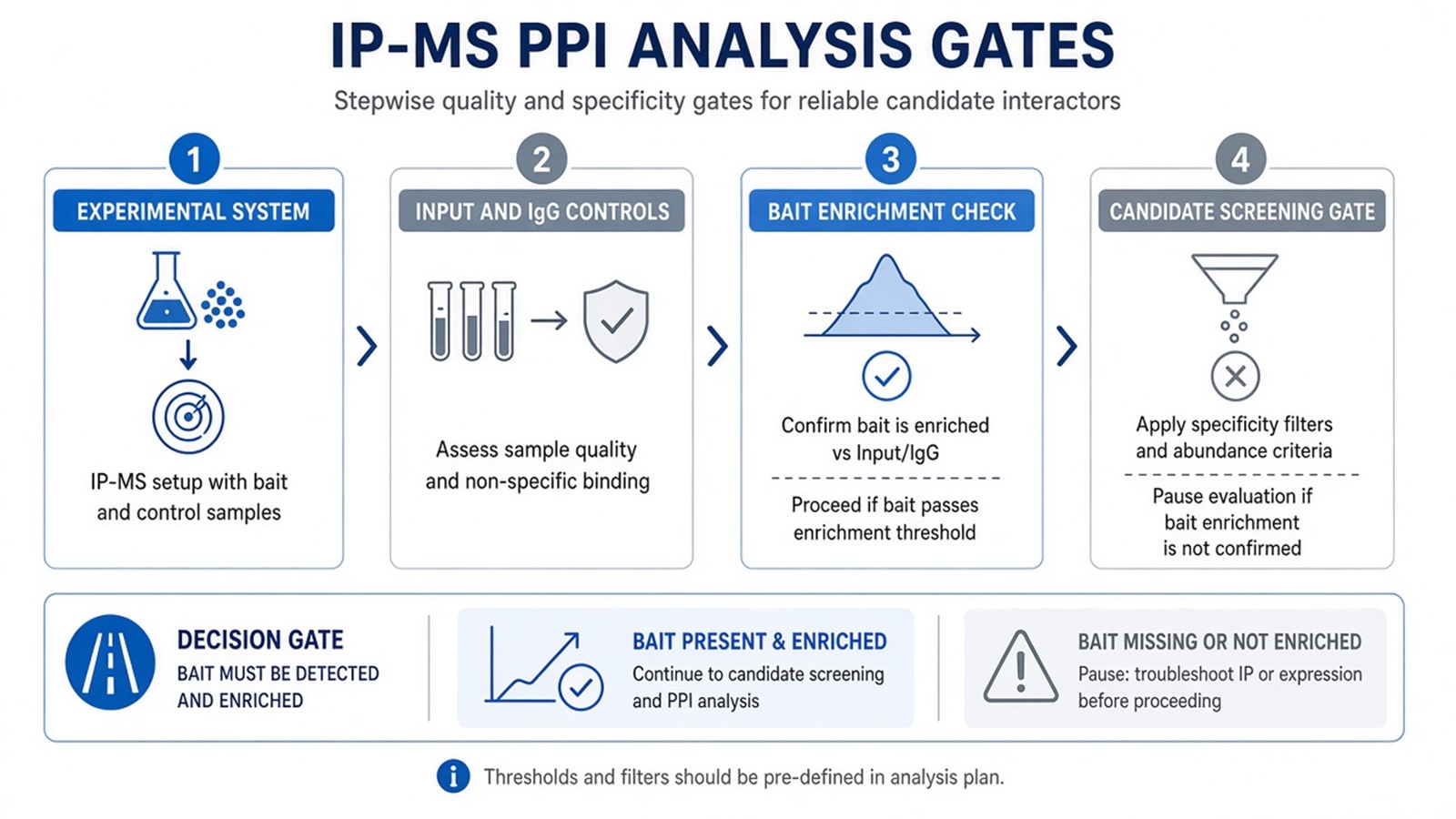
Figure 2. Candidate screening starts after bait recovery is documented. Negative controls diagnose the gap; they do not replace the bait.
Common Causes, Biases, and Result Boundaries
Likely cause |
Clue |
First response |
|---|---|---|
Poor IP antibody performance |
Blot works, IP eluate lacks bait |
Test another antibody or IP chemistry |
Low bait abundance or wrong state |
Weak or absent Input |
Change biological state or increase usable input |
Epitope masking |
IP fails under native lysis only |
Revise lysis or antibody |
Harsh washing or failed elution |
Bait lost across washes or left on beads |
Reduce wash stringency or change elution |
Poor peptide coverage |
Bait visible, no bait peptides |
Adjust digestion or search |
Search or reporting filter |
Raw bait peptides present, protein filtered out |
Review identification thresholds |
Antibody-chain dominance |
Strong H/L chain, weak bait |
Reduce antibody input or revise prep |
Failed replicate |
One sample unlike others |
Repeat that biological arm |
Antibody choice is the central IP-MS variable. An antibody can detect a denatured epitope on blot and fail to immunoprecipitate the native bait. Complex formation, modifications, or lysis chemistry can mask the epitope even when Input shows the protein. Harsh washes can remove the bait while leaving sticky background. Antibody heavy and light chain peptides can dominate sampling and hide low-abundance bait peptides. Shared-peptide ambiguity can assign peptides to a homolog rather than the entry the study expected.
After diagnosis, a protein-level value can support a relative statement only if the bait was recovered: protein B is enriched with bait A versus matched IgG inside this recipe. Without bait evidence, prey names may represent antibody background, bead contaminants, or abundant lysate proteins that survived washing. Comparative claims between treatment arms become unreliable if bait recovery differed between arms and was not monitored. Pathway maps do not repair a missing bait.
Do not write a missing bait as proof that no interaction exists. Absence of bait peptides can mean failed capture, failed digestion, or a reporting cutoff. Direct-binding claims still need an orthogonal pair assay even after the bait returns.
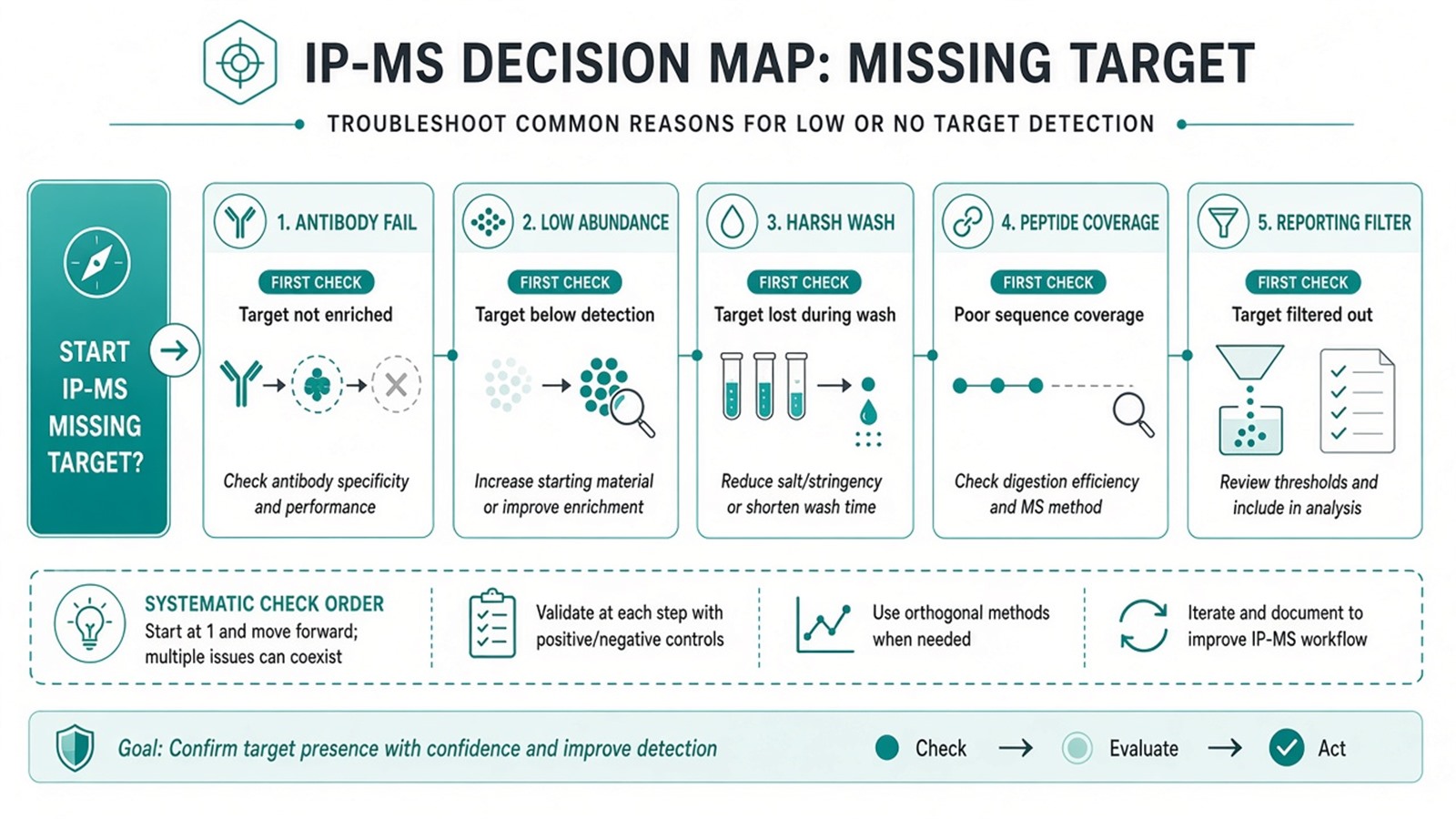
Figure 3. The first response follows the clue: antibody and Input problems are not solved by a longer MS run.
If IP failed, revise antibody, lysis, wash, usable input, or elution before repeating LC-MS/MS. If IP succeeded but MS missed the bait, revise digestion, cleanup, acquisition, or reporting thresholds while keeping Input and IgG matched. If recovery is consistently low, treat the dataset as low-confidence discovery and avoid strong interaction claims. If only one replicate lacks the bait, repeat that arm rather than overinterpreting the others.
For MS versus blot readouts when the bait is recovered but a named prey is the next question, see IP-MS vs Co-IP Western Blot: Which Method Fits Your Study?. Mixed enrichment-MS projects can be reviewed under the MS-Based Protein-Protein Interaction Analysis Service.
An IP-MS table without bait recovery does not support bait-specific protein-protein interaction claims.
Once target context, antibody status, Input and IgG results, and whether bait peptides exist in the raw search are defined, the project can be scoped as an IP-MS recovery review. Researchers can review the MtoZ Biolabs IP-Mass Spectrometry Service for sample evaluation and diagnostic planning.
Frequently Asked Questions
1. Can IP-MS results be used if the target protein is not detected?
Exploratory prey lists can be reviewed only as background. Bait-specific interaction claims should wait until bait recovery is confirmed.
2. Does a missing target always mean the immunoprecipitation failed?
No. The bait may be enriched on blot yet missed in LC-MS/MS because of digestion, peptide coverage, antibody-chain dominance, or reporting thresholds.
3. Should I repeat LC-MS/MS or the entire IP?
If targeted detection shows no bait recovery, repeat IP. If the bait is recovered but not identified by MS, investigate digestion and search parameters first.
4. How do Input and IgG help diagnose a missing bait?
Input tests whether the bait was present before capture. IgG tests handle-driven background. If both Input and bait IP lack the target, the system or extraction is the first question.
5. Why does an IP antibody work for western blot but not IP-MS?
Western blot and IP often use different epitope access and buffer conditions. IP performance must be shown under the lysis and wash used to generate the MS sample.
Reference
- M.Y. Hein, N.C. Hubner, I. Poser, J. Cox, N. Nagaraj, Y. Toyoda, I.A. Gak, I. Weisswange, J. Mansfeld, F. Buchholz, et al. (2015). A human interactome in three quantitative dimensions organized by stoichiometries and abundances. Cell, 163, 712-723. https://doi.org/10.1016/j.cell.2015.09.053
- H. Choi, B. Larsen, Z.Y. Lin, A. Breitkreutz, D. Mellacheruvu, D. Fermin, Z.S. Qin, M. Tyers, A.C. Gingras, A.I. Nesvizhskii (2011). SAINT: probabilistic scoring of affinity purification-mass spectrometry data. Nat. Methods, 8, 70-73. https://doi.org/10.1038/nmeth.1541
- D. Mellacheruvu, Z. Wright, A.L. Couzens, J.P. Lambert, N.A. St-Denis, T. Li, Y.V. Miteva, S. Hauri, M.E. Sardiu, T.Y. Low, et al. (2013). The CRAPome: a contaminant repository for affinity purification-mass spectrometry data. Nat. Methods, 10, 730-736. https://doi.org/10.1038/nmeth.2557
