



The elution buffer for Co-IP beads before mass spectrometry is the chemistry that releases, or leaves digestible, proteins after antibody capture so Input and IgG can still score bait enrichment. IP-MS and Co-IP-MS ask which proteins remain with an endogenous bait. Elution is readable only when the antibody recovered that bait and the same buffer is used on every arm. The choice fits cells or tissues when an IP-competent antibody exists and the eluate can be digested. It does not prove binary direct binding (Hein et al. 2015). Prefer a matched, MS-compatible elution when partners will be ranked. Reassess when a Western loading buffer, leftover salt, or detergent blocks digestion, or when only the bait IP is eluted.
Researchers who already have bead-bound Co-IP or IP-MS arms and a written interaction claim can also review the MtoZ Biolabs IP-Mass Spectrometry Service and Protein-Protein Interaction Analysis for project-specific elution review.
There Is No Single Co-IP Elution Buffer for MS
A Co-IP elution buffer is not a copied salt, acid, or detergent recipe. The buffer has one job: put bait-associated proteins into a form that LC-MS/MS can digest, while leaving Input and IgG on the same chemistry. That job can be done by acid release, a denaturing elution that later goes through gel or cleanup, competitive peptide release, or on-bead digestion that never uses a classical elution. Identification depth in a Co-IP-style eluate is typically hundreds to about a thousand proteins, depending on the sample. The buffer does not set that depth.
How the rest of the sample set is prepared is covered in How to Prepare Immunoprecipitation Samples for Mass Spectrometry. What must be submitted as a matched arm set is covered in Requirements for Samples in Protein Immunoprecipitation-Mass Spectrometry.
The choice fits cultured cells or tissues when the antibody is supplied by the study. It is a poor first choice when the antibody is Western-only, when leftover SDS or high salt will be left in a digest, or when the claim is reconstituted binding of a purified domain.
An elution buffer for Co-IP beads before MS protects bait recovery and digestion. It does not certify a partner.
Antibody Specificity Before Any Buffer Is Chosen
Antibody specificity is the first elution gate. If the capturing reagent does not recover the intended native bait, changing salt, acid, or SDS will not create an IP-MS result. Application-specific validation remains necessary because Western performance does not establish IP performance (Uhlen et al. 2016). How to qualify that reagent is covered in How to Choose the Right Antibody for Co-IP Assays?.
Record clone, lot, host species, bead pairing, and whether the antibody was coupled. Coupling can reduce chain release into the eluate, but it does not replace IgG. Extra unbound antibody that is stripped by a harsh elution fills the digest with chain peptides and then looks like a failed partner search. Empty-tag controls from AP-MS do not replace antibody documentation on a Co-IP elution.
If no IP-competent antibody exists, stop optimizing elution and change handle. Tagged AP-MS or GST pull-down use different release chemistries, compared in What Are the Main Differences Between GST-Pull Down and CoIP.
Input and IgG Must See the Same Elution
Input and IgG are the denominators of an elution choice. They are not optional after the bait IP looks clean.
Input is taken before capture. It shows whether the bait existed in the extract. A missing bait after elution is an expression or extraction problem if Input is empty. It is a capture or release problem if Input is positive.
IgG or bead controls must use the same lysate batch, wash, elution volume, temperature, and, for IP-MS, the same digestion and search. Preclearing is not an elution substitute for IgG. If IgG was left on beads while the bait IP was boiled in loading buffer, specificity cannot be read. How wash and elution are locked before the run is covered in Designing an Efficient Co-immunoprecipitation (Co-IP) Protocol.
Elution check |
What a pass looks like |
What the buffer cannot say |
|---|---|---|
Antibody specificity |
Intended bait recovered; no dominant off-target |
Partner names from an off-target capture |
Input |
Bait present before capture when expected |
A missing eluate read as a missing interaction |
IgG or bead |
Same elution recipe as the bait IP |
Every remaining name is bait-specific |
Enrichment efficiency |
Bait higher after elution than in Input and IgG |
A harsh strip that emptied the beads |
MS compatibility |
Eluate digestible after the planned cleanup |
Residual salt, detergent, or SDS left in the digest |
A practical elution sequence is:
- Write the co-recovery claim the eluate must support.
- Confirm native bait recovery versus Input on a pilot elution.
- Apply that same elution to matched IgG.
- Keep only a chemistry that leaves a digestible, bait-positive sample.
- Rank names after cleanup, not from the raw elution tube.
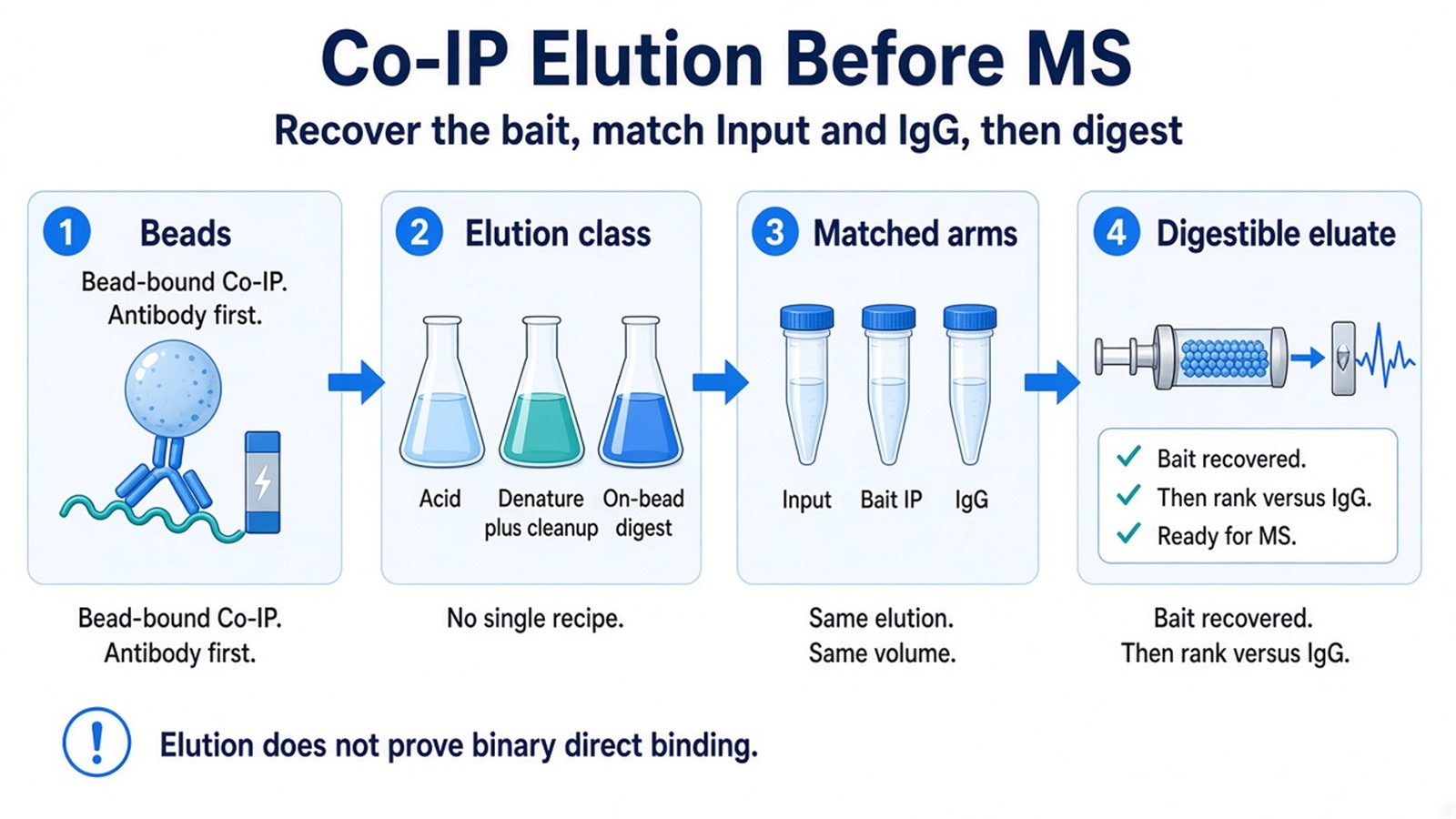
Figure 1. Elution buffer choice starts after bait recovery is shown. A copied salt or acid recipe is not an IP-MS result.
Enrichment Efficiency and Mass Spectrometry Compatibility
Enrichment efficiency decides whether elution worked. If the bait stays on the beads or is weak versus Input, stop partner interpretation. Relative intensity can compare the same protein across Input, IgG, and bait IP only when every arm used one elution. Limits of that comparison are covered in Can Co-Immunoprecipitation (Co-IP) Be Used for Quantitative Comparison. Intensity does not rank unrelated proteins as tighter binders.
Acid elution can release antibody-bound complexes when the pair is not covalently locked. It does not prove that remaining proteins contacted the bait. Denaturing elution, including SDS-containing loading buffer, can empty beads for gel-based MS, but leftover SDS above a digestible level blocks trypsin and is not acceptable in a submitted solution (Wisniewski et al. 2009). High-salt or mild-detergent mixes often behave like extra washes. They rarely finish an IP-MS elution on their own. On-bead digestion is a valid alternative when every arm stays on beads and no classical elution is required.
For IP-MS credibility, identification of a protein in the eluate is not a confidence call. Ranking requires bait recovery, Input-aware enrichment, and a declared contrast against IgG. Probabilistic scoring such as SAINT uses bait versus control counts to assign a probability that a prey is specifically co-purified (Choi et al. 2011). A contaminant catalog such as the CRAPome is a prior on control frequency (Mellacheruvu et al. 2013). Pathway software can annotate a shortlist. It cannot repair an unmatched elution.
If the bait is missing after elution, diagnose before ranking, as in Why Was the Target Protein Not Detected by IP-MS?. Protocol-level search matching is covered in Immunoprecipitation Mass Spectrometry Protocol.
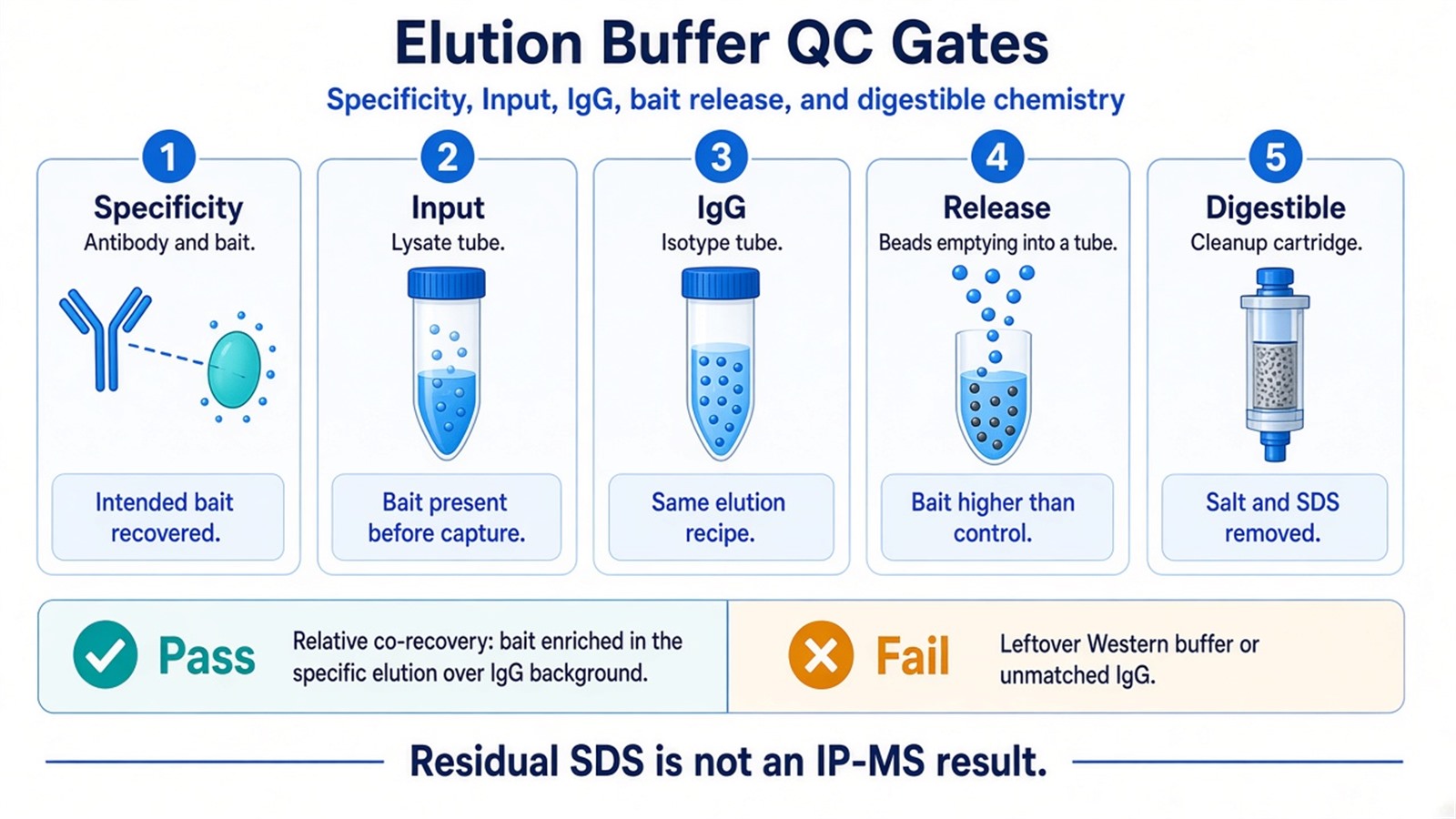
Figure 2. Mass spectrometry compatibility is an elution outcome. Residual salt or SDS does not become a partner list after search.
Common Buffer Biases and Result Boundaries
The common elution bias is copying 2 M salt, a Western loading buffer, or a strong bile salt because a list called them typical. Another bias is eluting only the bait IP and then treating leftover names as Co-IP-MS partners. Over-stripping can release antibody chains and bead binders and then look like a rich interactome. Under-eluting can leave the bait on the resin and look like a clean negative.
Do not write a successful elution as proof that remaining proteins contact the bait. Do not write a negative eluate as proof that no interaction exists in the cell. Absence can mean the wrong antibody, epitope masking, over-washing, or a buffer that never released the bait.
Prefer acid, denaturing-plus-cleanup, or on-bead digestion when native bait recovery can be shown and every arm matches. Prefer sending intact beads when elution chemistry is still untested. Prefer GST pull-down or tagged AP-MS when no IP-competent antibody exists. Prefer a defined-pair assay when the next sentence is direct contact. Mixed enrichment-MS projects can be reviewed under the MS-Based Protein-Protein Interaction Analysis Service.
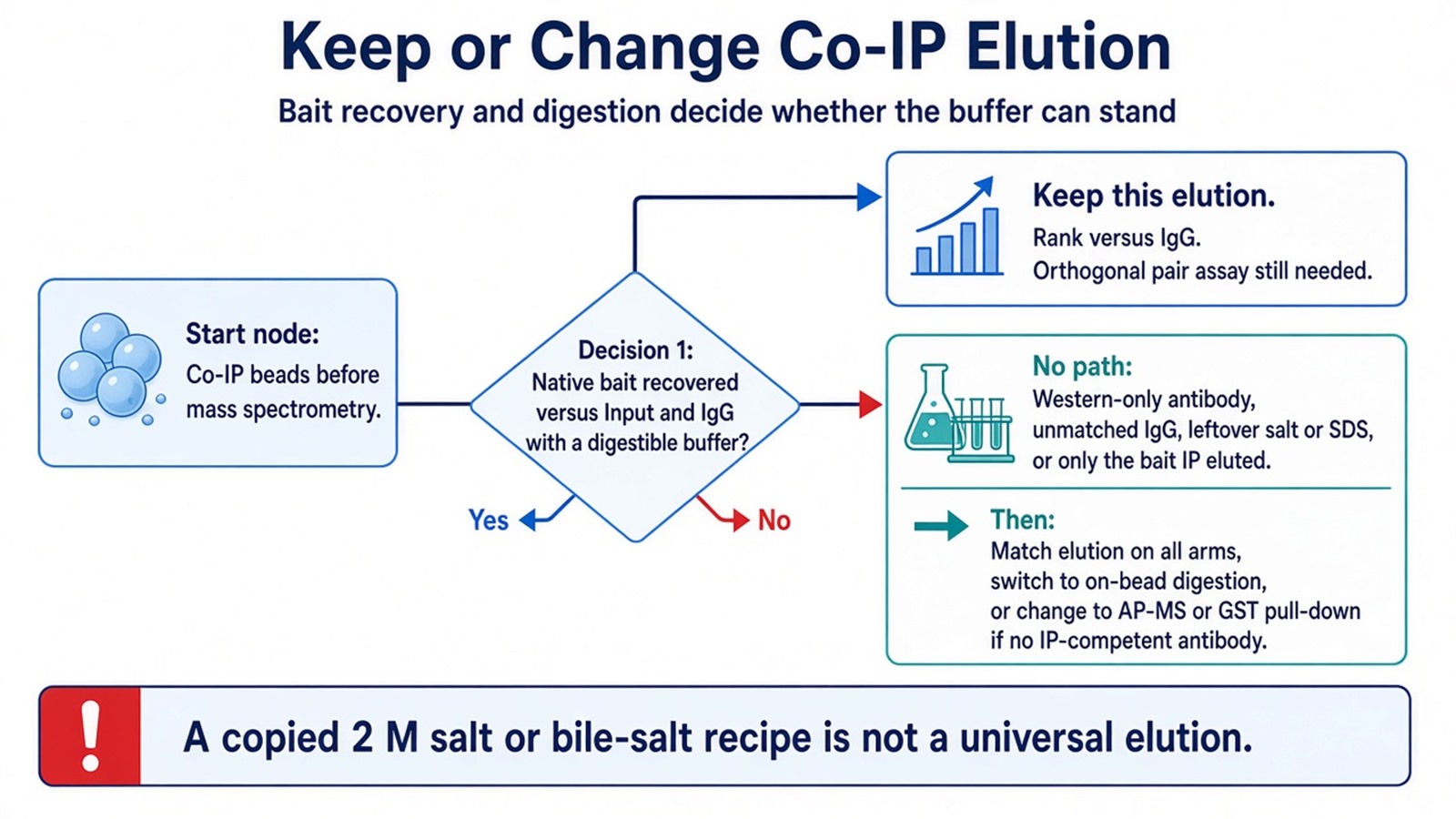
Figure 3. Keep a Co-IP elution buffer only while bait recovery and digestion remain possible. A pathway map is not a finished elution.
An elution buffer for Co-IP beads before MS supports candidate co-recovery after antibody, Input, IgG, and bait release are shown. It does not certify a binary interactome.
Once the claim, antibody status, matched elution of Input and IgG, and the planned digest route are defined, the project can be scoped as Co-IP or IP-MS elution for LC-MS/MS. Researchers can review the MtoZ Biolabs IP-Mass Spectrometry Service for sample evaluation and elution planning.
Frequently Asked Questions
1. Is there one elution buffer for all Co-IP beads before MS?
No. Choose a chemistry that recovers the bait, matches IgG, and can be digested. A copied salt or acid recipe is not a universal answer.
2. Can SDS-PAGE sample buffer go straight to LC-MS/MS?
Not as a leftover solution. Gel-based digestion or SDS removal is required first. Residual SDS above a digestible level blocks trypsin.
3. Must Input and IgG use the same elution as the bait IP?
Yes. Unequal elution makes enrichment unreadable. Preclearing does not replace a matched IgG elution.
4. Is on-bead digestion better than elution?
It is better when elution chemistry is untested or MS-incompatible, and every arm stays on beads. It is not automatically more specific.
5. Does a clean-looking eluate prove the interaction?
No. Cleanliness can mean over-washing or failed release. The result still needs bait recovery versus Input and IgG.
Reference
- M. Uhlen, A. Bandrowski, S. Carr, A. Edwards, J. Ellenberg, E. Lundberg, D. L. Rimm, H. Rodriguez, T. Hiltke, M. Snyder, T. Yamamoto (2016). A proposal for validation of antibodies. Nat. Methods, 13, 823-827. https://doi.org/10.1038/nmeth.3995
- M.Y. Hein, N.C. Hubner, I. Poser, J. Cox, N. Nagaraj, Y. Toyoda, I.A. Gak, I. Weisswange, J. Mansfeld, F. Buchholz, et al. (2015). A human interactome in three quantitative dimensions organized by stoichiometries and abundances. Cell, 163, 712-723. https://doi.org/10.1016/j.cell.2015.09.053
- H. Choi, B. Larsen, Z.Y. Lin, A. Breitkreutz, D. Mellacheruvu, D. Fermin, Z.S. Qin, M. Tyers, A.C. Gingras, A.I. Nesvizhskii (2011). SAINT: probabilistic scoring of affinity purification-mass spectrometry data. Nat. Methods, 8, 70-73. https://doi.org/10.1038/nmeth.1541
- D. Mellacheruvu, Z. Wright, A.L. Couzens, J.P. Lambert, N.A. St-Denis, T. Li, Y.V. Miteva, S. Hauri, M.E. Sardiu, T.Y. Low, et al. (2013). The CRAPome: a contaminant repository for affinity purification-mass spectrometry data. Nat. Methods, 10, 730-736. https://doi.org/10.1038/nmeth.2557
- J.R. Wisniewski, A. Zougman, N. Nagaraj, M. Mann (2009). Universal sample preparation method for proteome analysis. Nat. Methods, 6, 359-362. https://doi.org/10.1038/nmeth.1322
