






Targeted Mass Spectrometry or Discovery LC-MS/MS? Matching MRM, PRM, and Profiling Routes to Your Analytical Goal
Introduction
Mass spectrometry projects fail route selection when the analytical goal is unclear. One team may need to quantify forty predefined peptides across four hundred clinical samples with controlled specificity. Another may still be profiling the proteome to generate biomarker hypotheses. A third may need high-resolution confirmation after MRM transitions showed unstable ratios in plasma. Each scenario requires a different balance of breadth, selectivity, and repeat measurement.
Targeted mass spectrometry and discovery LC-MS/MS answer different questions. Targeted methods prioritize predefined analyte measurement with selective acquisition through MRM, PRM, or related routes. Discovery profiling prioritizes coverage and candidate generation through data-dependent acquisition (DDA) or, in some workflows, data-independent acquisition (DIA). The best choice depends on whether the analyte list is known, how many samples must be measured, and what level of assay confirmation the next decision requires.
Teams selecting an acquisition route before samples are prepared can compare options across study stage, matrix complexity, and reporting needs. MtoZ Biolabs can Compare targeted and discovery mass spectrometry workflows before method development or sample submission begins.
Related Services
Targeted Mass Spectrometry Service
MRM/PRM Quantitative Proteomics Service
Multi Reaction Monitoring MRM Service
Parallel Reaction Monitoring (PRM) Service
Label-Free Quantitative Proteomics Service, MS Based
Start With the Analytical Goal
Method selection usually begins with one of four scenarios:
- Hypothesis generation. The analyte target list is not yet defined.
- Candidate narrowing. A short list exists but selective assay development has not started.
- Validation-scale targeted measurement. A predefined panel must be measured reproducibly across many samples.
- Interference-limited follow-up. MRM performance is insufficient for part or all of the panel in matrix.
These scenarios lead to different default routes. Early discovery favors DDA or DIA profiling. Late validation favors targeted mass spectrometry through MRM or PRM.
Route Comparison at a Glance
|
Decision Factor |
Targeted MS (MRM/PRM) |
Discovery DDA |
DIA / Hybrid Workflows |
|---|---|---|---|
|
Core readout |
Predefined analyte quantitation |
Relative abundance across detected features |
Multiplexed window acquisition with reanalysis potential |
|
Best study stage |
Validation, QC, panel tracking |
Candidate discovery |
Discovery with later targeted follow-up |
|
Target definition |
Required upfront |
Not required |
Flexible depending on workflow |
|
Matrix strategy |
MRM for stable panels; PRM for interference |
Broad profiling with matrix constraints |
Window design and depth trade-offs |
|
Common bottleneck |
Cycle time, assay development |
Depth vs throughput |
Data analysis complexity |
|
Ideal deliverable |
Panel quantitation with method documentation |
Candidate analyte lists |
Combined discovery and targeted potential |
When Targeted Mass Spectrometry Is the Better Fit
Targeted mass spectrometry is usually the preferred route when:
- the analyte panel is already defined
- many samples must be measured with consistent assay performance
- biomarker or QC candidates move from discovery into validation
- biopharmaceutical workflows require predefined selective evidence
- MRM or PRM performance has been tested or is expected to be suitable for the matrix
Strengths include selective acquisition, reproducible panel measurement, and efficient cohort analysis once the method is locked.
Limitations include upfront method development and dependence on analyte detectability in the study matrix.
Teams with defined panels may review Targeted Mass Spectrometry Service or MRM/PRM Quantitative Proteomics Service.
When MRM Fits Within Targeted Mass Spectrometry
Multi Reaction Monitoring MRM Service is often the first targeted route when:
- transitions are stable in the matrix
- sample throughput on a focused panel is the priority
- triple-quadrupole quantitation meets the confirmation requirement
MRM remains efficient for many validation panels in moderately complex matrices.
When PRM Fits Within Targeted Mass Spectrometry
Parallel Reaction Monitoring (PRM) Service is often selected when:
- MRM transitions show interference or unstable ratios
- fragment-level confirmation is required
- plasma, tissue, or similarly complex backgrounds limit MRM specificity
PRM stays within targeted mass spectrometry because the analyte panel remains predefined.
When Discovery Profiling Should Come First
Label-Free Quantitative Proteomics Service, MS Based is often preferable when:
- the target list is not yet defined
- the project goal is unbiased profiling
- sample number is moderate and breadth matters more than panel performance
Discovery identifies candidates. Targeted mass spectrometry validates them once the panel is stable enough for repeat measurement.
Some programs use DIA-PRM Proteomics Service or related hybrid workflows when discovery breadth and later targeted confirmation must be connected within one program design.
Combined Discovery-to-Targeted Pipelines
Many programs use a staged strategy. Discovery profiling identifies candidate analytes, then targeted mass spectrometry quantifies a prioritized panel in an expanded cohort. Some programs use MRM first and move only interference-limited analytes to PRM.
Planning the targeted assay during discovery reduces delay when candidates advance to validation measurement.
If the project team is uncertain between MRM and PRM within targeted mass spectrometry, request a short matrix pilot that tests both routes on the same priority analytes. That pilot often costs less than committing the full cohort to the wrong platform.
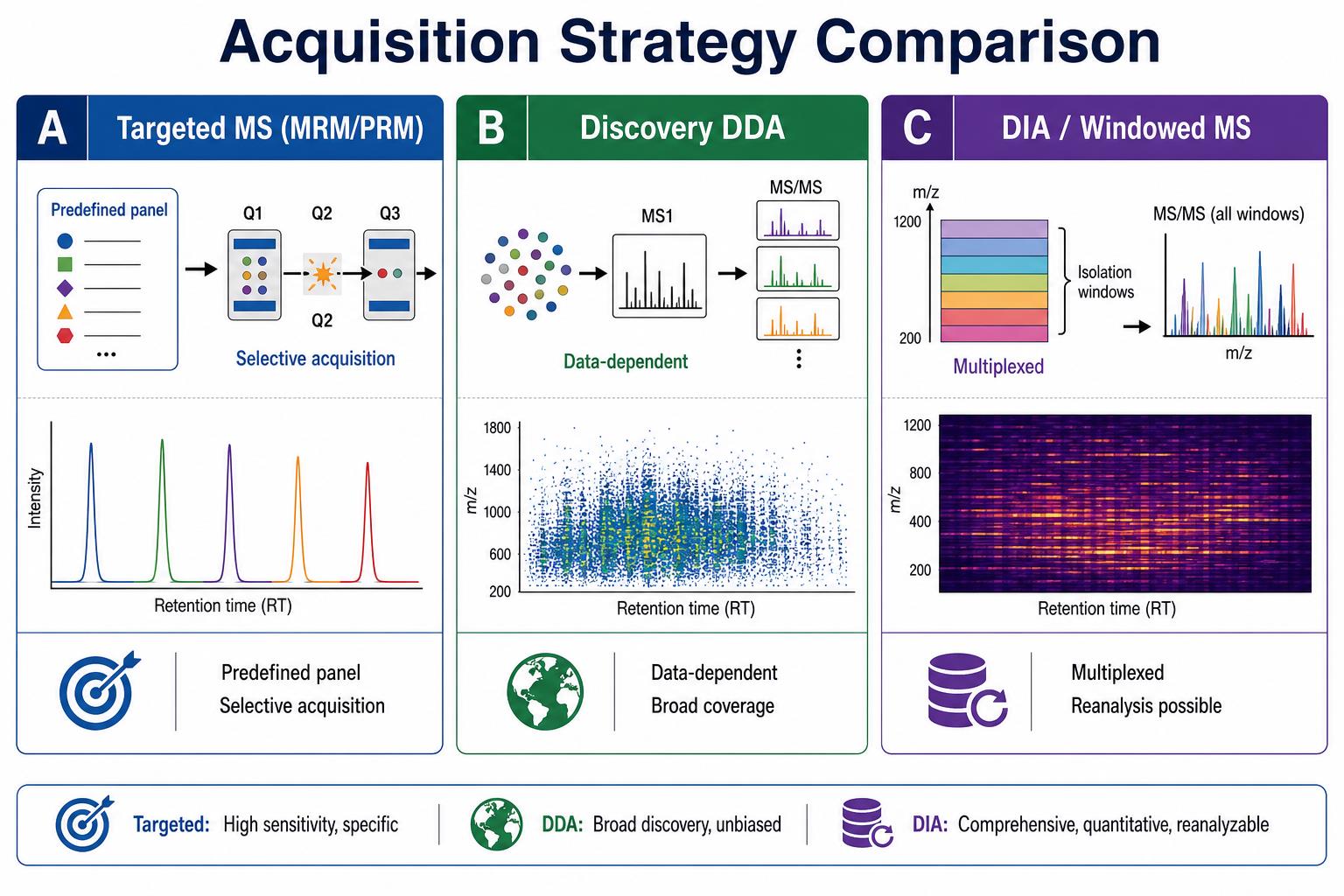
Figure 1. Analyte definition, study stage, and matrix complexity determine whether targeted mass spectrometry or discovery profiling is the better fit.
Decision Recommendations by Project Goal
Choose targeted mass spectrometry when:
- the panel is predefined
- sample count is high and assay consistency is critical
- validation or QC documentation is the primary goal
Choose MRM when:
- transitions are stable in matrix
- throughput and efficiency are priorities
Choose PRM when:
- MRM is interference-limited
- high-resolution fragment confirmation is required
Choose discovery DDA or DIA when:
- targets are not yet defined
- hypothesis generation is the primary goal
Practical Examples by Study Type
Plasma biomarker validation.
Twenty candidate proteins, three hundred samples. Targeted mass spectrometry with MRM or PRM after peptide or transition selection.
Exploratory treatment response study.
Pathway coverage unknown, eighteen samples. Label-free discovery before any panel lock-in.
Biopharmaceutical analyte monitoring.
Small predefined panel in formulation matrix. Targeted mass spectrometry with matrix pilot and documented QC.
Mixed panel after unstable MRM ratios.
Stable analytes remain on MRM; interference-limited analytes move to PRM within the same targeted program.
For internal route selection, use one decision line: if the panel is fixed and repeat measurement is the bottleneck, move into targeted mass spectrometry; if the panel is still open, remain in discovery until candidates survive initial filtering.
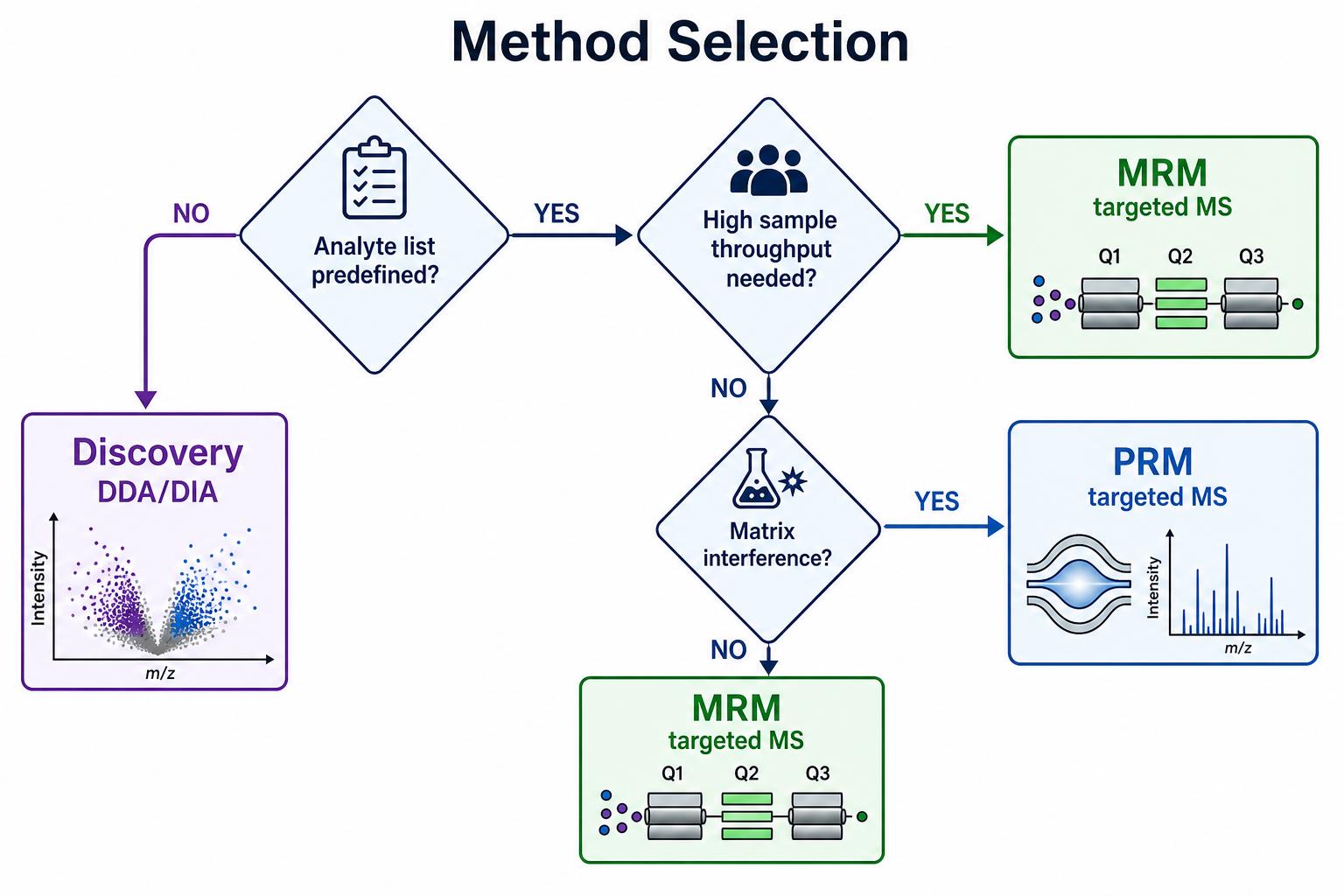
Figure 2. Analyte definition and matrix complexity determine whether discovery profiling, MRM, or PRM is the preferred targeted mass spectrometry route.
Frequently Asked Questions
Is targeted mass spectrometry the same as MRM?
No. MRM is one targeted route. Targeted mass spectrometry is the broader strategy of measuring predefined analytes, which may use MRM, PRM, or related selective assays.
Should every discovery project move to targeted mass spectrometry?
Not always. Only candidates that require large-scale repeat measurement usually justify targeted method development.
Can one program combine discovery and targeted mass spectrometry?
Yes. Many biomarker workflows use discovery to nominate targets and targeted mass spectrometry to validate them.
When should PRM replace MRM within a targeted panel?
When interference or confirmation requirements persist after MRM optimization in the study matrix.
Does targeted mass spectrometry replace DIA workflows?
No. DIA and targeted mass spectrometry serve different stages and can be combined in staged or hybrid program designs.
Conclusion
Targeted mass spectrometry and discovery LC-MS/MS serve different stages of the analytical workflow. Discovery methods generate breadth and candidates. Targeted mass spectrometry delivers predefined analyte measurement with selective acquisition through MRM, PRM, or related routes. Method selection should begin with analyte definition and study stage, not platform preference alone.
MtoZ Biolabs can Match the mass spectrometry workflow to project stage across Targeted Mass Spectrometry Service, MRM/PRM Quantitative Proteomics Service, and Label-Free Quantitative Proteomics Service, MS Based. Contact the technical team to compare options before sample submission.
How to order?




