



The steps for BS3 crosslinking apply to a protein, a lysate, or a cell-surface sample that already sits in an amine-free buffer. Bis(sulfosuccinimidyl) suberate is a water-soluble, membrane-impermeable N-hydroxysuccinimide (NHS) ester. It is dissolved in water and used at once. It does not enter intact cells to mark intracellular amines. A sugar-containing solution is not a quench. Several hours at room temperature is not the usual window.
The original seven headings remain the bench order once those limits are written. Compatible buffer, a fresh working solution, gentle mixing, a Tris or other amine stop, and a named assay are kept. DMSO as the default solvent, a spin that is said to purify crosslinked complexes, and “amino acid residues” as the reactive class are not kept as written. For the same spacer on the permeable analog, What Are the Specific Steps for DSS Protein Crosslinking? provides a complementary in-cell step page.
Researchers who already have a BS3 pulse planned and need a residue-pair table can also review the MtoZ Biolabs Crosslinking Mass Spectrometry Protein Interaction Analysis Service for project-specific feasibility and analysis planning.
Where These Steps Can Run
BS3 carries sulfo groups. That is why it dissolves in water and why it stays outside membranes. A purified complex, an already-open lysate, or the extracellular face of intact cells are the matching samples. Naming BS3 for an intracellular in-cell study is a site error. For that site-first choice, How to Select a Crosslinker for XL-MS Structural Studies provides a complementary selection page.
The spacer is the same chemical reach as DSS, near 11 Å. Water solubility does not make the reach a measured contact. NHS esters mark primary amines—lysine side chains and N-termini—not amino acid residues in general.
A no-BS3 arm is processed through the same buffer, quench, and assay. Changing only the treated tube mixes a handling effect with a reagent effect. For what a two-protein tube must contain before this step list starts, What Reagents Are Required for In Vitro Cross-Linking of Two Purified Proteins provides a complementary in-vitro reagent page.
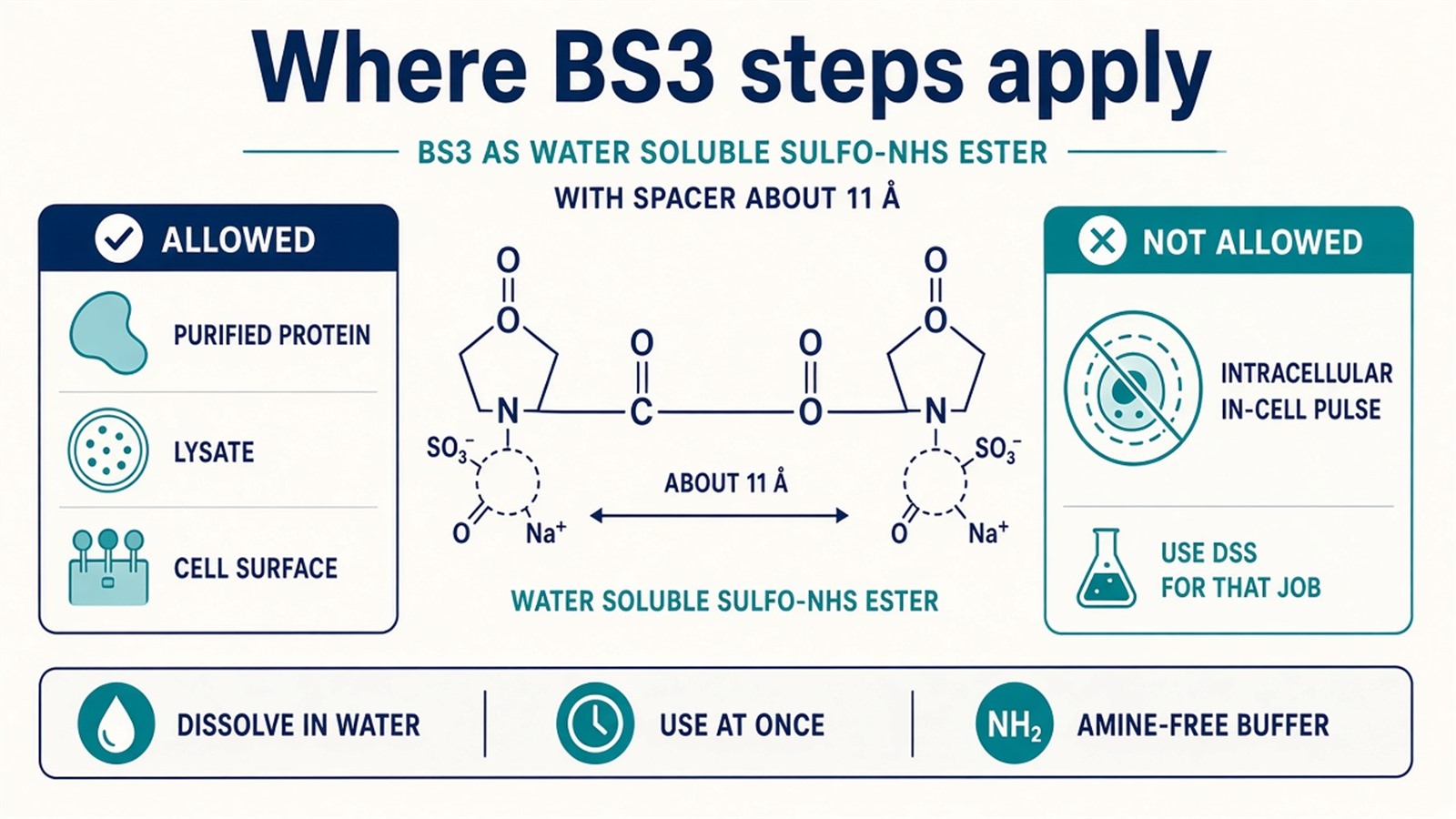
Figure 1. Water-soluble, membrane-impermeable BS3. Allowed: protein, lysate, surface. Intracellular in-cell work is a DSS job.
Write whether the amines are already accessible before dissolving BS3. A water stock does not convert the reagent into an in-cell pulse.
The Original Seven Headings, Corrected
These headings stay in order. The verbs inside them change.
1. Sample preparation
Exchange the protein, the lysate, or the washed cells into an amine-free buffer near pH 7–8, typically HEPES or phosphate. Compatible does not mean whatever the protein was stored in. Residual Tris, glycine, or imidazole consumes sulfo-NHS ester before the intended amines do. Concentration is written. A no-BS3 aliquot is split off here.
2. Preparation of the BS3 solution
Dissolve the solid in water or in the same amine-free buffer and dilute into the sample immediately. The ester hydrolyzes in water. A stock that sat at the bench is not the same reagent. DMSO can dissolve BS3. It is not the usual solvent and it is not required. DMSO is the DSS habit. Final organic solvent, if any, is kept low.
3. Addition of BS3
Add the working solution and mix. Dose is set from protein concentration and from a titration, not from a desired extent that can be read off a label. A molar excess is one dosing style. A written micromolar-to-millimolar range is the other. Neither is a universal excess.
4. Incubation
Hold the tube at room temperature for about thirty minutes as a starting window. Ice-cold pulses are used when hydrolysis and over-linking need to be slowed. Thirty minutes to several hours is the wrong range. Leftover time in water is hydrolysis, not a more complete architecture.
5. Termination of the reaction
Add Tris or another amine in excess to consume leftover sulfo-NHS ester. The quench stops further amine marking. It does not prevent sites that already formed. A sugar-containing solution does not react with those esters and is not a quench. For that stop-then-store order, How to Handle Samples After Adding Crosslinkers in Protein Crosslinking provides a complementary handling page.
6. Post-reaction treatment
Unreacted BS3 and hydrolyzed NHS products are removed by buffer exchange, precipitation, or a later digest cleanup. Washing and centrifugation pellet cells or debris. They do not purify crosslinked protein complexes from a clear supernatant. A stained gel is optional.
7. One named assay
SDS-PAGE, Western blotting, and mass spectrometry remain the original readouts. They are different tables. A shift or a blot asks whether a species became larger or whether a nominated band survived. Liquid chromatography–tandem mass spectrometry (LC-MS/MS) reports BS3 pairs only when the digest is searched as linked peptides. Searching ordinary peptides names proteins. It does not report the crosslink.
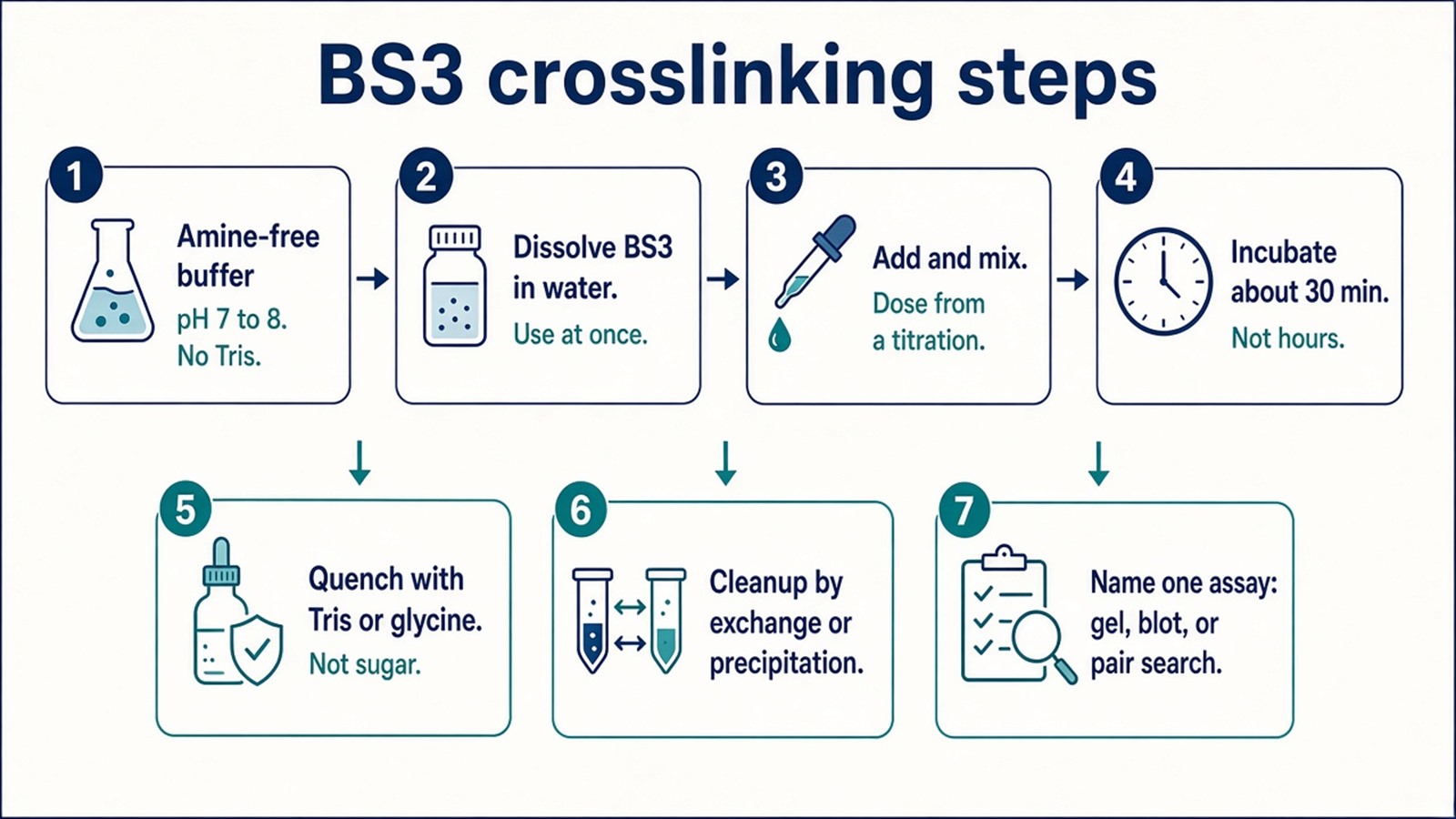
Figure 2. Corrected order. Water, not DMSO, is the usual solvent. Sugar is not a quench. The last step names one assay.
What the Original Wording Cannot Support
BS3 does not mark amino acid residues as a class. Primary amines are the reactive group. Intra-molecular and inter-molecular links both form. A band that became larger is a mass shift. It is not a purified complex and not a site.
A surface pulse on intact cells still has to be quenched before lysis if the next assay is intracellular. Adding BS3 to the medium and then opening the cells without a stop continues leftover chemistry in the lysate. That is not an in-cell intracellular experiment.
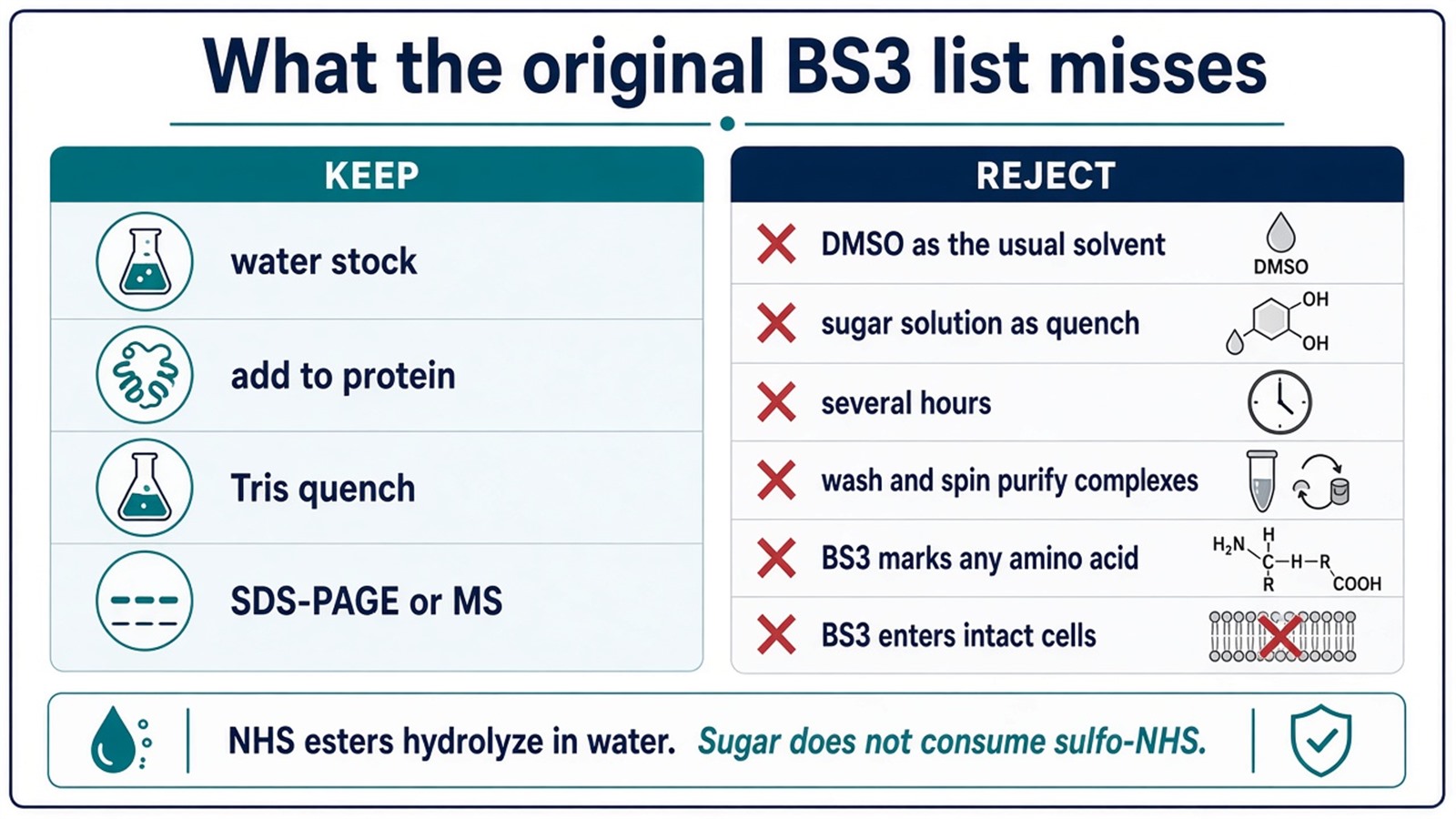
Figure 3. Keep: water stock, amine-free sample, Tris quench, named assay. Not granted: sugar quench, hours, spin purification, intracellular reach.
Experimental Limits
A BS3 step list reduces a sample to one accessible-amine compartment, one dose, one quench, and one assay. Diagnostic completeness of every surface or lysate contact sits outside ordinary research reporting. Switching the solid to DSS after a failed intracellular gel does not convert these seven headings into an in-cell protocol.
Project Planning and Service Scope
A usable BS3 plan names the compartment, the amine-free buffer, the quench, and the assay that will read the pulse, before the first water stock is made. MtoZ Biolabs scopes crosslinking MS with Orbitrap-class LC-MS/MS. Interpretability still follows those arms, not a general seven-step slogan.
Once the next sentence is a cellular partner list rather than a BS3 pair or a shift, the project should not be forced through this step list. Researchers who need that pellet can review the MtoZ Biolabs Protein-Protein Interaction Analysis Service for project-specific sample evaluation, feasibility assessment, and workflow planning.
Frequently Asked Questions
1. What are the steps for BS3 crosslinking?
Amine-free sample, dissolve BS3 in water, add, incubate about thirty minutes, quench with Tris or glycine, clean up, then one named assay.
2. Can BS3 be used for intracellular in-cell crosslinking?
No. The sulfo groups keep it outside membranes. That job is DSS.
3. Should BS3 be dissolved in DMSO?
Water is the usual solvent. DMSO can dissolve it. It is not required.
4. Does a sugar solution quench BS3?
No. Leftover sulfo-NHS ester is consumed by an amine such as Tris.
5. Does washing and centrifugation purify the crosslinked complexes?
No. A spin pellets debris. Leftover reagent is removed by exchange, precipitation, or later cleanup.
Reference
- Leitner A., Walzthoeni T., Kahraman A., et al. (2014). Probing native protein structures by chemical cross-linking, mass spectrometry, and bioinformatics. Nat. Protoc., 9, 120-135. https://doi.org/10.1038/nprot.2013.168
- Merkley E.D., Rysavy S., Kahraman A., et al. (2014). Distance restraints from crosslinking mass spectrometry: mining a molecular dynamics database to evaluate lysine-lysine distances. Protein Sci., 23, 747-759. https://doi.org/10.1002/pro.2458
- O'Reilly F.J., Rappsilber J. (2018). Cross-linking mass spectrometry: methods and applications in structural, molecular and systems biology. Nat. Struct. Mol. Biol., 25, 1000-1008. https://doi.org/10.1038/s41594-018-0147-0
- Yu C., Huang L. (2018). Cross-linking mass spectrometry: an emerging technology for interactomics and structural biology. Anal. Chem., 90, 144-165. https://doi.org/10.1021/acs.analchem.7b04431
- Sinz A. (2018). Cross-linking/mass spectrometry for studying protein structures and protein-protein interactions: where are we now and where should we go from here? Angew. Chem. Int. Ed., 57, 6390-6396. https://doi.org/10.1002/anie.201709559
