



Protein-RNA interaction studies can start from a defined RNA, a known RNA-binding protein (RBP), or an endogenous RNA whose chromatin association or surrounding molecular environment is of interest. The starting point determines which molecules are captured and what the experiment can reveal. This article compares major investigation strategies, explains how to design appropriate controls, and discusses how to interpret results and select follow-up experiments.
Researchers comparing the broader method landscape can use Protein Interaction Analysis to place RNA-related evidence beside other interaction classes. For project-specific feasibility and workflow selection, contact MtoZ Biolabs to discuss your protein–RNA interaction research goals, sample requirements, and suitable analytical approaches.
What Protein-RNA Interactions Can Reveal
RNA-binding proteins influence RNA processing, localization, translation, stability, and decay. Some proteins recognize sequence or structure directly, while others occur in ribonucleoprotein complexes and are recovered through another protein or RNA molecule. An interaction experiment can therefore reveal several distinct forms of evidence: proteins enriched with a defined RNA, RNAs associated with a known protein, genomic regions occupied by a chromatin-associated RNA, or molecules located near an RNA in cells.
RNA abundance, folding, modification, localization, and the composition of the source lysate can change which partners are available for recovery. A candidate detected in one cell type or treatment condition may not be present, accessible, or assembled into the same complex in another context. Comparisons are most informative when the biological question, sample source, and control logic are defined before choosing the assay.
RNA-Centered and Protein-Centered Investigation
RNA-Centered
An RNA-centered design starts with a known transcript or RNA region and asks which proteins associate with it. In an RNA pull-down, a labeled RNA bait is incubated with a protein source, captured, and analyzed by immunoblotting or LC-MS/MS. This route is useful for discovering candidate proteins, comparing wild-type and mutant RNA regions, or testing whether a sequence element changes protein recovery. Detailed bait and background decisions are discussed in RNA Pull-Down Assay.
RBP-Centered
An RBP-centered design starts with a known RNA-binding protein and asks which RNAs occur in its complexes. RNA immunoprecipitation uses an antibody against that protein, followed by RT-qPCR for selected RNAs or sequencing for broader discovery. RIP recovers RNAs present in the immunoprecipitated complex; it does not by itself map a contact nucleotide. Crosslinking-based contact-mapping methods can add higher-resolution site evidence when that claim is required, as shown for Nova-regulated RNA networks (Ule et al. 2003). The experimental and interpretive choices for RIP are covered in RNA Immunoprecipitation (RIP).
Chromatin-Associated RNA
Chromatin Isolation by RNA Purification, or ChIRP, starts from an endogenous RNA and uses tiled antisense probes to recover associated chromatin and, depending on the readout, proteins. ChIRP established a genome-scale route for mapping long noncoding RNA occupancy (Chu et al. 2011). ChIRP-seq addresses genomic occupancy, whereas ChIRP-MS addresses proteins recovered with the endogenous RNA complex. These outputs should not be confused with RIP, which starts from a known protein rather than from the RNA. RNA proximity labeling takes another approach by marking molecules near an RNA in a cellular environment. Proximity can preserve transient or spatial relationships, but it is not equivalent to direct physical binding.
The best starting axis is therefore not the most comprehensive technology. It is the identity of the known molecule and the desired output. A defined RNA plus an unknown protein favors an RNA-centered strategy. A defined RBP plus unknown RNAs favors an RBP-centered strategy. A chromatin-associated RNA plus a genomic localization question favors ChIRP or a related occupancy-oriented method.
Study Design and Controls for RNA-Binding Experiments
RNA integrity is a first-order design variable. Degradation can remove structural elements, create artificial fragments, and reduce the abundance of the intended target. Sample collection, storage, lysis, and downstream handling should minimize RNase exposure while remaining compatible with the selected enrichment chemistry. An RNase-treated comparison can help distinguish RNA-dependent recovery from protein-protein capture, but enzyme conditions should be set for the specific project rather than copied from an unrelated protocol.
Specificity also depends on the capture reagent. For protein-centered experiments, antibody performance in immunoprecipitation matters more than performance in a conventional immunoblot. For RNA-centered experiments, bait sequence, length, folding, and label placement can affect accessibility and protein recovery. An in vitro transcript may also lack modifications or binding history found on the endogenous RNA.
Controls should model the most plausible sources of background. RIP commonly uses an input sample to document RNA availability and a matched IgG control to estimate nonspecific immunoprecipitation. RNA pull-down may use beads-only, unrelated RNA, sequence-scrambled RNA, or a biologically informative mutant bait. A mutant bait is useful only if the change does not unintentionally destroy the overall fold, while an unrelated RNA may not reproduce the nucleotide composition or structure that drives nonspecific binding.
Replicates help distinguish reproducible enrichment from variable capture, but they cannot correct a systematically poor control. Treatment comparisons should also avoid confounding condition with processing batch. When feasible, all groups should share source material, handling, and analytical settings, with the biological variable isolated in the comparison.
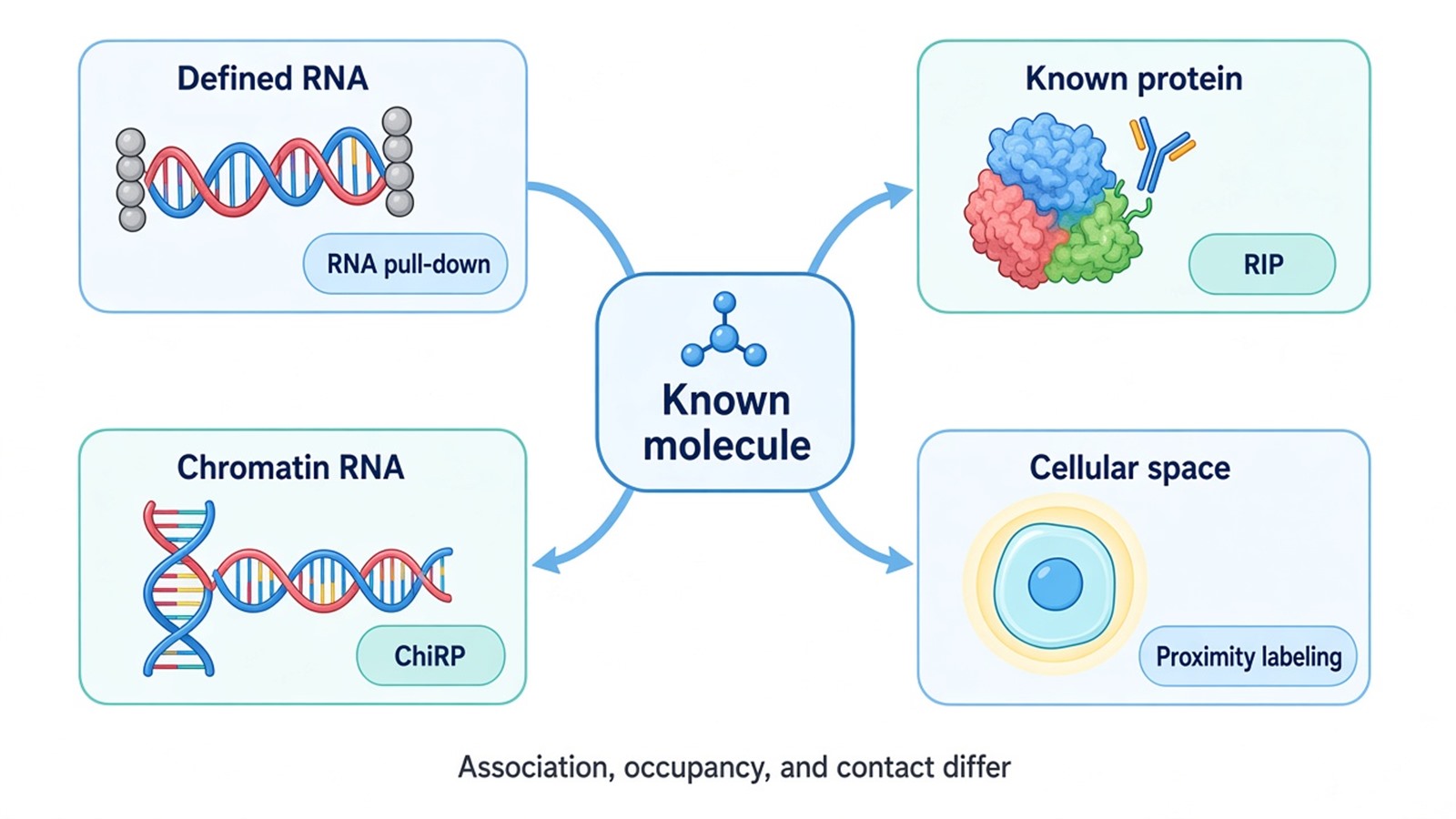
Figure 1. The known molecule, biological context, and intended readout determine the appropriate protein-RNA interaction strategy.
Types of Results and What They Support
RNA pull-down followed by LC-MS/MS produces a list of proteins identified in the captured material, with abundance-related evidence that can be compared across appropriate controls. Reproducibly enriched candidates can be prioritized using control behavior, protein abundance, known localization, RNA-binding features, and consistency with the biological model.
A protein detected by RNA pull-down may contact the RNA directly or be recovered through another component of a molecular complex. Candidate identification therefore provides a starting point for validation rather than a complete description of the molecular interaction.
RIP-qPCR measures the enrichment of selected RNAs in the immunoprecipitated material relative to Input and negative controls. RIP-seq extends this analysis to a broader set of associated RNAs. These methods identify RNA molecules recovered with a target protein but do not provide the nucleotide-level contact information generated by site-mapping approaches such as CLIP. Native complexes and post-lysis reassociation can also influence the RNA recovered by RIP.
ChIRP-seq produces genomic regions associated with a target RNA, while ChIRP-MS identifies candidate proteins recovered with the endogenous RNA complex. RNA proximity labeling produces a different readout: molecules labeled within the local environment of the target RNA. These outputs address distinct questions and should be interpreted according to the underlying capture mechanism.
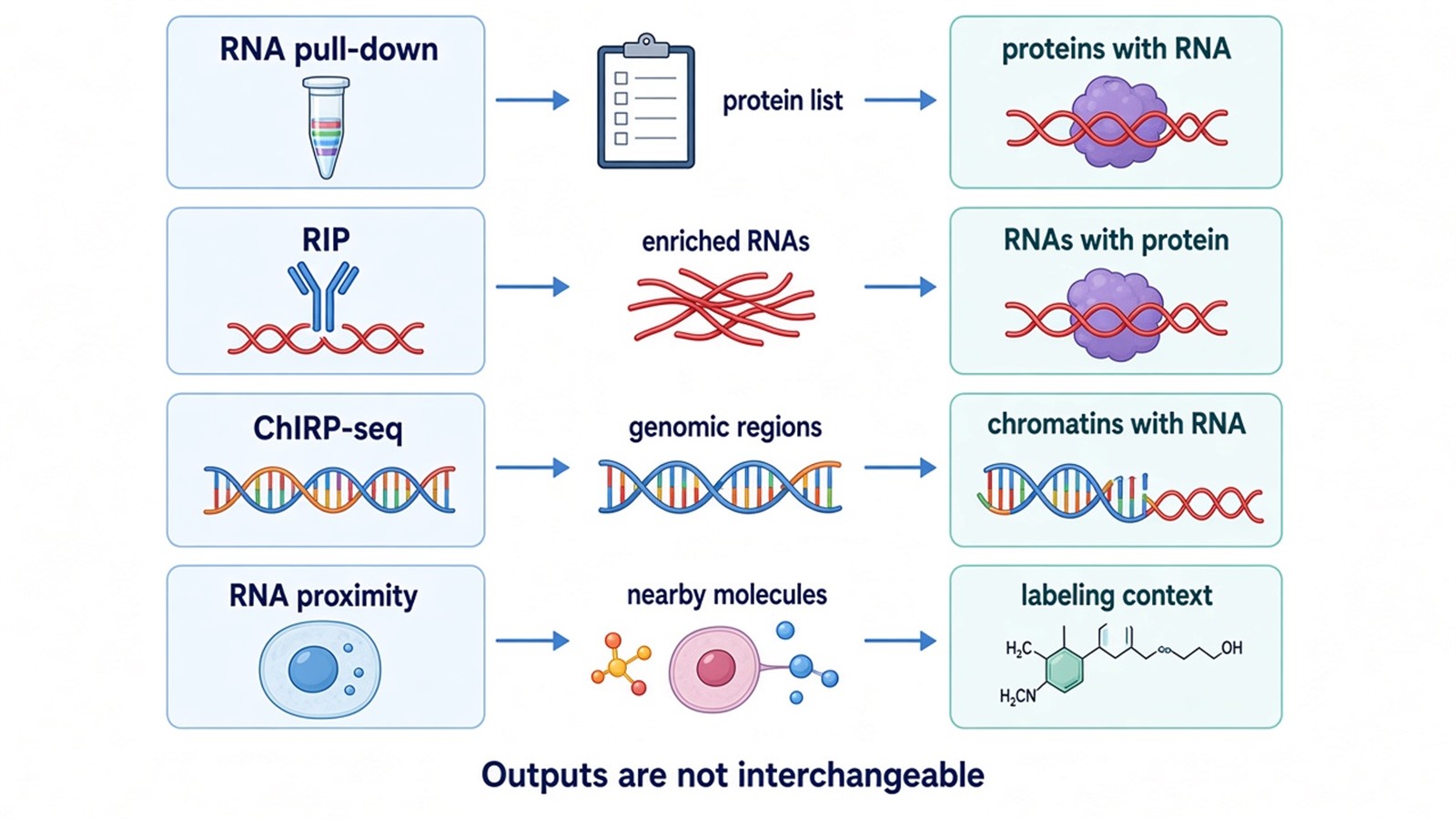
Figure 2. Protein lists, enriched RNAs, genomic regions, and proximity candidates are different outputs; each requires a claim-matched validation step.
Choosing the Next Analysis
The next analysis should close the largest evidence gap. After an RNA pull-down discovery experiment, a candidate may require targeted confirmation, cellular association evidence, or functional testing. After RIP, the next need may be a focused RNA validation, a higher-resolution contact assay, or an RNA-centered experiment that reverses the direction of capture. Concordant evidence from reciprocal designs is often more persuasive than adding another broad discovery list.
For chromatin-associated RNAs, the decision depends on whether the unresolved question concerns genomic occupancy or associated proteins. ChIRP-seq addresses where the RNA is recovered on chromatin, while ChIRP-MS addresses which proteins are recovered with it. If the concern is transient molecular proximity in living cells, a proximity method may be informative, provided its spatial readout is not interpreted as direct contact.
When an experiment yields little or no enrichment, first review the target's abundance and integrity, capture reagent performance, bait design, sample compatibility, and control behavior. The findings can then guide a targeted adjustment to the experimental strategy.
Frequently Asked Questions
1. Should I submit cells, tissue, purified RNA, or an enriched fraction?
The appropriate format depends on whether the interaction must be preserved in a cellular context and whether capture has already been performed. RIP generally begins with cells or tissue, whereas RNA pull-down can begin with source lysate or captured bead-bound material. Buffer composition, RNA integrity, available material, and the organism-specific reference database should be reviewed before sample preparation.
2. Which controls are most useful when background binding is high?
Choose controls that reproduce the suspected background mechanism. Beads-only controls reveal matrix binders, unrelated or scrambled RNA controls model broad RNA affinity, and mutant baits can test a defined sequence or structural feature. Input and IgG controls serve a different purpose in RIP. Several controls may be complementary, but they should be biologically justified rather than added as a generic checklist.
3. What should be done if the target RNA is low abundance?
First confirm that the RNA is detectable and intact in the intended source material. Increasing input may help in some settings, but low abundance can also require improved capture design, a more focused readout such as RT-qPCR, or a different strategy that preserves endogenous context. Detectability should be assessed for the specific sample rather than inferred from expression in another model.
Conclusion
Protein-RNA interaction analysis offers several complementary routes for investigating RNA-associated proteins, protein-associated RNAs, chromatin occupancy, and local molecular environments. Selecting the method according to the known molecule and intended readout helps align experimental design, controls, and follow-up validation with the research question.
Planning a protein-RNA interaction study? Contact MtoZ Biolabs to discuss your target RNA or RBP and identify an appropriate approach for investigating the molecular associations relevant to your research.
Reference
- J. Ule, K.B. Jensen, M. Ruggiu, A. Mele, A. Ule, R.B. Darnell (2003). CLIP identifies Nova-regulated RNA networks in the brain. Science, 302, 1212-1215. https://doi.org/10.1126/science.1090095
- C. Chu, K. Qu, F.L. Zhong, S.E. Artandi, H.Y. Chang (2011). Genomic maps of long noncoding RNA occupancy reveal principles of RNA-chromatin interactions. Molecular Cell, 44, 667-678. https://doi.org/10.1016/j.molcel.2011.08.027
