



Protein interaction network analysis asks which proteins can be drawn as connected nodes after a named evidence type and a stated filter. An edge can be co-recovery, database association, co-expression, or a predicted link. Those classes are not interchangeable (Szklarczyk et al. 2023). Prefer this path when a protein list must be read as modules, not as isolated names. Reassess when edge types are mixed without labels, when a hub is written as a drug target, or when a network neighbor is written as proven direct binding.
Researchers who already have a protein list, a written evidence class, and a network claim can also review the MtoZ Biolabs Protein-Protein Interaction Analysis for experimental capture after a shortlist. How a named network is first scoped is covered in Protein Interaction Network Analysis.
Evidence Source Before Any Edge Is Drawn
A protein interaction network is a graph of claims, not a photograph of the cell. Each node is a protein the project is allowed to plot. Each edge is a stated relationship. Co-recovery after Co-IP or AP-MS is one evidence class. A database association, a text-mined link, a co-expression edge, and a predicted score are other classes. Plotting them in one color makes a confident picture from mixed sentences.
Experimental edges still need their own controls. A Co-IP or IP-MS partner list is readable after bait recovery and a matched IgG or empty-tag arm. Identification depth in a Co-IP-style eluate is typically hundreds to about a thousand proteins, depending on the sample. Depth is not a denser network. How that capture is scoped is covered under the IP-Mass Spectrometry Service. Database edges need the source named before a module is kept. A literature-curated physical edge is not the same object as a pathway co-annotation.
The system is readable when three things are named. First, the input is a stated protein list from a named sample context. Second, every edge class that is allowed to enter the graph is written down. Third, the claim is module structure or candidate ranking, not native-cell binding of every neighbor. The system is a poor first choice when the input is an unfiltered identification table, when the next sentence is reconstituted binding of a purified domain, or when a public graph is copied as the project result.
Network analysis reports candidate associations under a named evidence class. It does not certify a binary protein-protein contact.
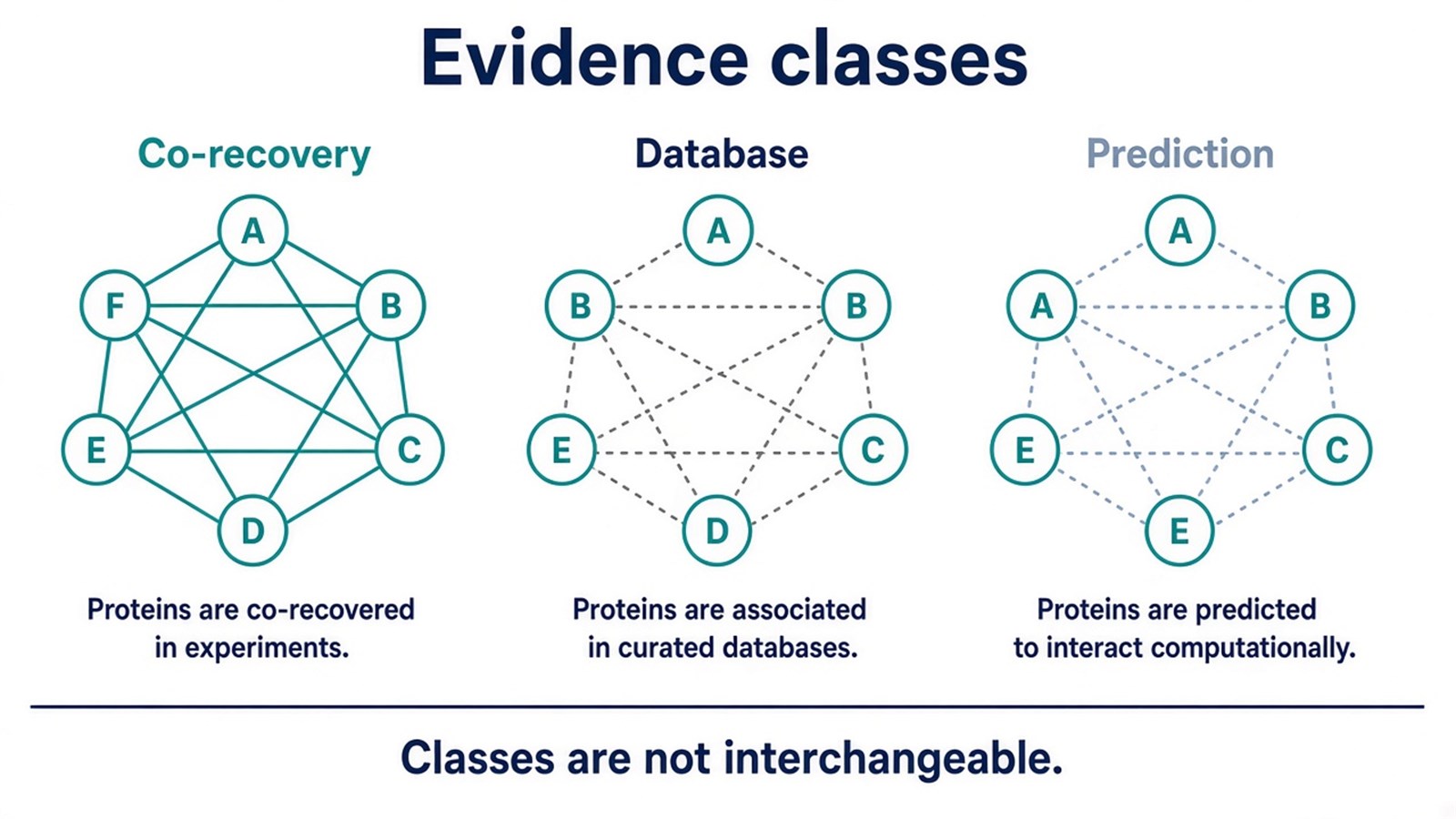
Figure 1. Name the edge class before a node is drawn. A mixed-color graph is not one interactome.
Network Credibility Before Any Hub Is Kept
Credibility is the denominator of network analysis. It is not optional after one hub looks central.
Filter proteins that are equal in the matched experimental control before they become nodes. Empty-tag and bead-only arms serve tagged AP-MS. IgG or isotype arms serve antibody IP-MS. Database-only nodes need a reason to enter besides high degree. A protein that is easy to detect, heavily studied, or sticky on beads can become a hub without being a regulator.
Context has to travel with the graph. Cell type, compartment, treatment, and modification state change which edges are plausible. A static public network does not inherit the sample. A phosphorylation change does not become a new physical edge unless that claim is written and tested. Do not write a larger graph as a more credible disease map. Size is not confidence.
|
System check |
What a pass looks like |
What the analysis cannot say |
|---|---|---|
|
Evidence source |
Named edge class for every line that is plotted |
One color for co-recovery, text mining, and prediction |
|
Network credibility |
Controls and context applied before hubs are ranked |
High degree as a drug target |
|
Candidate screening |
Modules ranked versus those filters |
An unfiltered protein list as a mechanism |
|
Result boundary |
Candidate association under those edges |
Proven direct binding or functional regulation |
A practical path is:
- Write the sentence the network must support.
- Name the input list and every allowed edge class.
- Remove proteins that fail the matched experimental control.
- Keep modules that survive that filter, not every high-degree name.
- Send a shortlist to an orthogonal Co-IP, pull-down, or pair assay.
Credibility ranks a module versus named edges and controls. It does not certify a disease mechanism by listing hubs.
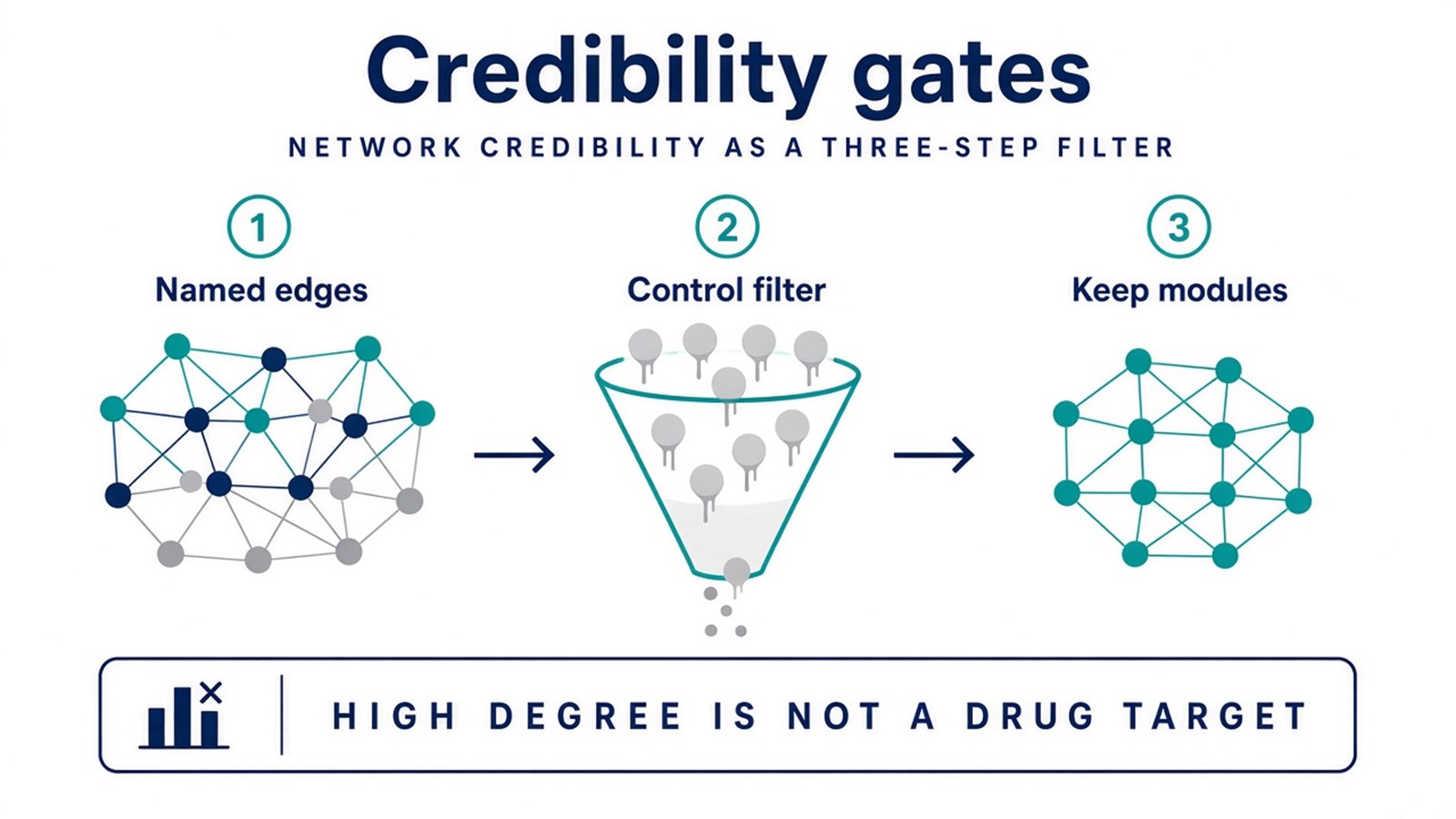
Figure 2. Screening is a filter outcome. Extra nodes do not replace a named edge class.
Association Is Not Direct Binding
The common bias is writing a network neighbor as a binding partner because the two names share an edge. Another bias is writing a hub as a drug target because it has many lines. A third is treating pathway enrichment and a physical interactome as the same figure.
An edge can mean the proteins were co-recovered, annotated together, or predicted to associate. Direct contact needs an orthogonal pair assay. Crosslinking-MS can add a covalent distance constraint, reviewed under Crosslinking Mass Spectrometry Service, and that constraint is still not functional regulation. Do not write a disease module as proven pathogenesis. Do not write a target-discovery figure as a completed pharmacology result. Do not write multi-omics layers as proof that every mapped protein participates.
Prefer network analysis when a protein list must be organized before the next experiment is chosen. Prefer Co-IP or IP-MS when the next sentence is bait-centered co-recovery. Prefer crosslinking-MS when the next sentence is a distance restraint. Prefer a pair assay when the next sentence is binary contact.
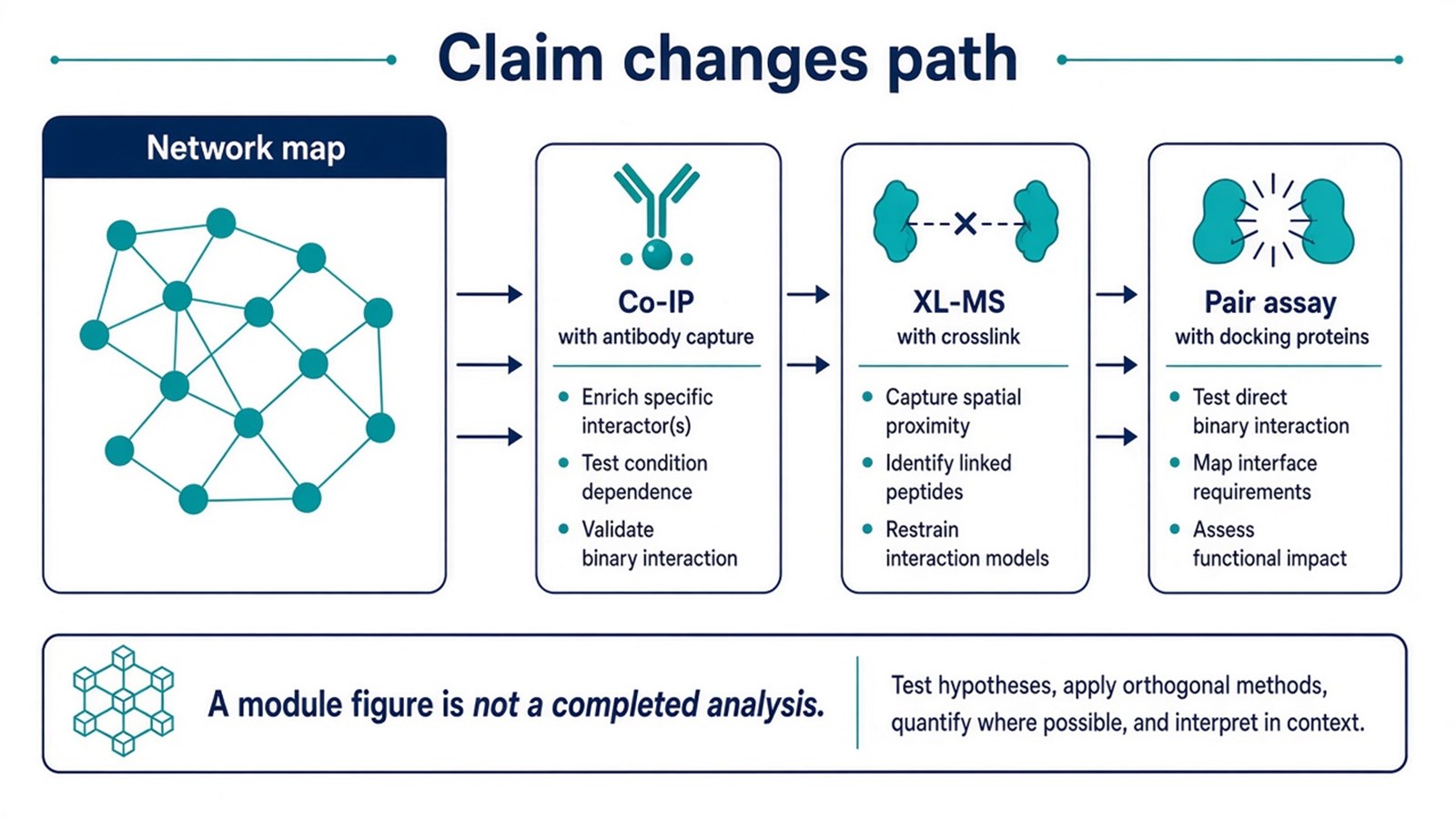
Figure 3. Keep the network only while the edge class can be named. A module figure is not a completed interaction analysis.
Once the input list, edge classes, controls, and written claim are defined, the project can be scoped as a network-interpretation task. Researchers can review the MtoZ Biolabs Protein-Protein Interaction Analysis for experimental follow-up after the shortlist.
Frequently Asked Questions
1. Does a network neighbor prove two proteins bind directly?
No. An edge reports a named association class. Direct contact needs an orthogonal pair assay.
2. Can I mix database edges with Co-IP-MS edges in one color?
Not if the claim is physical interaction. Draw or annotate the classes separately, or the module becomes unreadable.
3. Is a hub a drug target?
Not by degree alone. High connectivity can reflect study bias, stickiness, or true centrality. The next sentence still needs an experimental test.
4. Can network analysis replace Co-IP or IP-MS?
No. The network organizes claims. Co-IP and IP-MS generate co-recovery evidence after capture and matched controls.
5. Does a disease module prove a mechanism?
No. It can rank what to test next. Mechanism needs orthogonal biology, not a denser graph.
Reference
- D. Szklarczyk, R. Kirsch, M. Koutrouli, K. Nastou, F. Mehryary, R. Hachilif, A.L. Gable, T. Fang, N.T. Doncheva, S. Pyysalo, P. Bork, L.J. Jensen, C. von Mering (2023). The STRING database in 2023: protein-protein association networks and functional enrichment analyses for any sequenced genome of interest. Nucleic Acids Res., 51, D638-D646. https://doi.org/10.1093/nar/gkac1000
