



Prior mapping of mRNA methylation sites is not a required first step for every RNA pull-down. A site map answers where a mark such as m6A is enriched on transcripts. The bait assay answers which proteins are retained on a chosen RNA sequence. The order depends on the sentence the experiment must support. If the aim is proteins on a transcript or fragment, an unmodified biotinylated probe can start discovery. If the aim is modification-dependent binders, a methylated oligo and its unmethylated twin are required, and a published motif or a candidate region can be enough to design that pair. A transcriptome-wide map is useful when the site is unknown and the claim is site-specific. It is not a gate that every protein identification must pass.
Researchers who already have an RNA sequence, a probe plan, and a written binding claim can review MtoZ Biolabs RNA Pull-Down Mass Spectrometry Analysis for feasibility. Endogenous RNA-centered capture from cells can be scoped through the ChIRP-Seq Service when the next need is in-cell occupancy rather than an in-vitro bait.
Prior Site Mapping Is Not Required for Every RNA Pull-Down
MeRIP-seq and related m6A-seq methods enrich methylated fragments and report peaks, often at near-region rather than single-nucleotide resolution (Dominissini et al. 2012). That output is a map of candidate intervals. It is not a protein list.
RNA pull-down uses a biotinylated RNA probe, usually made by in vitro transcription or chemical synthesis, to capture proteins from a lysate. The probe sequence is chosen by the user. A full-length lncRNA, a circRNA back-splice junction, a 3-prime UTR fragment, or a short oligo can all serve as bait without a methylation atlas. In vitro probes lack the native modification pattern of the cellular RNA. A map does not install those marks onto an unmodified transcript.
Do not treat a missing MeRIP-seq track as a reason to delay protein discovery. Do not treat a peak list as a substitute for a control probe. Mapping and pull-down answer different inputs. One can precede the other. Neither is a universal prerequisite.
Nucleoside LC-MS reports modification abundance after RNA is digested. It does not place the mark on a nucleotide. Total m6A level is not a site map and not a pull-down design file. Abundance assays of that type are described in the Mass Spectrometry-based m6A Modification Quantitative Analysis Service.
Choose Order From the Experimental Aim
Choose the first experiment from the claim, not from a fixed pipeline.
Start with RNA pull-down when the claim is protein identity on a named RNA or fragment. Sequence, not methylation, is the bait variable. An unmodified probe is appropriate. A later methylated oligo can test a shortlisted protein if a motif then becomes the question.
Start with site or region mapping when the claim is where m6A, m5C, or another mark sits on the transcript of interest, and no confident interval exists. Pull-down waits until a fragment or oligo can be written. A DRACH-like motif in a known 3-prime UTR can sometimes replace a full transcriptome map if the claim is limited to that motif.
Start with paired methylated and unmethylated oligos when the claim is modification-dependent retention. m6A can change RNA structure and protein contacts on the same sequence (Liu et al. 2015). The twin oligo is the control. A genome-wide map is optional if the oligo sequence is already justified.
Start with an in-cell RNA capture when the claim is endogenous occupancy. ChIRP-MS hybridizes antisense probes to the cellular RNA and recovers associated proteins after crosslinking. That route does not require a methylation map. It also does not replace an in-vitro oligo pair if the claim is a single modified nucleotide.
The comparison below keeps site mapping, in-vitro bait capture, and in-cell capture on separate tracks.
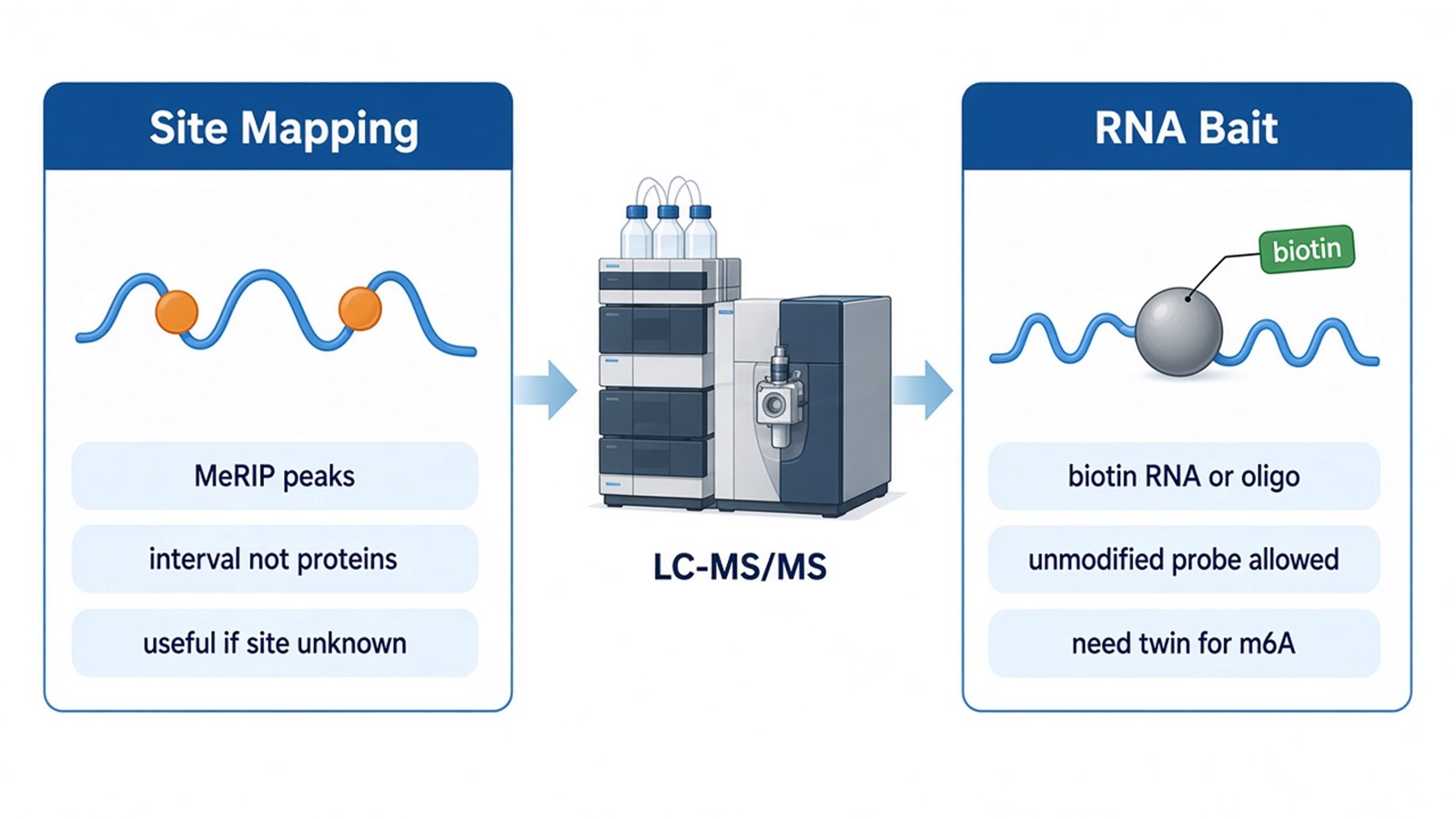
Figure 1. Site Map vs In-Vitro RNA Bait vs In-Cell RNA Capture.
Probe Design With or Without a Mapped Methylation Site
Probe length follows the aim. A long in vitro transcript screens proteins on a domain or a full noncoding RNA. A short biotinylated oligo tests a motif or a single modified base. Junction-spanning probes are used for circRNA. Antisense DNA oligos belong to ChIRP, not to a sense RNA bait.
The biotin handle should sit outside the motif. A handle inside the loop or next to the methylated adenosine can block the contact it was meant to present. Spacer length should be written with the sequence.
If no site is mapped, design from the RNA interval that matches the biological question: the coding region, a UTR, a repeat, or a published binding window. Include a scrambled or antisense RNA with the same length and biotin chemistry.
If a site or peak is available, synthesize the modified oligo and the unmodified twin with identical backbone and handle. Chemical m6A is a defined substitution. It is still not the full native RNP. Do not assume that every MeRIP peak can be reduced to one adenosine without a motif check.
RNase-free handling is part of probe design, not an afterthought. Degraded bait produces a protein table that no longer represents the intended RNA.
Controls That Separate Sequence, Modification, and Bead Background
Controls decide which names can enter the candidate list. The minimum set for a sequence-level capture is the sense bait, a length-matched scramble or antisense RNA, and a bead-only tube. All three should use the same lysate, wash, digest, and LC-MS/MS method.
The minimum set for a modification-level capture adds the unmethylated twin. Proteins equal on methylated and unmethylated oligos are sequence binders, not modification-dependent binders. Proteins equal on the oligo and the empty streptavidin resin are bead binders.
A MeRIP-seq peak does not replace those tubes. A published reader such as a YTH domain protein can be used as a positive-control blot or as a name to inspect in the table. It does not certify the rest of the list.
Relative intensity can be compared across bait and control probes. Recurrent-contaminant catalogs help interpret leftovers after experimental subtraction (Mellacheruvu et al. 2013). They do not replace the scramble or the unmethylated twin.
The bait assay remains an in-vitro retention assay. It cannot, by itself, prove direct binding or live-cell occupancy. RNA-DNA contacts should move to DNA pull-down or to ChIRP rather than be forced onto an RNA bait.
First experiment |
What it can support |
What it cannot support |
|---|---|---|
MeRIP-seq or m6A-seq |
Candidate methylated intervals |
A protein interactor list |
Nucleoside LC-MS |
Modification abundance |
Probe coordinates |
Unmodified RNA bait |
Proteins retained on that sequence |
Native modification dependence |
Methylated vs unmethylated oligo |
Modification-biased retention |
Cellular occupancy |
ChIRP-MS |
Endogenous RNA-associated proteins |
A single-nucleotide m6A mechanism |
The table is an order rule, not a ranking of platforms. Multi-mark nucleoside profiles can be reviewed under the mRNA Modification LC-MS Analysis Service when the question is abundance rather than bait design.
Samples, Deliverables, and a Sequence-Ready Intake
State the RNA identity, species, and the sentence the result is allowed to support. State whether the probe is an unmodified transcript, a fragment, or a methylated oligo pair. Send the probe sequence and biotin chemistry. For lysate-based capture, planning input is about 1 mg protein equivalent per condition. Washed beads should be at least 20 uL, or a gel band should be visible. Keep the workflow RNase-free. Liquid products should stay above 0.5 ug/uL when possible, with SDS below 0.1 percent. High salt, undepleted detergent, and degraded RNA or protein should not be shipped.
Orbitrap-class high-resolution LC-MS/MS is the usual acquisition platform. Search should use UniProt or a client FASTA in MaxQuant or an equivalent disclosed workflow. Identification depth is typically hundreds to thousands of proteins and depends on the sample. After controls, the usable set is the probe-enriched subset.
Intake is faster when the experimental order is mapped before shipment. The diagram below links the research aim to mapping, in-vitro bait capture, oligo pairs, and in-cell capture.
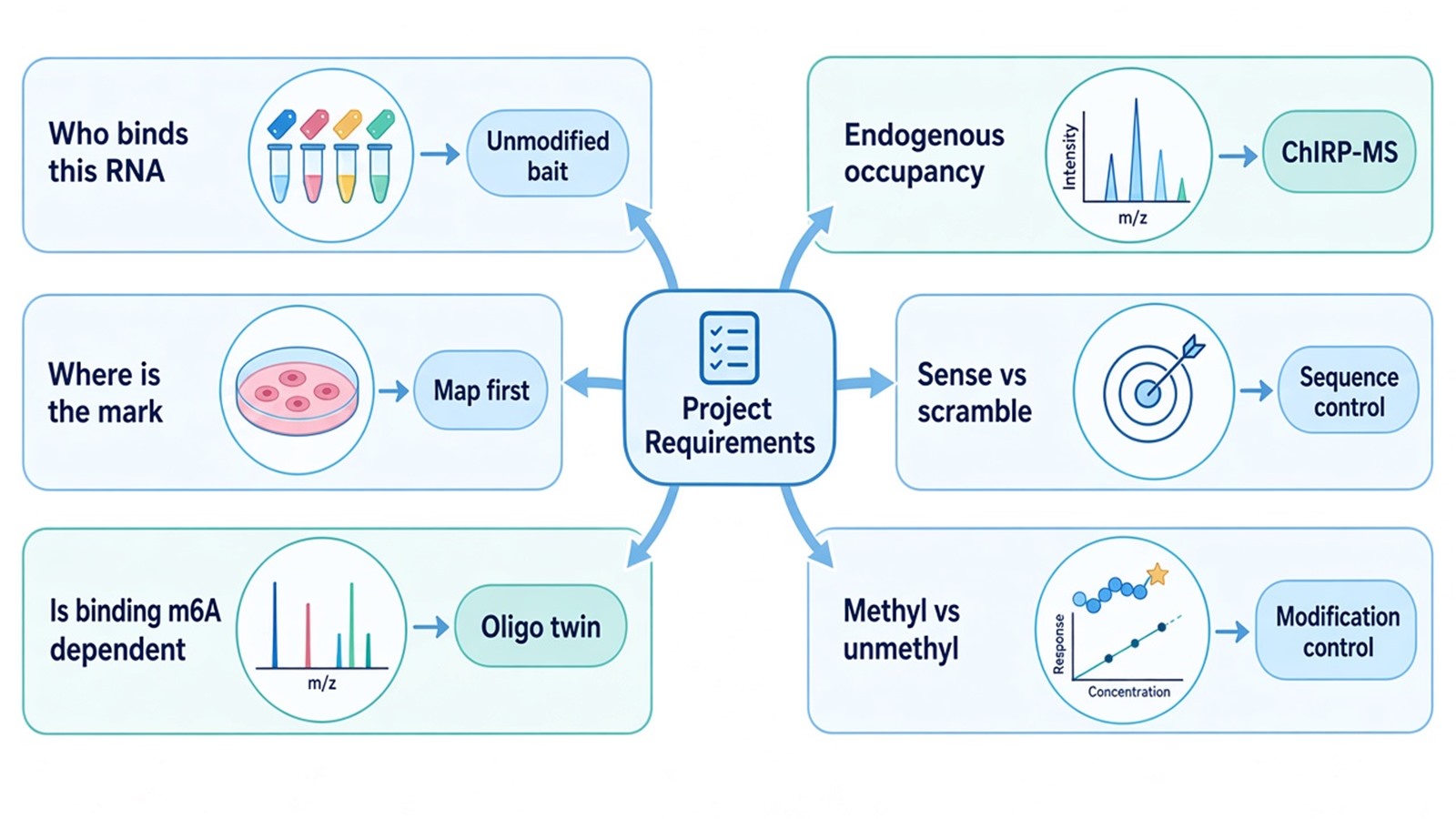
Figure 2. Matching Research Aims With Mapping and Bait-Capture Order.
Deliverables depend on the scoped arm. The bait assay typically returns identification tables, control-probe comparisons, and a short methods note. Mapping or nucleoside assays return peaks or abundance tables, not protein lists. ChIRP-MS returns proteins associated with the captured cellular RNA. Deliverables do not include a claim of direct binding, a certificate that an in-vitro probe carried native marks, or a functional assignment of a methylation site. To start intake, send the RNA sequence, probe plan, control set, and intended claim to info@MtoZ-Biolabs.com or use the site inquiry form so experimental order can be confirmed before shipment.
Frequently Asked Questions
1. Can a MeRIP-seq peak replace a mutant or unmethylated RNA control?
No. A peak places a candidate interval on the transcript. The control probe still has to show that capture depends on that sequence or that methyl group.
2. Does total m6A LC-MS tell me where to place the pull-down probe?
No. Nucleoside LC-MS reports how much m6A is present after digestion. Probe design needs a sequence interval, a motif, or a mapped region.
3. Should a full-length in vitro mRNA be used when only one motif is in question?
Use a short oligo pair when the claim is that motif or that modified base. A long transcript mixes many sequence surfaces and hides the modification contrast.
4. When is ChIRP-MS preferred over RNA pull-down?
Prefer ChIRP-MS when the RNA is endogenous and the claim is proteins associated with that RNA in cells. Prefer RNA pull-down when the bait must be a defined synthetic sequence or a chemically modified oligo.
5. What should a feasibility email attach if no methylation map exists?
Attach the RNA sequence or accession, the intended fragment, biotin chemistry, the claim sentence, and whether an unmethylated twin will be included. Mapping can be added later if the claim becomes site-specific.
Researchers can run RNA pull-down without waiting for a complete methylation atlas, then confirm probe geometry, controls, and experimental order through MtoZ Biolabs RNA Pull-Down Mass Spectrometry Analysis.
Reference
- D. Dominissini, S. Moshitch-Moshkovitz, S. Schwartz, M. Salmon-Divon, L. Ungar, S. Osenberg, K. Cesarkas, J. Jacob-Hirsch, N. Amariglio, M. Kupiec, et al. (2012). Topology of the human and mouse m6A RNA methylomes revealed by m6A-seq. Nature, 485, 201-206. https://doi.org/10.1038/nature11112
- N. Liu, Q. Dai, G. Zheng, C. He, M. Parisien, T. Pan (2015). N6-methyladenosine-dependent RNA structural switches regulate RNA-protein interactions. Nature, 518, 560-564. https://doi.org/10.1038/nature14234
- D. Mellacheruvu, Z. Wright, A.L. Couzens, J.P. Lambert, N.A. St-Denis, T. Li, Y.V. Miteva, S. Hauri, M.E. Sardiu, T.Y. Low, et al. (2013). The CRAPome: a contaminant repository for affinity purification-mass spectrometry data. Nat. Methods, 10, 730-736. https://doi.org/10.1038/nmeth.2557
