



Co-IP and IP-MS both recover an endogenous bait with an antibody. IP-MS then identifies co-purifying proteins by LC-MS/MS and ranks them against Input and IgG. Co-IP western blot detects one or more predefined prey proteins in the same class of eluate. IP-MS fits open partner discovery when prey antibodies are limited. Co-IP blot fits a short, already named list when bait and prey detection reagents work. Neither readout proves binary direct binding (Hein et al. 2015). Prefer IP-MS when the neighborhood is still open. Prefer Co-IP blot when the claim is yes-or-no co-enrichment of a known pair. Reassess either route when antibody specificity or bait enrichment is undocumented.
Researchers who already have a named bait, antibody status, and a written interaction claim can also review the MtoZ Biolabs IP-Mass Spectrometry Service and Protein-Protein Interaction Analysis for project-specific method feasibility.
Start From the Interaction Claim, Not the Detection Habit
The two methods share antibody capture. They diverge at what the eluate is allowed to answer. If the question is whether a specific prey co-enriches with the bait and a reliable prey antibody exists, Co-IP western blot is often the better first route. If the question is which proteins co-purify with the bait and should enter a validation shortlist, IP-MS is usually the better starting point.
IP-MS also fits when neighborhoods must be compared across treatment, mutation, or time point, because many potential partners need to be evaluated under matched immunoprecipitation conditions. Co-IP western blot is often the better follow-up after IP-MS or literature nomination has already produced candidates. Aligning the readout with the project phase keeps evidence strength proportional to the biological claim.
Co-IP-MS, as used for open MS discovery of endogenous partners, is the same capture class as IP-MS and is distinguished from tagged AP-MS in IP-MS vs. Co-IP-MS vs. AP-MS: Which Workflow Fits Your Study?. Capture-to-MS protocol layers are covered in IP-MS Protocol: From Antibody Capture to LC-MS/MS.
IP-MS nominates candidate co-recovery across an open eluate. Co-IP western blot tests named prey that a detection reagent can see. Neither certifies a direct contact.
Antibody Specificity, Input, IgG, and Enrichment Efficiency
Both readouts fail at the same wet-lab gates. Antibody specificity means the bait antibody recovers the intended protein relative to Input and does not pull a dominant off-target that then looks like a partner. A Western-only bait antibody can produce a clean-looking blot and still fail IP-MS, because epitope access, lysis chemistry, and bead handling differ.
Input is taken before capture. It shows that the bait was present and provides a baseline for enrichment. Without Input, a missing bait band or a missing bait peptide set can be misread as a failed interaction rather than a failed IP.
IgG or bead controls must be processed at the same handling depth as the bait IP. For IP-MS, isotype contrast is required to filter antibody background and abundant lysate carryover. For Co-IP western blot, the same IgG lane shows whether the prey band is antibody-driven. Empty-tag controls from AP-MS do not replace IgG in antibody IP designs.
Enrichment efficiency is bait-first. If the bait is weak versus Input, a prey band or a long MS table is not a credible interaction result. Relative intensity on MS, or band intensity on blot, can compare the same protein across Input, IgG, and bait IP. It does not rank unrelated proteins as tighter binders.
Check |
Co-IP western blot |
IP-MS |
Common failure |
|---|---|---|---|
Antibody specificity |
Bait and prey antibodies recover intended proteins |
Bait antibody recovers bait versus Input |
Western-only reagents treated as IP-grade |
Input |
Bait and prey visible before capture when expected |
Bait peptides detectable in Input |
Eluate interpreted with no starting abundance |
IgG or bead |
Prey band absent or reduced in IgG |
Prey ranked against matched IgG |
Control omitted or washed unlike bait IP |
Enrichment efficiency |
Bait enriched before prey is interpreted |
Bait higher in bait IP than in IgG |
Weak bait, strong story |
Result credibility |
Named pair co-enrichment under those lanes |
Filtered candidate list, not presence calling |
Blot or MS treated as direct-binding proof |
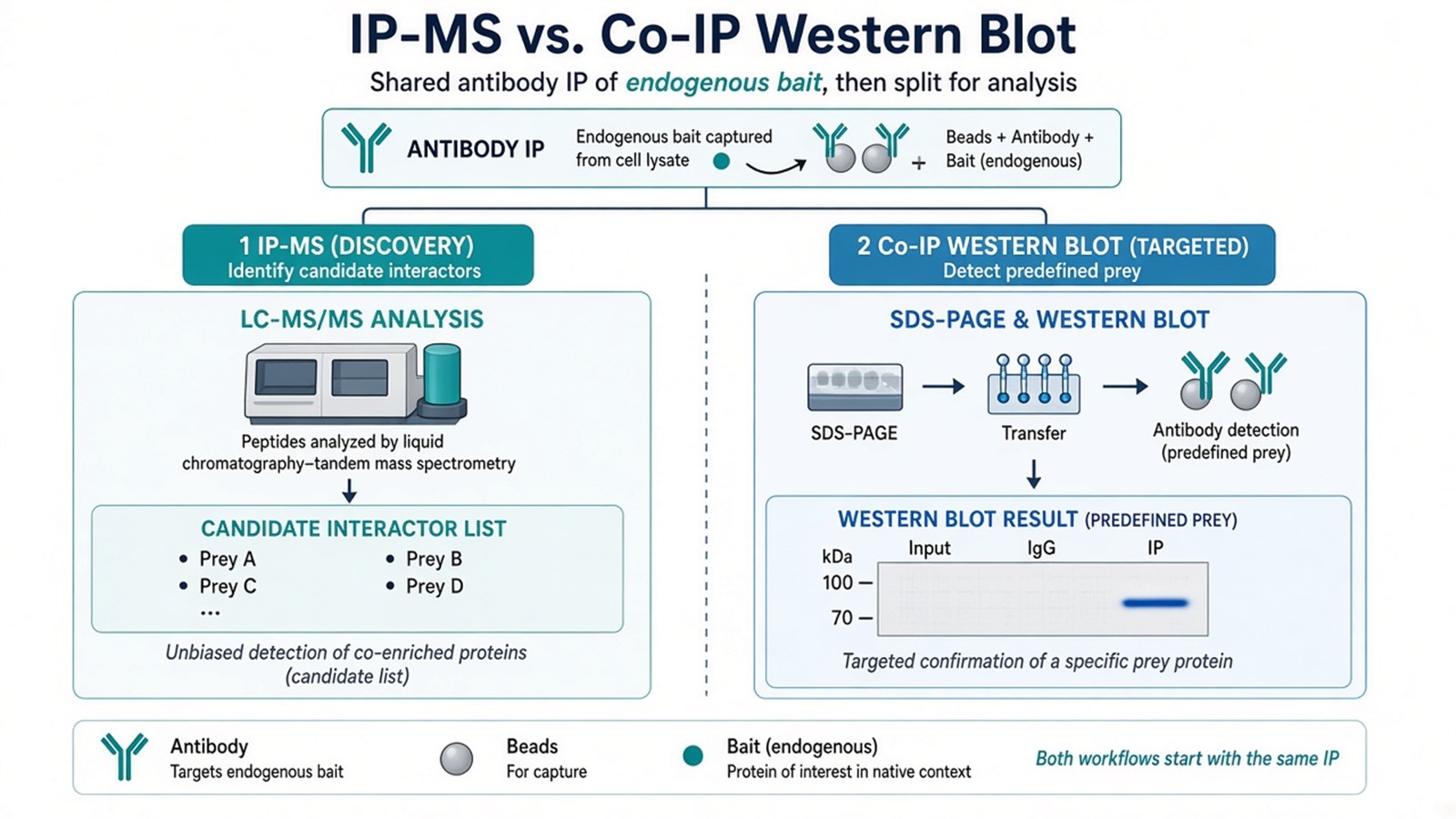
Figure 1. IP-MS and Co-IP western blot share capture. They differ in whether the eluate is surveyed by LC-MS/MS or read for named prey.
How to Read MS Credibility Versus a Targeted Blot
IP-MS identification of a protein in the eluate is not a confidence call. Ranking requires bait recovery, Input-aware enrichment, and a declared contrast against IgG. Probabilistic scoring such as SAINT uses bait versus control counts to assign a probability that a prey is specifically co-purified (Choi et al. 2011). A contaminant catalog such as the CRAPome is a prior on control frequency, not a substitute for the current Input and IgG pair (Mellacheruvu et al. 2013). Identification depth in a Co-IP-style eluate is typically hundreds to about a thousand proteins, depending on the sample. Depth without bait recovery is not a stronger interactome.
Co-IP western blot credibility is narrower. A prey band in the bait IP, reduced in IgG, and consistent with Input can support a relative statement that that named protein co-enriched under this capture recipe. A missing band can mean the prey was absent, the prey antibody failed, or wash chemistry stripped the association. It does not prove that no other partners exist.
After filtering, an IP-MS value can support: protein B is enriched with bait A versus matched IgG inside this recipe. A Co-IP blot can support the same class of sentence for a predefined prey. Pathway maps, publication figures, and literature edges do not repair a missing Input or a Western-only bait antibody.
Sample-prep parity that keeps those contrasts interpretable is covered in How to Prepare Immunoprecipitation Samples for Mass Spectrometry. Mixed enrichment-MS projects can be reviewed under the MS-Based Protein-Protein Interaction Analysis Service.
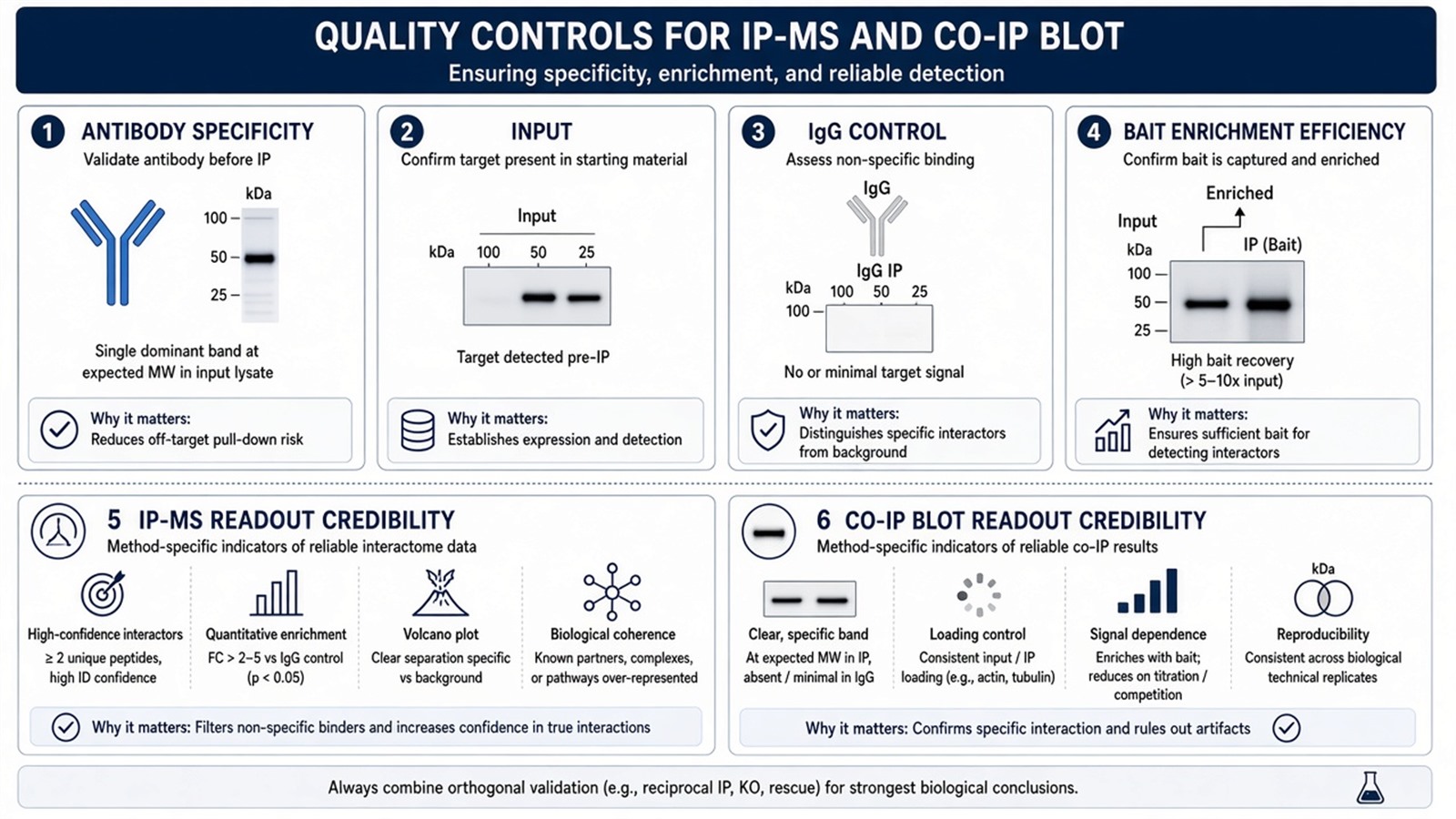
Figure 2. Antibody specificity, Input, IgG, and bait enrichment apply to both methods before either readout is interpreted.
Judgment Criteria: Which Method Fits
Decision factor |
Co-IP western blot |
IP-MS |
|---|---|---|
Primary goal |
Confirm selected partners |
Discover or compare bait-associated proteins |
Typical readout |
Targeted blot of named prey |
LC-MS/MS identification and ranking |
Prey antibody need |
Required for each tested prey |
Not required for initial discovery |
Partner coverage |
Limited to assayed prey |
Broader bait-centered survey |
Best project phase |
Confirmation or pairwise testing |
Discovery or comparative screening |
Main risk |
Missing unassayed partners; weak prey antibody |
Background without Input and IgG contrast |
Prefer Co-IP western blot when partners are already defined, bait and prey detection reagents work in the planned IP chemistry, and the claim is targeted co-enrichment rather than an open survey. Prefer IP-MS when the partner space is still open, prey antibodies do not exist for broad screening, or many potential partners must be compared under matched IP conditions.
Prefer a sequential plan when the program needs both a ranked shortlist and later targeted confirmation of selected pairs. Decide how many candidates will move forward before IP-MS begins, even if the exact prey names are not yet known. Do not convert a Co-IP blot protocol into IP-MS without revisiting control matching, elution compatibility, and metadata. Do not report an IP-MS table as final interaction proof.
For tagged versus antibody interactome choice, see AP-MS vs IP-MS: How to Choose the Right Interactome Workflow. Screening-level method maps are covered in Measuring Protein-Protein Interactions.
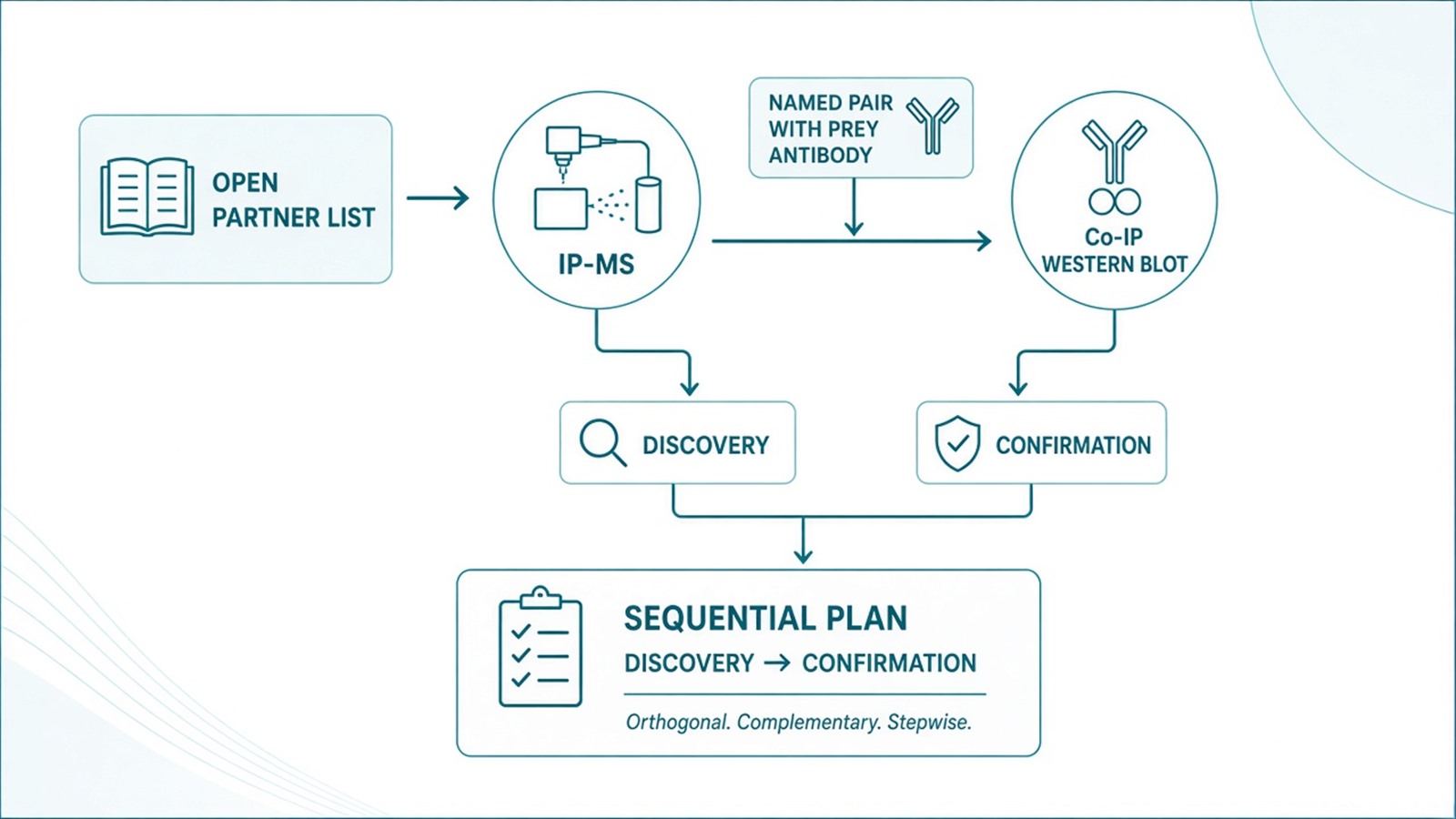
Figure 3. Method fit follows whether the prey list is open or named, not the shared use of immunoprecipitation.
Common Biases and Result Boundaries
IP-MS tends to overcall bead binders, antibody-chain contaminants, and proteins that survive because bait enrichment was weak. Co-IP western blot tends to overcall a pair when the prey antibody is nonspecific, when IgG is omitted, or when a band is read without Input. Repeating Co-IP blots across many untested names is a poor substitute for IP-MS when prey antibodies do not exist. Running IP-MS when only one named prey matters and a prey antibody is already available wastes discovery depth on a confirmation question.
A later requery of IP-MS files can add peptides the first search missed. It cannot repair a design that omitted Input. A stronger exposure on a blot cannot invent a prey antibody that does not work in IP.
IP-MS and Co-IP western blot support candidate or named-pair co-recovery under Input and IgG controls. They do not certify a binary interactome.
Once the claim, bait and prey antibody status, Input and IgG plan, and expected readout are defined, the project can be scoped as IP-MS, Co-IP western blot, or a sequential pair. Researchers can review the MtoZ Biolabs IP-Mass Spectrometry Service for sample evaluation and method planning.
Frequently Asked Questions
1. Is IP-MS just Co-IP with mass spectrometry?
IP-MS uses immunoprecipitation followed by LC-MS/MS identification of co-purifying proteins. Co-IP western blot uses the same class of enrichment with targeted detection of predefined prey rather than open MS discovery.
2. Which method is better for interaction discovery?
IP-MS is usually better for bait-centered discovery because it does not require prey-specific antibodies for every candidate. Co-IP western blot is better when the partners of interest are already defined.
3. Can Co-IP western blot validate IP-MS candidates?
Yes, when bait and prey antibodies work under the same IP chemistry. The blot tests named shortlist proteins. It does not re-survey the rest of the eluate.
4. Do both methods need Input and IgG controls?
Yes. Input shows starting abundance. Matched IgG or bead controls support specificity review on both the blot and the MS table.
5. Does a prey band on Co-IP western blot prove direct binding?
No. It supports co-enrichment of a named protein with the bait under those lanes. Direct-binding or functional claims need an orthogonal pair assay.
Reference
- M.Y. Hein, N.C. Hubner, I. Poser, J. Cox, N. Nagaraj, Y. Toyoda, I.A. Gak, I. Weisswange, J. Mansfeld, F. Buchholz, et al. (2015). A human interactome in three quantitative dimensions organized by stoichiometries and abundances. Cell, 163, 712-723. https://doi.org/10.1016/j.cell.2015.09.053
- H. Choi, B. Larsen, Z.Y. Lin, A. Breitkreutz, D. Mellacheruvu, D. Fermin, Z.S. Qin, M. Tyers, A.C. Gingras, A.I. Nesvizhskii (2011). SAINT: probabilistic scoring of affinity purification-mass spectrometry data. Nat. Methods, 8, 70-73. https://doi.org/10.1038/nmeth.1541
- D. Mellacheruvu, Z. Wright, A.L. Couzens, J.P. Lambert, N.A. St-Denis, T. Li, Y.V. Miteva, S. Hauri, M.E. Sardiu, T.Y. Low, et al. (2013). The CRAPome: a contaminant repository for affinity purification-mass spectrometry data. Nat. Methods, 10, 730-736. https://doi.org/10.1038/nmeth.2557
