



Protein-protein interaction analysis by IP-MS asks which proteins co-enrich with an endogenous bait after antibody capture, washing, and LC-MS/MS identification. It fits cells, tissues, or other matrices where a native bait can be recovered with an IP-competent antibody and matched negative controls. The readout is a candidate partner list ranked against isotype or bead controls, with optional relative intensity comparison of the same protein across enrichments. It does not prove binary direct binding or a complete interactome (Hein et al. 2015). Prefer IP-MS when tagging is undesirable and antibody performance is documented. Reassess when the antibody only works on a Western blot, bait recovery is weak, or the claim needs reconstituted binding or a tagged construct series.
Researchers who already have a named bait, an antibody, and a written interaction claim can also review the MtoZ Biolabs IP-Mass Spectrometry Service and Protein-Protein Interaction Analysis for project-specific IP-MS feasibility.
Experimental Systems IP-MS Can Support
An IP mass spec protocol is not a Western blot immunoprecipitation with LC-MS/MS added at the end. Wash conditions that look clean on a blot can still leave resin binders that dominate mass spectrometry. An antibody that works for blotting may recover little bait under IP conditions. A protocol without matched IgG or bead controls can turn every co-purifying protein into an apparent interactor.
IP-MS is built for endogenous bait recovery. Typical systems include cultured cells with native expression, tissues or primary material that cannot accept a tag, and condition-matched lysates when the same antibody and lysis recipe can be held constant. The antibody is supplied by the study. MtoZ intake can start from lysates, beads, or eluates, or from original biological material when a protein reference database exists.
IP-MS is a poor first system when no IP-competent antibody exists and tagging is not allowed, when bait abundance is too low for recovery, or when the question is reconstituted binding of a purified domain. Those claims belong on AP-MS or pull-down routes compared in AP-MS vs IP-MS: How to Choose the Right Interactome Workflow and Endogenous IP-MS vs. Tagged Pull-Down MS.
IP-MS supports protein-protein interaction analysis as co-recovery of an endogenous bait and candidate partners, not as proof that two proteins contact each other.
Protocol Layers From Antibody Capture to LC-MS/MS
The protocol has three linked goals: enrich the intended bait enough for LC-MS/MS, keep background low enough that candidates can be ranked against controls, and retain enough associated proteins to answer the written claim.
Antibody qualification comes first. Confirm that the antibody immunoprecipitates the bait under the planned lysis chemistry. Define clonality, host species, recommended IP evidence, and the isotype or bead-only control. Do not scale input or acquisition until bait recovery is shown in a pilot IP.
Lysis chemistry is a major variable. Detergent, salt, and inhibitor panels change both complex stability and background. The usable condition recovers the bait with acceptable partner retention, not the harshest buffer that produces a clean blot. Membrane-associated, chromatin-linked, or labile assemblies often need a pilot rather than a transferred recipe.
Capture and wash set the sensitivity-specificity trade-off. Gentle washes retain weak or transient partners and raise background. Stringent washes reduce contaminants and may strip relevant associations. Preclearing can lower some sticky binders. It does not replace matched controls. Elution should release bait and retained partners in a form compatible with digestion, and the same elution chemistry must be applied to controls.
After elution, proteins are digested and analyzed by LC-MS/MS on Orbitrap-class high-resolution instruments. Identification tables from bait IP and control IP are compared with enrichment metrics rather than presence-or-absence calling alone. Relative intensity can compare the same protein across matched enrichments. Identification depth depends on the sample and is typically hundreds to about a thousand proteins in a Co-IP-style eluate, not a proteome-wide census.
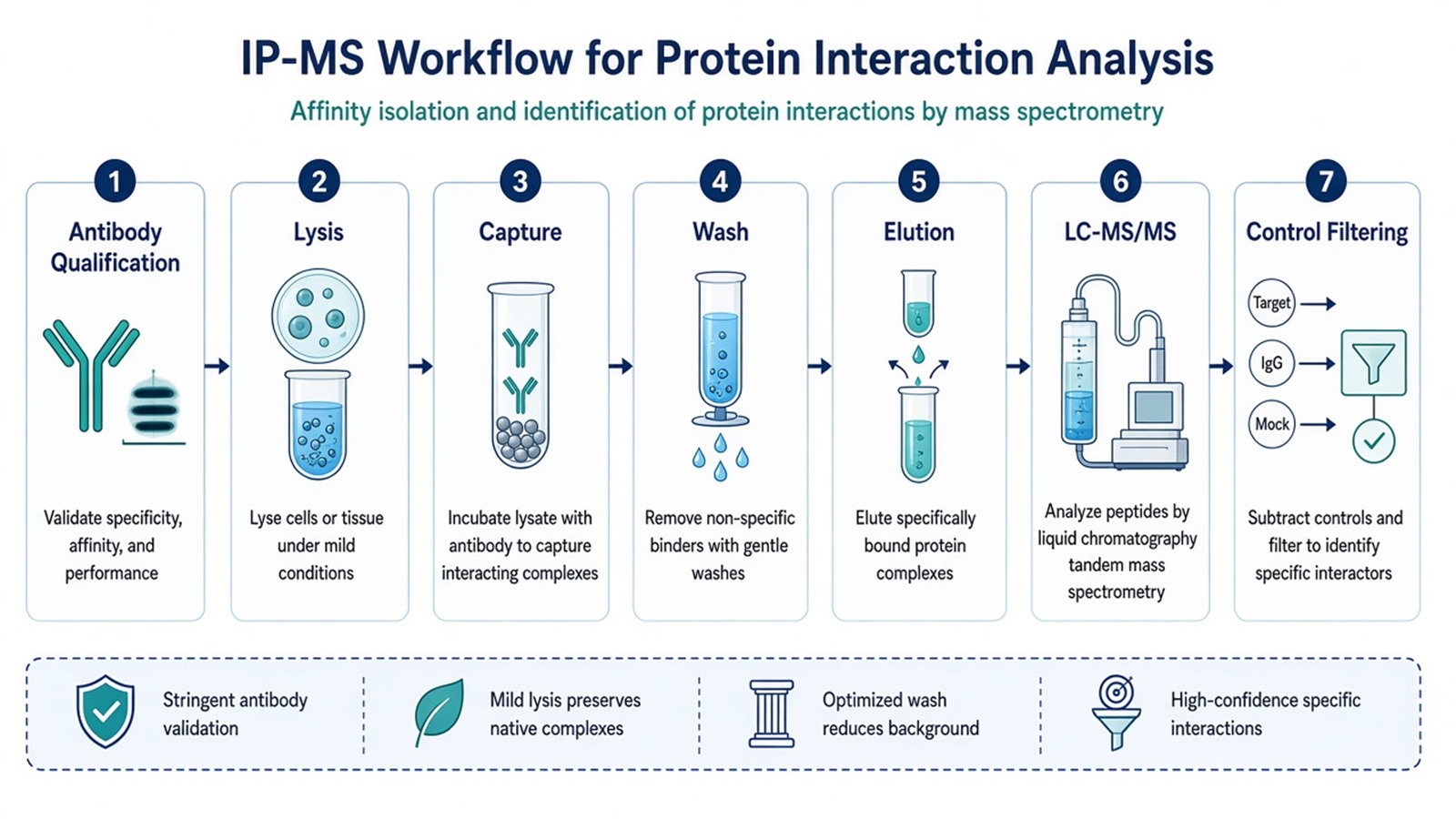
Figure 1. A usable IP-MS protocol links antibody qualification, capture chemistry, LC-MS/MS, and control filtering before any partner is ranked.
Negative Controls That Belong in the Protocol
A credible IP-MS protocol processes controls at the same handling depth as the bait IP.
Control |
What it subtracts |
What it cannot do |
|---|---|---|
Isotype-matched IgG |
Antibody-driven background |
Prove a remaining name is a direct binder |
Bead-only |
Resin binders under the same lysis and wash |
Replace an isotype control |
Bait-depleted lysate, when feasible |
Antibody plus lysate without bait |
Rescue a failed bait IP |
Process replicates |
Capture noise across the same recipe |
Merge unlike wash chemistries |
Single unreplicated IPs are weak support for interaction claims. Biological replicates allow enrichment metrics to stabilize ranking. A contaminant frequency catalog such as the CRAPome is a prior on how often a protein appears in control purifications, not a verdict that a name is false in the current matrix (Mellacheruvu et al. 2013).
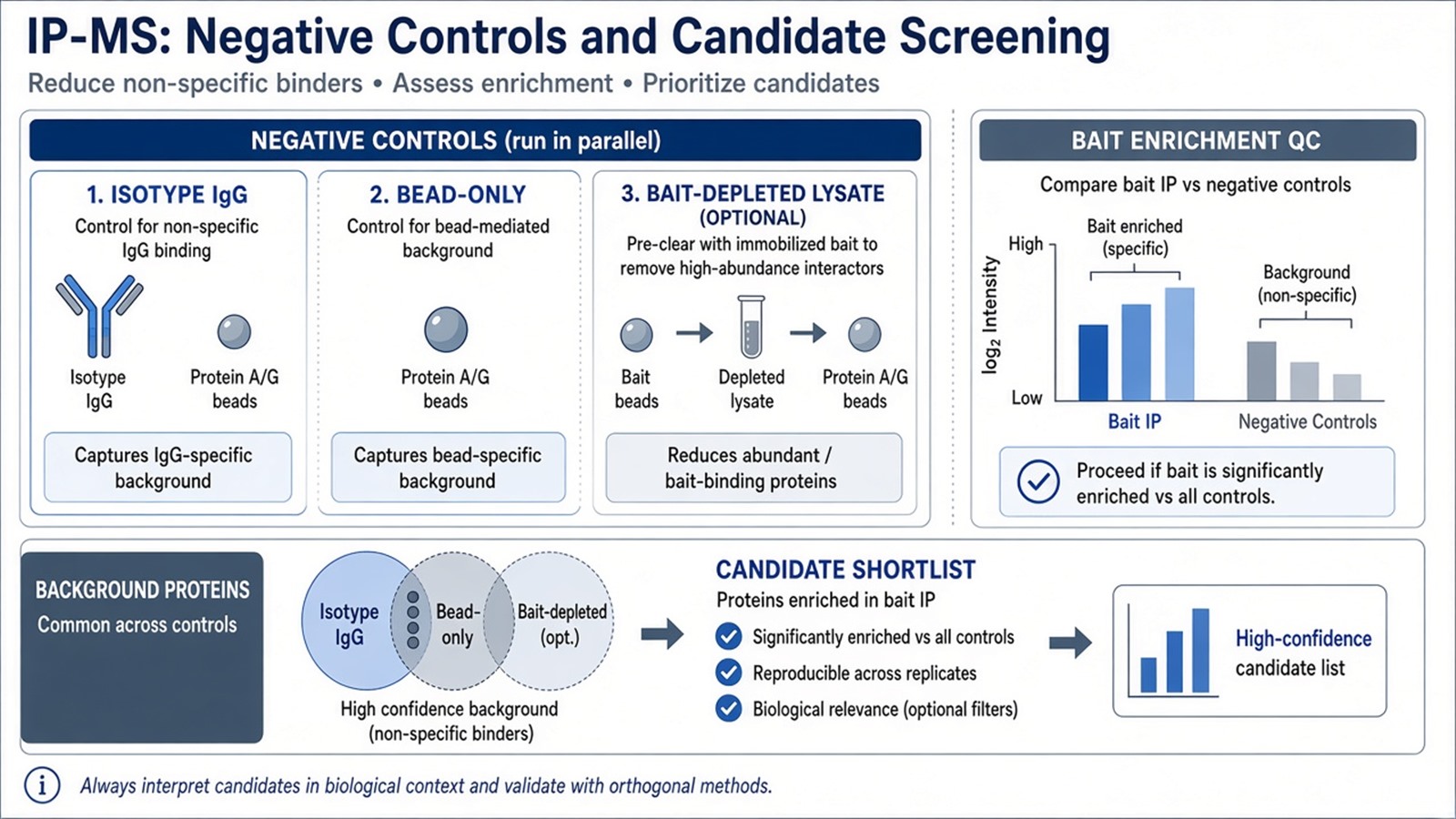
Figure 2. Negative controls and bait recovery checkpoints belong in the protocol, not in an appendix after interpretation.
Candidate Screening and Result Boundaries
Identification of a protein in an IP eluate is not a confidence call. Ranking requires bait recovery, handle-matched controls, and a declared enrichment rule. Probabilistic scoring such as SAINT uses bait versus control counts to assign a probability that a prey is specifically co-purified (Choi et al. 2011). Those scores still operate on enrichment tables.
A practical screening sequence is:
- Confirm bait peptides and expected bait coverage in the eluate.
- Remove proteins that fail identification or quantitation QC.
- Rank remaining names against isotype and bead controls processed identically.
- Flag high-frequency bead or antibody contaminants for extra scrutiny.
- Keep a shortlist for reciprocal capture, defined-pair pull-down, or another orthogonal test.
After filtering, a protein-level value can support a relative statement: protein B is enriched with bait A versus the matched control inside this capture recipe. Peptide support, bait recovery, control frequency, and wash conditions belong next to that statement. Ordinary IP-MS tables should not rank different proteins as tighter binders by intensity alone, infer a diagnostic interaction, or transfer a partner list from one lysis buffer to another study as a conserved complex.
Pathway maps interpret a shortlist. They do not repair a missing IgG control or a failed bait enrichment. Mixed enrichment-MS projects can be reviewed under the MS-Based Protein-Protein Interaction Analysis Service. For how enrichment lists constrain discovery without predicting structure, see How Can Mass Spectrometry Be Used to Analyze or Predict Protein-Protein Interactions?.
An IP-MS result supports candidate co-recovery under stated controls, not a certified binary interactome.
Common Biases and When to Change Methods
IP-MS tends to overcall proteins that bind antibody constant regions, proteins that stick to beads under the chosen lysis chemistry, and proteins related to antibody cross-reactivity. Weak bait recovery creates noisy lists dominated by contaminants. Over-washing can erase weak or transient partners that the written claim needed to keep.
Modify the protocol when bait recovery is weak, background is consistently high, or known positive partners disappear under current washes. Consider AP-MS when no IP-competent antibody is available and tagging is acceptable. Consider pull-down-MS when the question is reconstituted binding with a recombinant bait. Consider classical Co-IP with targeted detection when only a few known partners need confirmation and discovery MS is unnecessary.
Screening-level method choice among IP-MS, AP-MS, pull-down, and proximity labeling is covered in Measuring Protein-Protein Interactions. Immobilized bait follow-up is scoped through the GST Pull Down Assay Service.
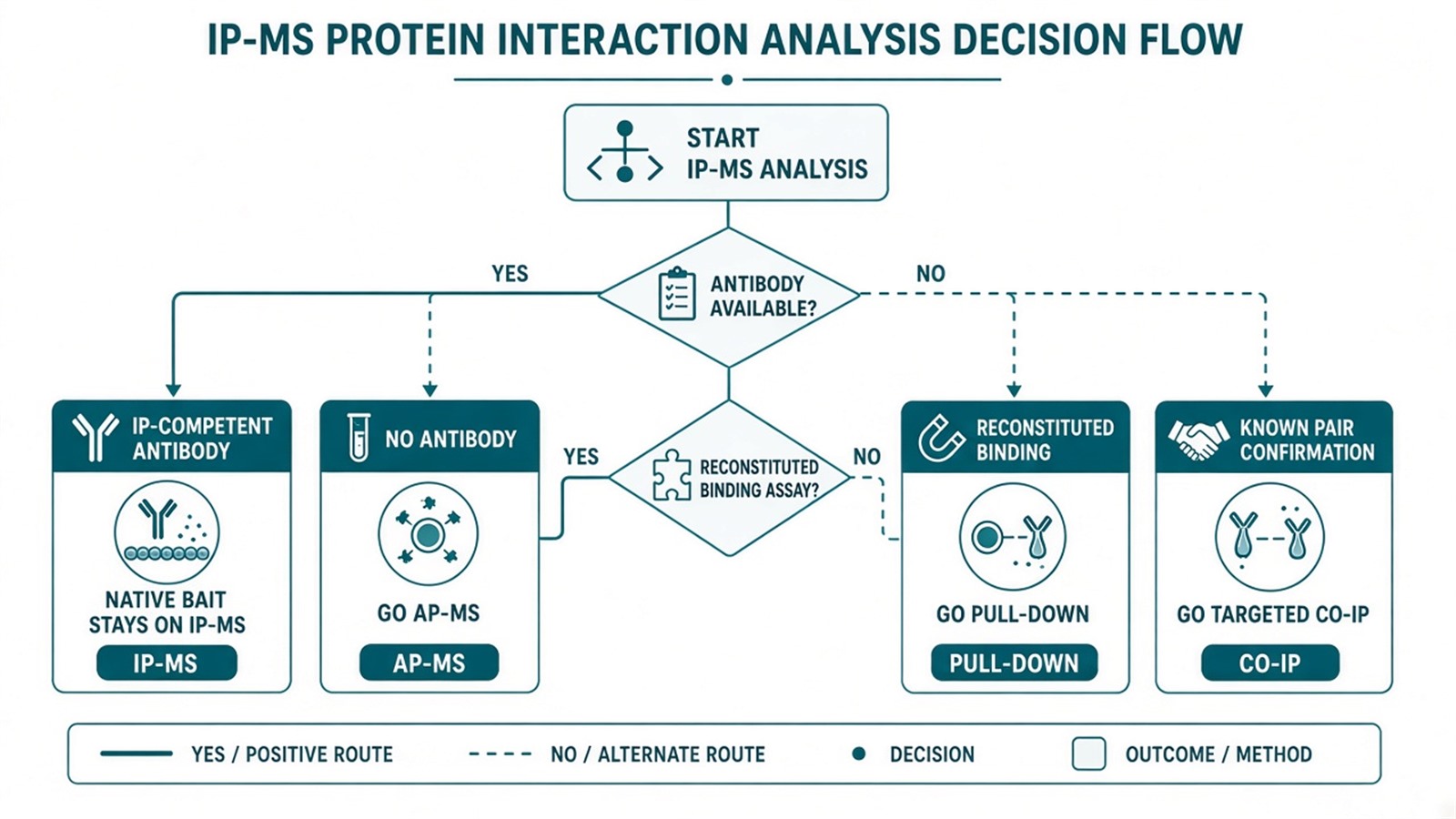
Figure 3. The IP-MS protocol stays appropriate only while the bait remains endogenous and the antibody can recover it under MS-compatible conditions.
Once antibody status, sample system, negative controls, and the expected candidate output are defined, the project can be scoped as an IP-MS protein-protein interaction study. Researchers can review the MtoZ Biolabs IP-Mass Spectrometry Service for sample evaluation and protocol planning.
Frequently Asked Questions
1. What is the difference between an IP protocol and an IP-MS protocol?
A classical IP protocol is often optimized for Western blot readout of the bait or known partners. An IP-MS protocol must also manage MS-detectable background, matched controls, and enrichment filtering for candidate interactors.
2. Does protein-protein interaction analysis by IP-MS prove direct binding?
No. IP-MS reports co-recovery with an endogenous bait. Direct binding needs an orthogonal pair assay such as a defined-pair pull-down or another contact-level method.
3. Do I need an antibody already shown to work in IP?
For discovery-oriented IP-MS, yes in practical terms. An antibody that only works on a Western blot can produce a weak dataset with poor bait recovery.
4. Should every IP-MS protocol include preclearing?
Preclearing can reduce some sticky binders, but it does not replace IgG or bead controls. Use it when background is high and verify that bait recovery remains adequate.
5. Can one protocol fit every bait and sample type?
No. Membrane proteins, nuclear complexes, and labile signaling assemblies often need different lysis and wash settings. Protocol transfer between baits should be treated as a starting point, not a finished method.
Reference
- M.Y. Hein, N.C. Hubner, I. Poser, J. Cox, N. Nagaraj, Y. Toyoda, I.A. Gak, I. Weisswange, J. Mansfeld, F. Buchholz, et al. (2015). A human interactome in three quantitative dimensions organized by stoichiometries and abundances. Cell, 163, 712-723. https://doi.org/10.1016/j.cell.2015.09.053
- H. Choi, B. Larsen, Z.Y. Lin, A. Breitkreutz, D. Mellacheruvu, D. Fermin, Z.S. Qin, M. Tyers, A.C. Gingras, A.I. Nesvizhskii (2011). SAINT: probabilistic scoring of affinity purification-mass spectrometry data. Nat. Methods, 8, 70-73. https://doi.org/10.1038/nmeth.1541
- D. Mellacheruvu, Z. Wright, A.L. Couzens, J.P. Lambert, N.A. St-Denis, T. Li, Y.V. Miteva, S. Hauri, M.E. Sardiu, T.Y. Low, et al. (2013). The CRAPome: a contaminant repository for affinity purification-mass spectrometry data. Nat. Methods, 10, 730-736. https://doi.org/10.1038/nmeth.2557
