



Co-IP-MS and IP-MS ask which proteins remain with an endogenous bait after antibody capture, matched Input and IgG handling, and LC-MS/MS identification. Preparing those immunoprecipitation samples for mass spectrometry means keeping bait IP, Input, and IgG or bead controls on one elution-to-cleanup recipe so enrichment can be scored. The work fits eluates, bead-bound IPs, or lysates destined for antibody capture when an IP-competent antibody exists. The readout is a candidate partner list, not proof of binary direct binding (Hein et al. 2015). Prefer matched prep when the claim is endogenous co-recovery. Reassess when the antibody only works on a Western blot, bait recovery is undocumented, or elution chemistry blocks digestion.
Researchers who already have bait IP material, planned Input and IgG arms, and a written interaction claim can also review the MtoZ Biolabs IP-Mass Spectrometry Service and Protein-Protein Interaction Analysis for project-specific sample-prep feasibility.
What Sample Readiness Means for Co-IP-MS and IP-MS
Readiness is not a visible bait band on a Western blot. A sample set is ready when bait IP, Input, and matched IgG or bead controls were generated with comparable handling and can be digested under the same preparation workflow. Eluate composition must allow proteolysis and peptide cleanup rather than inhibiting the enzyme or suppressing LC-MS/MS.
The antibody is supplied by the study. Specificity must already be plausible under IP conditions: the intended bait is recovered relative to Input, and a dominant off-target does not occupy the eluate. Without that, later cleanup cannot invent a credible partner list. Protocol-level capture decisions are covered in IP-MS Protocol: From Antibody Capture to LC-MS/MS. Workflow choice among IP-MS, Co-IP-MS, and AP-MS is covered in IP-MS vs. Co-IP-MS vs. AP-MS: Which Workflow Fits Your Study?.
Preparing IP samples for MS protects enrichment scoring; it does not convert an unfiltered eluate into proof of direct binding.
Antibody Specificity and Carryover Before Digestion
Immunoprecipitation samples introduce background that tagged AP-MS handles differently. Antibody heavy and light chains, protein A or protein G, and other capture-matrix proteins can dominate peptide output if carryover is high. High antibody input relative to bait recovery reduces effective sampling of co-purifying proteins.
Review whether elution released bait-associated material without excessive antibody-fragment carryover that will consume MS duty cycle. If bait recovery is low but antibody signal is high, the identification table may reflect reagent background more than biology. Document antibody source, bead type, and any covalent coupling used during IP, because these choices affect both recovery and the digestion route.
A Western-only antibody is not a preparation problem that cleanup can fix. If bait peptides are expected to be weak versus Input, stop and requalify the antibody before scaling LC-MS/MS. Empty-tag controls from AP-MS do not replace isotype controls in antibody IP designs.
Input, IgG, and Matched Handling
Input is taken before capture. It shows whether the bait was present at a detectable level and provides a baseline intensity for enrichment. Without Input, a missing bait in the eluate can be misread as a failed interaction rather than a failed IP.
IgG or bead controls must share cell source or lysate batch where possible, lysis buffer, clarification, incubation time, wash stringency, bead type, and elution method. If isotype controls were processed on a different day with different wash counts or bead lots, preparation alone cannot fully restore comparability. Replicates should be generated independently rather than split after enrichment.
Label tubes at the IP stage with bait identity, antibody clone if relevant, control type, replicate number, and contrast arm. Relabeling after pooling or cleanup is a common source of bait-control swaps. Teams submitting MS analysis only should confirm whether the receiving lab expects eluates, intact bead-bound material, or pre-digested peptides before shipment.
Prep check |
Pass criterion |
Common failure |
|---|---|---|
Antibody specificity |
Bait recovered versus Input; antibody chains do not dominate |
Western-only antibody, high Ig carryover |
Input |
Aliquot taken before capture and processed in parallel |
Eluate interpreted with no starting abundance |
IgG or bead parity |
Same wash, elution, digestion, and cleanup as bait IP |
Control omitted or handled unlike the bait IP |
Enrichment efficiency |
Bait higher in bait IP than in IgG after Input-aware review |
Low bait, deep MS, long contaminant list |
Buffer compatibility |
Eluate digestible after planned cleanup |
Western elution left in the tube |
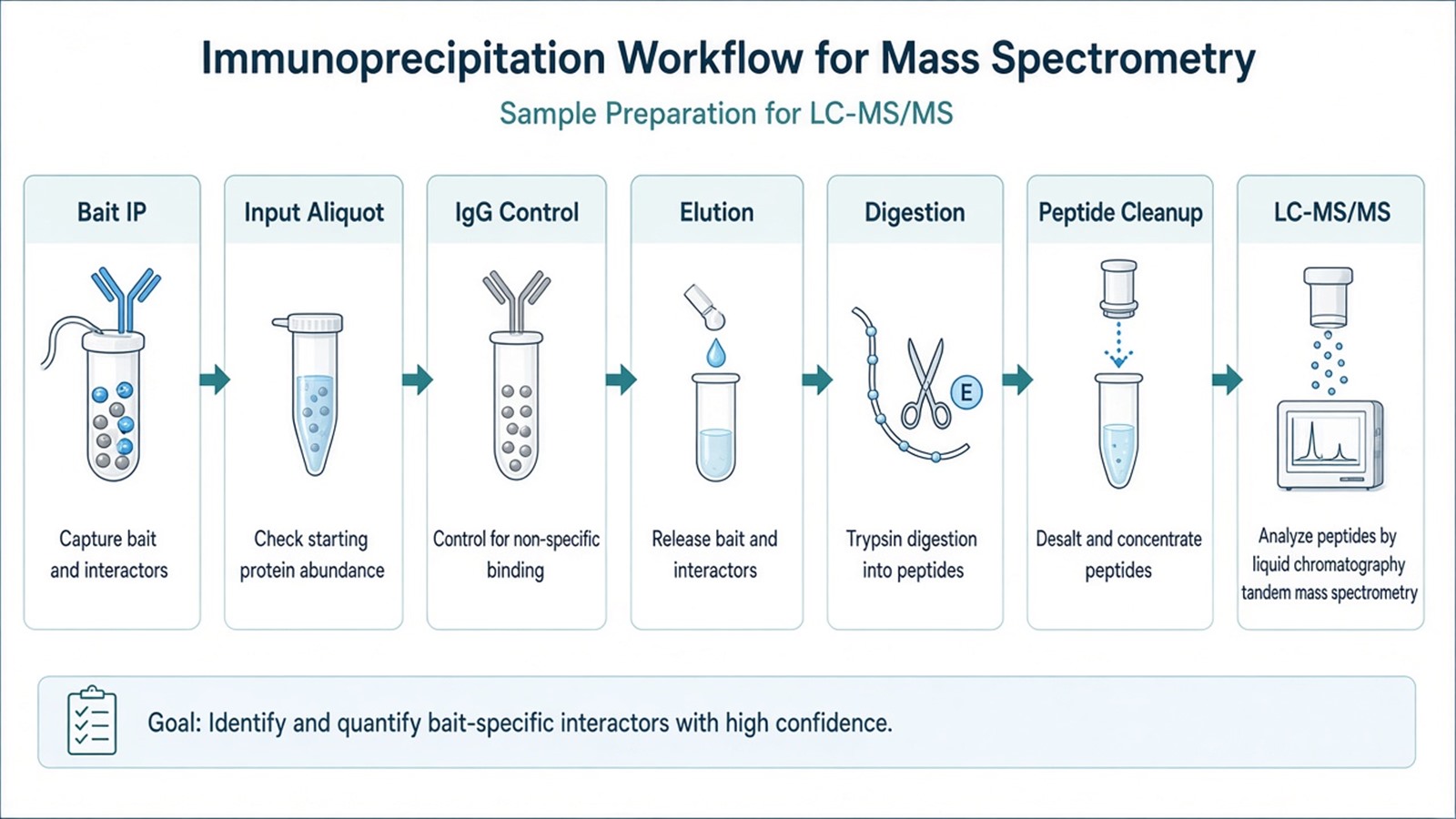
Figure 1. IP sample prep for MS keeps bait, Input, and IgG on one elution-to-cleanup recipe before enrichment is scored.
Enrichment Efficiency and Eluate Compatibility
Enrichment efficiency is bait-first. Inspect bait recovery with a targeted check when material allows. Very low bait recovery may still yield MS identifications, but many names may represent sticky lysate proteins rather than bait-associated partners. Identification depth in a Co-IP-style eluate is typically hundreds to about a thousand proteins, depending on the sample. Depth without bait recovery is not a stronger interactome.
Eluate quality affects digestion and LC-MS/MS performance. Detergent carryover, strong denaturants, high glycerol, or elution buffers optimized for Western blot can inhibit trypsin or suppress ionization. Some IP elution chemistries need buffer exchange, concentration, or precipitation before digestion. Correct incompatibility before acquisition rather than compensating with a longer run.
Digestion converts enriched protein into peptides. Reduce and alkylate when the workflow requires consistent enzymatic access across compared samples. Trypsin is commonly used because it generates peptides compatible with standard database searching. The same protease strategy must be applied across bait IP, Input, and IgG. On-bead digestion is acceptable when every arm follows the same bead-bound protocol.
Peptide cleanup removes salts and detergents that distort chromatography. Process compared arms with the same chemistry and handling time. Track sample identity through cleanup. Extremely low peptide input may still be analyzed, but missing values and unstable enrichment ranking become more likely.
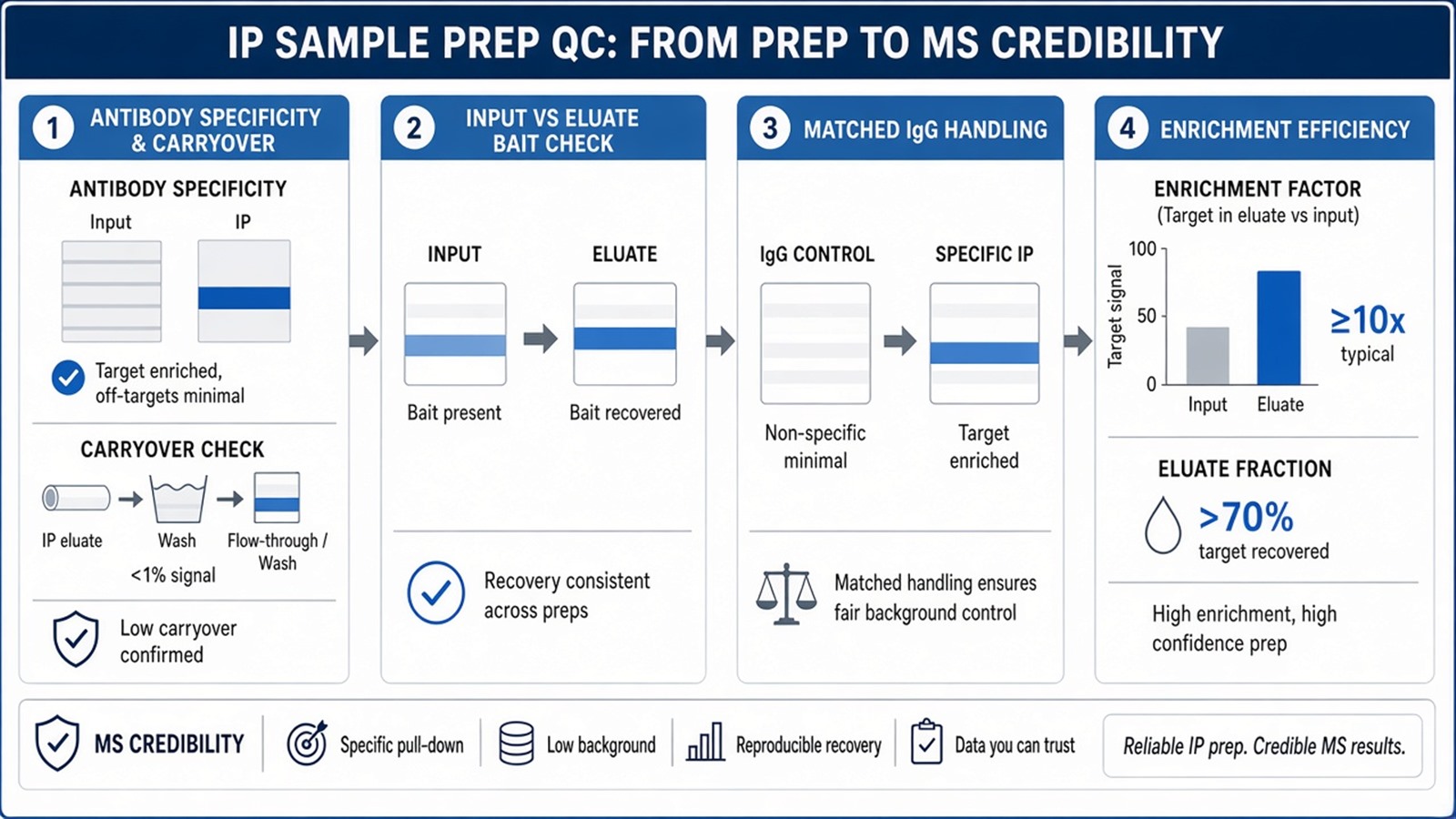
Figure 2. Antibody carryover, Input, IgG parity, and bait recovery decide whether an IP eluate can support a credible MS shortlist.
How Prep Choices Change MS Credibility
Identification of a protein in a prepared IP eluate is not a confidence call. Ranking requires bait recovery, handle-matched controls, and a declared enrichment rule. Probabilistic scoring such as SAINT uses bait versus control counts to assign a probability that a prey is specifically co-purified (Choi et al. 2011). Those scores still operate on enrichment tables. A contaminant catalog such as the CRAPome is a prior on control frequency, not a repair for unmatched prep (Mellacheruvu et al. 2013).
Prep problems that later look like biology include:
- Missing Input, so enrichment cannot be calculated
- Mismatched IgG handling that inflates or erases candidates
- Antibody-chain dominance that masks low-abundance prey
- Low bait recovery plus deep acquisition that over-reports sticky proteins
- Keratin introduced during open peptide handling
- Replicates pooled before analysis, so ranking has no independent arms
After filtering, a protein-level value can support a relative statement: protein B is enriched with bait A versus the matched IgG inside this prep recipe. Peptide support, Input abundance, and elution chemistry belong next to that statement. Pathway maps do not repair a Western elution left in the tube.
Mixed enrichment-MS projects can be reviewed under the MS-Based Protein-Protein Interaction Analysis Service. For how enrichment lists constrain discovery, see How Can Mass Spectrometry Be Used to Analyze or Predict Protein-Protein Interactions?.
Matched IP sample prep makes Co-IP-MS and IP-MS lists filterable. It does not certify a binary interactome.
Submission Format and When to Stop Before LC-MS/MS
Submission material |
Readiness focus |
Reassess |
|---|---|---|
IP eluate |
Buffer compatibility, bait recovery, matched Input and IgG |
Western elution with no exchange plan |
Bead-bound IP |
On-bead digestion matched across arms |
Bead type differs only on the bait IP |
Pre-digested peptides |
Cleanup completeness and tube identity |
Arms cleaned with unlike chemistry |
Lysate for outsourced IP-MS |
Antibody, Input, and IgG plan locked first |
Antibody never shown to work in IP |
Prefer sending material for LC-MS/MS when Input, IgG, and bait IP share one recipe and bait recovery has been checked. Reassess when the antibody is Western-only, when elution chemistry is incompatible, or when the claim is reconstituted binding of a recombinant bait. Those claims belong on AP-MS or pull-down routes discussed in AP-MS vs IP-MS: How to Choose the Right Interactome Workflow and Measuring Protein-Protein Interactions.
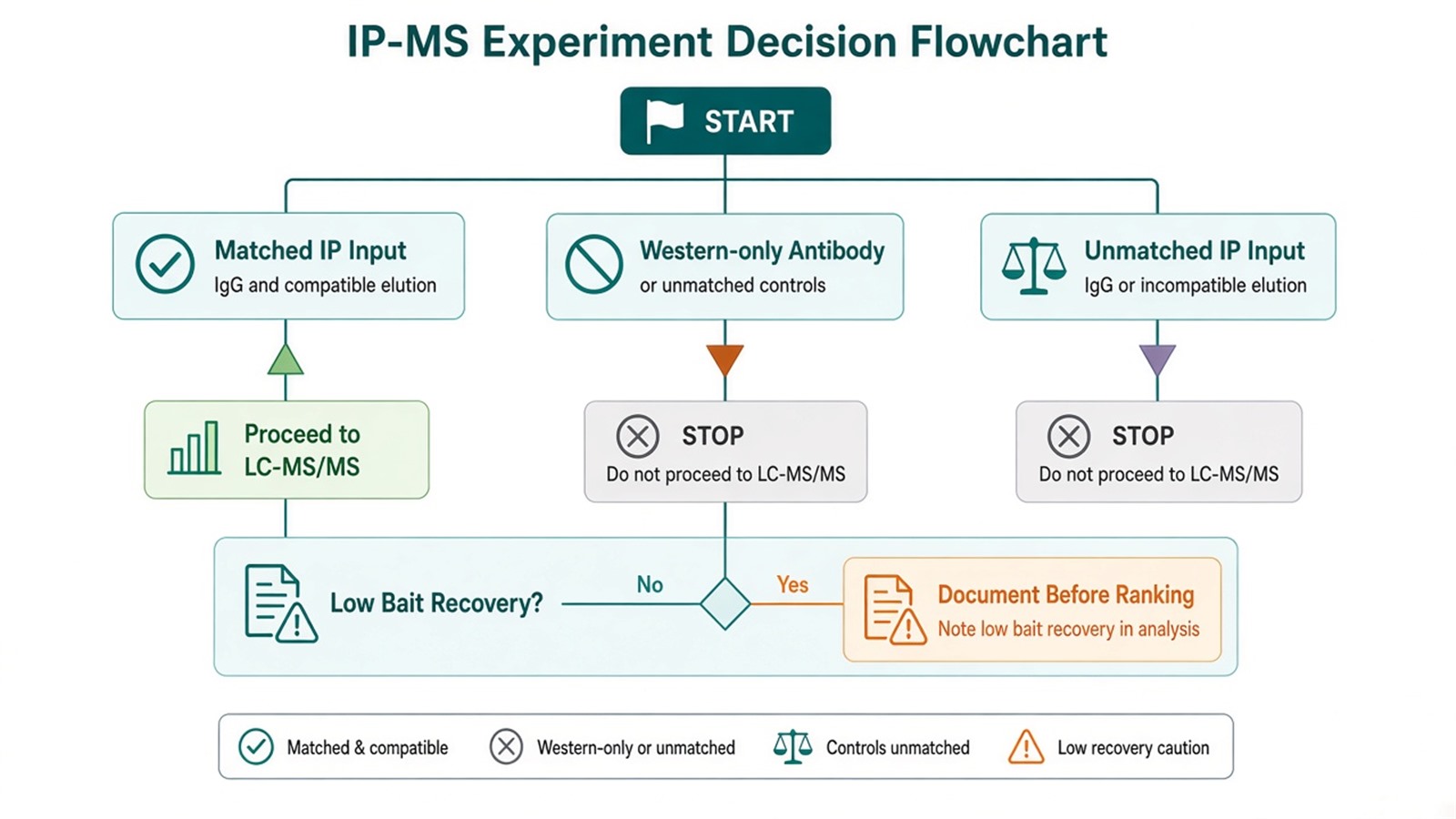
Figure 3. Prep readiness is a go or no-go for MS credibility, not a substitute for antibody qualification.
Once IP format, Input and IgG matching, elution chemistry, and bait-recovery notes are defined, the project can be scoped as IP-MS or Co-IP-MS sample preparation for LC-MS/MS. Researchers can review the MtoZ Biolabs IP-Mass Spectrometry Service for sample evaluation and prep planning.
Frequently Asked Questions
1. Do IP samples need Input and IgG controls before mass spectrometry?
Yes, for antibody IP-MS and Co-IP-MS. Input shows starting bait abundance. Matched IgG or bead controls processed in parallel support bait-specific filtering after LC-MS/MS.
2. Can IP eluates go directly to LC-MS/MS without digestion?
Routine interaction identification uses proteolytic digestion to generate peptides. Intact-protein MS is a different workflow.
3. Should bait, Input, and control IP samples follow the same preparation steps?
Yes. Compared arms should share elution, digestion, cleanup, and handling. Unequal prep cannot be repaired by search settings alone.
4. Is on-bead digestion acceptable for IP samples?
Yes, when the same on-bead strategy is applied across bait and control arms and the protocol is defined before processing begins.
5. What if bait recovery looks low before LC-MS/MS?
Document low recovery before analysis. MS may still identify proteins, but specificity interpretation becomes harder and background may dominate the list.
Reference
- M.Y. Hein, N.C. Hubner, I. Poser, J. Cox, N. Nagaraj, Y. Toyoda, I.A. Gak, I. Weisswange, J. Mansfeld, F. Buchholz, et al. (2015). A human interactome in three quantitative dimensions organized by stoichiometries and abundances. Cell, 163, 712-723. https://doi.org/10.1016/j.cell.2015.09.053
- H. Choi, B. Larsen, Z.Y. Lin, A. Breitkreutz, D. Mellacheruvu, D. Fermin, Z.S. Qin, M. Tyers, A.C. Gingras, A.I. Nesvizhskii (2011). SAINT: probabilistic scoring of affinity purification-mass spectrometry data. Nat. Methods, 8, 70-73. https://doi.org/10.1038/nmeth.1541
- D. Mellacheruvu, Z. Wright, A.L. Couzens, J.P. Lambert, N.A. St-Denis, T. Li, Y.V. Miteva, S. Hauri, M.E. Sardiu, T.Y. Low, et al. (2013). The CRAPome: a contaminant repository for affinity purification-mass spectrometry data. Nat. Methods, 10, 730-736. https://doi.org/10.1038/nmeth.2557
