



Identifying the interacting proteins of a specific protein is a bait-centered campaign, not a pairwise confirmation of two already named partners. The useful first decision is whether the next table should be binary hits or a wash-stable complex inventory. Co-immunoprecipitation (Co-IP), yeast two-hybrid (Y2H) and membrane yeast two-hybrid (MYTH), biotinylated yeast two-hybrid (BY2H), protein microarrays, tandem affinity purification (TAP), and public databases such as STRING, BioGRID, and IntAct can all be pointed at one bait. They do not return the same partner class. Co-IP and TAP report proteins that survive enrichment. Y2H-family assays report binary reconstitution in yeast. Microarrays report in vitro binding to immobilized proteins. Databases report prior knowledge around that bait, not partners recovered in the current lysate.
Detail, in this context, means a written bait, host, control set, and a second method for the edges that will appear in the next sentence. It does not mean running every technique once and merging the lists. Combining methods helps only when binary hits, complex preys, and database overlays stay labeled.
Researchers who already have a defined bait, antibody or tag, or project objective can also review the MtoZ Biolabs Protein-Protein Interaction Analysis Service for project-specific feasibility and analysis planning.
What a Specific-Protein Campaign Can Report
A well-planned study can return a scored candidate list for one protein and can feed selected preys into Western or a second capture chemistry. It cannot deliver a comprehensive or automatically direct interactome of that protein. Co-IP is not a direct-binding assay. For how a known pair is tested as a direct contact, What Are the Detection Methods for Direct Interaction Between Two Proteins provides a complementary binary-claim discussion.
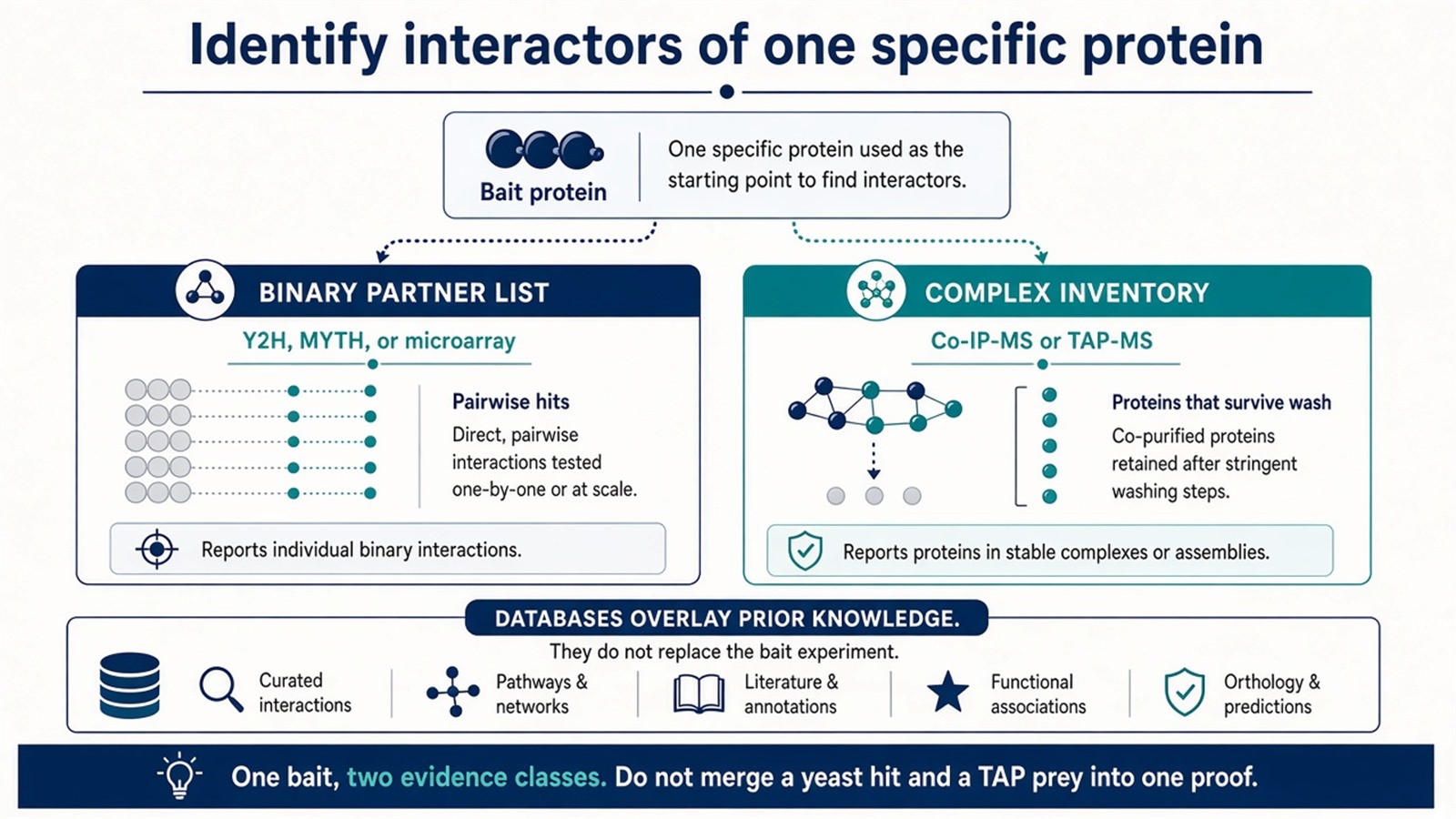
Figure 1. One bait can be screened for binary pairs or inventoried as a complex. Database overlays sit on a third layer and do not replace the bait experiment.
Name the bait and the partner class first. “In detail” does not authorize merging yeast hits with TAP preys.
Experimental and Database Routes to Partners of One Bait
1. Co-Immunoprecipitation (Co-IP)
An antibody precipitates the target protein and proteins that remain bound after the stated lysis and wash. The eluate is read by Western for a nominated prey or by mass spectrometry for an open list. Co-IP fits a specific protein when an IP-grade antibody exists. It reports wash-stable association, including possible bridged complex members, not automatically direct or only stable contacts. Isotype and bead-only controls belong in the set.
2. Yeast two-hybrid and related cellular screens
Y2H converts bait–prey binding into reporter activation in yeast and is the usual binary screen when one partner is known and a library can be built. MYTH adapts the logic for some membrane baits that do not enter a nuclear reporter well. Molecular three-hybrid formats can test a ligand-bridged ternary event; they are not a default substitute for Y2H. All of these assays report reconstitution in an engineered host, not the original tissue complex.
3. Biotinylated yeast two-hybrid (BY2H)
BY2H adds a biotin handle to a Y2H-class design so that a second streptavidin capture or detection step can be applied. The extra handle can help reading of weak reporter signals. It does not, by itself, prove lower background, and the assay remains a yeast binary reporter. Treat BY2H hits as screened pairs until Co-IP or TAP is closed.
4. Protein microarrays
A panel of proteins is immobilized and incubated with the specific protein as a probe. Fluorescence or chemiluminescence marks binding on the surface. Throughput is high when the panel exists. Immobilization can alter conformation, so a microarray hit is an in vitro panel result, not a cellular complex member.
5. Protein interaction network databases
STRING, BioGRID, and IntAct can list proteins already associated with the bait in public records. That list is useful for prioritizing which library to clone or which Western to run. It is not an identification of interacting proteins in the present sample. For how those edges should be drawn as overlays, How to Build and Analyze Protein-Protein Interaction Networks? provides a more detailed build-versus-overlay framework.
6. Tandem affinity purification (TAP)
A dual tag on the specific protein allows two sequential affinity steps, then mass spectrometry of the remaining complex. TAP reduces some bead binders and is used to inspect functional assemblies around that bait. The second purification also removes weak true partners. TAP-MS is a tagged complex inventory, not an untagged endogenous proof. Empty-tag controls still apply. For AP-MS and TAP-class evidence limits, How to Identify Protein–Protein Interactions Using Mass Spectrometry provides a more detailed explanation.
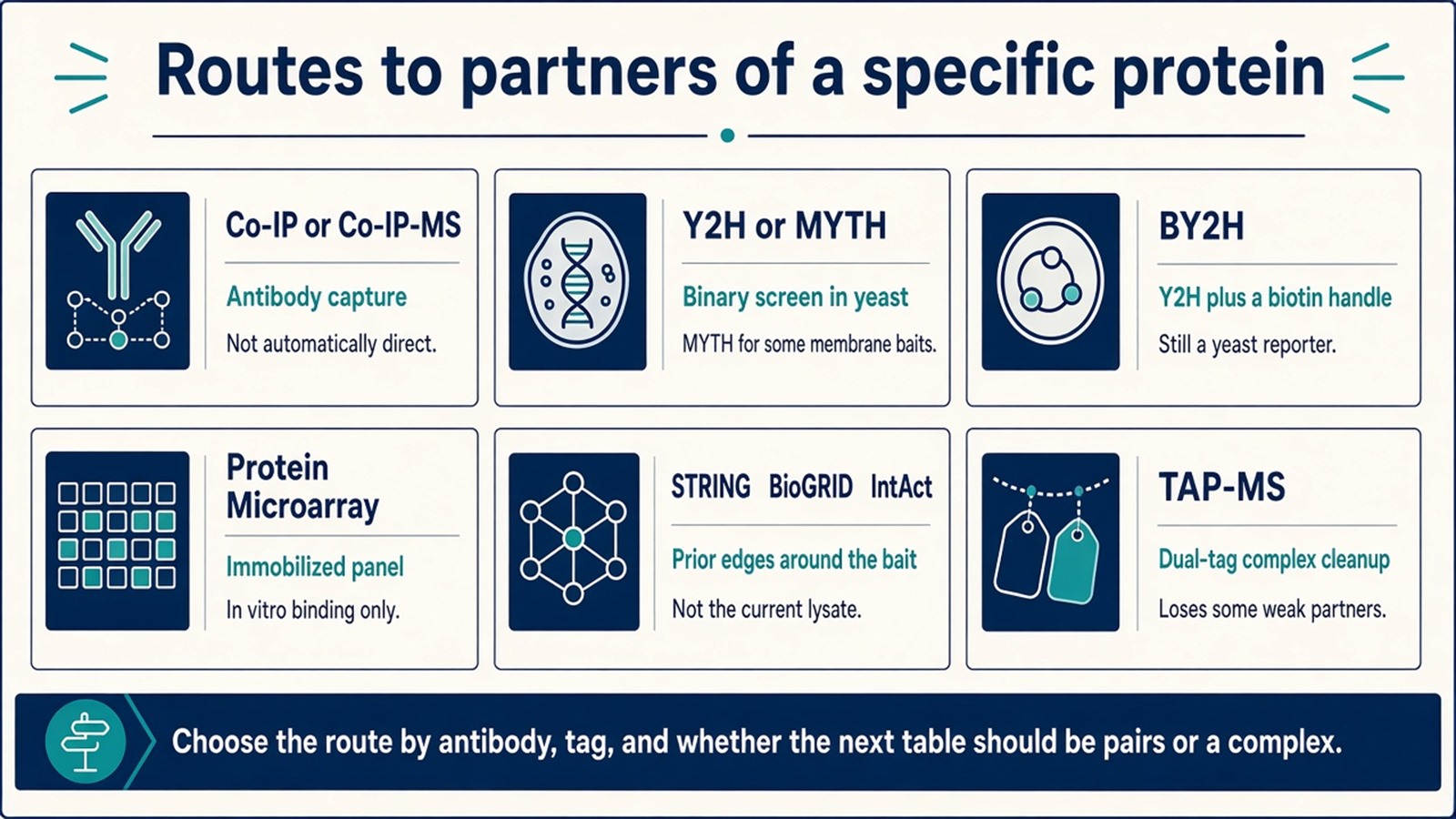
Figure 2. Routes split into antibody capture, yeast binary screens, an in vitro panel, public overlays, and dual-tag TAP-MS. Each returns a different partner class.
A Practical Path for One Specific Protein
Name the bait, the host cell or tissue, and whether an antibody or a tag can be used.
Screen binary space with Y2H, MYTH, BY2H, or a microarray when unknown pairs are the first need.
Inventory the wash-stable neighborhood with Co-IP-MS or TAP-MS when the next table should be a complex.
Overlay STRING or BioGRID only as a separate layer, then test selected preys by Western or reciprocal capture.
Running all six routes is not required. The combination follows the bait’s membrane status, antibody quality, and whether the next sentence is a pair or a complex.
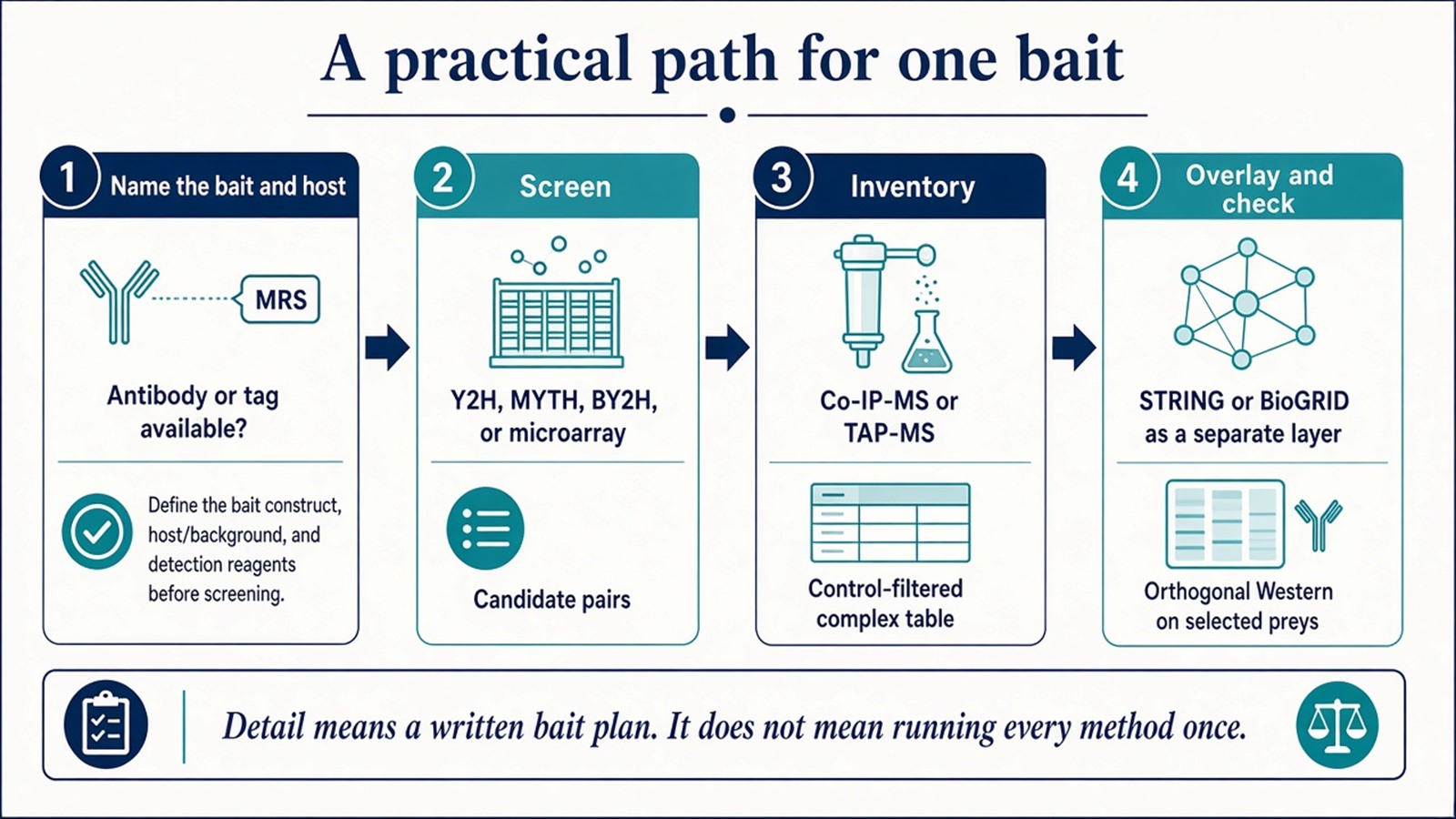
Figure 3. A detailed plan names the bait, screens or inventories with matched controls, then overlays databases without merging evidence classes.
Experimental Limits and Design Boundaries
Co-IP loses transient partners and can recover bridges. Y2H-family assays miss many mammalian modifications. Microarrays miss cellular assemblies. TAP can over-clean. Databases recycle well-studied hubs. Integrating complementary techniques does not produce a comprehensive and accurate interactome by addition. Diagnostic language sits outside ordinary research identification unless a separately validated assay framework is in place.
Project Planning and Service Scope
A usable plan names the specific protein, the first partner class, the controls, and which hits return to an orthogonal check. MtoZ Biolabs scopes antibody Co-IP-MS and dual-tag TAP or single-tag AP-MS on Orbitrap-class LC-MS/MS, plus pairwise follow-up after a Y2H or array shortlist. Recovery of low-abundance or membrane partners still depends on capture chemistry, not on calling the study detailed.
Once the bait, route, and follow-up rule are defined, the project can be scoped as a bait-centered PPI study. Researchers can review the MtoZ Biolabs Protein-Protein Interaction Analysis Service for project-specific sample evaluation, feasibility assessment, and workflow planning.
Frequently Asked Questions
1. What is the first method for identifying partners of one protein?
Start from the reagent. An IP-grade antibody points to Co-IP or Co-IP-MS. A tag points to TAP-MS or AP-MS. A cloneable bait and library point to Y2H or MYTH.
2. Does Co-IP identify only direct partners of that protein?
No. It identifies proteins that remain with the bait after wash, including possible indirect complex members.
3. Should STRING be used to identify interactors before any experiment?
It can prioritize candidates. It does not identify interactors in the current sample.
4. Is BY2H more accurate than standard Y2H?
It adds a biotin handle for capture or detection. Accuracy still follows the yeast reporter and the later orthogonal check.
5. Does TAP give a more complete complex than single-tag AP-MS?
TAP often reduces some background and also loses weak true partners. Completeness is not the usual gain. Specificity under a harsher cleanup is.
Reference
- Fields S., Song O. (1989). A novel genetic system to detect protein-protein interactions. Nature, 340, 245-246. https://doi.org/10.1038/340245a0
- Rigaut G., Shevchenko A., Rutz B., et al. (1999). A generic protein purification method for protein complex characterization and proteome exploration. Nat. Biotechnol., 17, 1030-1032. https://doi.org/10.1038/13732
- Stagljar I., Korostensky C., Johnsson N., te Heesen S. (1998). A genetic system based on split-ubiquitin for the analysis of interactions between membrane proteins in vivo. Proc. Natl. Acad. Sci. U.S.A., 95, 5187-5192. https://doi.org/10.1073/pnas.95.9.5187
- Gingras A.C., Gstaiger M., Raught B., Aebersold R. (2007). Analysis of protein complexes using mass spectrometry. Nat. Rev. Mol. Cell Biol., 8, 645-654. https://doi.org/10.1038/nrm2208
- Szklarczyk D., Gable A.L., Lyon D., et al. (2019). STRING v11: protein-protein association networks with increased coverage, supporting functional discovery in genome-wide experimental datasets. Nucleic Acids Res., 47, D607-D613. https://doi.org/10.1093/nar/gky1131
- Berggard T., Linse S., James P. (2007). Methods for the detection and analysis of protein-protein interactions. Proteomics, 7, 2833-2842. https://doi.org/10.1002/pmic.200700131
