



Co-IP and IP-MS ask which proteins remain with an endogenous bait after antibody capture, Input and IgG contrast, and either targeted detection or LC-MS/MS identification. Heavy-chain contamination is a readout problem inside that question. Denatured IgG can hide a blot band near 50 kDa, and antibody-chain peptides can dominate sampling in IP-MS. The methods fit cells or tissues when an IP-competent antibody exists and the claim is co-recovery, not binary direct binding (Hein et al. 2015). Prefer a protocol that still documents bait enrichment versus Input and IgG after chain reduction. Reassess when a cleaner blot is treated as a finished interactome, or when bait recovery is weak.
Researchers who already have a Co-IP eluate, visible chain interference, and a written interaction claim can also review the MtoZ Biolabs IP-Mass Spectrometry Service and Protein-Protein Interaction Analysis for project-specific readout review.
What Heavy-Chain Contamination Means in Co-IP and IP-MS
Antibody heavy-chain contamination is not one failure. On a Co-IP western blot, denaturing elution releases the capturing IgG. Under SDS and reducing conditions that IgG separates into a heavy chain near 50 kDa and a light chain near 25 kDa. A conventional anti-IgG secondary antibody then reports those fragments. The problem is worst when the bait or a named prey sits near those masses, because a chain band can be read as the target or can hide it.
On IP-MS, the same released chains become abundant peptides. They consume sampling time and can push low-abundance bait or partner peptides below reporting. Identification depth in a Co-IP-style eluate is typically hundreds to about a thousand proteins, depending on the sample. A table dominated by antibody and bead proteins is not a deeper interactome.
The two readouts therefore need different first moves. A blot-only study can sometimes change detection chemistry without repeating capture. An IP-MS study must reduce chain peptides in the digest or accept that enrichment scoring will be noisier. Shared capture-to-readout choice is compared in IP-MS vs Co-IP Western Blot: Which Method Fits Your Study?.
Reducing antibody-chain signal cleans a readout. It does not convert an unfiltered eluate into proof of a partner.
Antibody Specificity Is Not Solved by Removing Chains
Heavy-chain reduction is a handling step. Antibody specificity is a capture property. The capturing reagent must still recover the intended native bait without a dominant off-target that then looks like a partner. Application-specific validation remains necessary because Western performance does not establish IP performance (Uhlen et al. 2016). How to qualify that reagent is covered in How to Choose the Right Antibody for Co-IP Assays?.
Covalent coupling of the antibody to beads can lower chain release during elution. Coupling can also lower affinity or change recovered complexes if the chemistry inactivates the paratope. A coupled antibody that still pulls the wrong protein will produce a cleaner wrong list. Tag-directed capture with competitive peptide elution can leave the antibody on the resin. That is an AP-MS or tagged-capture design, not a minor cleanup of the original Co-IP, and is compared in AP-MS vs IP-MS: How to Choose the Right Interactome Workflow.
Do not raise antibody input to chase a stronger bait band if chain peptides already dominate. Extra IgG usually increases carryover faster than it increases bait recovery. Record clone, lot, host species, bead chemistry, and whether coupling was used, because those choices change both specificity and the later digest.
Input and IgG Still Diagnose Capture After Chain Reduction
Input and IgG remain mandatory after chain reduction. A missing 50 kDa band on blot, or fewer antibody peptides in MS, does not show that the bait was present or that capture was bait-specific.
Input is taken before capture. It shows whether the bait was expressed and extracted, and it provides a baseline for enrichment. If Input lacks the bait, a chain-free eluate still cannot support an interaction claim.
IgG or bead controls must use the same lysate batch, lysis, wash, elution, and any coupling chemistry as the bait IP. The isotype arm also contains antibody chains. That is expected. The diagnostic comparison is bait recovery and prey enrichment, not which lane has a 50 kDa band. Empty-tag controls from AP-MS do not replace IgG in an antibody Co-IP.
Check after chain reduction |
What a pass looks like |
What a cleaner chain signal cannot support |
|---|---|---|
Antibody specificity |
Intended bait recovered; no dominant off-target |
Partner names from an off-target capture |
Input |
Bait detectable before capture when expected |
A missing IP read as a missing interaction |
IgG or bead |
Shared background without bait-specific recovery |
Treating every remaining name as bait-specific |
Enrichment efficiency |
Bait higher in bait IP than in Input and IgG |
A long MS table or a single remaining blot band |
Readout route |
Blot uses chain-aware detection; MS samples bait peptides |
Chain-blind blot chemistry applied as an MS fix |
A practical sequence is:
- Confirm the written claim and whether the ending is blot or IP-MS.
- Confirm native bait recovery versus Input before scaling elution tricks.
- Process matched IgG with the same coupling and elution chemistry.
- Reduce chain carryover only after those arms exist.
- Rank remaining names or bands against IgG, not against the absence of a 50 kDa band.
Protocol-level placement of those arms is covered in Designing an Efficient Co-immunoprecipitation (Co-IP) Protocol. Sample-prep parity after elution is covered in How to Prepare Immunoprecipitation Samples for Mass Spectrometry.
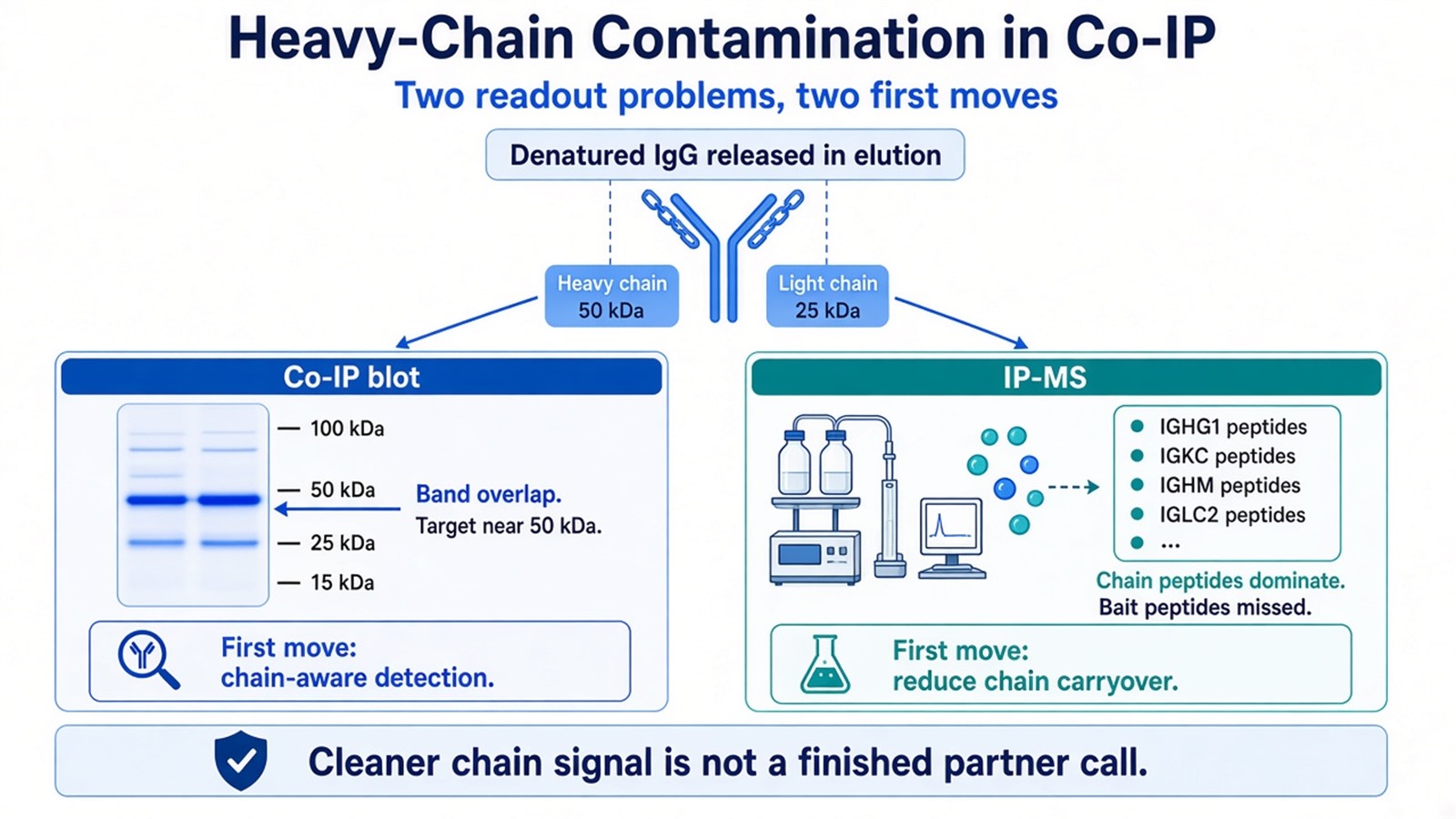
Figure 1. Heavy-chain contamination is a blot-masking problem or an MS sampling problem. The first move depends on the readout.
Enrichment Efficiency and Mass Spectrometry Credibility
Enrichment efficiency is still bait-first after chains are reduced. If the bait is weak versus Input, removing IgG fragments only unmasks how little bait was captured. Relative intensity can compare the same protein across Input, IgG, and bait IP. It does not rank unrelated proteins as tighter binders, and a weaker 50 kDa band is not a stronger interaction.
For blot endings, chain-blind or native-IgG-selective secondary detection can reduce reporting of denatured IP antibody. Light-chain-selective detection can also move the interference. Higher-resolution gels can separate a prey from 50 kDa when the masses differ enough. None of those detection changes remove antibody protein from an eluate destined for MS.
For IP-MS endings, coupling, lower antibody input, or competitive elution can reduce chain peptides in the digest. Identification of a protein in the remaining table is not a confidence call. Ranking requires bait recovery, Input-aware enrichment, and a declared contrast against IgG. Probabilistic scoring such as SAINT uses bait versus control counts to assign a probability that a prey is specifically co-purified (Choi et al. 2011). A contaminant catalog such as the CRAPome is a prior on control frequency, including common antibody-associated contaminants (Mellacheruvu et al. 2013). Neither score repairs a Western-only antibody or a missing IgG arm.
After those gates, a protein-level value can support a relative statement: protein B is enriched with bait A versus matched IgG inside this capture recipe, after chain carryover was reduced. Peptide support, bait recovery, and wash conditions belong next to that statement. Pathway maps do not repair a chain-dominated digest.
If the bait itself is missing while antibody chains dominate, diagnose recovery before ranking prey, as in Why Was the Target Protein Not Detected by IP-MS?.
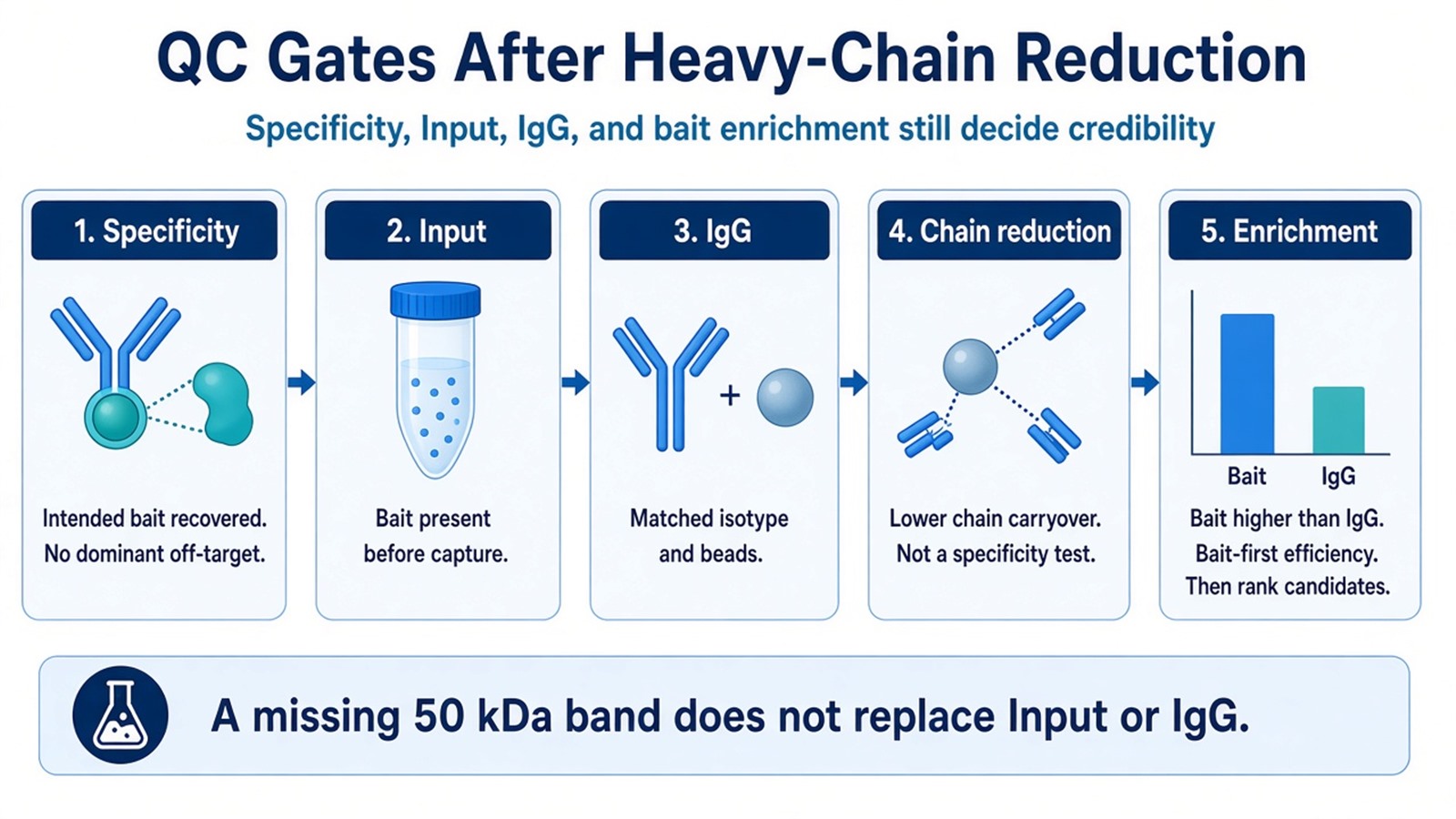
Figure 2. Chain reduction is inserted after capture arms exist. Mass spectrometry credibility still starts with bait enrichment versus Input and IgG.
Common Biases and Result Boundaries
The common bias is treating a disappeared 50 kDa band as proof that the remaining signal is the partner. Another bias is applying a blot-only detection reagent and then sending the same eluate to IP-MS as if chains were gone. Coupling can fail if residual uncoupled antibody still elutes, or if coupling inactivates the antibody and bait recovery collapses. Tag elution avoids chains only when the tagged bait remains biologically relevant and the competitive peptide actually releases the complex.
Do not write a chain-cleaned bait IP as proof that every remaining protein contacts the bait. Do not write a chain-dominated blot as proof that the prey is absent. A missing band near 50 kDa can mean the prey was hidden, the prey antibody failed, or capture never recovered the pair.
Prefer coupling or reduced antibody input when IP-MS is planned and bait recovery is already shown. Prefer chain-aware blot detection when the Co-IP is finished and only Western interpretation is blocked. Prefer a tagged competitive elution when no IP-competent endogenous antibody can be cleaned without losing the bait, and tagging is acceptable. Mixed enrichment-MS projects can be reviewed under the MS-Based Protein-Protein Interaction Analysis Service. Screening-level method maps are covered in Measuring Protein-Protein Interactions.
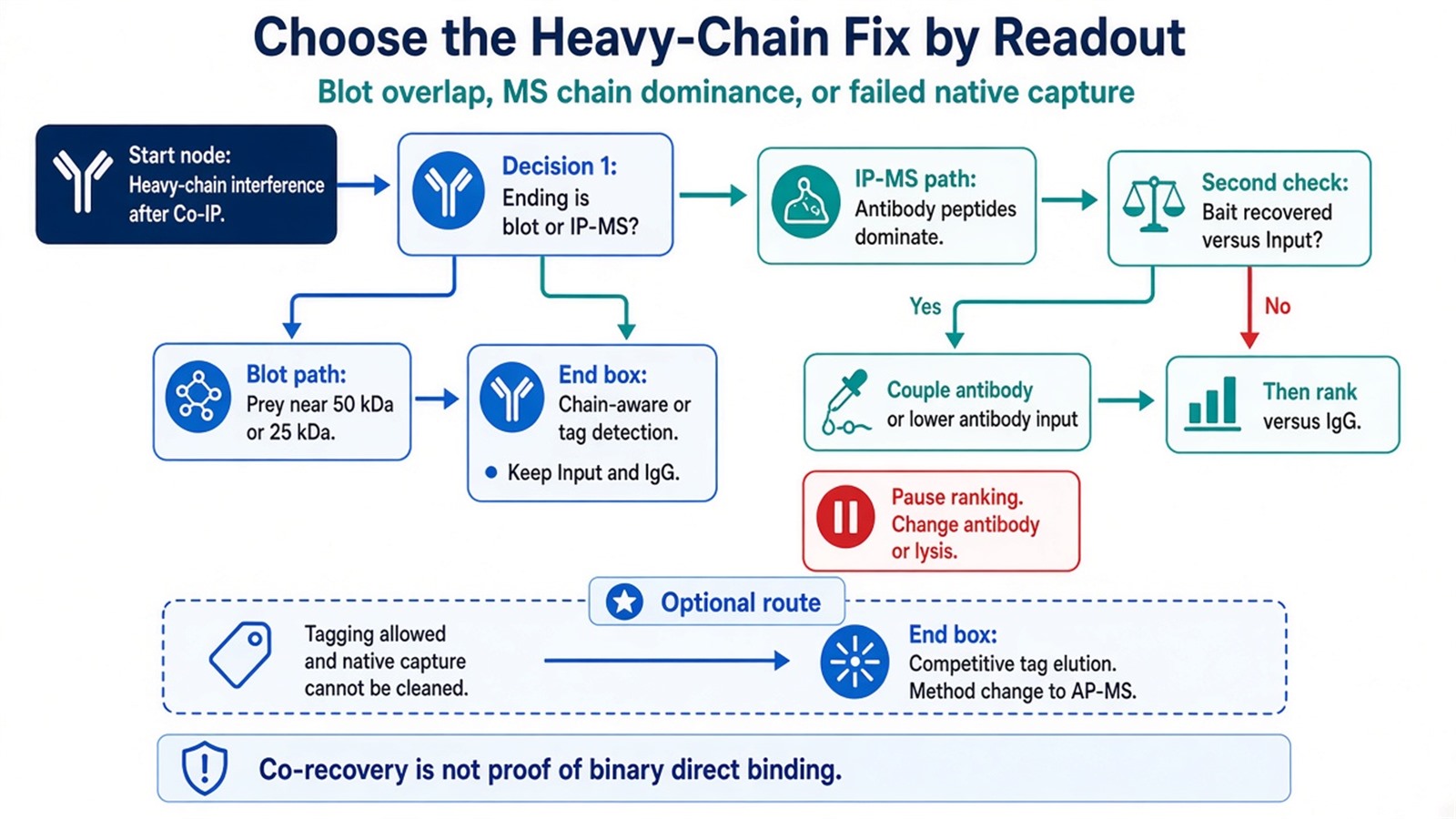
Figure 3. Choose the chain-reduction move from the readout. Input and IgG stay in every route.
Heavy-chain reduction supports a readable Co-IP or IP-MS result only after antibody, Input, IgG, and bait enrichment are shown. It does not certify a binary interactome.
Once the readout, chain-interference type, antibody status, Input and IgG plan, and enrichment evidence are defined, the project can be scoped as Co-IP blot interpretation or IP-MS. Researchers can review the MtoZ Biolabs IP-Mass Spectrometry Service for sample evaluation and chain-aware planning.
Frequently Asked Questions
1. Does coupling the antibody to beads remove the need for an IgG control?
No. Coupling can lower chain release. It does not estimate lysate proteins that bind the handle or the beads.
2. Will a chain-blind secondary antibody fix heavy-chain contamination in IP-MS?
No. That detection chemistry changes what a blot reports. It does not remove antibody protein from a digest.
3. If the 50 kDa band disappears, is the remaining band the partner?
Only if the bait was recovered versus Input and the same band is reduced in matched IgG. A cleaner lane is not a completed specificity test.
4. Can IP-MS be interpreted when antibody peptides dominate both bait IP and IgG?
Exploratory names can be reviewed as background. Bait-specific ranking should wait until bait peptides are recovered above that chain background.
5. When should I switch to a tag antibody to avoid heavy chains?
Switch when competitive elution can release the complex without the antibody, tagging is acceptable, and native IP-grade capture cannot be cleaned without losing the bait.
Reference
- M. Uhlen, A. Bandrowski, S. Carr, A. Edwards, J. Ellenberg, E. Lundberg, D. L. Rimm, H. Rodriguez, T. Hiltke, M. Snyder, T. Yamamoto (2016). A proposal for validation of antibodies. Nat. Methods, 13, 823-827. https://doi.org/10.1038/nmeth.3995
- M.Y. Hein, N.C. Hubner, I. Poser, J. Cox, N. Nagaraj, Y. Toyoda, I.A. Gak, I. Weisswange, J. Mansfeld, F. Buchholz, et al. (2015). A human interactome in three quantitative dimensions organized by stoichiometries and abundances. Cell, 163, 712-723. https://doi.org/10.1016/j.cell.2015.09.053
- H. Choi, B. Larsen, Z.Y. Lin, A. Breitkreutz, D. Mellacheruvu, D. Fermin, Z.S. Qin, M. Tyers, A.C. Gingras, A.I. Nesvizhskii (2011). SAINT: probabilistic scoring of affinity purification-mass spectrometry data. Nat. Methods, 8, 70-73. https://doi.org/10.1038/nmeth.1541
- D. Mellacheruvu, Z. Wright, A.L. Couzens, J.P. Lambert, N.A. St-Denis, T. Li, Y.V. Miteva, S. Hauri, M.E. Sardiu, T.Y. Low, et al. (2013). The CRAPome: a contaminant repository for affinity purification-mass spectrometry data. Nat. Methods, 10, 730-736. https://doi.org/10.1038/nmeth.2557
