



IP-MS and Co-IP-MS both recover an endogenous bait with an antibody and identify proteins by LC-MS/MS. They differ in the written claim, not in a second wet-lab method. IP-MS asks whether the antibody recovered the bait and what co-purified. Co-IP-MS asks which proteins remain with that bait after Input and IgG contrast. Both need antibody specificity, matched controls, and bait enrichment. Neither proves binary direct binding (Hein et al. 2015). Prefer IP-MS when bait recovery is the first claim. Prefer Co-IP-MS when partners will be ranked after bait recovery. Reassess either name when the antibody is Western-only or controls are missing.
Researchers who already have a named bait, antibody status, and a written interaction claim can also review the MtoZ Biolabs IP-Mass Spectrometry Service and Protein-Protein Interaction Analysis for project-specific naming and readout planning.
The Difference Is the Claim, Not a Second Protocol
The two names share one capture class: an IP-competent antibody, an endogenous bait, and LC-MS/MS of the eluate. Co-IP-MS is not a later, more complete version of IP-MS that suddenly pulls interactors the first method missed. The beads, wash, and search can be the same. The sentence the table is allowed to support is not.
IP-MS is the bait-recovery claim. It is the right label when the first question is whether the antibody enriches the intended protein, and which proteins travel with that capture. Co-IP-MS is the partner-ranking claim. It is the right label only after bait recovery versus Input is shown and names are scored against matched IgG. Identification depth in a Co-IP-style eluate is typically hundreds to about a thousand proteins, depending on the sample. Depth does not turn IP-MS into Co-IP-MS.
A three-way workflow choice that also includes tagged AP-MS is covered in IP-MS vs. Co-IP-MS vs. AP-MS: Which Workflow Fits Your Study?. Targeted blot readout of a named prey is compared in IP-MS vs Co-IP Western Blot: Which Method Fits Your Study?.
The pair fits cultured cells or tissues when the antibody is supplied by the study and a protein reference database exists. It is a poor first pair when tagging is required because no IP-competent antibody exists, or when the claim is reconstituted binding of a purified domain.
IP-MS reports bait recovery and co-purifying proteins. Co-IP-MS ranks candidate partners after that recovery. Neither certifies a direct contact.
Antibody Specificity Is Shared, Not Optional
Antibody specificity is the first gate for both names. If the capturing reagent does not recover the intended native bait, later protein names are not IP-MS results and they are not Co-IP-MS partners. Application-specific validation remains necessary because Western performance does not establish IP performance (Uhlen et al. 2016). How to qualify that reagent is covered in How to Choose the Right Antibody for Co-IP Assays?.
Record clone, lot, host species, and bead pairing next to whichever name is used. A lot change can move bait recovery and then look like a biological difference between IP-MS and Co-IP-MS. Extra antibody that fills the eluate with chain signal makes both tables noisier. Empty-tag controls from AP-MS do not replace antibody documentation on either label.
If no IP-competent antibody exists, stop arguing the two names and change handle. Tagged AP-MS is compared in AP-MS vs IP-MS: How to Choose the Right Interactome Workflow. GST pull-down is a different result class, compared in What Are the Main Differences Between GST-Pull Down and CoIP.
Input and IgG Decide Whether Either Name Can Be Used
Input and IgG are the denominators of both IP-MS and Co-IP-MS. They are not decorative samples.
Input is taken before capture. It shows whether the bait existed in the extract and provides a baseline for enrichment. A missing bait protein group is an expression or extraction problem if Input is empty. It is a capture problem if Input is positive. Co-IP-MS cannot start from a missing bait.
IgG or bead controls must use the same lysate batch, lysis, wash, elution, digestion, and search. Preclearing is not a substitute for IgG. If IgG was washed unlike the bait IP, neither name can support a specificity sentence. What those arms must look like as submitted material is covered in Requirements for Samples in Protein Immunoprecipitation-Mass Spectrometry.
Check |
What a pass looks like |
What the name cannot say |
|---|---|---|
Antibody specificity |
Intended bait recovered; no dominant off-target |
Partner names from an off-target capture |
Input |
Bait present before capture when expected |
A missing IP read as a missing interaction |
IgG or bead |
Shared background without bait-specific recovery |
Every remaining name is bait-specific |
Enrichment efficiency |
Bait higher in bait IP than in Input and IgG |
A long MS table as a finished Co-IP-MS map |
Same-protein comparison |
One protein compared across matched arms |
Unrelated proteins ranked as tighter binders |
A practical naming sequence is:
- Write the claim: bait recovery, or partner ranking after recovery.
- Confirm native bait recovery versus Input.
- Compare the same bait and prey against matched IgG.
- Call the table IP-MS until that contrast is shown.
- Call it Co-IP-MS only for names that pass, then keep a shortlist for a pair assay.
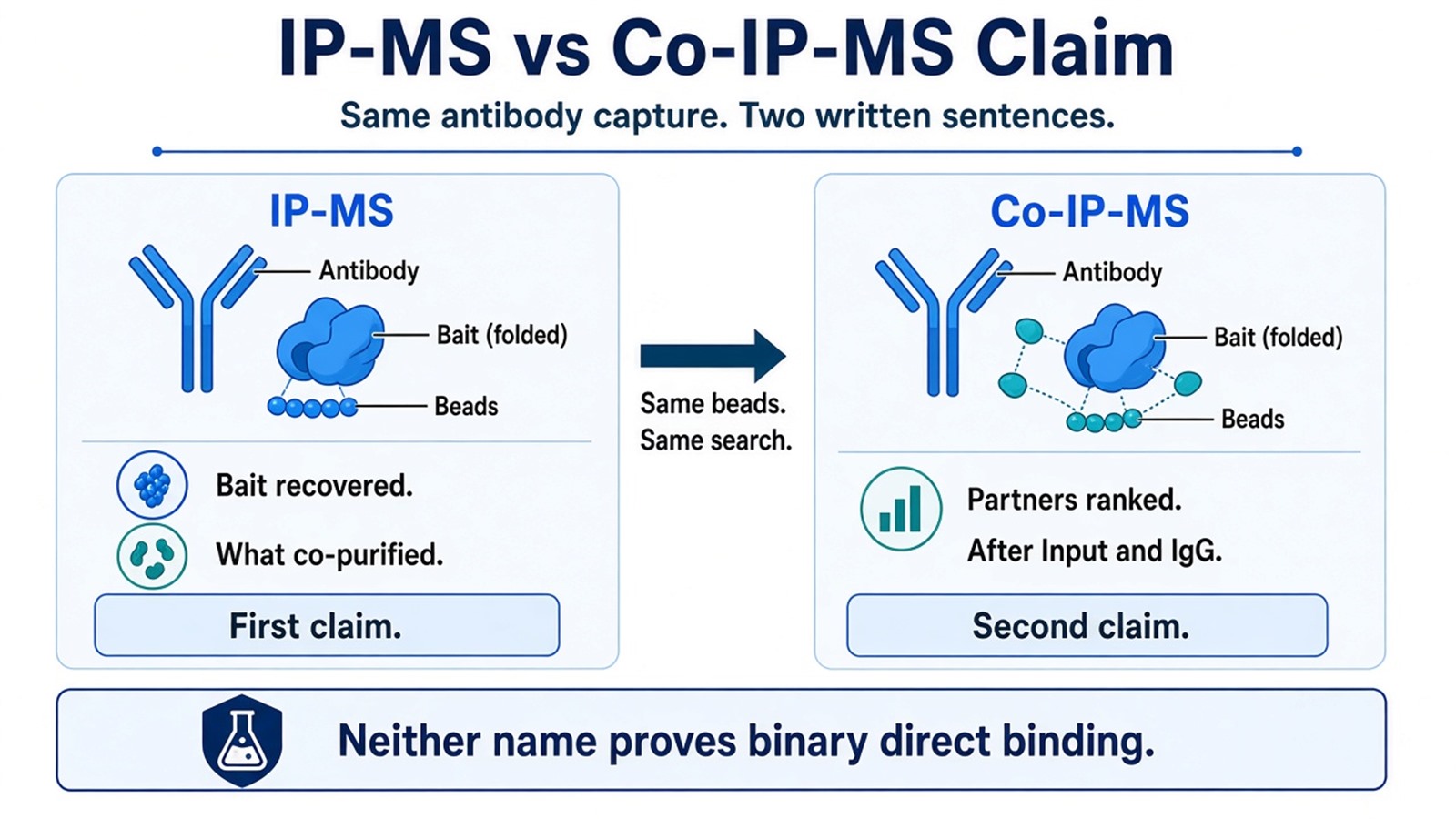
Figure 1. IP-MS and Co-IP-MS are two claims on one antibody capture. They are not two bead recipes.
Enrichment Efficiency and Mass Spectrometry Credibility
Enrichment efficiency decides whether capture worked. If the bait is weak versus Input, stop partner interpretation and do not upgrade the file from IP-MS to Co-IP-MS. Relative intensity can compare the same protein across Input, IgG, and bait IP, or across treatments that used one antibody and one wash. Limits of that comparison are covered in Can Co-Immunoprecipitation (Co-IP) Be Used for Quantitative Comparison. Intensity does not rank unrelated proteins as tighter binders.
For both names, identification of a protein is not a confidence call. Ranking requires bait recovery, Input-aware enrichment, and a declared contrast against IgG. Probabilistic scoring such as SAINT uses bait versus control counts to assign a probability that a prey is specifically co-purified (Choi et al. 2011). A contaminant catalog such as the CRAPome is a prior on control frequency (Mellacheruvu et al. 2013). Pathway or network software can annotate a shortlist. It cannot repair a missing IgG arm or convert IP-MS bait recovery into a Co-IP-MS interactome.
After those gates, a protein-level value can support: protein B is enriched with bait A versus matched IgG inside this capture recipe. Peptide support, antibody clone, and wash chemistry belong next to that statement.
If the bait is missing from the table, diagnose before ranking, as in Why Was the Target Protein Not Detected by IP-MS?. Protocol-level search matching is covered in Immunoprecipitation Mass Spectrometry Protocol. How to read the finished table is covered in Co-IP Results.
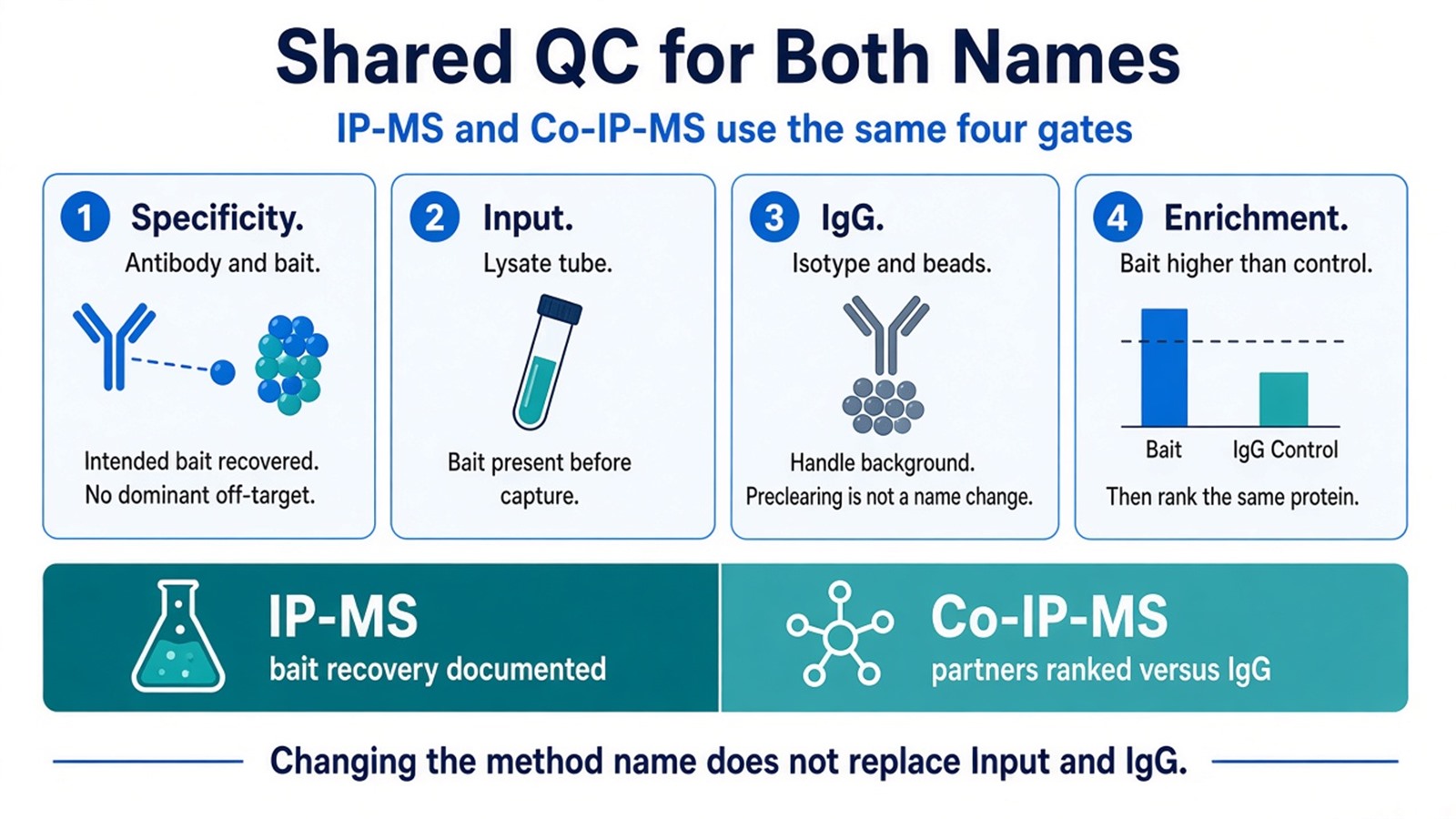
Figure 2. Mass spectrometry credibility is shared. Changing the method name does not replace Input and IgG.
Common Naming Biases and Result Boundaries
The common bias is writing Co-IP-MS as the method that finds interactors and IP-MS as the method that only sees the bait. Both files can contain the same proteins. The difference is whether bait recovery and IgG contrast were shown before partner language was used. Another bias is treating every co-eluting protein as a validated partner because the file was labeled Co-IP-MS.
Do not write a successful bait IP as proof that remaining proteins contact the bait. Do not write a negative Co-IP-MS table as proof that no interaction exists in the cell. Absence can mean the wrong antibody, epitope masking, over-washing, or a bait that is not expressed in the tested state.
Prefer IP-MS when native bait recovery is still being established. Prefer Co-IP-MS when that recovery is documented and partners will be ranked. Prefer GST pull-down or tagged AP-MS when no IP-competent antibody exists. Prefer a defined-pair assay when the next sentence is direct contact. Mixed enrichment-MS projects can be reviewed under the MS-Based Protein-Protein Interaction Analysis Service.
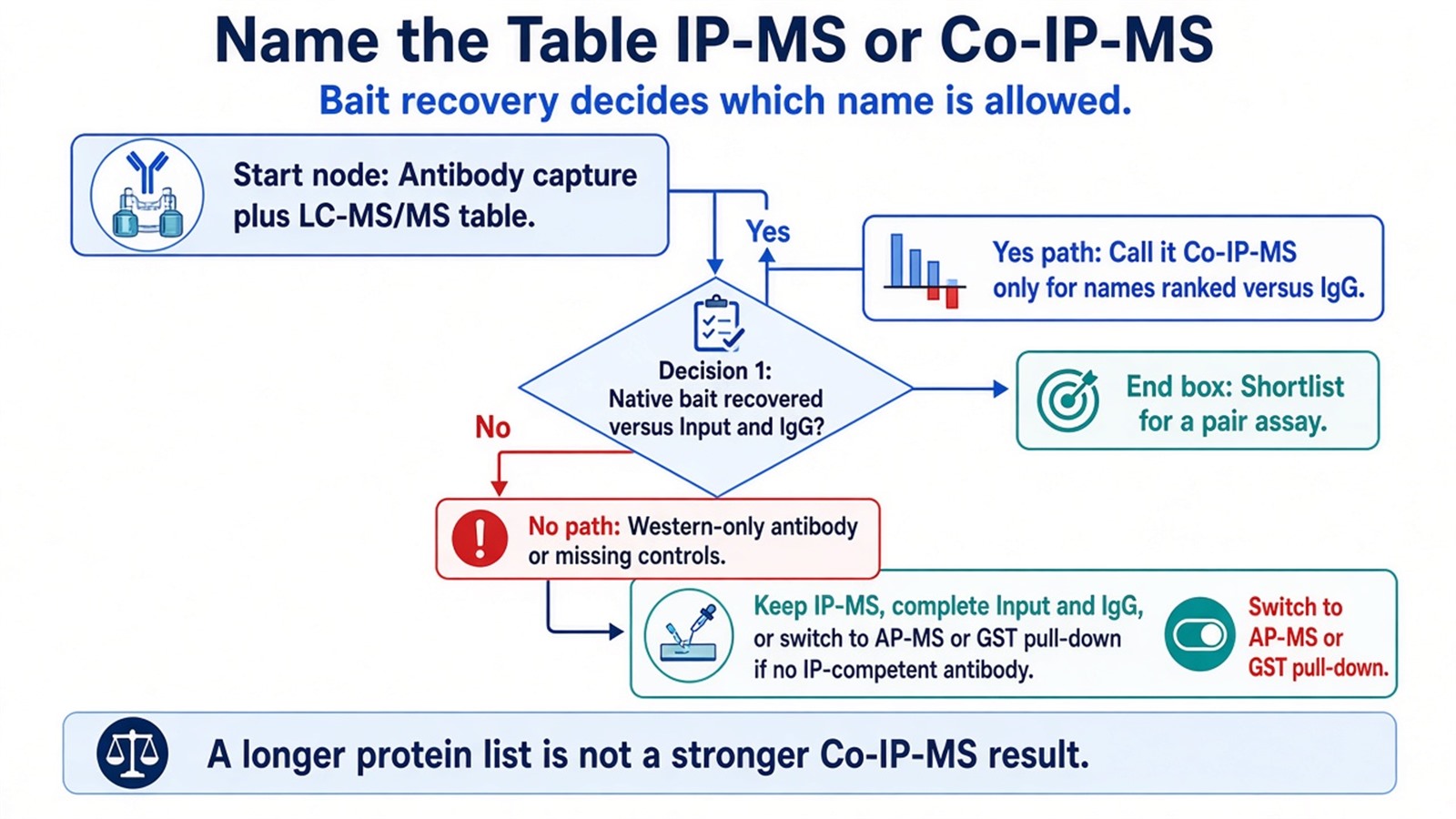
Figure 3. Keep the IP-MS label until bait recovery is documented. A pathway map is not a Co-IP-MS result.
IP-MS and Co-IP-MS support candidate co-recovery after antibody, Input, IgG, and bait enrichment are shown. They do not certify a binary interactome.
Once the claim, antibody status, Input and IgG results, and the intended name are defined, the project can be scoped as IP-MS or Co-IP-MS. Researchers can review the MtoZ Biolabs IP-Mass Spectrometry Service for sample evaluation and naming of the readout.
Frequently Asked Questions
1. Are IP-MS and Co-IP-MS different bead protocols?
No. They share antibody capture of an endogenous bait and LC-MS/MS. The difference is the claim: bait recovery versus ranked partners.
2. Can I call a table Co-IP-MS if the bait is missing?
No. Co-IP-MS ranking starts after native bait recovery versus Input. A missing bait keeps the file at failed or incomplete IP-MS.
3. Does Co-IP-MS prove direct or indirect contact?
No. Both names report co-recovery versus IgG. Direct contact needs a defined-pair assay.
4. When should I stop comparing the two names and switch method?
Switch when no IP-competent antibody exists. Use tagged AP-MS or GST pull-down instead of renaming the same failed capture.
5. Does a longer protein list make Co-IP-MS stronger than IP-MS?
No. Depth depends on the sample. A longer list without Input and IgG is not a stronger interaction result.
Reference
- M. Uhlen, A. Bandrowski, S. Carr, A. Edwards, J. Ellenberg, E. Lundberg, D. L. Rimm, H. Rodriguez, T. Hiltke, M. Snyder, T. Yamamoto (2016). A proposal for validation of antibodies. Nat. Methods, 13, 823-827. https://doi.org/10.1038/nmeth.3995
- M.Y. Hein, N.C. Hubner, I. Poser, J. Cox, N. Nagaraj, Y. Toyoda, I.A. Gak, I. Weisswange, J. Mansfeld, F. Buchholz, et al. (2015). A human interactome in three quantitative dimensions organized by stoichiometries and abundances. Cell, 163, 712-723. https://doi.org/10.1016/j.cell.2015.09.053
- H. Choi, B. Larsen, Z.Y. Lin, A. Breitkreutz, D. Mellacheruvu, D. Fermin, Z.S. Qin, M. Tyers, A.C. Gingras, A.I. Nesvizhskii (2011). SAINT: probabilistic scoring of affinity purification-mass spectrometry data. Nat. Methods, 8, 70-73. https://doi.org/10.1038/nmeth.1541
- D. Mellacheruvu, Z. Wright, A.L. Couzens, J.P. Lambert, N.A. St-Denis, T. Li, Y.V. Miteva, S. Hauri, M.E. Sardiu, T.Y. Low, et al. (2013). The CRAPome: a contaminant repository for affinity purification-mass spectrometry data. Nat. Methods, 10, 730-736. https://doi.org/10.1038/nmeth.2557
