



The useful split is evidence type. IP-MS and AP-MS constrain a co-enriched partner list under lysis and wash conditions. XL-MS constrains distances between reactive residues. Prediction tools constrain nothing until a pair or pose is tested. Researchers who already have a bait, controls, and a written claim can review MtoZ Biolabs for feasibility. Screening-level method choice is covered in .
What Mass Spectrometry Analyzes Versus What Prediction Proposes
Prediction proposes associations or poses from sequence, literature, or coordinates. A STRING edge can mix experiments, text mining, and transfer from other species (Szklarczyk et al. 2019). A docking pose is a geometric hypothesis. An interface-residue score is a classifier output. None of those models should be rewritten as an MS identification.
A common mix-up is to treat a protein database hit as interaction prediction. The search identifies a sequence in the submitted sample. It does not say that two identified proteins contact each other. Two names in one IP-MS run can be bait, prey, a bridging subunit, or a bead binder. Interface-server workflows that start from coordinates are a different task and are covered in .
IP-MS Constraints: Co-Enrichment, Not a Predicted Structure
IP-MS and AP-MS provide a co-enrichment constraint. A bait is captured with an antibody or tag, the recovered material is digested, and LC-MS/MS identifies proteins that are enriched versus empty-bead, isotype, or empty-tag controls. Large-scale maps of this type describe complex membership and abundance context more than a complete set of binary contacts (Hein et al. 2015).
The constraint is conditional. It holds for the lysis buffer, wash stringency, antibody or tag, and expression system that were used. Transient pairs can be lost. Abundant contaminants can survive. Scoring tools such as SAINT and contaminant catalogs such as the CRAPome help rank names against control frequency, but they still operate on enrichment tables, not on structures (Choi et al. 2011; Mellacheruvu et al. 2013).
IP-MS does not deliver an interface, a docking pose, or a predicted network. Reciprocal capture, a defined-pair pull-down, or an orthogonal MS route is still required if the claim moves from “co-recovered” to “this pair engages here.” Antibody-based intake is scoped through the . Mixed enrichment-MS projects can be reviewed under the .
XL-MS Constraints: Residue Distances, Not an Interactome Forecast
XL-MS provides a distance constraint. A chosen crosslinker covalently links residues that are close enough and reactive enough, and LC-MS/MS identifies the linked peptides (Leitner et al. 2016). The useful output is a residue-pair table with a spacer-length limit. That table can restrain a docking pose, filter a predicted interface, or test whether two chains in an IP-MS list come close in the submitted sample.
XL-MS is not a method for predicting who interacts in a proteome. Absence of a crosslink can mean the residues were not close, not reactive, or not recovered after digestion. Presence of a crosslink does not assign binding energy or prove a unique pose. Intra-molecular links constrain fold or conformation. Inter-molecular links constrain proximity between chains.
XL-MS fits after a pair or complex is already named and the sample can tolerate the reagent. It fits poorly as a substitute for IP-MS discovery or as a stand-alone prediction engine. Distance-restraint projects can be scoped through the .
IP-MS and XL-MS supply different experimental records. Computational prediction sits beside them as a hypothesis source, not as a third MS mode. The comparison below keeps discovery measurements on one side and model outputs on the other.
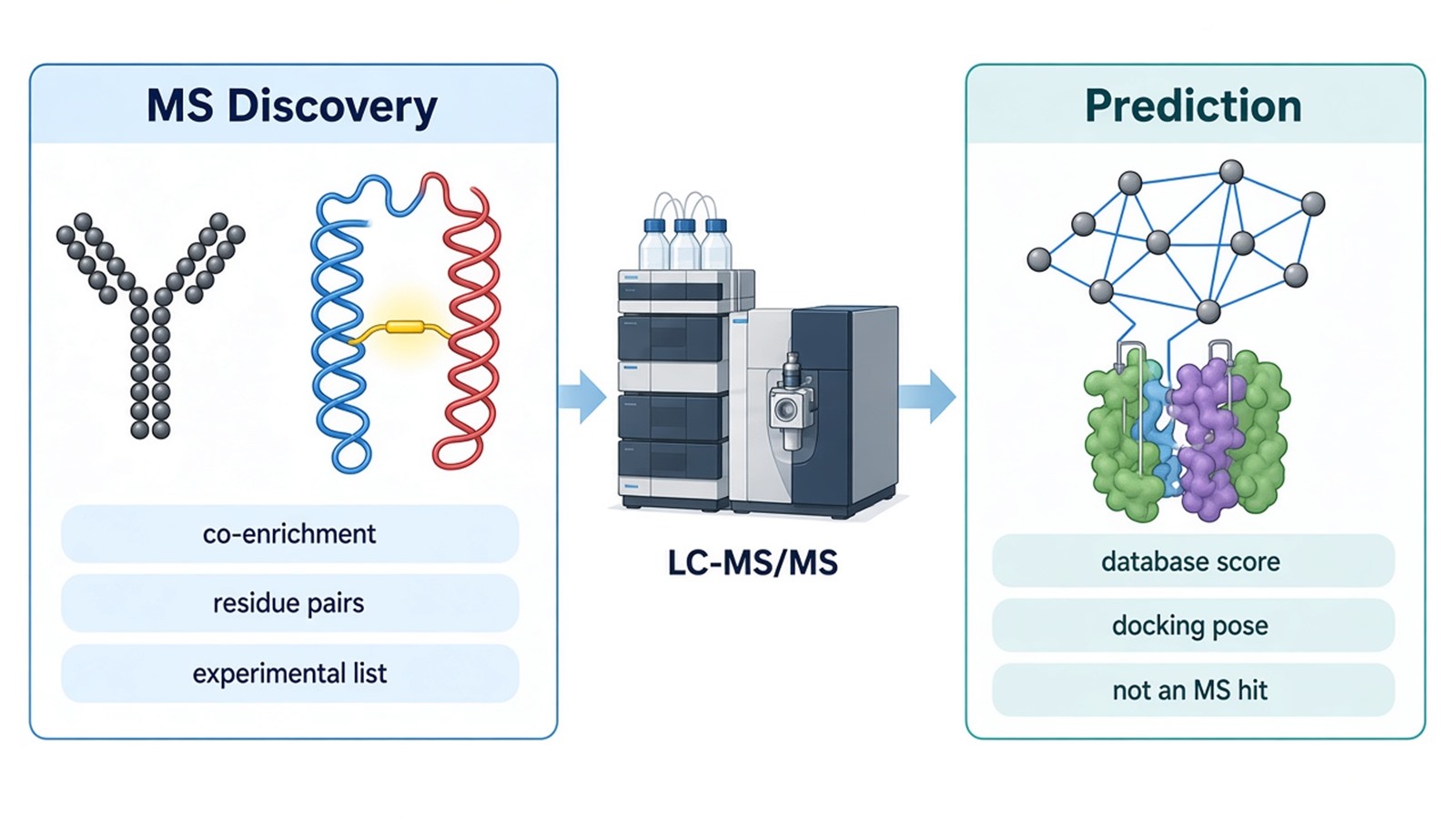
Figure 1. MS Discovery vs Computational Prediction.
Databases and Prediction Tools as Complements
Databases and prediction tools are useful after, or beside, a measured list. BioGRID and similar repositories collect published experimental reports. STRING aggregates multiple evidence channels into a confidence score that is not equal to an IP-MS enrichment factor (Szklarczyk et al. 2019). Docking or assembly-analysis servers can propose residues to mutate once a pair and coordinates exist.
Use them as filters, not as authors of the result sentence. A database edge can justify keeping a borderline IP-MS name for follow-up. A docking cluster can choose which XL-MS-compatible lysines to inspect. A residue classifier can shrink a mutagenesis set. Reverse the order, and a predicted edge can be mistaken for an identified interactor.
Record the tool name, version, and score type. A STRING score, a SAINT probability, and a docking rank are not interchangeable numbers. When the next need is an interface shortlist rather than a partner list, move to the server workflow in and keep the MS tables attached as restraints or as the reason the pair was named.
Evidence Limits When Combining MS and Computation
Combining layers does not convert prediction into measurement. The strongest sentence the data can support should stay attached to the weakest layer in the stack. An IP-MS name plus a STRING edge is still a candidate. An XL-MS pair plus a docking pose is a restrained model. A Mascot protein hit plus a homology dimer is not an analyzed interaction.
| Evidence source | What it can constrain | Typical output | What it does not prove |
|---|---|---|---|
| IP-MS / AP-MS | Co-recovery versus controls | Ranked partner list | Direct contact or a structure |
| XL-MS | Residue pairs within reagent reach | Crosslinked residue table | A unique docked pose or a proteome-wide forecast |
| Spectrum search | Peptide and protein identity in the sample | Protein identifications | That two identified proteins bind |
| STRING / literature databases | Prior reports or transferred associations | Scored network edges | A new experimental interaction |
| Docking or interface servers | Possible poses or residues from coordinates | Ranked poses or residue scores | Cellular occupancy or measured affinity |
Keep discovery and prediction in separate columns of the notebook. If the publication claim is discovery, lead with controlled IP-MS or AP-MS and use databases only in discussion. If the claim is a spatial model, lead with XL-MS or HDX-MS on a named pair and use docking as a fitting tool. If the claim is prediction only, do not place MS in the title as if spectra were generated.
A second limit is sample mismatch. An IP-MS list from a lysate cannot validate a docking pose of two isolated domains. An XL-MS dataset on a purified complex cannot rescue an uncontrolled bait purification. The computational file and the MS sample must describe the same constructs.
Samples, Deliverables, and Feasibility Intake
IP-MS submissions need bait identity, antibody or tag details, lysis and wash history, and the control set that will be searched in parallel. Gel bands or liquid eluates should be compatible with digestion; high SDS or salt should be declared. XL-MS submissions need a named complex or pair, protein amount and purity, buffer amines that can quench the reagent, and whether a model will be used to interpret residue pairs. Prediction-only files do not replace those samples.
The next test should match the evidence already in hand. The diagram below maps partner lists, residue pairs, database hits, and docked poses to follow-up routes used in feasibility review.
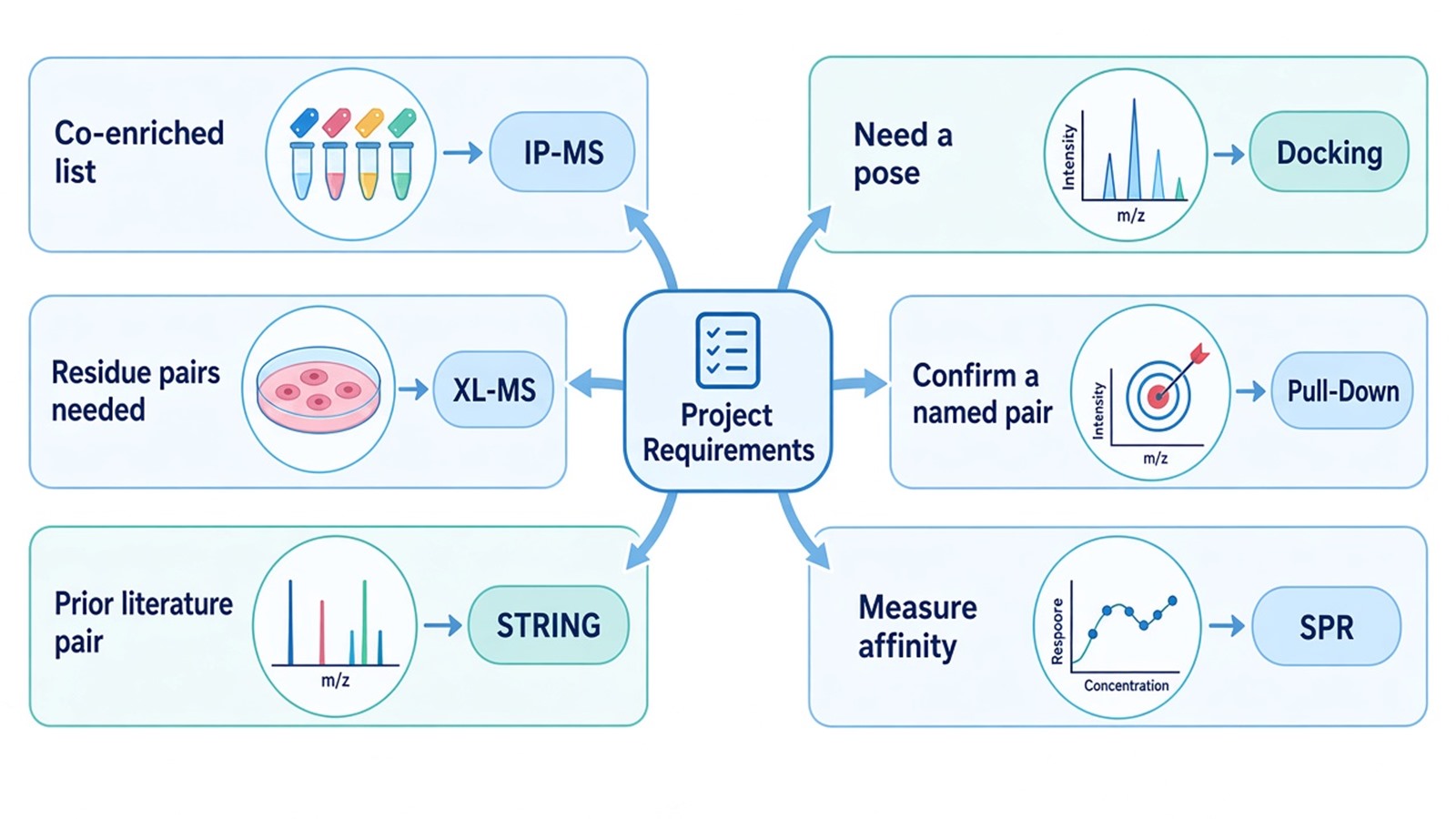
Figure 2. Matching Evidence Type With Next PPI Tests.
Deliverables depend on the scoped route. IP-MS reports typically include identification tables, control-aware ranking, and a written candidate list. XL-MS reports typically include crosslinked peptide identifications and residue-pair tables. Database or docking outputs can be attached as supporting files. They should not be labeled as MS identifications. To start intake, send the evidence goal, bait or pair, available controls or models, and sample format to info@MtoZ-Biolabs.com or use the site inquiry form so the experimental route can be confirmed before shipment.
Frequently Asked Questions
1. Does a protein identified in the same IP-MS run count as a predicted interactor?
No. Identification means the protein was present in the submitted eluate. Interaction status depends on enrichment versus controls and on later pair tests. Prediction tools may comment on that name, but they do not convert the spectrum match into a binding claim.
2. Can XL-MS replace IP-MS when the goal is to find unknown partners?
Usually not. XL-MS is efficient when the complex is already defined and spatial restraints are required. Unknown-partner discovery is still scoped first as IP-MS or AP-MS with controls. The two methods answer different questions and can be sequenced, not swapped.
3. Is a STRING high-confidence edge enough to skip negative controls in IP-MS?
No. Database scores summarize prior information. They do not measure bead binding, antibody artifacts, or abundance bias in the current lysate. Controls and contaminant filters remain part of the MS design.
4. Can docking software be listed as a mass spectrometry analysis method?
No. Docking uses coordinates. MS uses peptides from a physical sample. Docking can consume XL-MS restraints or suggest mutants after an IP-MS pair is named. It should be reported as a computational step.
5. What should a feasibility email include when both MS and prediction are planned?
State the discovery claim and the prediction claim separately. Include bait or pair, controls, sample type, and any PDB or model files that will be used only as restraints. Feasibility review assigns IP-MS, XL-MS, or a later pair assay before treating server output as a result.
Researchers can keep mass spectrometry analysis and computational prediction on separate evidence tracks, then confirm bait, controls, and sample format through MtoZ Biolabs intake.
Reference
-
M.Y. Hein, N.C. Hubner, I. Poser, J. Cox, N. Nagaraj, Y. Toyoda, I.A. Gak, I. Weisswange, J. Mansfeld, F. Buchholz, et al. (2015). A human interactome in three quantitative dimensions organized by stoichiometries and abundances. Cell, 163, 712-723. https://doi.org/10.1016/j.cell.2015.09.053
-
H. Choi, B. Larsen, Z.Y. Lin, A. Breitkreutz, D. Mellacheruvu, D. Fermin, Z.S. Qin, M. Tyers, A.C. Gingras, A.I. Nesvizhskii (2011). SAINT: probabilistic scoring of affinity purification-mass spectrometry data. Nat. Methods, 8, 70-73. https://doi.org/10.1038/nmeth.1541
-
D. Mellacheruvu, Z. Wright, A.L. Couzens, J.P. Lambert, N.A. St-Denis, T. Li, Y.V. Miteva, S. Hauri, M.E. Sardiu, T.Y. Low, et al. (2013). The CRAPome: a contaminant repository for affinity purification-mass spectrometry data. Nat. Methods, 10, 730-736. https://doi.org/10.1038/nmeth.2557
-
A. Leitner, M. Faini, F. Stengel, R. Aebersold (2016). Crosslinking and mass spectrometry: an integrated technology to understand the structure and function of molecular machines. Trends Biochem. Sci., 41, 20-32. https://doi.org/10.1016/j.tibs.2015.10.008
-
D. Szklarczyk, A.L. Gable, D. Lyon, A. Junge, S. Wyder, J. Huerta-Cepas, M. Simonovic, N.T. Doncheva, J.H. Morris, P. Bork, et al. (2019). STRING v11: protein-interaction networks, with increased coverage and integration. Nucleic Acids Res., 47, D607-D613.
