



Protein-protein interaction analysis asks which proteins remain with a bait after capture and matched controls. A CUT&Tag data analysis pipeline does not answer that question. It asks which genomic regions are occupied by a chromatin protein or histone mark after sequencing, alignment, negative-control contrast, and peak ranking. The path fits libraries from cells or tissues when a CUT&Tag-competent antibody was used and the claim is occupancy, not protein-protein contact or functional regulation (Kaya-Okur et al. 2019). Prefer this pipeline when FASTQ files and matched IgG or no-primary arms already exist. Reassess when the control library is missing, a failed library is sent to peak calling, or peaks are written as PPI edges.
Researchers who already have target and control libraries, a named chromatin target, and a written occupancy claim can also review the MtoZ Biolabs CUT&Tag Analysis Service for project-specific analysis scoping.
Which Experimental System Can Support This Pipeline
CUT&Tag data analysis is a protein-chromatin occupancy workflow. Sequencing reads come from antibody-guided tagmentation, not from recovering proteins on a protein bait. The pipeline can start only after the wet-lab system is named: the chromatin target, the antibody class, the host genome, and whether an IgG or no-primary library was made on the same recipe.
The system is readable when three files exist. First, a target library from a CUT&Tag-competent antibody. Second, a matched negative-control library. Third, a reference genome that matches the sample species and the later annotation build. Quality control, alignment, and peak calling are later filters. None of them converts occupancy into protein-protein interaction analysis.
How the wet-lab capture is designed before sequencing is covered in Beginner’s Guide: How to Start CUT&Tag Analysis. When the written sentence is which proteins remain with a protein bait, use Protein-Protein Interaction Analysis instead of this pipeline.
The system is a poor first choice when no control library was sequenced, when the antibody was Western-only, when the FASTQ files fail basic integrity checks, or when the claim is reconstituted protein-protein binding or a finished regulatory network.
A CUT&Tag analysis pipeline reports candidate occupancy from matched libraries. It does not certify a protein-protein contact.
Negative Controls Before Any Peak Is Kept
Negative controls are the denominators of the pipeline. They are not optional after FastQC looks clean.
IgG or no-primary libraries show antibody-independent tagmentation. They must be processed through the same trim, alignment, duplicate filter, and peak-calling settings as the target. Changing only the control threshold, or calling peaks on the target alone, makes enrichment unreadable. An unused barcode or a later batch-correction term does not replace IgG.
Input DNA from a ChIP-seq notebook is not automatically a CUT&Tag control. If an input-like arm is kept, it must travel the same analysis recipe. Spike-in or scaling factors can compare batches. They do not prove that a remaining peak is target-specific.
System check |
What a pass looks like |
What the analysis cannot say |
|---|---|---|
Experimental system |
Named chromatin target, CUT&Tag libraries, matching genome |
A PPI bait recovered from a lysate |
Negative control |
IgG or no-primary through the same analysis recipe |
Every remaining peak is target-specific |
Candidate screening |
Occupancy ranked versus those controls |
An unfiltered peak table as a network |
Result boundary |
Candidate occupied regions under those arms |
Protein-protein contact or gene regulation |
A practical path is:
- Write the occupancy sentence the peak table must support.
- Confirm target and control FASTQ files belong to the same recipe.
- Align and filter both arms with the same settings.
- Rank only regions that pass that contrast.
- Keep a shortlist for an orthogonal RNA, motif, or perturbation assay.
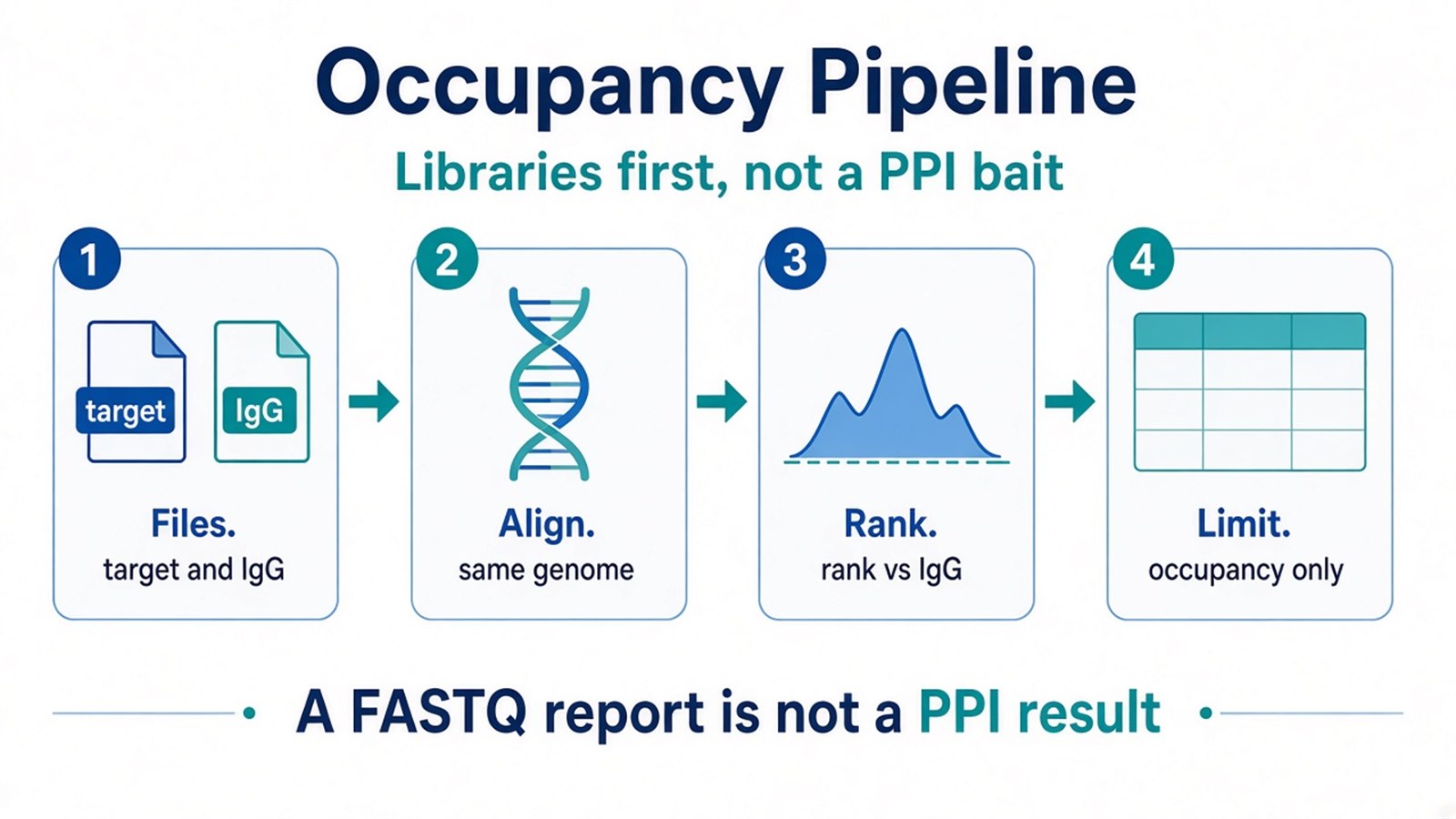
Figure 1. The pipeline starts after target and control libraries are named. A finished FASTQ report is not an interaction result.
Screening Candidate Occupied Regions
Candidate screening starts after the target library produces fragments above the matched control. If IgG or no-primary tracks look like the target track, stop ranking genes.
A peak is a contrast against the control recipe. It is not a partner protein. Alignment tool, duplicate filter, and peak caller can change the shortlist. They do not turn occupancy into PPI, and they do not assign a gene as a regulated target. Common alignment and annotation tools for this path include Bowtie2 and ChIPseeker. Naming those tools is not evidence that the claim is finished.
Do not write nearest-gene annotation as regulation. Do not write GO or pathway enrichment as a protein interaction network. Do not write a differential peak as proof that a transcription factor now binds a new partner. How a peak table is called and annotated, after these gates, is covered in How to Perform CUT&Tag Peak Calling and Functional Annotation?.
Candidate screening ranks occupied regions versus matched negative controls. It does not certify a binary protein-protein or protein-DNA contact.
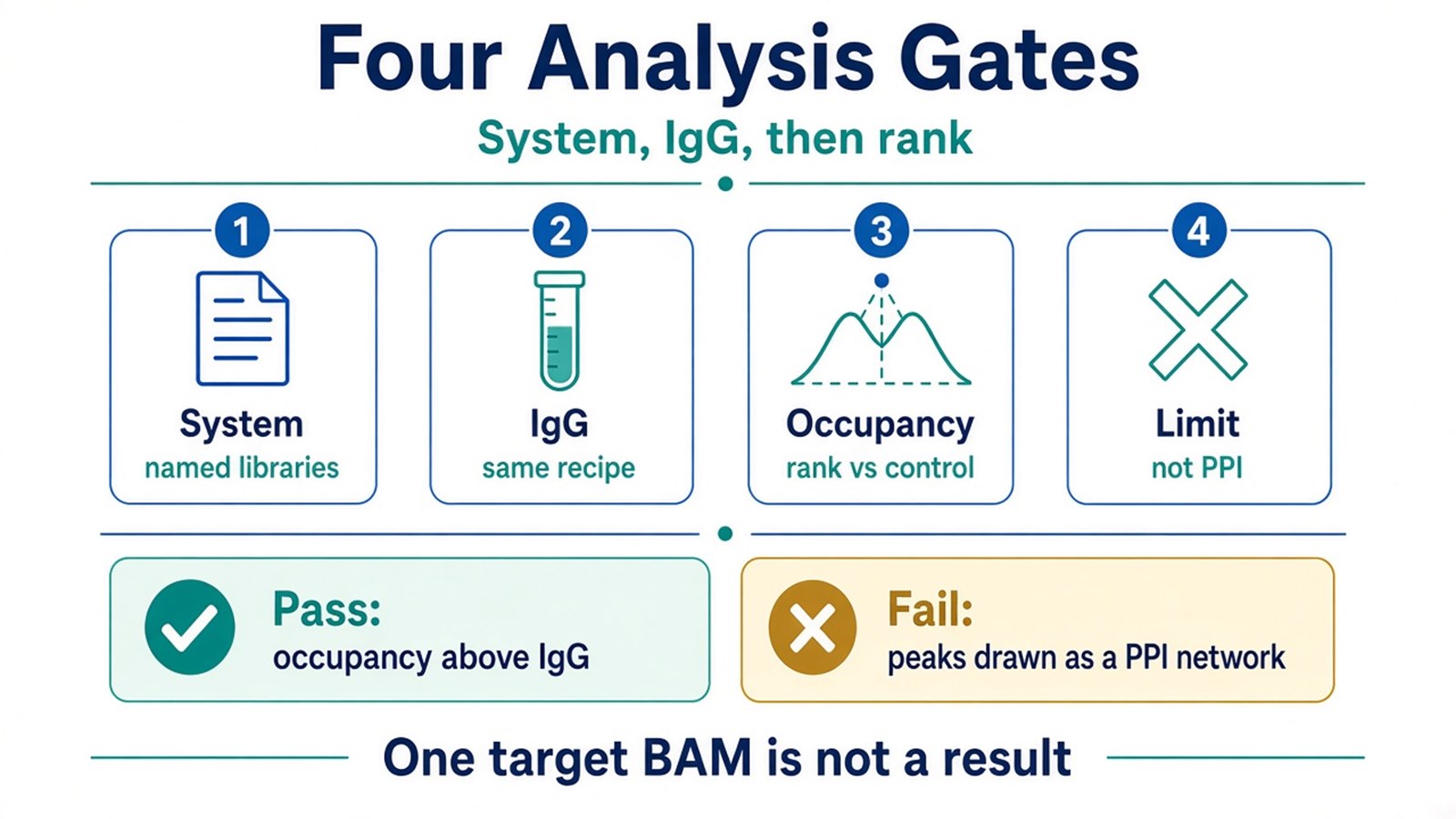
Figure 2. Screening is a control outcome. Extra visualization does not replace IgG or no-primary.
Result Boundaries and Common Biases
The common bias is writing a complete analysis pipeline as completed protein interaction analysis because FASTQ, BAM, and a peak table exist. Another bias is skipping IgG because only the target library was sequenced, then drawing leftover fragments as condition-specific regulation. Over-calling broad histone domains can fill the table with background. Under-calling a sparse transcription-factor library can hide a real mark.
Do not write a successful alignment rate as proof that remaining peaks contact the protein. Do not write a peak near a transcription start site as a functional regulatory site. Distance to a gene is a map, not a mechanism. Do not write a heatmap or genome-browser screenshot as orthogonal validation.
Prefer this pipeline when occupancy must be ranked from existing CUT&Tag libraries. Prefer a wet-lab redesign when the antibody or control arm is missing. Prefer protein-protein interaction analysis when the next sentence is which proteins remain with a protein bait.
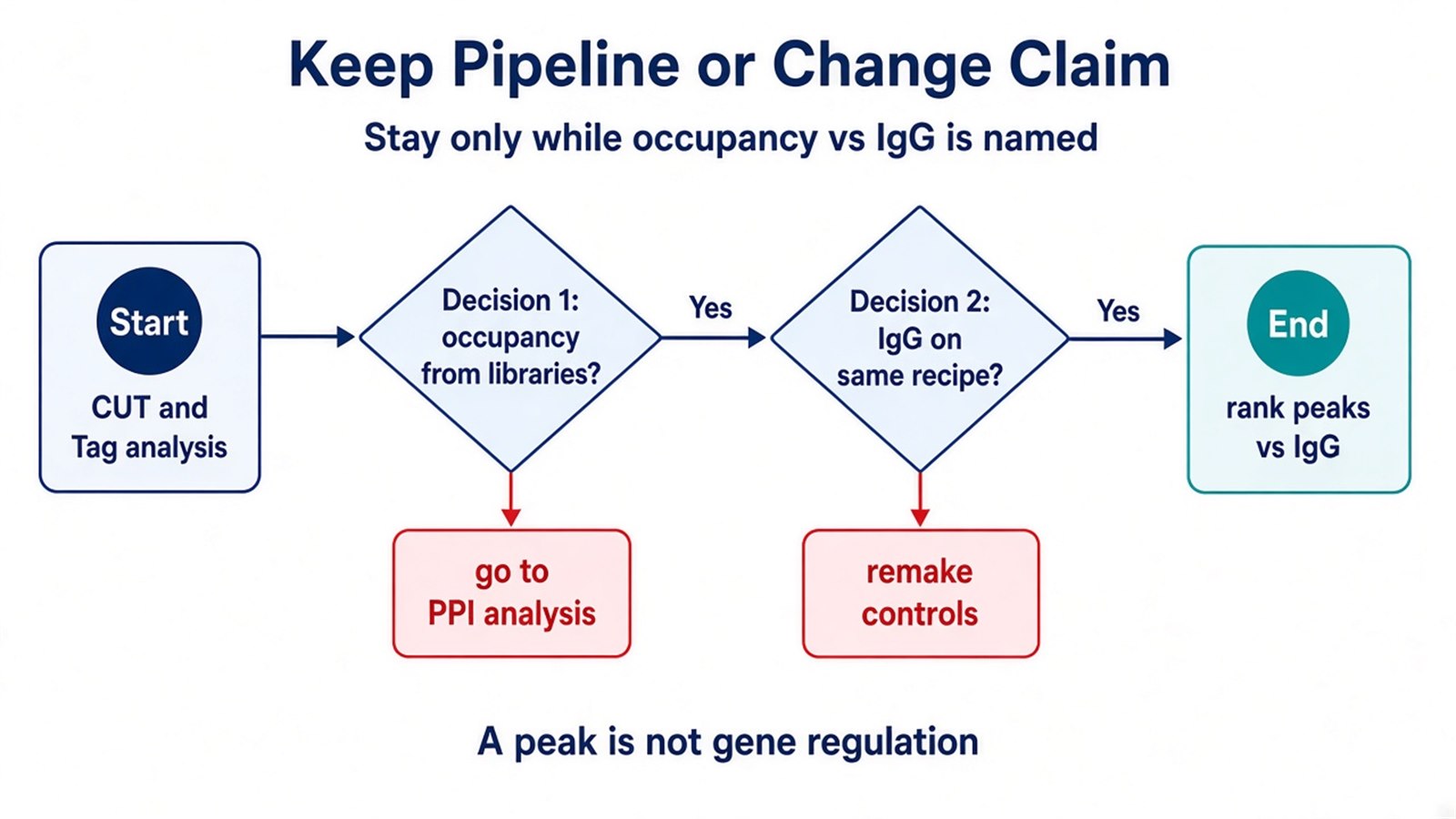
Figure 3. Keep the pipeline only while occupancy versus IgG can be named. A peak track is not a completed interaction analysis.
Once the target, control libraries, genome build, and the planned ranking are defined, the project can be scoped as CUT&Tag occupancy analysis. Researchers can review the MtoZ Biolabs CUT&Tag Analysis Service for sample evaluation and analysis planning.
Frequently Asked Questions
1. Does a CUT&Tag analysis pipeline analyze protein-protein interactions?
No. It maps chromatin occupancy from sequencing to a ranked peak table. PPI analysis recovers proteins that remain with a protein bait.
2. Can I call peaks if only the target library was sequenced?
No. IgG or no-primary must see the same analysis recipe. One target BAM file is not a CUT&Tag result.
3. Does peak annotation mean the protein regulates that gene?
No. Annotation places a peak on a map. Regulation needs a perturbation or other orthogonal assay.
4. Does finishing QC, alignment, and visualization finish the biological claim?
No. Those steps make the occupancy contrast readable. They do not prove contact, affinity, or function.
5. When should this analysis move to a PPI or pair assay?
Move when the next written sentence is protein-protein contact, direct DNA contact, or affinity. Keep the occupancy shortlist as the input, not as the proof.
Reference
- H.S. Kaya-Okur, S.J. Wu, C.A. Codomo, E.S. Pledger, T.D. Bryson, J.G. Henikoff, K. Ahmad, S. Henikoff (2019). CUT&Tag for efficient epigenomic profiling of small samples and single cells. Nat. Commun., 10, 1930. https://doi.org/10.1038/s41467-019-09982-5
