



Co-IP-MS and XL-MS both use liquid chromatography–tandem mass spectrometry. They do not answer the same protein-interaction question. Co-immunoprecipitation followed by mass spectrometry (Co-IP-MS) asks which proteins remain with a bait after a stated wash. Cross-linking mass spectrometry (XL-MS) asks which residues were close enough for a chosen reagent to form a covalent pair. Choose Co-IP-MS when the next table should be a partner list. Choose XL-MS when the next table should be residue-level proximity. Using the discovery workflow to demand contact sites, or the contact workflow to screen an unknown neighborhood, produces background lists or sparse links that cannot support the next sentence.
One project may need unknown partners from a cellular lysate. Another already has a defined complex and needs distance restraints for a model. Those are different sample states, control sets, and failure modes. The useful comparison starts from the desired readout, not from which instrument name sounds more structural.
Researchers who already know whether the deliverable is a partner list or a contact-site table can also review the MtoZ Biolabs Co-IP-MS Protein Interaction Analysis Service for bait-centered discovery planning.
What Co-IP-MS and XL-MS Actually Measure
Co-IP-MS enriches a bait and proteins that co-purify from a lysate or related matrix. The spectrometer identifies those proteins. A controlled design can rank condition-dependent neighbors and complex members that survive wash. It does not prove direct physical contact. A prey may bind the bait, bind a bridge, stick to beads, or recur as a contaminant.
XL-MS uses a chemical cross-linker to connect amino acids that are close in space. After digestion and LC-MS/MS, cross-linked peptides supply distance restraints that can support interface inference, conformational comparison, or model filtering. The method can be run on a purified or enriched complex and, in selected cases, on more complex samples. Cross-linked peptides are usually rare and harder to assign than a linear identification. Absence of a link is not absence of contact.
The core difference is the sentence each table is allowed to support. Co-IP-MS: which proteins are enriched with this bait. XL-MS: which regions were close enough to be linked. For how Co-IP is coupled to LC-MS/MS when partners are the goal, How to Combine Co-IP with Mass Spectrometry for Protein Interaction Analysis? provides a complementary coupling discussion. For why Co-IP-MS cannot substitute for a site map, Can Co-IP Followed by Mass Spectrometry Determine the Binding Sites Between Two Proteins? provides a complementary site-claim discussion.
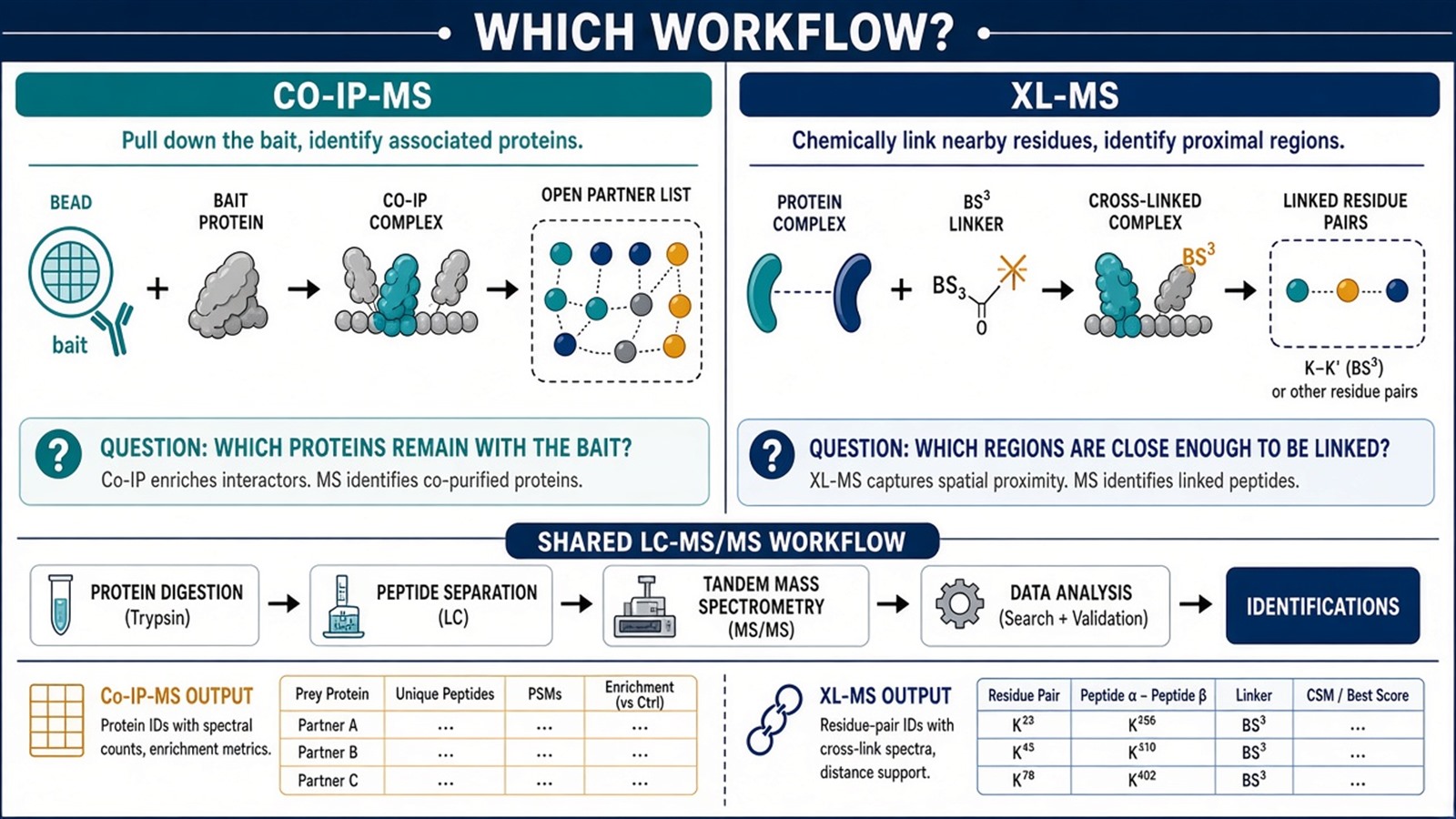
Figure 1. Pick the workflow from the readout. A partner list and a residue-proximity table are not interchangeable interactomes.
Write the next sentence before naming the chemistry. Shared LC-MS/MS does not make the two pellets equivalent.
Key Comparison Dimensions
The two workflows are not interchangeable discovery tools. They differ in question, sample state, output, and what must be validated next.
Dimension |
Co-IP-MS |
XL-MS |
|---|---|---|
Primary question |
Which proteins co-purify with the bait? |
Which residues or regions are close in space? |
Usual fit |
Partner discovery, complex profiling, condition comparison |
Interface constraint, topology, structural restraints |
Main dependency |
Antibody or tag, bait occupancy, lysis, matched controls |
Cross-linker chemistry, complex quality, peptide coverage, search rules |
Typical output |
Protein list with enrichment against a control |
Cross-linked peptide pairs and distance restraints |
Main limitation |
Bridges and bead binders need filtering |
Sparse links; low identification rate; harder analysis |
Co-IP-MS is often the first experiment when the neighborhood is unknown and an antibody or tagged bait exists. XL-MS fits when the complex is already named and a partner list cannot supply the next structural sentence. For how XL-MS sits among AP-MS and proximity labeling, How to Identify Protein–Protein Interactions Using Mass Spectrometry provides a complementary evidence-type map.
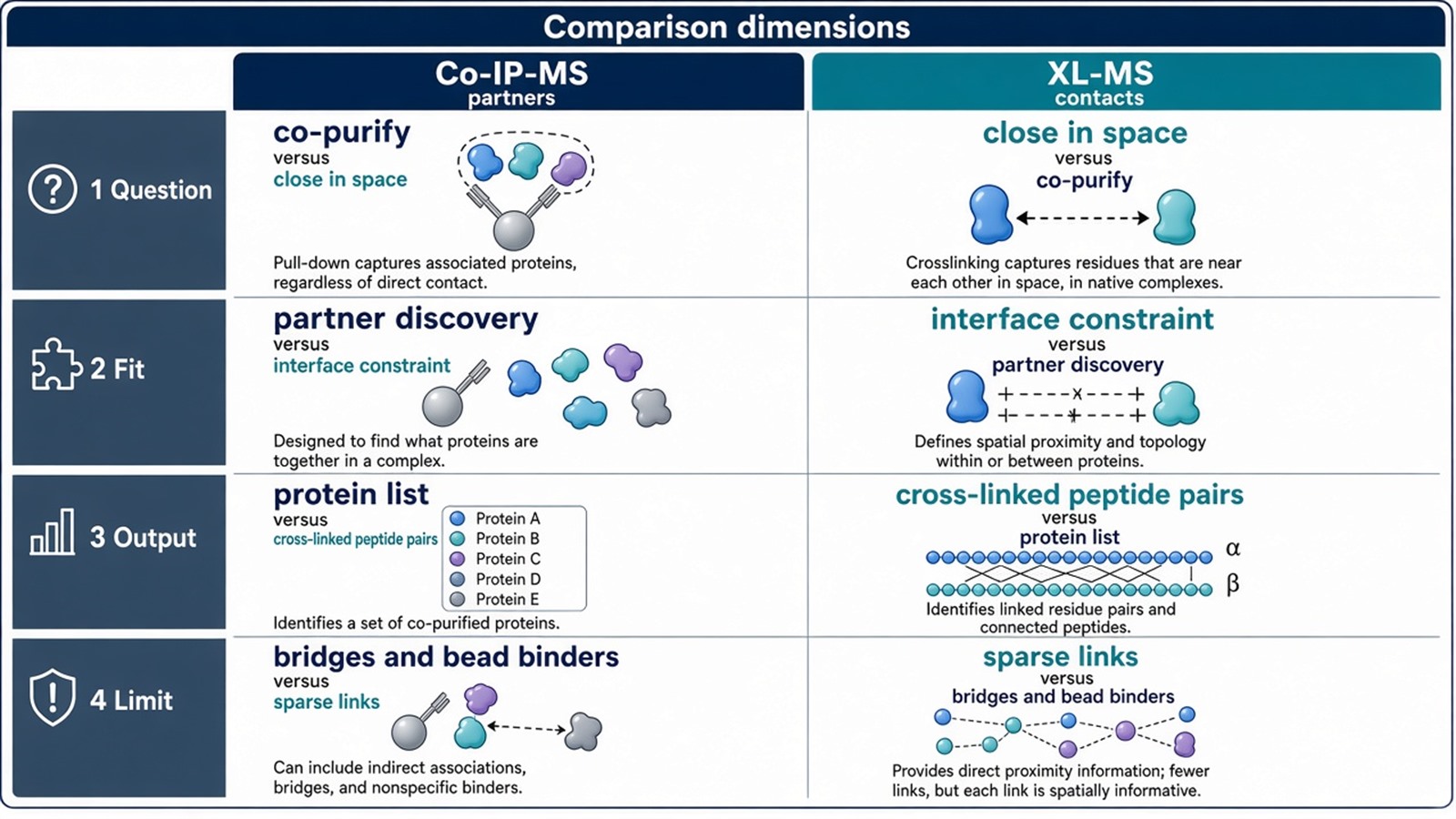
Figure 2. The workflows differ in the question, the sample they need, the table they return, and the validation they still require.
When Co-IP-MS Is the Better Choice
Choose Co-IP-MS when the goal is to discover or compare partners under a stated biological condition. Examples include a transcription-factor neighborhood before and after stimulation, or a tagged target compared across treatment. The workflow captures wash-stable association, not only a residue contact.
Co-IP-MS is the usual fit when a validated antibody or tag exists, the complex is expected to survive lysis and wash, the project needs a ranked candidate list, the condition matters, and IgG, bead-only, empty-tag, and input arms can be processed with the bait.
The main risk is reading every enriched protein as a direct binder. Enrichment statistics, a contaminant catalog, control pulldowns, and an orthogonal check belong with the list. Western, reciprocal Co-IP, or a targeted MS assay can test high-value candidates. Colocalization does not replace those checks.
When XL-MS Is the Better Choice
Choose XL-MS when the project needs spatial information: which residues or regions were close enough to be chemically linked. That output can constrain topology, an interface hypothesis, a conformational contrast, or a model.
XL-MS is the usual fit when the complex or pair is already defined, contact-site evidence is the claim, the sample can tolerate the reagent, and the amount and purity are enough for low-abundance cross-linked peptides. Computational models, including AlphaFold-class predictions, can be filtered by those restraints. The model is not validated merely because a link is nearby.
XL-MS does not replace Co-IP-MS for early open discovery. It can follow discovery when a prioritized complex needs spatial context.
Sample Requirements and Expected Outputs
Co-IP-MS can start from cells, tissue, or lysate if bait enrichment is specific and the complex survives extraction. XL-MS more often needs a cleaner, more defined input, because link identification becomes harder as complexity rises.
Planning factor |
Co-IP-MS |
XL-MS |
|---|---|---|
Sample state |
Lysate or compatible matrix |
Purified or enriched complex; selected lysates |
Critical reagent |
IP-grade antibody, tag, or affinity resin |
Cross-linker with a stated spacer and chemistry |
Controls |
IgG, bead-only, empty-tag, input, biological replicates |
No-cross-linker arm, reagent titration, digestion check, replicate LC-MS/MS |
Output |
Interactor table with enrichment |
Residue pairs with distance restraints |
Common QC concern |
Bait recovery and non-specific binding |
Cross-linking efficiency and confident link rate |
Harsh detergents can strip weak Co-IP partners. Mild buffers can raise background. For XL-MS, over-cross-linking reduces peptide recovery; under-cross-linking yields too few informative links. Both failures are chemistry problems, not instrument-name problems.
Decision Recommendations by Research Goal
Choose Co-IP-MS when the project starts with a bait and a broad neighborhood question: pathway context, mutation contrast, or treatment response as occupancy change.
Choose XL-MS when the complex is defined and the next sentence is structural: domain proximity, interface constraint, or model refinement.
Use both in sequence when discovery and mechanism are both required. Co-IP-MS nominates partners; XL-MS is then applied to a better-defined target. One workflow should not be expected to answer both questions in a single unfiltered run.
If antibody performance, bait abundance, or sample amount is uncertain, a small feasibility test belongs before a full queue.
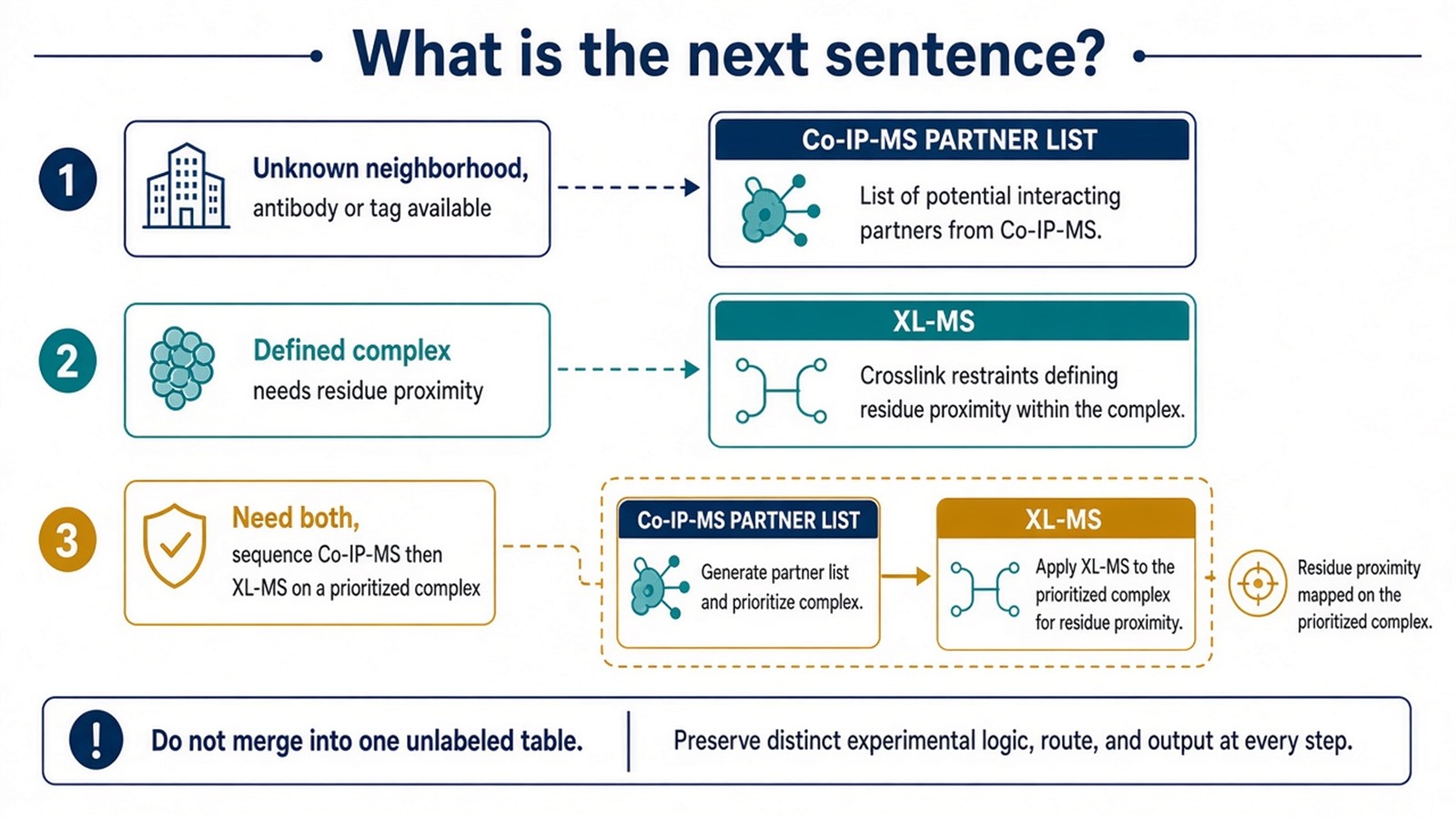
Figure 3. Discovery and contact mapping can be sequenced. They should not be merged into one claim from one chemistry.
Common Pitfalls
A Co-IP-MS list without a matched IgG, bead-only, or empty-tag arm is hard to interpret because background proteins enrich efficiently.
XL-MS should not be asked for a complete interaction map from a crowded lysate. Observed links are sparse. Missing links are not negative proof.
Both tables still need a next assay. Co-IP-MS candidates may need reciprocal capture or targeted MS. XL-MS links may need mutagenesis or an orthogonal biophysical check. The better workflow is the one whose output matches that next decision.
Experimental Limits
Neither workflow reports a dissociation constant. Co-IP-MS will keep returning bridges. XL-MS will keep returning incomplete interfaces. Diagnostic or drug-target language sits outside ordinary research comparison unless a separately validated assay framework is in place.
Project Planning and Service Scope
A usable choice names the readout, the sample state, the critical reagent, and the control set. MtoZ Biolabs scopes antibody or tag Co-IP-MS for partner tables and chemical XL-MS, including BS3-class reagents, for residue-proximity tables, on Orbitrap-class LC-MS/MS. Pull-down MS is a separate handle when the bait is not antibody-captured. Depth still follows capture or cross-link chemistry, not the platform name.
Once the question is written as partners or as contacts, the project can be scoped to that workflow. Researchers who need residue-level proximity after a defined complex can review the MtoZ Biolabs Crosslinking Mass Spectrometry Protein Interaction Analysis Service for project-specific sample evaluation, feasibility assessment, and workflow planning.
Frequently Asked Questions
1. Is Co-IP-MS better than XL-MS for discovering new protein partners?
Usually yes, when an antibody or tag exists and the claim is co-purification. XL-MS is more efficient after the candidate complex is already defined.
2. Can XL-MS prove a direct protein–protein interaction?
It provides residue-proximity evidence when the link is confidently assigned. Direct contact still depends on spacer length, flexibility, sample purity, and the search rule. It is not automatic proof of a functional interface.
3. Should Co-IP-MS and XL-MS be used together?
They can be sequenced. Co-IP-MS can nominate partners; XL-MS can add spatial constraints on a prioritized complex. They should not be merged into one unlabeled table.
4. What is the biggest risk in Co-IP-MS interpretation?
Treating every enriched protein as a direct binder. Controls, enrichment, and a contaminant catalog belong in the same record.
5. What is the biggest risk in XL-MS?
Low recovery of confident cross-linked peptides. Reagent choice, sample quality, buffer, and search settings all move that rate.
Reference
- Gingras A.C., Gstaiger M., Raught B., Aebersold R. (2007). Analysis of protein complexes using mass spectrometry. Nat. Rev. Mol. Cell Biol., 8, 645-654. https://doi.org/10.1038/nrm2208
- Leitner A., Walzthoeni T., Kahraman A., et al. (2010). Probing native protein structures by chemical cross-linking, mass spectrometry, and bioinformatics. Mol. Cell. Proteomics, 9, 1634-1649. https://doi.org/10.1074/mcp.R000089-MCP201
- O'Reilly F.J., Rappsilber J. (2018). Cross-linking mass spectrometry: methods and applications in structural, molecular and systems biology. Nat. Struct. Mol. Biol., 25, 1000-1008. https://doi.org/10.1038/s41594-018-0147-0
- Dunham W.H., Mullin M., Gingras A.C. (2012). Affinity-purification coupled to mass spectrometry: basic principles and strategies. Proteomics, 12, 1576-1590. https://doi.org/10.1002/pmic.201100523
- Mellacheruvu D., Wright Z., Couzens A.L., et al. (2013). The CRAPome: a contaminant repository for affinity purification-mass spectrometry data. Nat. Methods, 10, 730-736. https://doi.org/10.1038/nmeth.2557
