



Co-IP and IP-MS ask which proteins remain with an endogenous bait after antibody capture, Input and IgG contrast, and either targeted detection or LC-MS/MS identification. Quantitative comparison is allowed only as a relative statement about the same protein across matched enrichments. The design fits cells or tissues when the same antibody, lysis, and controls are held constant and bait recovery is documented. It does not measure proteome-wide expression, rank unrelated proteins as tighter binders, or prove binary direct binding (Hein et al. 2015). Prefer comparison when Input and IgG are processed identically. Reassess when antibody lots, bait enrichment, or wash chemistry differ between arms.
Researchers who already have matched Co-IP arms and a written comparison claim can also review the MtoZ Biolabs IP-Mass Spectrometry Service and Protein-Protein Interaction Analysis for project-specific quantitative feasibility.
What Quantitative Comparison Means After Co-IP or IP-MS
The question is not whether a number can be written next to a band or a protein group. The question is which sentence that number is allowed to support. A Co-IP or IP-MS intensity can compare the same protein across Input, IgG, and bait IP, or across treatment arms that used one capture recipe. That is a relative abundance statement inside an enrichment. It is not an expression atlas of the lysate, and it is not a binding-affinity constant.
Co-IP western blot can support a relative band comparison for a named prey when loading, antibody, and exposure are held constant. IP-MS can support the same class of sentence for many co-purifying proteins because LC-MS/MS reports intensity for identified proteins and peptides. Neither readout becomes quantitative proteomics of the starting tissue. Readout choice is compared in IP-MS vs Co-IP Western Blot: Which Method Fits Your Study?.
A usable comparison therefore has three parts. The bait must be recovered in every arm that will be interpreted. The prey being compared must be the same protein, not a homolog assigned by shared peptides. The contrast must be declared: bait IP versus IgG, or condition A versus condition B under one antibody and one wash.
Co-IP can support relative comparison of the same protein across matched enrichments. It cannot convert an unmatched eluate into expression levels or affinity.
Antibody Specificity Must Be Equal Across Compared Arms
Antibody specificity is a quantitative variable. If two arms use different clones, lots, or saturating amounts, intensity differences can be antibody bias rather than biology. The capturing reagent must recover the intended native bait in every compared lysate without a dominant off-target that then looks like a changing partner. Application-specific IP performance still has to be shown, because a Western-only reagent can produce bands that do not reflect native capture (Uhlen et al. 2016). How to qualify that reagent is covered in How to Choose the Right Antibody for Co-IP Assays?.
Keep host species, isotype, bead chemistry, and antibody input constant across the comparison. Do not add more antibody to a weak arm to force a bait band. Extra IgG usually increases chain carryover and can suppress prey sampling in IP-MS. If one condition loses the epitope through modification or complex rearrangement, the intensity drop is an accessibility change until bait recovery is checked in Input.
Input and IgG Are the Quantitative Baseline
Input and IgG are the denominators of a Co-IP comparison. They are not optional lanes added after a fold change is already believed.
Input is taken before capture from each biological arm. It shows whether bait or prey abundance in the starting extract already changed. A stronger prey band in the bait IP can be higher expression, better extraction, or true co-enrichment. Without Input, those explanations cannot be separated.
IgG or bead controls must use the same lysate batch, lysis, wash, elution, and antibody amount as the paired bait IP. The isotype arm estimates handle-driven background at the same intensity scale. Empty-tag controls from AP-MS do not replace IgG in antibody Co-IP. If IgG of condition A is washed unlike bait IP of condition B, the comparison is no longer quantitative.
Quantitative check |
What a pass looks like |
What an intensity value cannot support |
|---|---|---|
Antibody specificity |
Same clone and lot recover the intended bait in every arm |
A fold change caused by switching antibodies |
Input |
Bait and, when relevant, prey are visible before capture |
Treating IP intensity as starting expression |
IgG or bead |
Background measured with the same recipe |
Subtracting an unlike control after the fact |
Enrichment efficiency |
Bait recovery comparable across compared bait IPs |
Prey changes while bait capture collapsed in one arm |
Same-protein rule |
One protein compared across arms |
Ranking protein B against protein C as a tighter binder |
A practical comparison sequence is:
- Write the relative sentence the study will claim.
- Hold antibody, lysis, wash, and elution constant.
- Collect Input from every biological arm.
- Process matched IgG with the same recipe.
- Compare the same protein only after bait recovery is similar.
Protocol-level matching of those arms is covered in Designing an Efficient Co-immunoprecipitation (Co-IP) Protocol. Sample-prep parity after elution is covered in How to Prepare Immunoprecipitation Samples for Mass Spectrometry.
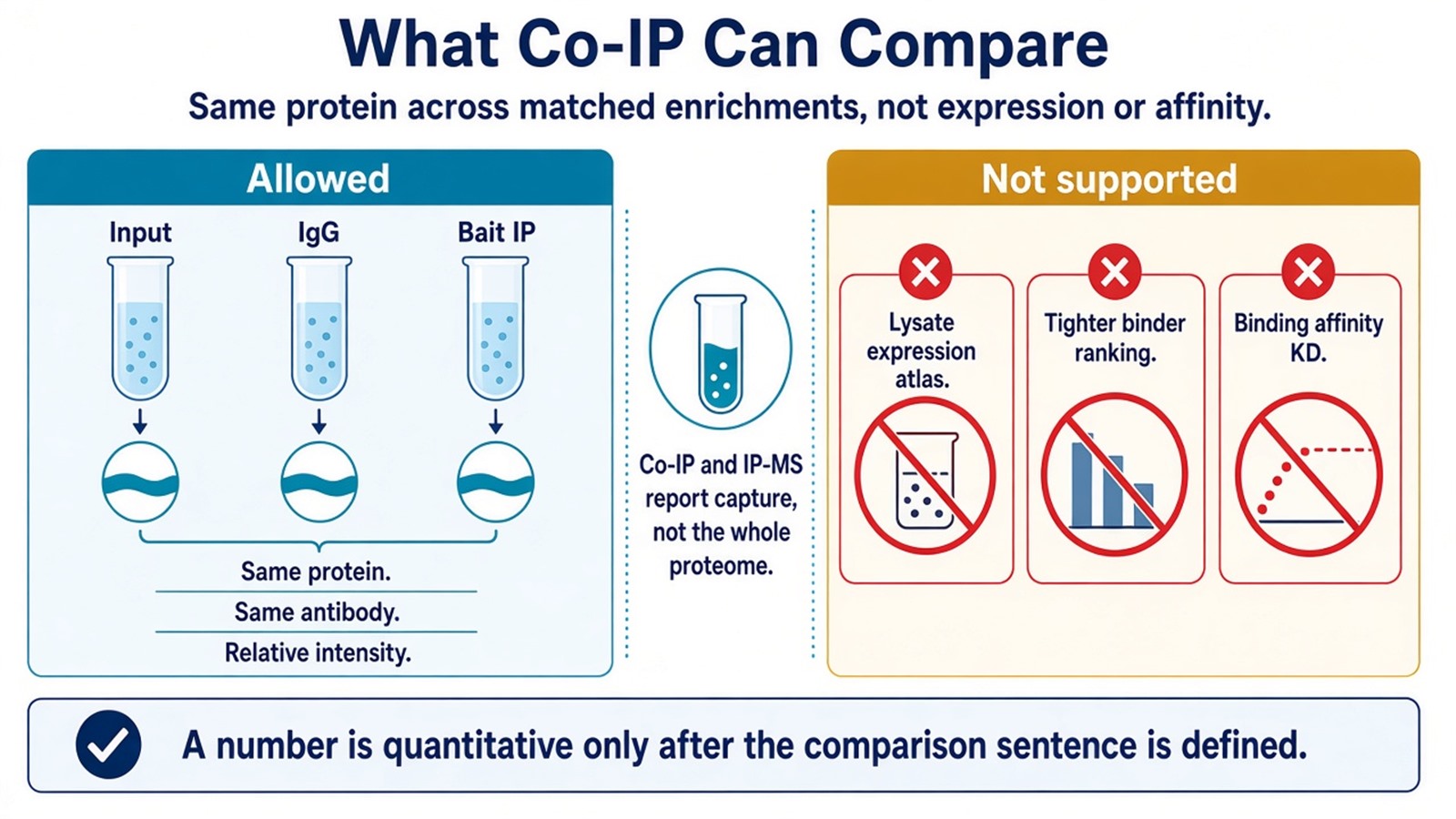
Figure 1. Quantitative Co-IP compares one protein across matched enrichments. It does not measure lysate expression or binding affinity.
Enrichment Efficiency and Mass Spectrometry Credibility
Enrichment efficiency is bait-first in a quantitative design. If bait recovery differs between treatments, prey intensity will follow the capture, not necessarily the biology. Check bait peptides or bait bands in every arm before interpreting a prey change. Identification depth in a Co-IP-style eluate is typically hundreds to about a thousand proteins, depending on the sample. A longer table is not a more quantitative comparison.
Relative intensity can compare the same protein across matched enrichments. It does not rank unrelated proteins as tighter binders. A manufacturer dissociation constant is not the cellular affinity of a Co-IP intensity ratio. Labeling methods can multiplex several arms in one IP-MS run. They do not replace matched Input and IgG, and they are not required for every two-arm comparison.
Identification of a protein in one eluate is not a confidence call. Ranking still requires bait recovery and a declared contrast against IgG. Probabilistic scoring such as SAINT uses bait versus control counts to assign a probability that a prey is specifically co-purified (Choi et al. 2011). That probability is not a fold-change of interaction strength. A contaminant catalog such as the CRAPome is a prior on control frequency (Mellacheruvu et al. 2013). It does not convert unmatched intensities into a quantitative interactome.
After those gates, a protein-level value can support: protein B is higher with bait A in condition 1 than in condition 2 versus matched IgG, inside this capture recipe, after bait recovery was comparable. Peptide support, antibody lot, and wash chemistry belong next to that statement. Pathway maps do not repair a missing Input.
If bait recovery itself is the unstable value, diagnose before comparing prey, as in Why Was the Target Protein Not Detected by IP-MS?.
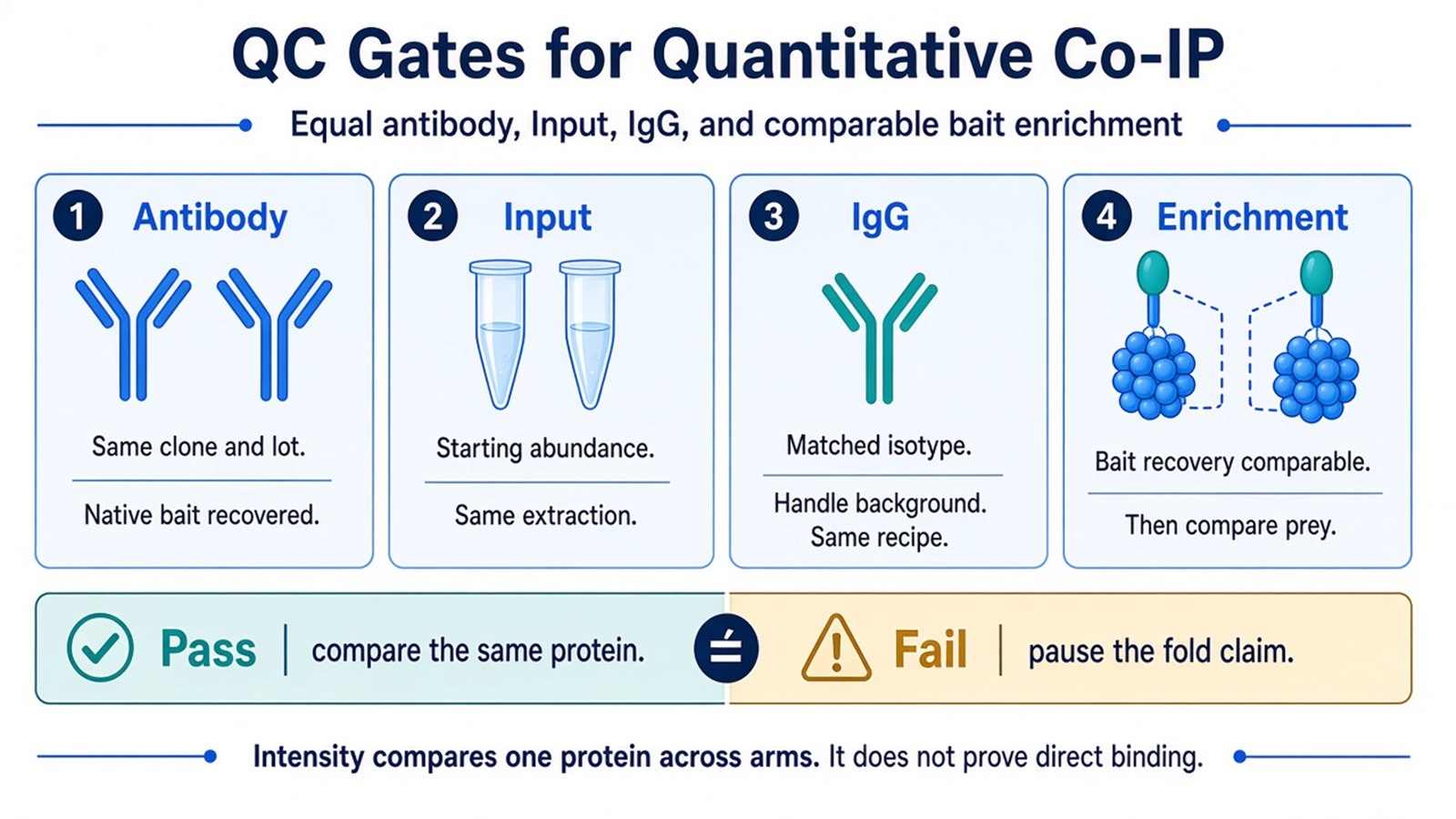
Figure 2. Mass spectrometry credibility for a Co-IP comparison starts after bait enrichment is shown to be comparable across arms.
Common Biases and Result Boundaries
The common bias is reading Co-IP as qualitative only, then refusing a matched relative comparison that the intensities can support. The opposite bias is treating any number from an eluate as quantitative proteomics. Loading more lysate into one IP, changing wash salt between treatments, or comparing a monoclonal arm with a polyclonal arm all create intensity differences that are not biological.
Do not write a higher prey intensity as proof of tighter binding. Do not write a lower intensity as proof that the interaction is lost in the cell. Absence can mean failed bait capture, epitope masking, over-washing, or a prey that stayed in Input. Do not write Co-IP fold changes as intracellular KD.
Prefer Co-IP or IP-MS comparison when the claim is condition-dependent co-recovery of named or discovered partners and the four gates can be matched. Prefer a lysate-level quantitative proteomics design when the claim is starting abundance rather than co-enrichment. Prefer a defined-pair biophysical assay when the claim is affinity. Tagged versus antibody capture for comparative interactomes is covered in AP-MS vs IP-MS: How to Choose the Right Interactome Workflow. Mixed enrichment-MS projects can be reviewed under the MS-Based Protein-Protein Interaction Analysis Service.
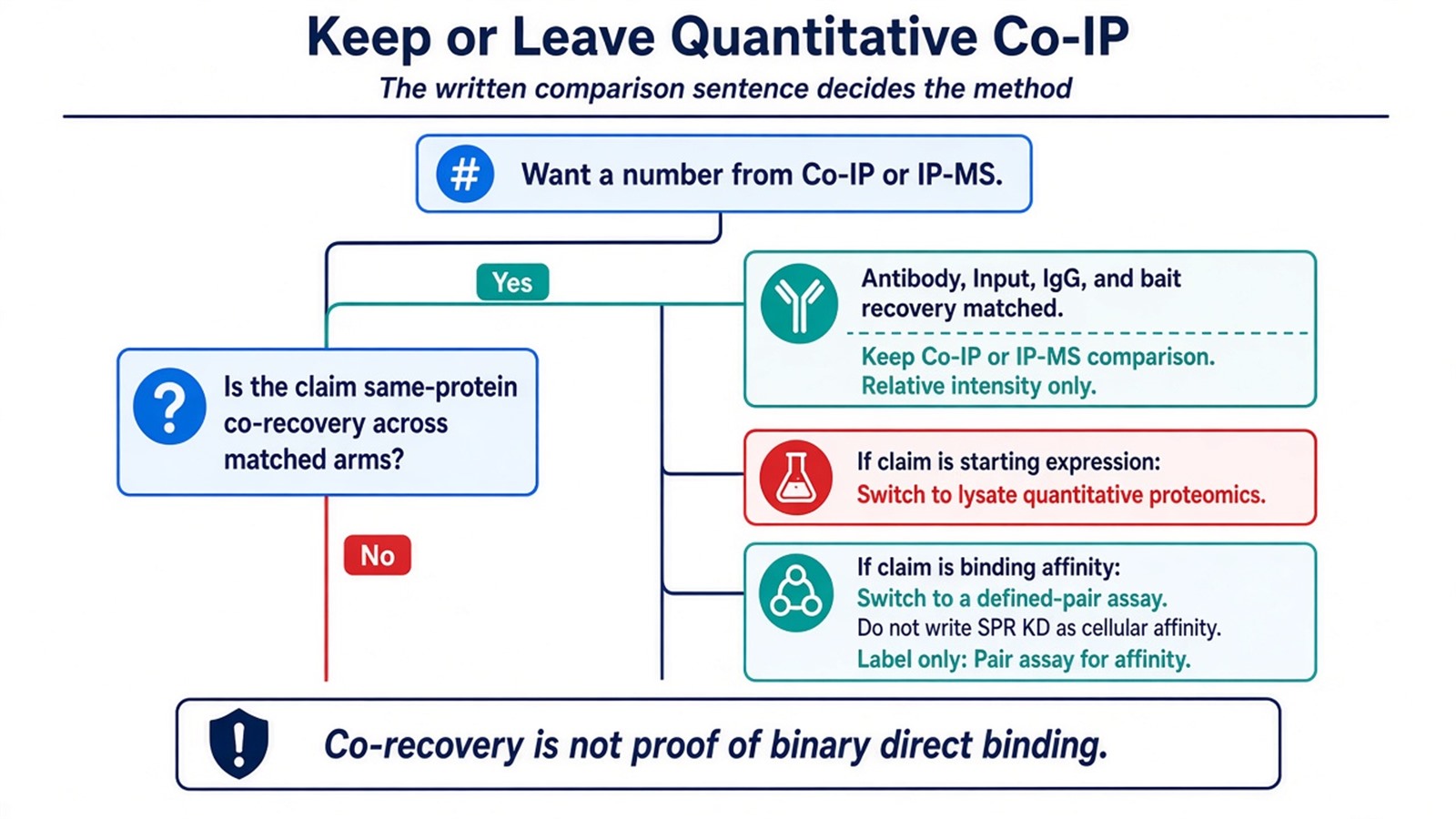
Figure 3. Keep Co-IP for relative co-recovery comparison. Move expression or affinity questions off the IP eluate.
Co-IP and IP-MS support relative comparison of the same protein after antibody, Input, IgG, and bait enrichment are matched. They do not certify a quantitative binary interactome.
Once the comparison sentence, antibody status, Input and IgG plan, and bait-recovery checks are defined, the project can be scoped as a comparative Co-IP or IP-MS study. Researchers can review the MtoZ Biolabs IP-Mass Spectrometry Service for sample evaluation and comparison planning.
Frequently Asked Questions
1. Can two treatments be compared by Co-IP band intensity?
Yes, for the same named protein, when antibody, loading, Input, and IgG are matched and bait recovery is similar. A darker band is not a tighter binder.
2. Does higher IP-MS intensity mean a stronger interaction?
No. Intensity is a relative abundance value inside this capture recipe. It does not rank protein B against protein C as higher affinity.
3. Is labeling required to compare Co-IP samples by mass spectrometry?
No. Relative intensity of the same protein can compare matched arms. Labeling can multiplex several arms. It does not replace Input and IgG.
4. Can IgG replace Input in a quantitative Co-IP?
No. Input tests starting abundance and extraction. IgG tests handle-driven background. A comparison needs both.
5. Can Co-IP replace quantitative proteomics of the whole lysate?
No. Co-IP reports proteins that survived capture. Lysate-level expression is a different experiment on the starting extract.
Reference
- M. Uhlen, A. Bandrowski, S. Carr, A. Edwards, J. Ellenberg, E. Lundberg, D. L. Rimm, H. Rodriguez, T. Hiltke, M. Snyder, T. Yamamoto (2016). A proposal for validation of antibodies. Nat. Methods, 13, 823-827. https://doi.org/10.1038/nmeth.3995
- M.Y. Hein, N.C. Hubner, I. Poser, J. Cox, N. Nagaraj, Y. Toyoda, I.A. Gak, I. Weisswange, J. Mansfeld, F. Buchholz, et al. (2015). A human interactome in three quantitative dimensions organized by stoichiometries and abundances. Cell, 163, 712-723. https://doi.org/10.1016/j.cell.2015.09.053
- H. Choi, B. Larsen, Z.Y. Lin, A. Breitkreutz, D. Mellacheruvu, D. Fermin, Z.S. Qin, M. Tyers, A.C. Gingras, A.I. Nesvizhskii (2011). SAINT: probabilistic scoring of affinity purification-mass spectrometry data. Nat. Methods, 8, 70-73. https://doi.org/10.1038/nmeth.1541
- D. Mellacheruvu, Z. Wright, A.L. Couzens, J.P. Lambert, N.A. St-Denis, T. Li, Y.V. Miteva, S. Hauri, M.E. Sardiu, T.Y. Low, et al. (2013). The CRAPome: a contaminant repository for affinity purification-mass spectrometry data. Nat. Methods, 10, 730-736. https://doi.org/10.1038/nmeth.2557
