






What Affects Absolute Protein Quantification Costs?
Introduction
Researchers evaluating absolute protein quantification often ask for a single price before reporting units, standard strategy, and validation scope are defined. That question is understandable. Grant budgets, vendor comparisons, and QC timelines all depend on cost predictability. However, absolute protein quantification is rarely a one-size-fits-all service. The final quote depends on proteotypic peptide selection, AQUA or labeled-standard design, calibration range, sample matrix complexity, MRM or PRM platform choice, sample number, and the reporting standard required for the project.
A single-peptide feasibility assay in a defined lysate matrix is a different workload from a multiplex absolute panel in plasma with matrix-matched calibration, recovery QC, and documentation-grade concentration reporting. Treating these projects as equivalent leads to under-budgeting, repeat standard synthesis, or a concentration report that does not support the intended decision. The more useful question is not only what absolute protein quantification costs, but which workflow factors determine the price and what level of calibrated evidence the project actually needs.
Related Services
For projects where reporting units, standard strategy, or QC documentation depth is still undefined, MtoZ Biolabs can review project requirements and provide a project-based quote before AQUA standards are ordered or samples are submitted.
Why Quotes Vary Between Projects
Unlike relative targeted quantitation, absolute protein quantification often includes feasibility review, proteotypic peptide selection, AQUA or labeled-standard planning, calibration design, matrix pilot testing, selective LC-MS acquisition, concentration calculation, and report formatting suited to specification or QC review. These steps add scientific value, but they also make pricing project-specific.
Two absolute quantitation requests that appear similar on a target list can differ sharply in cost. One may need a single calibrated peptide assay in cell lysate with a narrow reporting range. The other may need PRM assay development in plasma, multiple AQUA standards, extended calibration levels, recovery QC, and a report formatted for method transfer or filing review. Quotes also vary because validation depth differs. Some projects need exploratory concentration readouts. Others need documented calibration performance, QC recovery, and range compliance suitable for regulated or internal specification review.
A lower-cost option that excludes matrix pilot testing may be appropriate for early feasibility work. A higher-cost option with fuller calibration validation and QC documentation is often necessary for biomarker concentration reporting, host cell protein monitoring, or biopharmaceutical specification comparison.
Core Cost Components in Absolute Protein Quantification
A useful quote comparison should break the workflow into visible components rather than treating the service as a single line item. Each stage below contributes differently to the final quote, so comparing vendors requires matching not only sample number but also which workflow steps are included.
|
Workflow Stage |
What It Covers |
Why It Affects Cost |
|---|---|---|
|
Feasibility review |
Target list, reporting units, matrix type, and QC needs |
Prevents mismatched scope before standards are ordered |
|
Proteotypic peptide design |
Surrogate peptide selection and matrix review |
Poor early peptide choice increases rework and standard waste |
|
AQUA or labeled-standard planning |
Standard synthesis scope and spike strategy |
More targets and custom standards increase material cost |
|
Calibration design |
Calibrator levels, matrix matching, and QC placement |
Broader range and fuller validation increase setup effort |
|
Assay development |
MRM transition or PRM optimization for light and heavy pairs |
Complex matrices often require more development and revision |
|
Matrix pilot testing |
Detectability, interference, and range review in project samples |
Skipping pilot work can increase repeat analysis later |
|
Cohort LC-MS analysis |
Selective acquisition across samples, calibrators, and QC controls |
Sample number and QC structure drive instrument time |
|
Concentration calculation and QC review |
Curve fitting, recovery review, and range flags |
Higher documentation needs increase review effort |
|
Report delivery |
Concentration tables, calibration summary, method notes |
Specification or transfer use needs more deliverable depth |
These components explain why two vendors may quote very different prices for what appears to be the same absolute protein quantification request.
Key Factors That Shape the Workflow and Price
Six variables account for most quote differences in absolute protein quantification projects. Standard design and calibration scope usually set the fixed setup burden. Matrix complexity and platform choice define the technical depth. Sample number and reporting depth determine how much acquisition, review, and project management are included in the final quote.
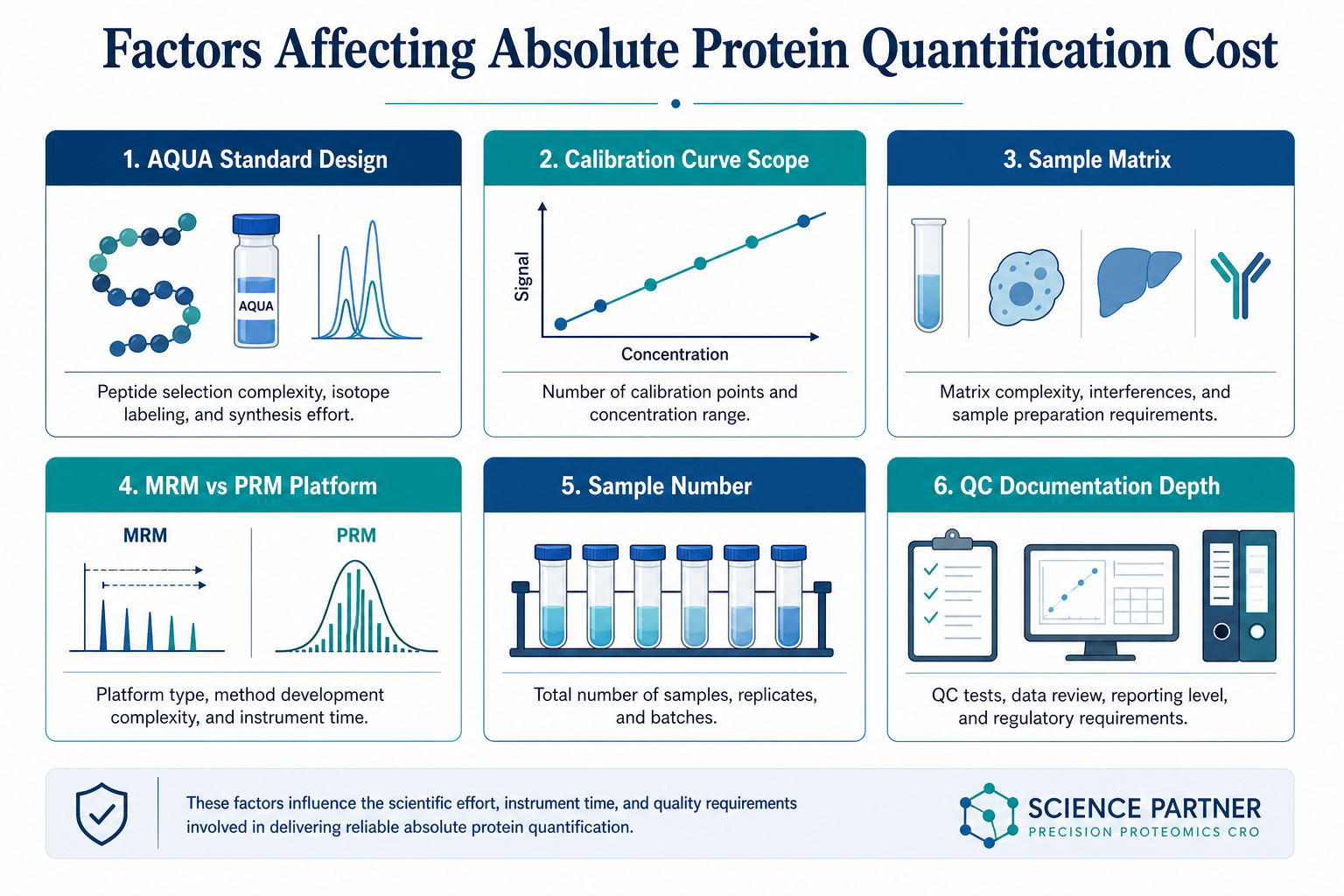
Figure 1. Absolute protein quantification cost is shaped by AQUA standard design, calibration scope, sample matrix, platform choice, sample number, and QC documentation requirements.
1. Number of Targets and AQUA Standard Scope
A single-protein assay with one proteotypic peptide and one AQUA standard is usually less complex than a multiplex panel requiring multiple labeled peptides, separate calibration logic, and more data review. Standard synthesis and spike design are often major fixed-cost components.
2. Calibration Range and QC Depth
Assays that must cover a wide concentration range usually require more calibrator levels, more QC samples, and more review than narrow-range feasibility assays. Documentation-grade validation typically costs more than exploratory concentration reporting.
3. Sample Matrix Complexity
Cell lysate, tissue homogenate, plasma, serum, and biopharmaceutical formulation each present different digestion, cleanup, interference, and recovery challenges. Complex matrices often require more matrix pilot testing and may push part of the assay toward PRM rather than MRM.
4. MRM Versus PRM Platform Choice
MRM on a triple-quadrupole platform is often efficient for calibrated peptide assays in manageable matrices. PRM on a high-resolution platform may add value when interference limits MRM performance or when fragment-level confirmation is required. PRM method setup and review can increase development effort compared with a straightforward MRM assay.
5. Assay Development Depth
Some projects arrive with an existing calibrated method. Others require full peptide selection, AQUA standard planning, transition optimization, matrix testing, and calibration revision before sample reporting begins. Assay development is often the largest fixed-cost component in a new absolute quantitation project.
6. Sample Number and Reporting Goal
Cost scales with study samples, calibrator injections, QC controls, blank runs, and whether the project must support specification comparison, method transfer, or internal research review only. Reporting in ng/mL, ppm, or fmol is not more expensive by unit label alone, but the validation package behind those units often differs.
How Project Scope Changes the Budget
Project scope is the practical bridge between scientific need and price. A narrower scope can keep costs controlled. A broader scope may be necessary, but it should be chosen deliberately.
|
Project Tier |
Typical Deliverable |
Relative Cost Drivers |
|---|---|---|
|
Phase 1 feasibility assay |
Single or small peptide panel with matrix pilot and initial calibration review |
Lower standard scope and limited sample number |
|
Phase 2 calibrated validation |
Defined calibration curve, QC levels, and validated range in project matrix |
Additional standard cost and validation effort |
|
Phase 3 cohort reporting package |
Concentration tables across study samples with documentation-grade QC summary |
Higher acquisition volume and reporting depth |
Researchers should define scope before comparing vendor quotes. A quote based on a feasibility assay is not comparable to a quote based on a full cohort package with documented calibration performance and specification-ready reporting.
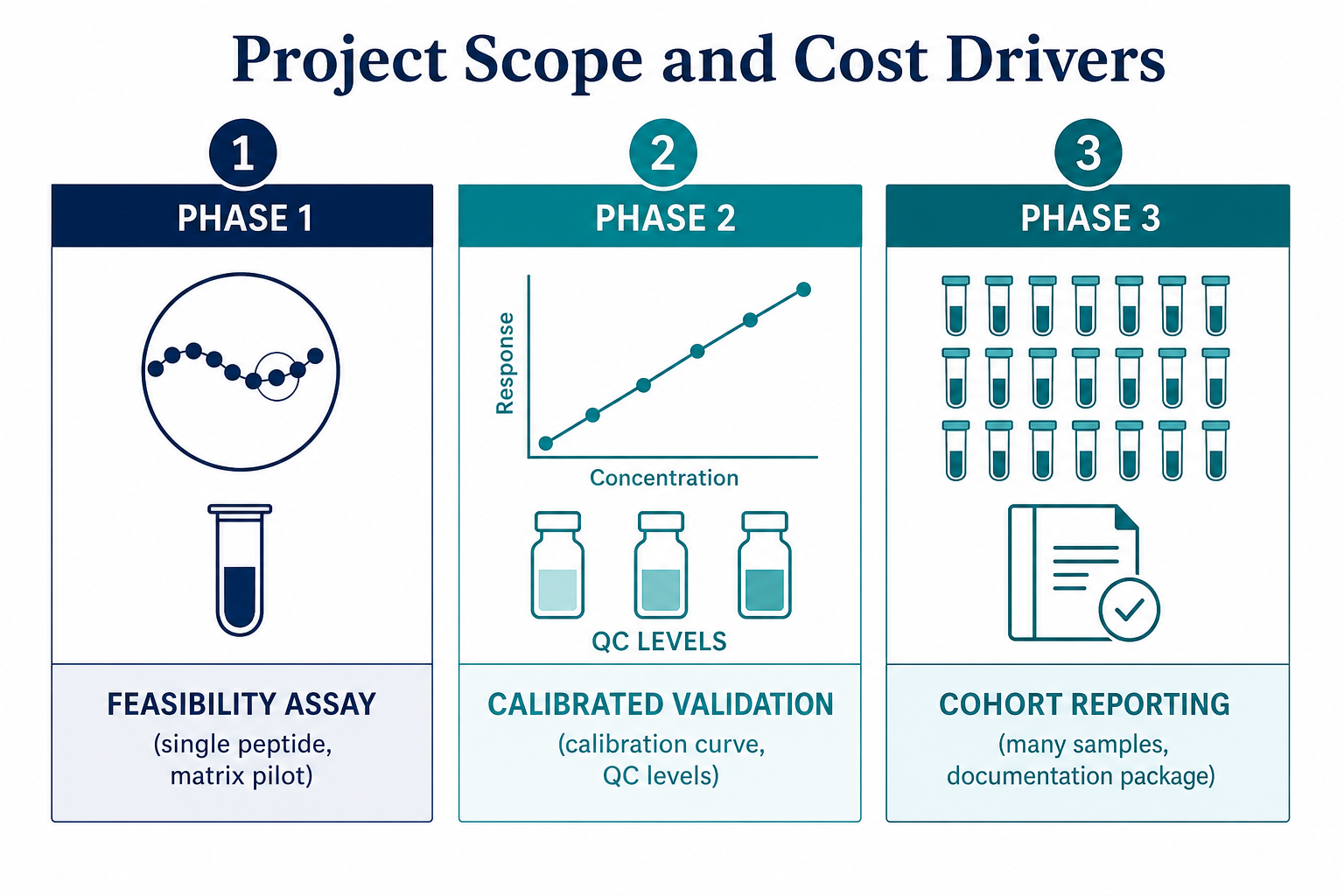
Figure 2. Project tier selection should match reporting units, validation depth, and the decision the concentration data must support.
What You Are Paying For in a Quality Service
Price should be evaluated together with deliverable quality. A lower quote may exclude steps that matter for the final decision. A higher quote may reflect real value if it includes target feasibility review, matrix-tested calibration design, selective LC-MS acquisition, concentration QC, and a report that can be used downstream.
A reliable absolute protein quantification service typically provides:
-
project scoping before AQUA standards are ordered
-
proteotypic peptide and matrix feasibility review
-
documented calibration and standard strategy
-
selective MRM or PRM acquisition with QC controls
-
clear reporting of samples outside the validated range
-
practical recommendations for range revision or surrogate peptide replacement
These elements reduce the risk of paying twice because the first calibrated assay did not perform reliably in the project matrix.
Hidden Cost Risks to Avoid
Common hidden cost risks include:
-
ordering AQUA standards before proteotypic peptide performance is reviewed in the project matrix
-
defining a calibration range that does not bracket real sample concentrations
-
comparing quotes without matching reporting units and QC documentation depth
-
treating relative targeted quantitation and absolute quantitation as equivalent scope
-
submitting difficult matrices without feasibility review
-
expanding sample number after the project was priced for a pilot assay only
-
requesting specification-ready reporting after scoping only exploratory concentration output
Planning reporting units, calibration depth, and QC documentation before standard synthesis often reduces rework cost and protects project interpretability.
How to Request a Useful Quote
Use the following questions to prepare a quote request that leads to an accurate project estimate:
-
What proteins or peptides must be quantified in absolute units?
-
What reporting units are required: ng/mL, fmol, ppm, or per-input normalization?
-
What is the sample matrix and preparation method?
-
What is the expected concentration range and sample number?
-
Is an existing calibrated assay available, or is full assay development required?
-
How many AQUA or labeled standards are needed?
-
Will the result support biomarker reporting, host cell protein monitoring, biopharmaceutical QC, or method transfer?
-
What QC documentation must be included in the deliverable?
A quote based on these answers is far more reliable than a generic per-sample price.
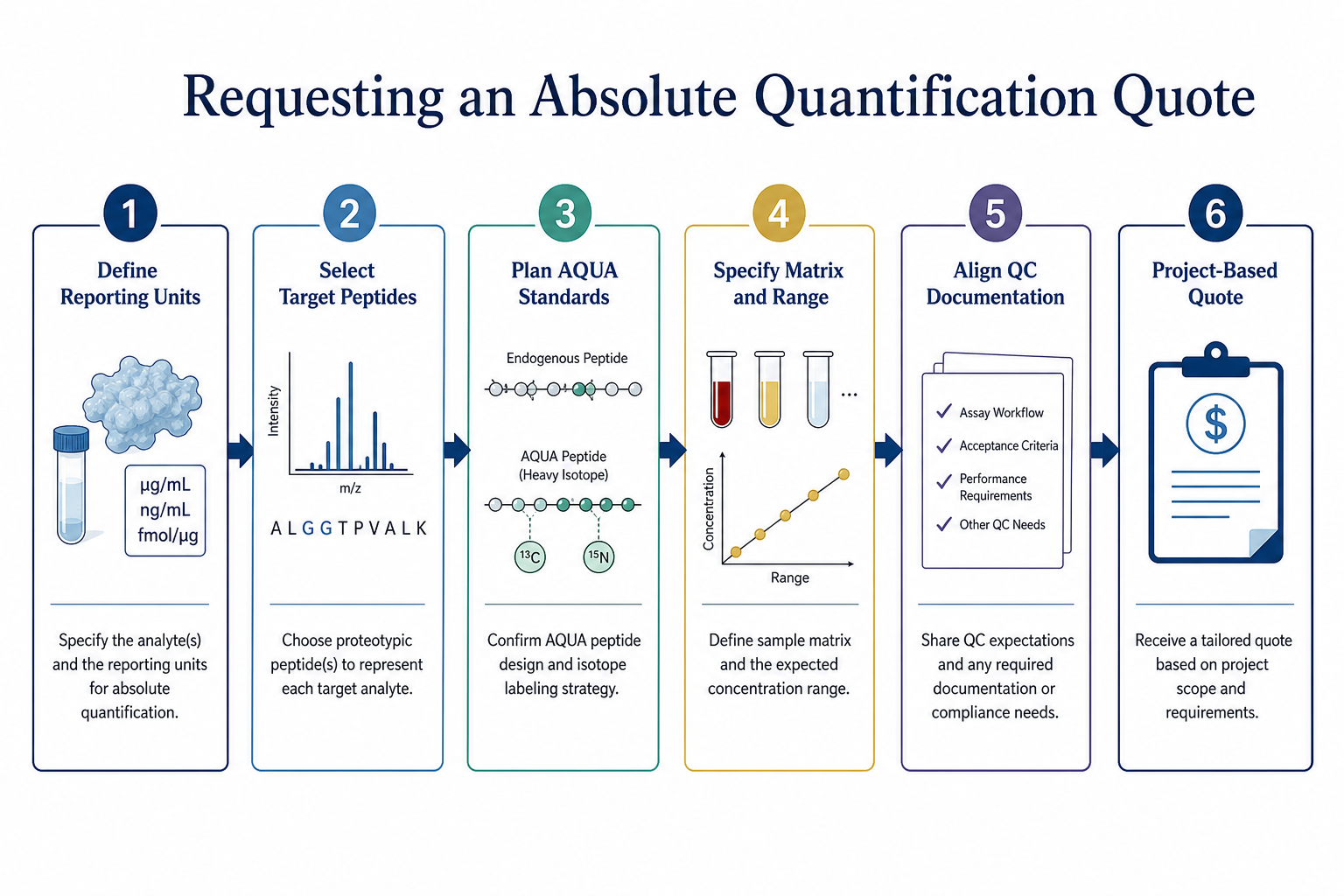
Figure 3. A useful quote request begins with reporting unit definition, target peptide review, AQUA standard planning, and QC scope alignment before vendor comparison.
Decision Guide by Project Goal
Matching scope to project goal prevents both underfunding and unnecessary overspending.
|
Project Goal |
Recommended Scope |
Cost Control Tip |
|---|---|---|
|
Early feasibility in a new matrix |
Phase 1 single-peptide pilot with calibration review |
Start with one surrogate peptide before multiplex expansion |
|
Plasma biomarker concentration reporting |
Phase 2 calibrated assay with matrix-matched standards |
Define expected range before calibrator levels are set |
|
Host cell protein ppm monitoring |
Phase 2 or Phase 3 assay with recovery QC |
Scope matrix pilot before full batch submission |
|
Biopharmaceutical specification comparison |
Phase 3 documentation-grade reporting package |
Align QC acceptance criteria during scoping |
|
Method transfer support |
Documented calibration, QC summary, and panel version control |
Define report format before cohort analysis begins |
|
Transition from relative to absolute reporting |
Staged assay upgrade on existing panel |
Reuse peptide selection where matrix performance is already known |
If relative quantitation is still sufficient for the current decision, teams can consult MtoZ Biolabs to determine whether absolute calibration can be deferred until specification reporting is required.
Frequently Asked Questions
1. Is there a standard price for absolute protein quantification?
No. Pricing is usually project-based because standard design, calibration depth, matrix complexity, sample number, and reporting requirements vary widely.
2. What usually increases absolute protein quantification cost the most?
AQUA standard scope, calibration validation, matrix complexity, and reporting depth are common drivers. Multiplex assays in plasma with documentation-grade QC typically cost more than single-peptide feasibility work in a defined lysate matrix.
3. Does sample number alone determine the price?
Sample number is important, but it is not the only driver. A small sample set with full AQUA design, calibration development, and matrix pilot testing can cost more than a larger cohort running an already validated absolute assay.
4. Why do vendor quotes differ so much?
Quotes may reflect different deliverables. One proposal may include only basic concentration tables, while another includes feasibility review, matrix pilot testing, calibration validation, QC recovery review, and specification-ready documentation.
5. How can researchers reduce rework cost?
Define reporting units early, review proteotypic peptides in the project matrix before ordering standards, and match QC documentation depth to the decision the project must support.
Conclusion
Absolute protein quantification cost is shaped by AQUA or labeled-standard scope, calibration range and QC depth, sample matrix complexity, MRM or PRM platform choice, assay development effort, sample number, and reporting requirements. Projects that need only a narrow feasibility assay in a manageable matrix are usually less complex than multiplex absolute panels in plasma with documentation-grade calibration reporting. The most reliable way to control budget is to define reporting units and validation depth before comparing quotes and to match the workflow to the specification or concentration decision the project must support. Researchers planning absolute protein quantification for biomarker measurement, host cell protein monitoring, or biopharmaceutical QC can contact MtoZ Biolabs to review target list, reporting units, and matrix requirements, then request a project-based quote aligned with the required level of calibrated evidence.
How to order?




